
When you’re an employee facing off against a company, the power imbalance can feel overwhelming. Your employer likely has a team of lawyers and significant financial resources, while you are dealing with the stress of a hostile workplace or the loss of your income. This is where the contingency fee model becomes a powerful equalizer. It allows you to secure top-tier legal representation without paying any upfront fees. By working with an employment law attorney on contingency, you get a dedicated advocate whose interests are perfectly aligned with yours. This guide explains how this arrangement works, why it’s the standard for employee-side law, and how it makes justice accessible to everyone, not just those who can afford to pay hourly rates.
Key Takeaways
- Pay nothing unless you win: A contingency agreement means you do not pay attorney fees upfront, making quality legal help accessible. Your lawyer is paid from the settlement or award, so they are fully invested in getting you the best possible result.
- Understand the difference between fees and costs: Your agreement covers your lawyer’s fee, but lawsuits also have other expenses like court filing fees or expert witness charges. Before signing, clarify how these costs are handled and if you are responsible for them if the case is not successful.
- Come to your consultation prepared: To secure a contingency lawyer, you need to show the strength of your claim. Help an attorney see the merits of your case by organizing your documents, creating a timeline of events, and being ready to tell your story clearly.
What Does It Mean to Hire a Lawyer on Contingency?
Hiring a lawyer on contingency means you don’t pay any attorney’s fees unless you win your case. It’s a common arrangement that makes it possible for people to get high-quality legal help without paying expensive hourly rates upfront. This type of payment structure is called a contingency fee agreement, because your attorney’s fee is “contingent” upon a successful outcome.
If you believe your rights have been violated, our Wrongful Termination Attorney in California team can help you understand your options and pursue your claim.
This model is especially important in the field of employment law, where an individual is often taking on a former employer with far greater financial resources. A contingency agreement ensures that anyone with a strong case can seek justice, regardless of their personal financial situation. It removes the fear of accumulating legal bills while you’re already dealing with the stress of a workplace dispute. Let’s look at exactly how this works and why so many employment lawyers use this model.
How Contingency Fees Work
A contingency fee is a straightforward concept. Your lawyer’s payment is a percentage of the money they recover for you, whether through a negotiated settlement or a court award. Before any work begins, you and your attorney will agree on a specific percentage. This is all documented in a formal, written agreement so there are no surprises later. If your case is successful, your lawyer receives that agreed-upon portion of the funds as their fee. If you do not win your case, you owe no attorney’s fees for the time and effort they invested. This approach removes the financial risk and makes it possible to pursue a valid claim even if you are facing financial hardship.
Why Employment Lawyers Use This Model
This payment structure is popular with plaintiff’s lawyers because it perfectly aligns your interests with your attorney’s. Since the lawyer only gets paid if you get paid, they are fully invested in achieving the best possible result for you. It also means lawyers are selective, choosing to take on cases they believe have a strong legal merit and a good chance of success. For an employee facing a large corporation, this model helps level the playing field by providing access to skilled legal representation. Ultimately, the contingency model is about ensuring access to justice. It allows dedicated firms to advocate for employees who have been wronged, without their ability to pay being a barrier to getting help.
What Types of Cases Use a Contingency Fee?
Contingency fee agreements are a cornerstone of employment law, especially for employees taking on an employer. This payment structure is common in cases where a person has suffered financial losses and emotional distress due to an employer’s illegal actions. It allows you to pursue justice without paying legal fees out of pocket. While every law firm has its own policies, you’ll find that most plaintiff-side employment attorneys offer contingency arrangements for specific types of cases. These are typically situations where a successful outcome results in a monetary award, from which the attorney’s fee is paid. Let’s look at the most common examples.
Wrongful Termination
If you were fired for reasons that violate the law or the terms of your employment contract, you may have a case for wrongful termination. Losing your job is not only stressful; it cuts off your income, making it nearly impossible to afford a lawyer’s hourly rates. This is precisely why attorneys handle wrongful termination cases on a contingency basis. It ensures that you can fight for your rights and seek compensation for your lost wages and other damages without any upfront financial burden. Your lawyer gets paid a percentage of the settlement or award they secure for you, aligning their success directly with yours.
Discrimination and Harassment
Workplace discrimination and harassment can take a significant emotional and financial toll. Whether you’re facing unfair treatment because of your race, gender, age, or disability, or enduring a hostile work environment, you have legal protections. Because these cases often involve seeking damages for emotional distress and lost career opportunities, they are well-suited for contingency fee agreements. An experienced attorney can help you build a strong discrimination claim without asking for retainers or hourly fees. This allows you to focus on your well-being while your legal team works to hold your employer accountable and secure the compensation you deserve.
Wage and Hour Disputes
California has strict laws about how and when employees must be paid, but employers don’t always follow them. Common wage and hour disputes include failing to pay overtime, denying required meal and rest breaks, or misclassifying employees to avoid paying fair wages. In these situations, you are trying to recover money that is already rightfully yours. A contingency fee arrangement is ideal here. Your attorney will work to get back your unpaid wages, plus any penalties, and their fee will be a percentage of that total recovery. This means you don’t need to spend money to get the money you’re owed.
Retaliation and Whistleblowing
It takes courage to report illegal activity at work, whether it’s harassment, safety violations, or fraud. The law protects you from being punished for it, but retaliation still happens. If you were fired, demoted, or otherwise penalized for being a whistleblower or for reporting misconduct, you may have a legal claim. These cases are prime candidates for contingency fees because they empower you to fight back without risking your financial security. An attorney can help you seek justice if you’ve become a victim of retaliation at work. Their payment is tied to winning your case, so they are fully invested in proving your employer acted unlawfully.
The Benefits of a Contingency Fee Agreement
When you’re already dealing with the stress of a workplace dispute, the last thing you need is another financial burden. A contingency fee agreement removes the upfront cost of hiring a lawyer, making quality legal representation accessible. This arrangement offers several key advantages that empower you to pursue your case with confidence. It levels the playing field, allowing you to stand up to employers with deep pockets without having to worry about paying legal fees along the way.
Pay Nothing Upfront
The most significant benefit of a contingency fee is that you pay no attorney fees out of pocket. Your lawyer only gets paid for their time if they successfully recover money for you through a settlement or a court award. If your case is not successful, you don’t owe your lawyer any fees for the work they performed. This arrangement allows you to secure legal help from a dedicated employment law firm without worrying about how you’ll afford it, which is especially important if you’ve lost your income or are facing financial hardship.
Reduce Your Financial Risk
Hiring a lawyer on contingency shifts the financial risk of the lawsuit from you to the law firm. Because the attorney’s payment depends entirely on winning, they take on the risk of investing their time and resources into your case. You can move forward with your claim knowing you won’t be left with a large legal bill if the outcome isn’t in your favor. This structure provides critical peace of mind when you are facing an uncertain situation, such as a potential wrongful termination claim, and need to focus on protecting your rights without the added financial pressure.
Your Lawyer Is Invested in Winning
A contingency fee agreement aligns your lawyer’s goals directly with yours. Since their compensation is a percentage of the money you receive, they are highly motivated to achieve the best possible outcome for you. This shared interest means your attorney will work diligently to build a strong case and maximize your recovery. They are not just working for a fee; they are invested in your success. This model ensures your lawyer is committed to fighting for the full value of your wage and hour claims or other workplace injustices, because when you win, they win too.
Understanding Costs Beyond the Attorney’s Fee
A contingency fee agreement is a huge relief because it means you don’t pay your lawyer’s fee unless you win. However, it’s important to know that the attorney’s fee is separate from the other costs of pursuing a lawsuit. These are often called “out-of-pocket” expenses, and they cover the necessary logistics of building and arguing your case. A transparent lawyer will walk you through these potential costs during your initial consultation so there are no surprises down the road. Let’s look at what these expenses typically include.
Court and Administrative Fees
Think of these as the administrative costs of your legal journey. When you file a lawsuit, the court requires a filing fee. You may also need to pay for things like getting official copies of documents, deposition transcripts, or paying for a process server to formally deliver legal papers. While these individual costs might seem small, they can add up over the course of a case. It’s standard practice for these expenses to be tracked and often deducted from your final settlement or award. Be sure to ask your potential attorney how their firm handles these employment law case costs.
Investigation and Expert Witness Costs
Some cases need a deeper level of proof, which is where investigators and expert witnesses come in. For example, if you have a disability discrimination claim, a medical expert might be needed to explain your condition and its impact on your work. In a complex wage dispute, a forensic accountant could be hired to analyze payroll records. These professionals charge for their time and expertise, which can be a significant expense. Your attorney should discuss the potential need for any experts in your case, the estimated cost, and how that payment will be handled, whether it’s paid upfront or taken from the settlement.
When You Might Still Owe Money
This is the question on everyone’s mind: if I lose, do I owe anything? With a contingency agreement, you won’t owe your attorney their fee if you don’t win your case. However, you may still be responsible for the out-of-pocket costs we’ve discussed, like court fees and expert witness expenses. Different firms handle this differently. Some may absorb these costs, while others may require you to pay them regardless of the outcome. This is one of the most important details to clarify before you sign an agreement, especially if you’re pursuing a wrongful termination case. A trustworthy attorney will be upfront about their policy on case expenses.
How to Find the Right Contingency Lawyer
Finding the right legal partner is one of the most important steps you will take. You are not just looking for someone who knows the law; you are looking for an advocate who believes in your case and will fight for you. Since a contingency lawyer invests their own time and resources, they are selective about the cases they take. This means the search is a two-way street. You need to find a lawyer who is a good fit for you, and they need to see the strength in your claim. Taking the time to research and ask the right questions will help you find a dedicated attorney who can champion your cause.
What to Look For in an Attorney
Start by looking for a lawyer with specific experience in California employment law. This area of law is complex, and you want someone who is deeply familiar with state and federal statutes. An experienced attorney will have a track record of handling cases similar to yours, whether it involves wrongful termination or a specific type of discrimination. Beyond credentials, pay attention to how they make you feel. Do they listen to you? Do they explain things clearly and respectfully? A good lawyer should not only have the right skills and resources but also the ability to make you feel seen and supported through a difficult process.
Key Questions for Your Consultation
Your initial consultation is your chance to interview a potential lawyer. Come prepared with any relevant documents and a list of questions. This is not just about them evaluating your case; it is about you evaluating them.
Consider asking:
- What are the potential strengths and weaknesses of my case?
- What is your experience with claims like mine, such as a hostile work environment?
- What is your communication style, and how will I be kept updated?
- Who will be my main point of contact at the firm?
- What is a realistic outcome for a case like this?
The answers will give you a sense of their expertise, strategy, and how they would work with you.
Red Flags to Watch Out For
Just as there are green flags, there are also warning signs to look out for. Be cautious of any lawyer who guarantees a specific outcome or promises an “easy win.” Employment law is complicated, and there are no guarantees. A good lawyer will be honest and realistic about the challenges ahead. Another red flag is poor communication from the start. If they are hard to reach, dismiss your concerns, or do not explain their fee agreement clearly, they may not be the right partner for you. You want an advocate who is confident in your case because they believe in it, not one who just tells you what you want to hear.
Before You Sign: What to Know About the Agreement
A contingency fee agreement is a formal contract, so it’s essential to review it carefully before putting pen to paper. This document outlines the entire financial relationship between you and your attorney for the duration of your case. Think of it as the roadmap for your legal journey. It should clearly define what happens when you win and, just as importantly, what happens if you don’t. Don’t feel rushed or pressured to sign anything on the spot. A reputable lawyer will want you to feel completely confident and clear on the terms. Take the time to read every clause and ask questions about anything that seems confusing.
Clarify the Fee Percentage and Structure
The first thing to look for is the contingency fee percentage. Most employment lawyers work on a scale, typically between 30% and 40% of the amount recovered for you. However, this number isn’t always static. Your agreement should specify if the percentage changes at different stages of your case. For example, an attorney might take a lower percentage if your case settles quickly but a higher one if it proceeds to a lengthy trial. This reflects the increased time and resources required. Before you sign, ask for a clear explanation of the fee structure so you understand how your attorney’s fee is calculated in any scenario, whether it’s a wrongful termination or discrimination claim.
Know Who Pays for Expenses
Beyond the attorney’s fee, every lawsuit involves other costs. These can include court filing fees, charges for obtaining evidence, deposition costs, and fees for expert witnesses. These are often called “case costs” or “out-of-pocket expenses.” Your agreement must clearly state who is responsible for these costs. It should also detail whether these expenses are deducted from your settlement award before or after the lawyer’s percentage is taken. This distinction can significantly impact the net amount you receive. Make sure the agreement also clarifies what happens to these costs if you lose the case. While you won’t owe an attorney’s fee, some agreements may still hold you responsible for the expenses, so it’s a critical point to discuss.
Understand Your Rights and Responsibilities
The agreement is a two-way street, defining the obligations for both you and your attorney. Your primary right is that you will not pay attorney’s fees if you do not win your case; the lawyer assumes that financial risk. The agreement should state this plainly. It will also outline your responsibilities as a client, which generally include being honest, responding to your lawyer’s communications in a timely manner, and providing any requested documents. A strong attorney-client relationship is built on trust and cooperation. Fully understanding your role helps the entire process run more smoothly and supports your attorney in building the strongest possible employment law case on your behalf.
Potential Hurdles in Finding a Contingency Lawyer
While a contingency fee arrangement is ideal for many employees, finding an attorney to take your case on this basis isn’t always straightforward. Because the law firm fronts all the costs and only gets paid if they win, they have to be selective about the cases they accept. This isn’t a reflection on you or the validity of your experience; it’s a business decision based on the firm’s assessment of risk and the likelihood of a successful outcome. Understanding what lawyers look for can help you prepare and present your situation effectively, giving you the best chance of securing representation.
Why It Can Be Hard to Find One
Contingency lawyers are careful about the cases they take on. Think of it this way: the law firm is making a significant financial investment in your case. They cover everything from filing fees to the cost of expert witnesses, all without any upfront payment from you. Because of this, they need to feel confident they can win. An attorney will evaluate the strength of your evidence, the clarity of the legal violation, and the potential damages you could recover. If a case seems like a long shot or the potential financial recovery is too small to cover the costs of litigation, a firm may decline to take it on a contingency basis.
How to Show Your Case is Strong
When you meet with a potential attorney, your goal is to present a clear and compelling story. The more organized you are, the easier it is for them to see the strength of your claim. Before your consultation, gather all relevant documents: emails, text messages, performance reviews, pay stubs, and any company policies related to your issue. Create a simple timeline of events with dates and key details. This preparation shows the attorney you are serious and helps them quickly assess the merits of your case, whether it involves wrongful termination or another workplace injustice. A strong, well-organized presentation can make all the difference.
Setting Realistic Expectations
It’s important to approach your search with realistic expectations. You may speak with several attorneys before you find the right fit, and some may not offer a contingency arrangement for your specific situation. If a lawyer decides not to take your case, don’t be discouraged. It’s simply one firm’s assessment. However, if multiple attorneys decline, it might be a sign to re-evaluate the strength of your claim. When you do find a firm that believes in your case, like our firm, it’s a strong indicator that you have a solid path forward. Always be sure to fully understand the fee agreement before you sign.
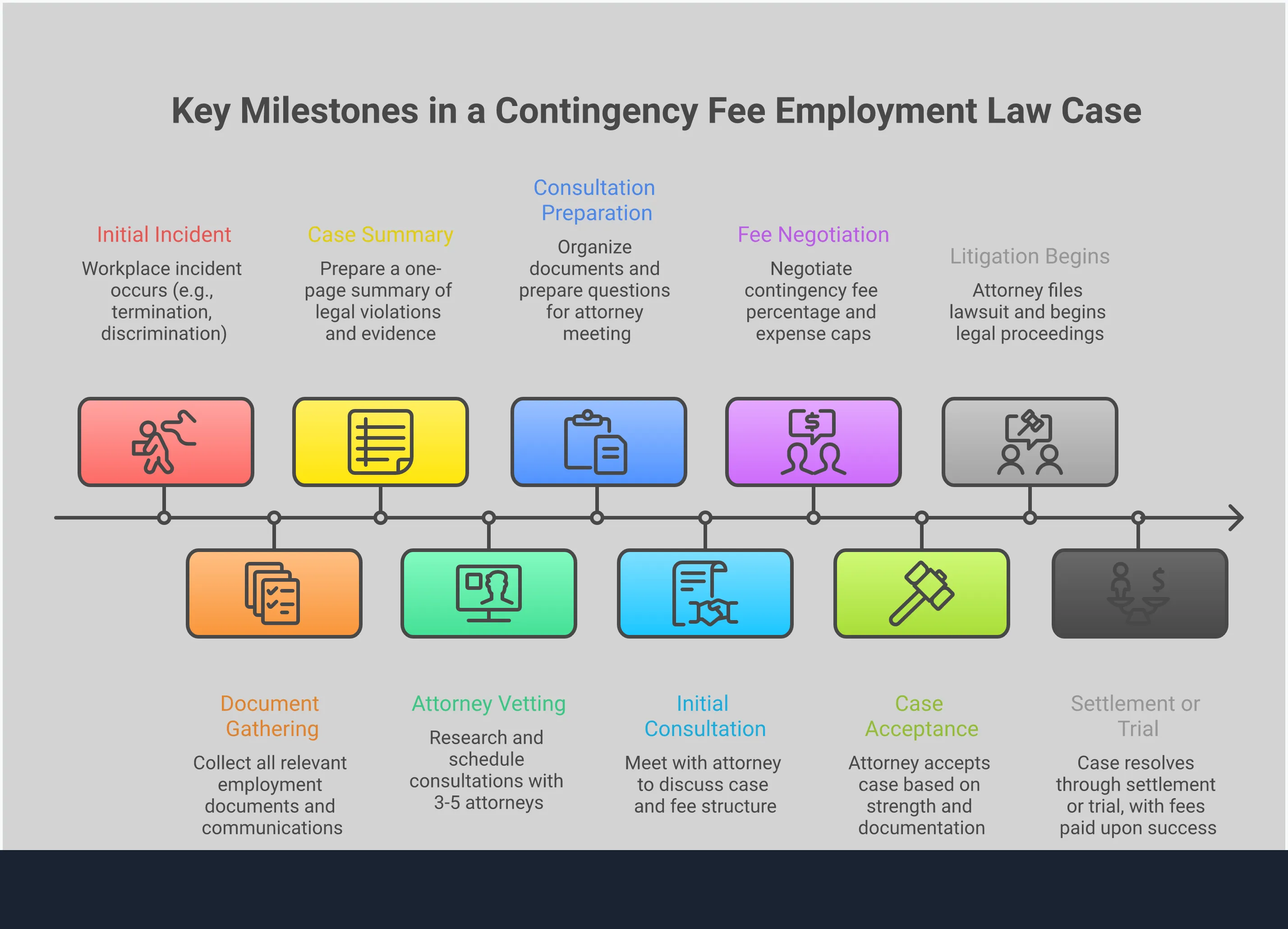
How to Prepare for Your First Consultation
Walking into your first meeting with an attorney can feel intimidating, but a little preparation goes a long way. Knowing what to expect and what to bring will help you make the most of this important conversation. Your goal is to give the attorney a clear, comprehensive picture of your situation so they can give you the best possible advice. By organizing your thoughts and documents beforehand, you can walk in feeling confident and ready to have a productive discussion about your case. This initial meeting is your opportunity to find out if the attorney is the right partner to help you move forward.
What to Bring With You
When you meet with an attorney, you are telling the story of what happened to you at work. The best way to support that story is with documentation. Before your consultation, gather every relevant piece of paper or digital file you can find. This includes your employment contract or offer letter, performance reviews, emails or text messages with your boss or HR, and recent pay stubs. If your case involves a specific issue like a wrongful termination, bring your termination letter. The more information you can provide, the better the attorney can assess the strength of your claim. Also, come prepared with a list of questions you want to ask about their experience and the legal process.
How to Explain Your Situation
During the consultation, be prepared to tell your story clearly and honestly. It’s best to start from the beginning and walk the attorney through the key events in chronological order. Don’t leave out details, even if you think they might not be helpful. The attorney needs the full picture to understand the context of your case. For example, if you believe you were a victim of retaliation at work, you’ll need to explain the initial action you took and the negative response that followed. Remember, this is a confidential conversation. Being upfront allows your potential lawyer to identify the strengths and weaknesses of your case and build the strongest strategy for you.
Setting a Realistic Timeline
One of the most common questions people have is, “How long will this take?” It’s important to understand that employment lawsuits are often complex and can take a significant amount of time to resolve. The legal system has many required steps, and delays are common. While a quick resolution is what everyone hopes for, patience is key. Many cases are settled out of court through negotiation, which can be a faster and less stressful path than a full trial. An experienced attorney’s negotiation skills are just as important as their ability to argue in court. They can guide you through the employment law process and help you set realistic expectations from the start.
Frequently Asked Questions
If I lose my case, will I owe any money at all? If you lose, you will not owe your attorney any fees for their time. That is the central promise of a contingency fee agreement. However, you may still be responsible for the direct case expenses, such as court filing fees or the cost of an expert witness. This policy varies between law firms, so it is one of the most important questions to ask during your initial consultation. A trustworthy lawyer will be completely transparent about how they handle these costs.
How is the lawyer’s percentage decided? The percentage is something you and your attorney agree on before any work begins, and it is all detailed in your formal agreement. It is often a sliding scale. This means the percentage might be lower if your case settles quickly but could be higher if it must proceed all the way to a trial. This structure reflects the amount of time and resources the law firm invests at each stage of the legal process.
What if I don’t have much proof or documentation for my case? You might have more proof than you realize. Items like emails, text messages, or even a personal journal where you noted events can be very helpful. Do not let a lack of a “smoking gun” document stop you from seeking advice. An experienced employment lawyer knows how to gather evidence, which includes requesting documents from your employer and speaking with witnesses. Your story is a critical piece of evidence itself, so the most important step is to share it with an attorney.
Why would a contingency lawyer decide not to take my case? Because a law firm invests its own money and time into your case, it has to be confident in the chances of winning. A lawyer might decline a case if the legal violation is not clear enough, if there is not enough evidence to meet the legal standard of proof, or if the potential financial recovery is too low to justify the high costs of a lawsuit. This is a business decision based on risk, not a judgment on your personal experience.
Besides the lawyer’s fee, what other costs are involved in a lawsuit? A lawsuit involves out-of-pocket expenses that are separate from the attorney’s fee. These are the practical costs of moving a case forward. Common examples include court filing fees, the cost of ordering deposition transcripts, fees for expert witnesses (like a medical expert in a disability case), and costs for investigators. Your fee agreement should clearly explain how these costs are tracked and paid.
Related Articles
- What Type of Lawyer Handles Employment Issues? A Guide
- What a Civil Employment Attorney Can Do For You
- Best Employment Lawyers for Employees: A 2026 Guide
Think you were wrongfully terminated?
Get a free, confidential case evaluation from our experienced employment law attorneys.
Request Your Free Consultation