
You wouldn’t hire a general contractor to perform heart surgery, and the same principle applies when your career is on the line. Employment law is a highly specialized field, and a general practice lawyer simply won’t have the deep knowledge needed to effectively handle your case. Choosing the right legal expert is the most critical decision you’ll make. This guide breaks down exactly what to look for, from specific experience in California employment law to a proven track record with cases like yours. We’ll give you the tools to vet potential candidates and ensure you find the best attorney for unlawful termination to protect your rights.
Key Takeaways
- Look for a dedicated employment law specialist: Your ideal attorney should focus exclusively on employment law and have a proven history with wrongful termination cases. Do your homework by reading client reviews, checking state bar records, and confirming their professional credentials.
- Treat consultations like a two-way interview: Arrive prepared with a timeline, relevant documents, and a list of questions about their experience, strategy, and communication style. This preparation allows you to accurately compare your options and choose a partner you trust.
- Clarify fees and communication from the start: Before hiring anyone, get a clear understanding of their fee structure, asking specifically about contingency fees to avoid upfront costs. It’s just as important to set expectations for communication to build a strong and transparent partnership.
What to Look for in a Wrongful Termination Attorney
Finding the right attorney can feel overwhelming, especially when you’re already dealing with the stress of losing your job. But choosing the right legal partner is one of the most important steps you can take. Not every lawyer has the specific skills needed to handle a complex employment case. You need someone who not only understands the law but also has a proven history of fighting for employees like you.
If you believe your rights have been violated, our Wrongful Termination Attorney in California team can help you understand your options and pursue your claim.
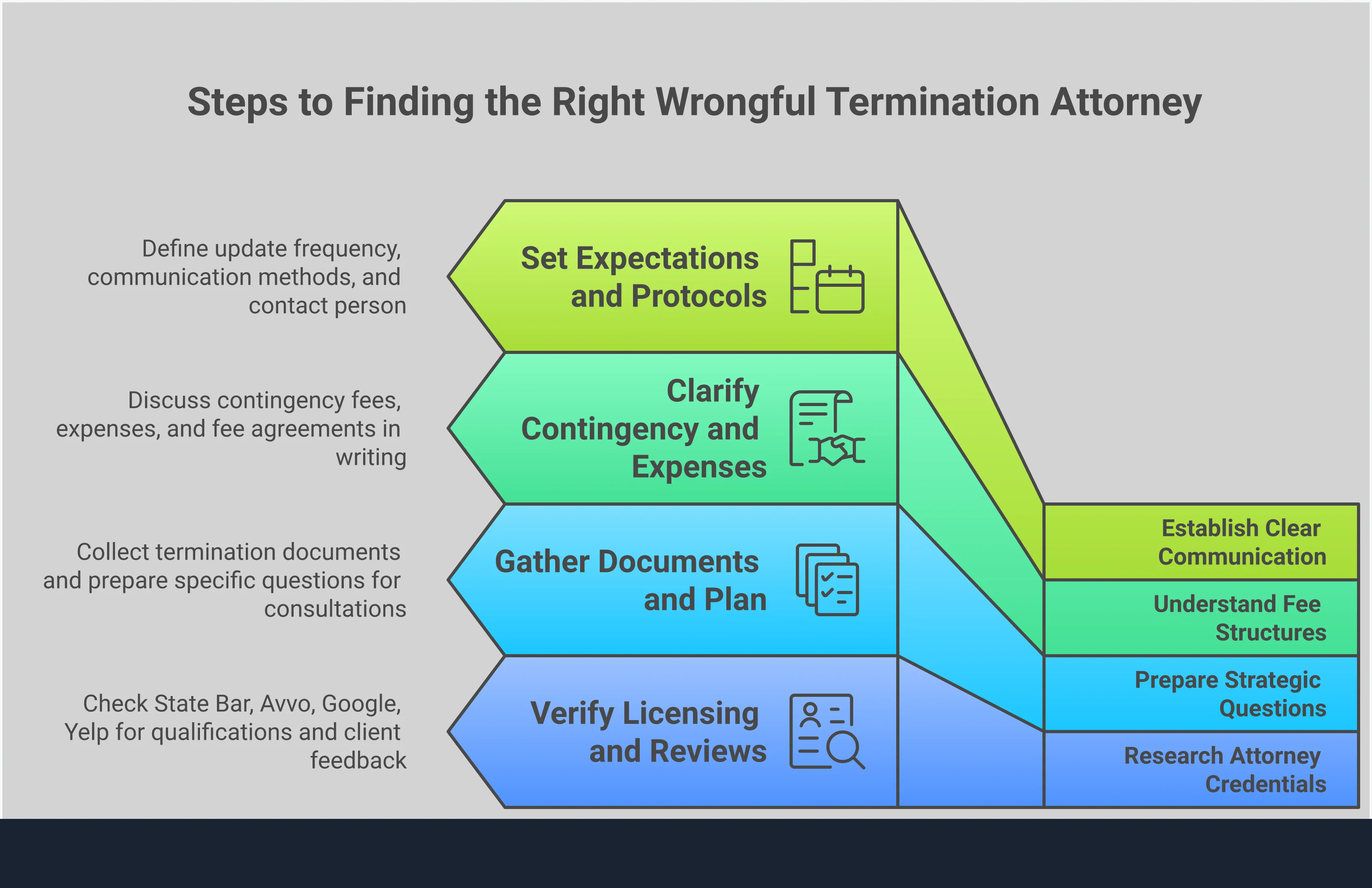
When you start your search, focus on a few key areas to help you find a lawyer who can effectively represent you. Think of it like hiring any other expert; you want to see their qualifications, their experience, and their track record. A great wrongful termination attorney will have a solid foundation in three main areas: specialized experience in employment law, a history of success with similar cases, and the right professional credentials to back it all up. Let’s break down what each of these means for you and your case.
Specialized Experience in Employment Law
First things first, you need an attorney who lives and breathes employment law. This area of law is incredibly complex, with specific state and federal rules that are always evolving. A general practice lawyer who dabbles in different legal fields might not have the deep knowledge required to handle the nuances of your case. An employment law specialist will be familiar with all the relevant statutes, recent case law, and procedural rules that can make or break a wrongful termination claim. They understand the tactics employers use and know how to build a strong counter-argument, whether your termination involved discrimination, retaliation, or another illegal action.
A Strong Track Record with Cases Like Yours
Experience is more than just knowing the law; it’s about applying it successfully. Look for an attorney who has a proven history of handling cases similar to yours. If you were fired after reporting harassment, you’ll want a lawyer who has a strong background in retaliation cases. During your consultation, don’t be shy about asking about their experience with situations like yours. While they can’t share confidential details, they should be able to speak to their track record and past successes. An attorney with a history of achieving favorable settlements and winning verdicts for their clients can give you confidence that your case is in capable hands.
Important Professional Credentials
Finally, take a moment to verify the attorney’s professional standing. This is a simple but crucial step. At a minimum, confirm they are a member in good standing with the state bar association. You can also look for other credentials that signal a high level of expertise and respect within the legal community. Has the attorney received any awards or recognition from their peers? Do they belong to professional organizations focused on employment law? This information is often available on their firm’s website and can help you feel secure in your choice. Checking these credentials helps ensure you’re hiring a reputable and qualified advocate to represent you.
How to Research an Attorney’s Reputation
Once you have a shortlist of potential attorneys, it’s time to do a little homework. An attorney’s reputation gives you a glimpse into their professionalism, communication style, and how they treat their clients. Think of it as checking references for a very important job. A lawyer’s track record in the courtroom is important, but their reputation for client service can tell you what it will actually be like to work with them during a stressful time. This research is about finding more than just a legal expert; it’s about finding a trusted advocate who will be in your corner.
Doing this research upfront helps you find a legal partner you can trust. It allows you to move forward with confidence, knowing you’ve chosen someone who is not only qualified but also respected by their clients and peers. A few simple checks can reveal a lot about an attorney’s character and practice, helping you avoid potential issues down the road. Taking the time to look into their background, read what former clients have to say, and verify their credentials will give you a complete picture of who you’re hiring. This step is crucial for building a strong attorney-client relationship from the very beginning.
Check State Bar Association Records
Your first and most important step is to verify the attorney’s standing with the State Bar of California. This is a non-negotiable background check that confirms they are licensed to practice law and reveals any public disciplinary actions against them. You can easily search for an attorney by name on the state bar’s website. This official record will show you when they were admitted to the bar and if they have a history of misconduct. An attorney with a clean record from the state bar has met the basic professional and ethical standards required to handle your case. Think of it as the foundation upon which all other research is built.
Read Online Reviews and Client Testimonials
While the state bar confirms an attorney’s credentials, online reviews offer a window into the client experience. Websites like Avvo, Google, and Yelp can provide valuable insights into how an attorney communicates, manages cases, and treats clients. Look for patterns in the feedback. Are clients consistently praising the attorney for being responsive and compassionate? Or are there recurring complaints about poor communication or a lack of attention? While a single negative review isn’t necessarily a dealbreaker, a consistent theme of dissatisfaction is a major red flag. Reading these firsthand accounts can help you understand if an attorney’s style is the right fit for your wrongful termination case.
Look into Professional Memberships
An attorney’s involvement in professional organizations is another good indicator of their dedication and expertise. Memberships in groups like the California Employment Lawyers Association (CELA) or local bar associations show that an attorney is committed to staying current with the latest developments in employment law. These organizations often provide continuing education and resources that help lawyers sharpen their skills. An attorney who actively participates in their legal community is likely passionate about their field and invested in their professional growth. This commitment often translates into a higher level of service and a deeper understanding of the law, which is exactly what you want from the person representing you.
Key Questions to Ask During Your First Consultation
Your first meeting with an attorney is more than just a chance to tell your story; it’s a two-way interview. You are evaluating them just as much as they are evaluating your case. Coming prepared with the right questions will help you understand their expertise, working style, and whether they are the right advocate for you. This is your opportunity to find a partner you can trust during a challenging time. Use this consultation to gather the information you need to make a confident and informed decision about who will represent you.
Experience with Similar Wrongful Termination Cases
You wouldn’t see a foot doctor for a heart problem, and the same logic applies to law. You need an attorney who specializes in employment law and has direct experience with cases like yours. Ask them directly about their background handling wrongful termination claims. You can ask questions like, “How many cases similar to mine have you managed?” or “Can you describe your experience with wrongful termination claims that involve retaliation?” An experienced lawyer will be able to clearly articulate their background and give you confidence in their ability to handle the specifics of your situation.
Approach to Legal Strategy and Case Assessment
Legal processes can feel complicated, but a great attorney will make them understandable. They should be able to explain their proposed strategy without relying on confusing legal jargon. During your consultation, ask them to outline their initial assessment of your case. Good questions to ask include, “What do you see as the main strengths and weaknesses of my claim?” and “What are the key steps in the legal process for a case like this?” You should leave the meeting with a clear picture of the path forward and feel that the attorney is a strategic thinker who can guide you through the complexities of your employment law case.
Communication Style and General Availability
Feeling left in the dark about your own case is incredibly frustrating. That’s why it’s so important to establish communication expectations from day one. Ask the attorney how they typically keep clients informed and how often you can expect to hear from them. Find out who your primary point of contact will be and what their policy is for returning calls or emails. A law firm that prioritizes client communication, like our firm, understands that keeping you informed is essential for building a strong, trusting relationship. You deserve an advocate who is responsive and available to answer your questions.
Fee Structure and Your Payment Options
Discussing money can be uncomfortable, but it’s a necessary conversation to have before you hire an attorney. You need to have a complete understanding of how they charge for their services to avoid any surprises down the road. Many wrongful termination attorneys work on a contingency fee basis, which means they only get paid if you win your case. Be sure to ask, “What is your fee structure?” and “Are there any upfront costs I need to cover, such as filing fees?” Since many cases settle before going to trial, it’s also wise to ask how fees are handled in the event of a settlement.
How Legal Fees Work in Wrongful Termination Cases
Losing your job is stressful enough without worrying about affording legal help. Understanding how attorneys charge is a critical step in finding the right representation. Fortunately, several fee structures are designed to help people in a tough financial spot. Before signing an agreement, make sure you have a clear picture of the costs, how they are calculated, and when you will pay. This conversation should be a standard part of your initial consultation.
Contingency Fee Agreements
Many attorneys who handle wrongful termination cases work on a contingency fee basis. This is great news for you, as it means you don’t pay legal fees unless your attorney wins your case through a settlement or verdict. As the firm Morgan & Morgan puts it, “You only pay them if they win your case.” If you win, the attorney receives a pre-agreed percentage of the money you recover. This arrangement makes quality legal representation accessible, removing the barrier of upfront costs and ensuring your attorney is motivated to get you the best possible outcome.
Hourly Rates and Retainer Fees
Some law firms use a different model, charging hourly rates or requiring a retainer fee. A retainer is an upfront payment that the firm holds in a trust account, deducting their hourly fees as they work on your case. According to JML Law, these fees “can vary significantly based on the attorney’s experience and the complexity of the case.” This payment structure can lead to unpredictable and high costs, especially if your case becomes complicated or lengthy. For this reason, it’s a less common arrangement for employees pursuing these claims.
The Possibility of Recovering Legal Fees
In some situations, you may be able to get your former employer to cover your legal costs. If you win your lawsuit, the court can order the other side to pay your attorney’s fees. The Employment and Commerce Law Group notes, “If you win a wrongful termination case, you might be able to recover your legal fees as part of the settlement or judgment.” While not guaranteed, it’s a powerful provision in many employment law statutes that helps level the playing field. It allows individuals to stand up to large companies without being crushed by legal expenses.
Where to Find Qualified Wrongful Termination Attorneys
Once you’ve decided to seek legal advice, the next step is finding the right person to guide you. Knowing where to look can make the process feel much less overwhelming. There are several reliable avenues you can explore to find an experienced attorney who specializes in wrongful termination and is a good fit for your situation. Think of this as building your support team; you want to find someone with the right skills and approach to help you.
Online Legal Directories and Referral Services
A great starting point for your search is the internet. Online legal directories are designed to help you find qualified attorneys in your area. Websites like Avvo, FindLaw, and the official State Bar of California website allow you to search for lawyers based on their practice area and location. These directories often provide valuable information at a glance, including an attorney’s professional background, specialties, and reviews from former clients. This can help you create a shortlist of potential candidates before you even pick up the phone.
Your Professional and Personal Networks
Don’t underestimate the power of a personal recommendation. Reach out to friends, family members, or trusted colleagues who may have gone through a similar experience. Hearing about their experience firsthand can give you insight into an attorney’s communication style, dedication, and overall effectiveness. A referral from someone you trust can lead you to a reputable lawyer with a proven track record. While a personal recommendation is a fantastic starting point, remember to do your own research to ensure the attorney is the right match for the specifics of your case.
Deciding Between a Local or National Firm
You might wonder whether to hire an attorney from a local firm or a large, national one. While national firms may have extensive resources, a local attorney will have a deep understanding of California’s specific employment laws, which often provide stronger protections for employees than federal laws. A local lawyer is also more likely to be familiar with the local court system and judges. This specialized knowledge can be a significant advantage in a wrongful termination case, ensuring your claim is handled with the nuance it deserves.
Common Mistakes to Avoid When Hiring an Attorney
Finding the right legal partner after losing your job can feel like another full-time role. It’s easy to get overwhelmed by the options and make a quick decision you might later regret. But the attorney you choose has a massive impact on the outcome of your case. Taking the time to be deliberate now will save you headaches down the road. This isn’t just about finding someone with a law degree; it’s about finding an advocate who understands your situation, believes in your case, and has the specific skills to fight for you effectively.
Many people, understandably stressed and anxious, rush the process. They might hire the first lawyer who returns their call or the one with the flashiest advertisement. But these shortcuts can lead to working with someone who isn’t a good fit, isn’t experienced enough, or doesn’t communicate well. To help you feel more confident in your search, let’s walk through some of the most common missteps people make when hiring a lawyer for a wrongful termination claim. Knowing what to watch out for can help you filter your options more effectively and find an advocate who is truly the right fit for you and your situation. By avoiding these pitfalls, you put yourself in a much stronger position to secure the justice you deserve.
Choosing an Attorney Based on Cost Alone
It’s completely understandable to be concerned about legal fees, especially when you’re out of work. However, picking an attorney simply because they are the cheapest option can be a costly mistake. An inexperienced lawyer might offer a lower rate, but they may lack the specific knowledge to handle your case effectively, potentially leaving money on the table or even losing your case.
Instead of focusing only on the price tag, prioritize experience and a proven track record in employment law. Many top-tier employment attorneys work on a contingency fee basis, meaning you don’t pay unless they win your case. This arrangement allows you to hire a skilled lawyer without worrying about upfront costs.
Forgetting to Verify Their Specialization
You wouldn’t ask a general family doctor to perform heart surgery, and the same logic applies to law. Employment law is a highly specialized and intricate field. A lawyer who dabbles in everything from personal injury to real estate simply won’t have the deep, up-to-date knowledge required to handle the nuances of a wrongful termination case.
Look for an attorney or firm that focuses exclusively on employment law. These specialists live and breathe workplace issues, from discrimination to retaliation. They understand the specific tactics employers use and know the state and federal laws inside and out. A specialist will give you the best possible chance of success.
Ignoring Communication Red Flags
Pay close attention to how an attorney and their staff communicate with you from the very first interaction. Do they return your calls promptly? Do they listen to your story without interrupting? Do they explain legal concepts in a way you can understand, or do they rely on confusing jargon?
If you feel rushed, dismissed, or consistently left in the dark, consider it a major red flag. You will be working closely with your attorney for months or even years. You need a partner who is responsive, respectful, and committed to keeping you informed. Trust your gut; if the communication feels off from the start, it’s unlikely to improve.
Not Preparing for Your Consultation
An initial consultation is a two-way interview. While you’re sizing up the attorney, they are also evaluating the strength of your potential case. To make the most of this meeting, you need to come prepared. Don’t just show up and expect to tell your story from memory.
Before your appointment, take some time to write a detailed timeline of events leading up to your termination. Gather any relevant documents you have, such as your termination letter, performance reviews, employment contracts, and any emails or messages that support your claim. Also, write down a list of questions you want to ask the attorney. This preparation helps the lawyer give you a more accurate assessment and shows that you are serious about your case.
How to Effectively Compare Your Attorney Options
After meeting with a few potential attorneys, the details can start to blend. You’ve heard different legal strategies, fee structures, and timelines, and now you have to make a choice. This decision is too important to leave to a hazy memory or a gut feeling alone. A structured approach will help you compare your options clearly and choose the advocate who is the best fit for you and your case. Think of it as creating your own hiring process to find the right legal partner.
Create Your Personal Evaluation Checklist
Before making a final decision, go back to basics with a simple checklist. This isn’t just about ticking boxes; it’s about defining what matters most to you. Your list should cover the essentials, like their specific experience with wrongful termination cases in California and their track record. But don’t stop there. Add criteria for personal fit. How did they make you feel? Were they patient and clear when explaining complex legal ideas? Did you feel heard? Effective communication is the foundation of a strong attorney-client relationship, so your checklist should mix professional qualifications with personal rapport.
Take Detailed Notes During Each Meeting
During your consultations, act like a journalist. Taking detailed notes helps you capture crucial information you might otherwise forget, and it also serves a deeper purpose. It allows you to compare how each attorney communicates and approaches your situation. Write down the specific advice they give, the questions they ask, and how they answer yours. Do they use plain language or hide behind legal jargon? Are they focused and present? These notes become an invaluable record when you sit down to compare, providing concrete examples of each attorney’s style and how well they listen.
How to Make Your Final Decision
Making the final call comes down to a combination of logic and intuition, backed by your research. Review your evaluation checklist and the detailed notes from each meeting. Lay them out side-by-side if you need to. Which attorney consistently checked the most boxes for both experience and communication style? While qualifications and a history of success in employment law are non-negotiable, don’t discount your own comfort level. You will be working closely with this person on a sensitive matter, so you need to feel confident in their abilities and comfortable in your partnership. Trust the work you’ve put into this process.
How to Best Communicate with Your Attorney
Once you’ve hired an attorney, your partnership is just beginning. Building a strong working relationship is essential for your case, and the foundation of that relationship is clear and consistent communication. While your lawyer will handle the legal complexities, you play an active role in the process. A successful outcome often depends on how well you and your attorney work together.
This means being on the same page about how you’ll stay in touch, providing the information your legal team needs, and feeling comfortable asking questions along the way. Open dialogue ensures you understand the status of your case and helps your attorney represent you effectively. By focusing on a few key practices, you can build a productive partnership that supports your goals and reduces stress during a challenging time. Your attorney is your advocate, but they need your collaboration to build the strongest case possible. Think of it as a team effort where you provide the firsthand knowledge and they provide the legal expertise. This synergy is what leads to positive results.
Establish Clear Communication Expectations
From your very first meeting, it’s important to talk about how you and your attorney will communicate. Don’t be shy about setting some ground rules. Discuss whether email or phone calls are best for different types of updates and ask about their typical response time. You can also ask how often you should expect to hear from them about your case. Establishing these expectations early on prevents misunderstandings and ensures you feel supported, not left in the dark. A law firm that values its clients, like our firm, will welcome this conversation and work with you to find a communication rhythm that works for both of you.
Provide Thorough and Organized Documentation
You are the primary source of information for your case. Your attorney relies on you to provide the documents and details needed to build a strong argument. To make this process as smooth as possible, keep all your records organized. Gather any relevant emails, performance reviews, pay stubs, and your termination letter. When you send documents to your legal team, try to present them in a clear, chronological order. This preparation helps your attorney work more efficiently and allows them to focus on the legal strategy for your wrongful termination claim. Your organization can make a significant difference in how effectively they can fight for you.
Ask Questions to Stay Informed About Your Case
Legal proceedings can be confusing, and it’s completely normal to have questions. Never hesitate to ask for clarification if you don’t understand a legal term, a document, or the next step in the process. Your attorney is there to guide you. Feeling informed and involved will give you confidence as your case moves forward. To make your conversations more productive, consider writing down your questions before a scheduled call or meeting. Being an engaged client helps you and your attorney work together as a team, which is crucial when dealing with complex employment law issues. A good lawyer will always take the time to make sure you understand what’s happening.
Additional Resources That Can Support Your Claim
While finding the right attorney is a huge step, you should also know about other organizations that can offer support and information. These groups are dedicated to protecting employee rights and can be valuable resources as you figure out your next steps. Think of them as additional layers of support in your corner.
The U.S. Equal Employment Opportunity Commission (EEOC)
The U.S. Equal Employment Opportunity Commission (EEOC) is a vital federal agency that investigates claims of workplace discrimination. If you suspect your firing was due to your race, religion, gender, age, disability, or another protected status, the EEOC is your first stop for federal support. They provide straightforward guidance on filing a claim and will look into your allegations. If the issue isn’t resolved through a process like mediation, the EEOC can help move your case forward, potentially toward a trial, making sure your voice is heard.
California’s Civil Rights Department (CRD)
Here in California, we have our own powerful advocate for employee rights: the Civil Rights Department (CRD). The CRD is responsible for enforcing state laws that protect workers from wrongful termination. They provide a wealth of resources and support specifically for Californians who feel they’ve been fired for illegal reasons. The CRD ensures you understand all the protections available to you under state law, which often provide even broader coverage than federal regulations. They are an essential resource for anyone facing an unlawful firing in our state.
Legal Aid and Pro Bono Services
If you’re worried about the cost of hiring an attorney, please know that there are options available. Legal aid societies and pro bono services are designed to provide free or low-cost legal assistance to those who qualify. These organizations are staffed by lawyers who volunteer their time to ensure everyone has access to justice, regardless of their financial situation. They can offer essential support, help you understand the complexities of employment law, and provide the representation you need to pursue your claim effectively.
Frequently Asked Questions
I’m worried about the cost. Can I really afford a good lawyer after losing my job? This is one of the most common and valid concerns. The good news is that most reputable wrongful termination attorneys work on a contingency fee basis. This means you don’t pay any legal fees upfront. Instead, the attorney’s payment is a percentage of the settlement or award they win for you. If you don’t win your case, you don’t owe them a fee. This structure makes high-quality legal help accessible to everyone, not just those who can afford to pay out of pocket.
How much paperwork or evidence do I need to have ready before my first consultation? You don’t need to have a perfectly organized, trial-ready case file before your first meeting. The purpose of the consultation is for the attorney to hear your story and assess your claim. However, coming prepared can make the meeting much more productive. Try to write down a simple timeline of events leading to your termination and gather any key documents you have, like your termination letter, recent performance reviews, or relevant emails.
What’s the real difference between a general lawyer and one who only does employment law? Think of it this way: you’d see a cardiologist for a heart issue, not your family doctor. Employment law is a very specific and constantly changing field. A lawyer who specializes in it understands the complex state and federal laws, knows the common tactics employers use, and has deep experience building cases just like yours. A general practice lawyer simply won’t have that same level of focused knowledge, which can make a huge difference in the outcome of your case.
What if I don’t connect with the first attorney I meet? Should I just go with them anyway? Absolutely not. Your initial consultation is a two-way interview, and you should feel comfortable and confident with the person you choose to represent you. If an attorney seems dismissive, doesn’t listen well, or just doesn’t feel like the right fit, it is perfectly okay to keep looking. You will be working closely with this person on a very personal and stressful matter, so trusting your intuition and finding a good personal rapport is just as important as their legal qualifications.
How can I tell if an attorney is a good communicator? Pay attention to their communication style from your very first interaction. When you call their office, is the staff helpful and professional? During your consultation, does the attorney explain complex legal ideas in a way that you can actually understand, or do they use a lot of confusing jargon? A good communicator will listen patiently to your story, answer your questions directly, and make you feel heard and respected.
Related Articles
- What Type of Lawyer Handles Employment Issues? A Guide
- Free Consultation With a CA Wrongful Termination Lawyer
- When to Call a Constructive Discharge Lawyer
Think you were wrongfully terminated?
Get a free, confidential case evaluation from our experienced employment law attorneys.
Request Your Free Consultation