
The legal world can feel like a foreign country, with its own language and unwritten rules. When you’re already dealing with the stress of a hostile work situation, trying to find the right legal guide can feel impossible. You need someone who can not only fight for you but also explain the process in a way that makes sense. This is where your search begins: finding an attorney who is both a skilled litigator and a clear communicator. This article is designed to demystify the process. We will provide you with a straightforward framework for identifying, interviewing, and ultimately choosing from the best employment retaliation attorneys who can offer both expert representation and genuine support.
Key Takeaways
- Focus on Specialized Experience: Your best advocate will be an attorney who concentrates on employment retaliation cases and has a deep understanding of California’s unique, employee-friendly laws. This specific expertise is crucial for handling the complexities of your situation.
- Treat the Consultation as an Interview: Prepare for your first meeting by gathering documents and creating a list of questions. Use this time to assess the attorney’s track record, communication style, and overall fit, ensuring you find a partner who makes you feel confident and respected.
- Clarify the Fee Structure Upfront: Don’t let financial worries prevent you from seeking help, as most employment lawyers work on a contingency basis, so you pay no attorney fees unless you win. Make sure you get a clear explanation of the fee agreement and any potential case costs before you commit.
How to Find the Best Employment Retaliation Attorney for You
Facing retaliation at work is stressful enough; finding the right person to fight for you shouldn’t add to that burden. The search for a great attorney can feel overwhelming, but you can simplify it by focusing on a few important factors: local expertise, specific experience, and a good personal fit. Let’s walk through how to find an attorney who can effectively handle your case and give you confidence in your corner.
If you believe your rights have been violated, our Victim of Retaliation at Work team can help you understand your options and pursue your claim.
Related articles: How to Find a Retaliation Lawyer For Your Case | What Is Employer Retaliation? 7 Signs to Know | Can I Be Fired for Reporting Harassment in Alameda?
Why a California-Based Firm Matters
California has some of the strongest worker protection laws in the country, which is great news if you’re pursuing a claim here. This is exactly why you need a lawyer who is deeply familiar with the state’s legal landscape. An attorney based in California will understand the specific laws that protect you, like the Fair Employment and Housing Act (FEHA). They will also have experience with local court procedures and opposing counsel. This insider knowledge of California employment law can make a significant difference in the strategy and outcome of your case, giving you a home-field advantage when you need it most.
Where to Look for Nationally Recognized Attorneys
Your search for a great attorney can start with trusted legal directories like the California State Bar website or professional organizations like the National Employment Lawyers Association. While national recognition is a plus, what you’re really looking for is a lawyer with a proven track record in employment retaliation cases. As you browse their profiles and websites, look for specific experience handling cases like yours. Pay attention to client testimonials and peer reviews, as they offer insight into an attorney’s communication skills and dedication. A firm’s reputation is built on its results and how it treats its clients, so our firm prides itself on both.
Finding a Specialist in Your Region
Once you have a shortlist, it’s time to dig deeper. “Employment law” is a wide field, so you want someone who doesn’t just handle employment cases, but specializes in helping a victim of retaliation at work. Check the attorney’s website to see if they have detailed information about retaliation claims. Understanding whether they regularly handle cases involving your specific issue gives you a clear idea of their ability to manage your case effectively. When you meet for a consultation, don’t be shy about asking direct questions about their experience with retaliation claims similar to yours. This helps ensure you’re partnering with a true specialist.
What to Look for in an Employment Retaliation Attorney
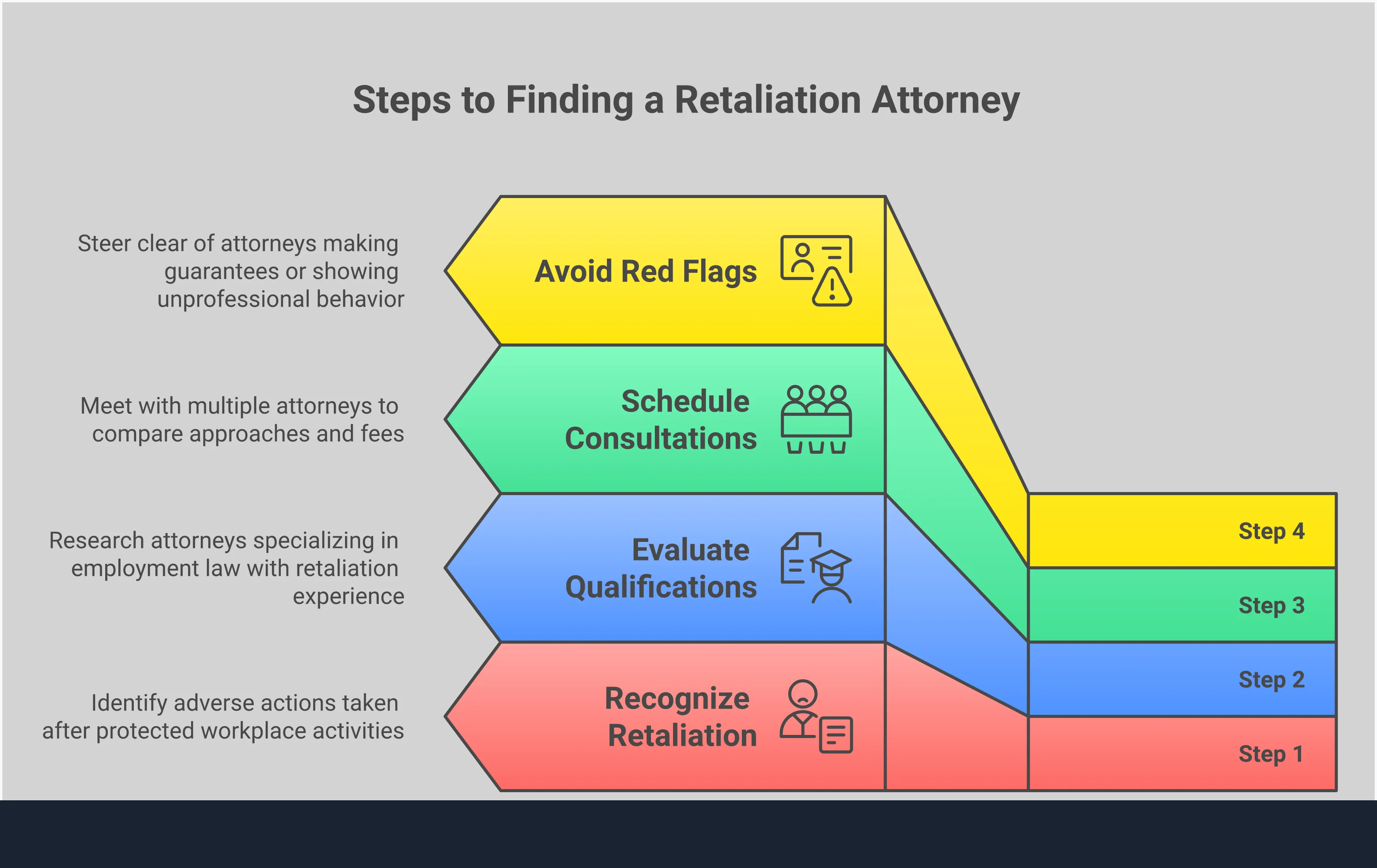
Choosing an attorney is a major decision that will shape your experience throughout the legal process. You need more than just a lawyer; you need a dedicated advocate who understands the nuances of your situation. When you’re facing retaliation at work, the right legal partner can make all the difference. As you evaluate your options, focus on a few key qualities that separate a good attorney from a great one. These factors will help you find someone with the right skills, experience, and approach to champion your case effectively.
A Strong Track Record in Retaliation Cases
Not all employment lawyers have the same focus. Retaliation is a specific and complex area of law, so you’ll want an attorney with a proven history of handling these types of cases successfully. When you speak with a potential lawyer, ask about their experience with situations similar to yours. An attorney who has a strong background in workplace retaliation claims will understand the evidence needed to build a compelling case and the common tactics employers use to defend themselves. Their specific experience means they won’t be learning on your time; instead, they’ll be applying a tested and refined strategy from day one.
Deep Knowledge of Employment Law
Employment law is an intricate field with overlapping state and federal regulations. Your attorney should have a deep understanding of California’s specific protections, which are often stronger than federal laws. A knowledgeable lawyer can identify every potential legal issue in your case, ensuring no claim is overlooked. This expertise is critical because a California employment law specialist will be current on recent court decisions and legislative changes that could affect your outcome. Their comprehensive knowledge allows them to build the strongest possible argument on your behalf.
Clear Communication and Client-Focused Support
The legal process can feel overwhelming, so it’s essential to find an attorney who communicates clearly and consistently. Your lawyer should be your powerful advocate, someone who takes the time to explain your rights, the status of your case, and your options in a way you can understand. A client-focused firm prioritizes your well-being and makes you feel heard and respected. During your initial consultation, pay attention to how they listen and respond to your questions. You should feel comfortable and confident that you have a supportive partner in our firm who is genuinely invested in your success.
Transparent Fee Structures
Understanding how your attorney gets paid is crucial for a trusting and transparent relationship. Most employment retaliation attorneys work on a contingency fee basis, which means they only get paid if you win your case. Before you sign any agreement, make sure the attorney clearly explains their fee structure and any other potential costs. A reputable lawyer will provide a detailed fee agreement that outlines the percentage they will receive and how expenses like court filing fees are handled. This transparency ensures there are no surprises and allows you to focus on your case without worrying about unexpected bills.
Positive Professional Recognition and Reviews
An attorney’s reputation can tell you a lot about their skills and professionalism. Look for lawyers who have received positive reviews from past clients and recognition from their peers. Awards from organizations like Best Lawyers or Super Lawyers can indicate that an attorney is highly regarded in the legal community for their expertise in employment law. While accolades aren’t the only thing that matters, they can reinforce that you’re choosing someone with a history of excellence. Reading testimonials from former clients can also provide valuable insight into what it’s like to work with the attorney and their firm.
How to Prepare for Your First Consultation
Walking into an attorney’s office for the first time can feel intimidating, but a little preparation goes a long way. Your initial consultation is a crucial first step. It’s your chance to share your story, understand your options, and decide if an attorney is the right fit for you. To make the most of this meeting, it helps to come organized and ready to ask questions. Think of it less as a test and more as a strategic conversation where you and the attorney figure out the best path forward together.
What Information to Bring with You
The more information you can provide, the clearer the picture your potential attorney will have of your case. Start by gathering any and all documents related to your employment and the incident. This includes your employment contract, offer letter, performance reviews (both good and bad), and any disciplinary notices. Collect emails, text messages, or letters that support your claim. If you kept a personal journal of events, bring that too. Having a detailed timeline of what happened, including dates, times, and names of people involved, is incredibly helpful. This documentation is the foundation for building a case for workplace retaliation. Don’t worry about organizing it perfectly; just gather everything you can find.
Key Questions to Ask a Potential Attorney
This consultation is a two-way street. While the attorney is evaluating your case, you should be evaluating them. Come prepared with a list of questions to help you decide if they’re the right advocate for you. You can ask about their specific experience with cases like yours, their typical communication style, and who at the firm would be handling your case. It’s also fair to ask about their general strategy for these types of situations. Before your meeting, it’s a good idea to do some initial research on the firm’s attorneys to see their backgrounds and credentials. This preparation helps you ask more targeted questions and feel more confident in your conversation.
How an Attorney Will Assess Your Case
During the consultation, the attorney will be listening for key facts to determine if you have a valid legal claim. They will analyze your story against the requirements of state and federal laws. They’ll consider the strength of your evidence, the timeline of events, and the actions your employer took. An experienced lawyer will draw on their knowledge from handling similar cases, whether it involves wrongful termination or another form of illegal conduct. They are essentially trying to piece together a puzzle to see if it forms a picture of unlawful behavior. They will give you an honest, initial assessment of your case’s strengths and weaknesses and discuss potential outcomes.
Understanding Your Legal Protections
It’s empowering to walk into a consultation with a basic understanding of your rights. In California, employees have robust protections against retaliation and other unfair treatment. You are legally protected from being punished for engaging in lawful activities, such as reporting harassment, taking medical leave, or filing a wage claim. An attorney will explain exactly which laws apply to your situation and how they protect you. Knowing that the law is potentially on your side can provide peace of mind. A good lawyer will help you understand the full scope of your rights under California employment law and how to use them to seek justice.
Understanding How Retaliation Attorneys Charge
Worrying about legal fees shouldn’t stop you from seeking justice. Many people hesitate to contact a lawyer because they’re afraid of the cost, but most employment law firms that represent employees understand this concern. That’s why they’ve structured their fees in a way that makes legal help accessible. When you’re dealing with the fallout of being a victim of retaliation at work, the last thing you need is another financial burden.
The good news is that you can get expert legal advice without paying anything out of pocket. The most common payment structure in employment law is designed to protect you, the employee. It ensures your attorney is motivated to win your case because they only get paid if you do. Let’s break down the different components of legal fees so you know exactly what to expect when you start talking to potential attorneys. This knowledge will give you the confidence to ask the right questions and find a payment arrangement that works for you.
What Is a Contingency Fee?
Most plaintiff’s employment attorneys work on a contingency fee basis. In simple terms, this means you don’t pay any attorney fees unless you win your case, either through a settlement or a court verdict. If you win, your lawyer receives a pre-agreed percentage of the total amount recovered. This arrangement is incredibly helpful for employees because it removes the financial risk of pursuing a claim. It also means your lawyer’s success is directly tied to yours, creating a strong partnership from day one. When discussing your case, make sure you understand the exact percentage the firm charges, as it can vary.
Explaining Hourly Rates and Other Costs
While the attorney’s time is typically covered by the contingency fee, there are other expenses associated with a lawsuit. These are called “case costs” and can include things like court filing fees, the cost of hiring expert witnesses, and fees for depositions and mediation. It’s important to ask a potential attorney how these costs are handled. Often, the law firm will cover these expenses upfront and then deduct them from your settlement or award at the end of the case, after the attorney’s fees are calculated. This is a critical detail to clarify before you sign any agreement for your wrongful termination or retaliation claim.
What Does a Free Consultation Include?
A free consultation is essentially a two-way interview. It’s your opportunity to share the details of your situation and the law firm’s chance to evaluate the strength of your potential case. During this meeting, the attorney will listen to your story, review any documents you provide, and give you an initial assessment of your legal options. It’s also your time to ask questions and get a feel for the attorney’s communication style and approach. Think of it as a no-obligation conversation to see if the firm is the right fit for you. You should leave the consultation with a clearer understanding of your rights and potential next steps.
How to Read Your Fee Agreement
The fee agreement is the formal contract between you and your attorney, and it’s one of the most important documents you will sign. Read it carefully before you commit. The agreement should clearly outline the contingency fee percentage, how case costs will be managed, and what happens if you don’t win your case. It will also define the scope of the firm’s representation. Don’t be afraid to ask for clarification on any part you don’t understand. A trustworthy attorney will be happy to walk you through the document and ensure you are comfortable with every term before moving forward with your retaliation case.
Common Mistakes to Avoid When Hiring an Attorney
Choosing an attorney can feel like another mountain to climb, especially when you’re already dealing with the stress of a difficult work situation. But this decision is one of the most important you’ll make, as it will shape your entire legal journey. The right lawyer is more than just a legal representative; they are your advocate, your guide, and your partner through a challenging process. Making a thoughtful choice from the start can significantly reduce your stress and set the stage for a stronger case. It’s about finding someone who not only has the right legal skills but also makes you feel heard, respected, and supported every step of the way. A great attorney-client relationship is built on trust and clear communication, which are just as crucial as legal expertise. To help you make a confident choice, let’s walk through some common missteps people make and how you can steer clear of them. By being aware of these potential pitfalls, you can focus your search on finding a legal professional who truly has your best interests at heart and is fully equipped to fight for you. This isn’t just about hiring a service; it’s about building a team.
Don’t Choose Based on Price Alone
It’s natural to be mindful of costs, but picking a lawyer based on who has the lowest fee can be a costly mistake in the long run. Experienced attorneys often charge more because their skills, reputation, and track record command it. You are paying for their deep knowledge and proven ability to handle complex cases. Instead of focusing on the price tag, consider the value they bring. Many employment law firms also work on a contingency fee basis, meaning you don’t pay unless they win your case. This structure allows you to secure top-tier representation without upfront costs, making expertise far more important than a low hourly rate when you’re facing a case of wrongful termination.
Always Research Their Specific Experience
Employment law is a highly specialized field. A lawyer who handles a little bit of everything won’t have the focused knowledge required to effectively manage your case. You need an attorney who lives and breathes California employment law. When you consult with a potential lawyer, ask them directly about their experience with cases like yours. If you believe you are a victim of retaliation at work, you want someone who has successfully handled retaliation claims before. A true specialist will have a deep understanding of the tactics employers use and the specific legal strategies needed to counter them. Don’t be shy about asking for their track record; a confident, experienced attorney will be happy to share it.
Pay Attention to Communication Style
Your relationship with your attorney will have a significant impact on your experience throughout the legal process. You need someone you can trust and communicate with openly. During your initial consultation, pay close attention to how the attorney interacts with you. Do they listen to your story without interrupting? Do they explain complex legal concepts in a way you can understand? You should feel like a respected partner, not just another case file. A good lawyer will be responsive, clear, and empathetic. The team at our firm believes that a strong, client-focused relationship is the foundation for a successful outcome, so this is something we prioritize from day one.
Ask About Their Strategy for Your Case
While no attorney can predict the future, a good one can outline a potential strategy. During your consultation, ask how they would approach your case. What are the strengths and weaknesses they see? What would the first steps be? This conversation isn’t about getting a guarantee; it’s about understanding their legal mind and approach. Hearing their initial thoughts will show you how they analyze a situation and whether they are thinking critically about your specific circumstances. This is especially important for nuanced issues like proving a hostile work environment, which requires a thoughtful and well-planned legal strategy from the very beginning.
Making Your Final Decision
You’ve done your research, had a few consultations, and now you’re close to choosing the right attorney to handle your case. This is a significant step, and it’s normal to feel a little pressure to get it right. The lawyer you choose will be your partner and advocate through a challenging process, so it’s important to feel confident in your decision. Before you sign any agreement, take a moment to reflect on your conversations and consider a few final points. This last check will help you confirm you’re partnering with someone who is not only skilled but also the right fit for you and your situation.
Red Flags to Watch Out For
Trust your intuition during your consultations. If an attorney seems distracted, dismissive of your concerns, or uninterested in the details of your story, that’s a major red flag. A good lawyer will ask thoughtful questions to understand your situation fully. Be wary of anyone who guarantees a specific outcome or promises a quick, easy win. Employment law cases are complex, and such promises are unrealistic and unprofessional. You want an advocate who is honest and grounded in reality, not someone who tells you only what you want to hear. A professional will manage your expectations, not inflate them.
Final Questions to Ask Before You Hire
Before you commit, it’s perfectly acceptable to ask a few more clarifying questions. This is your chance to ensure you and your potential attorney are on the same page. You could ask, “Can you tell me about your experience with cases similar to mine?” or “Based on what you know so far, what is your initial thinking on a legal strategy?” Their answers will give you a clearer picture of their expertise and approach. This isn’t about getting a guaranteed plan, but about seeing how they think and whether their style gives you confidence. A lawyer who is a true advocate for a victim of retaliation at work will welcome these questions.
Why Local Expertise Is So Important
Choosing a lawyer who specializes in California employment law is critical. While federal laws provide a baseline of protection, California often has more extensive employee rights, especially concerning issues like retaliation and wrongful termination. An attorney with deep local expertise understands the specific state and local court systems, the tendencies of judges in your jurisdiction, and the strategies that are most effective here. They are familiar with the nuances of California’s Fair Employment and Housing Act (FEHA) and other state-specific codes. This localized knowledge isn’t just a small advantage; it can fundamentally shape the approach and success of your case.
Setting Realistic Expectations for Your Case
A great attorney is also a great communicator who sets clear and realistic expectations from the start. They should be able to give you a straightforward overview of the legal process, including potential timelines, likely challenges, and the different stages your case might go through. They won’t sugarcoat the difficulties or the emotional toll a lawsuit can take. Instead, they will prepare you for the road ahead so you can feel informed and in control. Your relationship with your attorney is a partnership, and that partnership thrives on honesty and transparency about what to expect every step of the way.
Related Articles
- Wrongful Termination Retaliation California: A Guide
- What Is Employer Retaliation? Know Your Rights
- Retaliation at Work: Legal Help & Compensation | Bluestone Law
- Retaliation Lawyers California: What You Need to Know
- Workplace Retaliation Lawyer: A Complete Guide
Frequently Asked Questions
I’m worried I can’t afford a good lawyer. How much does it cost to hire an employment retaliation attorney? This is a very common and understandable concern. The great news is that most reputable employment attorneys who represent employees work on a contingency fee basis. This means you pay no attorney fees unless and until you win your case through a settlement or court verdict. The lawyer’s fee is a pre-agreed percentage of the money recovered. This structure allows you to access top legal talent without any upfront cost, ensuring your case is judged on its merits, not on your ability to pay.
What’s the most important thing to look for in an attorney for a retaliation case? While legal skill is essential, the most important factor is finding a specialist you trust. You want an attorney who focuses specifically on employment law and has a proven history of handling retaliation cases. Beyond their resume, pay close attention to how they communicate. You should feel comfortable asking questions and confident that they are genuinely listening to you. The right attorney is a strong legal strategist and a supportive partner who keeps you informed.
What should I do if I don’t have a lot of written evidence, like emails or texts? Don’t let a lack of a “smoking gun” email discourage you from seeking advice. Many successful retaliation cases are built on more than just documents. Your own detailed account of what happened is a powerful piece of evidence. Start by writing down a timeline of events, including who was involved, what was said, and when it happened. An experienced attorney knows how to use this information, along with witness testimony and other investigative tools, to build a strong case.
Why is it so important to hire a lawyer who specifically practices in California? California provides some of the strongest legal protections for employees in the entire country, often going far beyond federal law. A lawyer who specializes in California employment law understands these specific advantages and how to use them effectively in your case. They are familiar with the local courts, judges, and opposing law firms, which provides a significant strategic edge. This insider knowledge is not just a bonus; it can be critical to the success of your claim.
I’m nervous about the first consultation. What is the main goal of that meeting? Think of the initial consultation as a strategic, two-way conversation, not an interrogation. The main goal is for you and the attorney to determine if you are a good fit for each other. You will share your story and provide any documents you have, which allows the attorney to give you an initial, honest assessment of your legal options. At the same time, it is your opportunity to ask questions, get a feel for their personality and communication style, and decide if you feel confident in their ability to represent you.
Think you were wrongfully terminated?
Get a free, confidential case evaluation from our experienced employment law attorneys.
Request Your Free Consultation