
The FMLA is supposed to be a safety net, allowing you to care for yourself or your loved ones without fear of losing your job. When an employer violates that trust, it can throw your entire life into chaos. You don’t have to accept this treatment. The law provides a clear path for you to fight back and recover what you’ve lost. This article will serve as your roadmap, explaining your legal options, the strict deadlines you must meet, and what you can expect from the legal process. We will cover the essential details of how to sue for FMLA violation and empower you with the knowledge to stand up for your rights.
Key Takeaways
- Time is a critical factor: The law sets a strict two-year deadline for filing most FMLA lawsuits. Acting quickly ensures you don’t lose your right to take legal action, so it’s important to understand your timeline from the start.
- Create a detailed paper trail: Your best evidence is a thorough record of events. Save every email, performance review, and leave request, and report the violation to HR in writing to establish a clear timeline of what happened.
- Understand what a violation looks like: Illegal actions fall into two main categories: interference (when your employer stops you from taking leave) and retaliation (when they punish you for taking it). Identifying which one you experienced helps you build a stronger case.
What Are Your Rights Under the FMLA?
Before you can determine if your employer broke the law, it’s important to understand what the Family and Medical Leave Act (FMLA) actually guarantees. This federal law provides a safety net for employees who need to step away from work for significant health or family reasons. It ensures you don’t have to choose between your job and your family’s well-being during a critical time. Knowing your rights is the first step toward protecting them.
If you believe your rights have been violated, our Family and Medical Leave Act team can help you understand your options and pursue your claim.
Related articles: FMLA 3-Day Rule: Understanding Serious Health Conditions | 5. How FMLA Cases Are Won by Employees: A Guide | Penalties for FMLA Violations: A Complete Guide
The Family and Medical Leave Act, Explained
The FMLA gives eligible employees the right to take unpaid, job-protected leave for specific family and medical reasons. Think of it as a pause button. When you take FMLA leave, your employer must hold your job for you, or a very similar one, until you return. They also have to maintain your group health insurance coverage under the same terms as if you had continued to work. This protection is designed to help you manage serious health conditions or major family events without the added stress of losing your job and benefits. The law provides crucial protections for family and medical leave, ensuring you can focus on what matters most.
Are You Eligible for FMLA Protection?
Not everyone qualifies for FMLA, so it’s essential to check if you meet the requirements. First, you must work for a covered employer, which includes public agencies, schools, and private companies with 50 or more employees. Second, you need to have worked for that employer for at least 12 months, though these months don’t have to be consecutive. Finally, you must have worked at least 1,250 hours for your employer during the 12 months immediately before your leave starts. If you meet all three of these conditions, you are likely eligible for FMLA protection. Understanding California’s specific employment law can provide additional context for your situation.
What Kind of Leave Does the FMLA Cover?
The FMLA applies to specific, often serious, situations. You can take leave for several qualifying reasons. These include the birth and care of a newborn child within one year of birth, or the placement of a child for adoption or foster care. You can also use FMLA leave to care for an immediate family member (a spouse, child, or parent) with a serious health condition. If you have a serious health condition that makes you unable to perform your job, that’s covered, too. Lastly, the FMLA covers certain needs related to a family member’s military service, such as handling financial matters or attending counseling.
Did Your Employer Violate the FMLA?
It can be tough to know if your employer’s actions cross the line from frustrating to illegal. When it comes to the FMLA, violations typically fall into two main categories: interference and retaliation. Interference happens when your employer prevents or discourages you from taking your rightful leave. Retaliation is when they punish you for having taken it. Understanding the difference can help you identify what’s happening at your workplace and figure out your next steps. Both actions are against the law, and you have rights.
Interference Violations
Interference is any action your employer takes to stop you from using your FMLA leave in the first place. This doesn’t have to be an outright denial. It can be more subtle, like management making discouraging comments about taking time off, creating unnecessarily complex paperwork to request leave, or questioning the seriousness of your medical condition. If your employer’s actions make it difficult or impossible for you to use the family and medical leave you are entitled to, they are interfering with your rights. Employers who violate the FMLA this way might have to pay you for lost wages, benefits, and other damages.
Retaliation Violations
If your employer punishes you for taking FMLA leave, they are breaking the law. This is called retaliation, and it can happen either while you are on leave or after you return to work. The FMLA makes it illegal for your employer to penalize you for using your protected leave. Examples of retaliation include being fired, demoted, receiving a sudden poor performance review, having your hours cut, or being moved to a less desirable position. Essentially, if you face any negative job action that feels connected to your FMLA leave, it could be illegal retaliation.
Common Employer Misconceptions
Sometimes, FMLA violations happen because employers don’t fully understand the law. For example, you don’t have to specifically say the words “I need FMLA leave.” You just need to give your employer enough information for them to understand your request is for a reason covered by the FMLA. Another common issue is intimidation. Some employers try to scare you out of taking leave by suggesting your job won’t be secure or that your team will suffer. These tactics are a form of interference. Knowing your rights under employment law is the first step in protecting yourself from these violations.
What to Do Right After an FMLA Violation
Realizing your employer may have violated your FMLA rights can be incredibly stressful and confusing. The actions you take immediately after the incident are critical for protecting yourself and building a potential case. It’s important to be strategic and methodical from the very beginning. By following a few key steps, you can create a clear record of events and preserve your legal options. This process involves careful documentation, formal reporting within your company, gathering evidence, and understanding the strict timelines for taking legal action. Let’s walk through exactly what you should do.
Document Everything
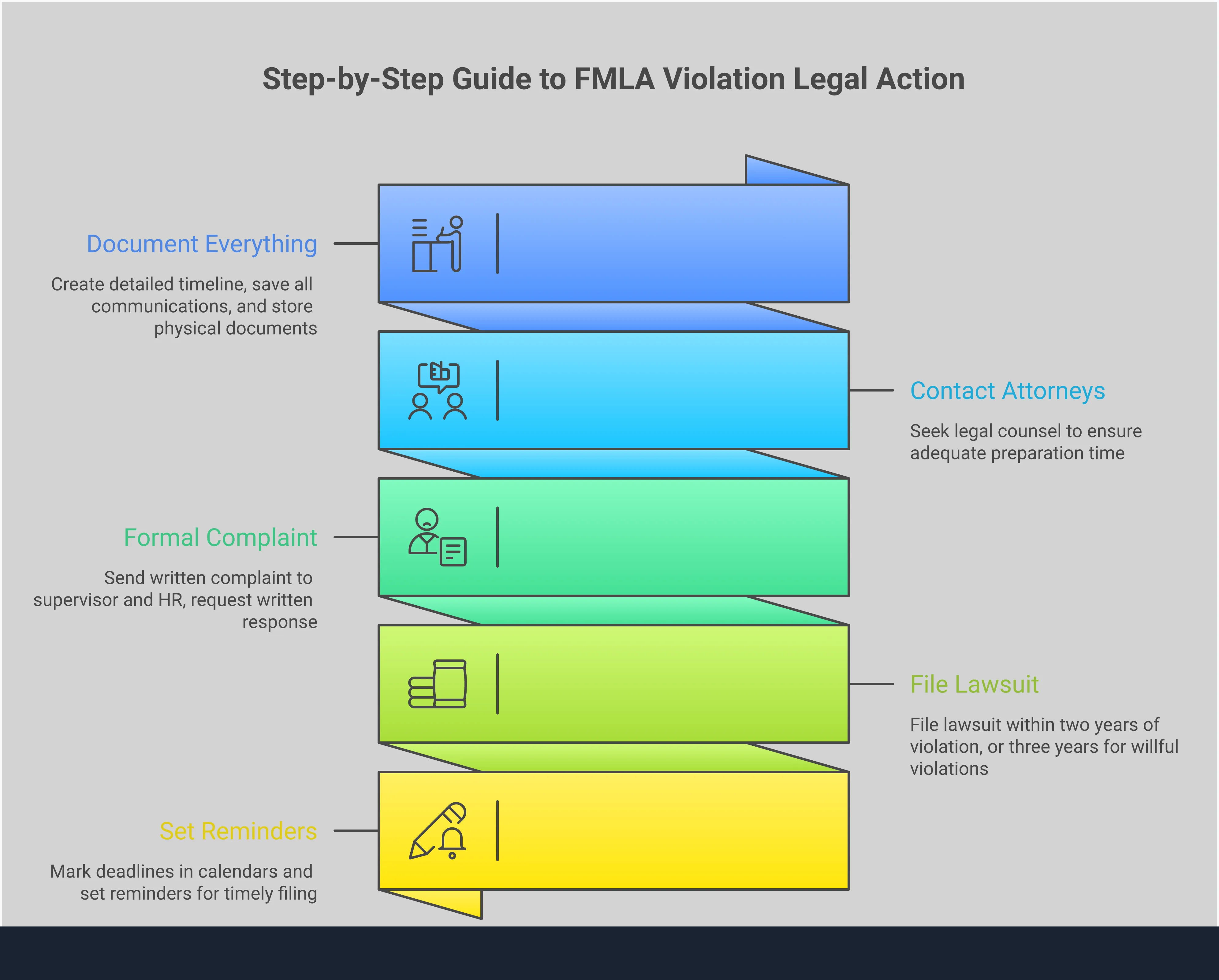
Your memory is powerful, but a paper trail is undeniable. Start by creating a detailed timeline of events related to your leave and the potential violation. Keep detailed records of all communications, leave requests, performance reviews, and any negative actions taken by your employer. This includes emails, text messages, official forms, and even your own personal notes about conversations. Be sure to store these documents in a personal file, not on a work computer or company-provided device. You need to ensure you can access this information even if you lose access to your work accounts. This documentation is the foundation of any claim regarding your family and medical leave.
Report the Violation Internally
While it may feel daunting, formally reporting the issue within your company is a crucial step. First, tell your supervisor and Human Resources (HR) in writing that you believe your FMLA rights were violated. An email is perfect for this because it creates a timestamped record. In your message, be professional and stick to the facts. Clearly state what happened, when it happened, and why you believe it violates your FMLA rights. This official complaint demonstrates that you tried to resolve the issue internally and gives your employer a chance to correct their mistake. It also creates an important piece of evidence for your case should you need it later.
Gather Evidence and Witness Info
To build a strong case, you’ll need to show that your FMLA leave was a main reason for your employer’s negative action. Your employer might offer a different reason for their decision, like poor performance. An experienced lawyer can help prove that any reasons your employer gives are just “pretext,” or fake reasons to cover up the real, illegal motive. Start gathering any evidence that supports your claim, such as positive performance reviews from before your leave or emails that contradict your employer’s story. Also, discreetly identify any colleagues who may have witnessed the mistreatment or heard relevant comments. Being a victim of retaliation at work is illegal, and evidence is key to proving it.
Act Before the Deadline
The law sets strict deadlines for taking legal action, so you can’t afford to wait. You generally have two years from the date of the violation to file a lawsuit, and sometimes three years if the violation was intentional or willful. A “willful” violation means your employer knew their conduct was illegal or showed reckless disregard for the law. Missing this deadline, known as the statute of limitations, means you could lose your right to sue entirely, no matter how strong your case is. This is why it’s so important to speak with an employment law attorney as soon as possible to understand your specific timeline and options.
What Are Your Legal Options?
If you believe your employer has violated your FMLA rights, you don’t have to just accept it. You have a few different paths you can take to hold them accountable and seek justice. The right choice depends on your specific situation, what you hope to achieve, and how you want to proceed. Understanding these options is the first step toward standing up for your rights. Here’s a straightforward look at the legal avenues available to you.
File with the Department of Labor
One of your first moves can be to file a complaint with the U.S. Department of Labor. You can do this by getting in touch with their Wage and Hour Division. This government agency is responsible for enforcing the FMLA, and they will investigate your claim on your behalf. You can submit your complaint in person, by mail, or over the phone, making it a fairly accessible option. If the department finds that your employer did violate the law, they can take action to correct the situation. This is a solid choice if you want an official investigation without heading directly to court.
File a Private Lawsuit
You also have the right to take legal action against your employer by filing a private lawsuit in state or federal court. This approach allows you to seek compensation for damages, like lost wages and benefits, that resulted from the violation. It’s important to act promptly, as you generally have two years from the last incident to file a lawsuit. This window extends to three years if the violation was willful. Taking an employer to court can be a powerful way to address being a victim of retaliation at work or other FMLA infringements and secure a legal remedy for the harm you’ve experienced.
Weighing the Pros and Cons
Filing a lawsuit is a significant decision, so it’s smart to think it through. To build a strong case, you’ll need to show that you were eligible for FMLA, your reason for leave was covered, you gave proper notice, and your employer interfered with your rights or retaliated against you. A lawsuit can be an effective way to get justice, but it requires solid evidence and a clear understanding of the process. Carefully considering the potential outcomes and the strength of your evidence is a critical step before moving forward. Exploring all aspects of employment law can help you make an informed choice.
How to File an FMLA Lawsuit
If you’ve decided that a lawsuit is the right path for you, it’s time to get prepared. The legal process can feel complex, but it becomes much clearer when you break it down into actionable steps. Filing an FMLA lawsuit is your way of holding an employer accountable for violating your rights. It involves meeting specific legal standards, following court procedures, and building a strong case with solid evidence. While you can file a claim with the Department of Labor, a private lawsuit often gives you more control over the outcome. Here’s what you need to know to get started.
Meet the Legal Requirements
Before you can file a lawsuit, you need to confirm that you and your employer are covered by the FMLA. First, the law applies to companies with 50 or more employees within a 75-mile radius. Second, you must have worked for your employer for at least 12 months, though they don’t have to be consecutive. Finally, you need to have worked at least 1,250 hours in the 12 months leading up to your leave request. These requirements are strict, so it’s important to verify your eligibility from the start. Understanding your rights under the family and medical leave act is the first step toward protecting them.
The Federal Court Process
Once you’ve confirmed your eligibility, you have the right to sue your employer directly in either state or federal court. This is a significant step that allows you to seek justice for the harm you’ve experienced. One of the most critical things to remember is the deadline. You generally have two years from the date of the last violation to file your lawsuit. This is known as the statute of limitations, and if you miss it, you could lose your right to sue. Acting promptly ensures you can build the strongest case possible while the evidence and witness memories are still fresh. This process puts you in the driver’s seat, allowing you to pursue damages directly.
Work with an Employment Attorney
You don’t have to go through this process alone. In fact, working with an experienced employment attorney is one of the best things you can do for your case. The FMLA has many technical rules, and employers often have their own legal teams ready to challenge your claim. A skilled attorney can help you gather the right evidence, meet all the legal deadlines, and build a compelling argument on your behalf. They become your advocate, handling the complex legal work so you can focus on moving forward. Getting professional legal advice is a crucial part of any successful employment law claim.
What You Need to Prove
To win your FMLA lawsuit, you need to prove four key things. First, you must show that you were eligible for FMLA leave. Second, you need to demonstrate that your reason for taking leave, like a serious health condition or caring for a family member, was covered by the act. Third, you have to prove that you gave your employer proper notice of your need for leave. Finally, and most importantly, you must provide evidence that your employer interfered with your rights or retaliated against you for taking leave. This could be anything from denying your request unfairly to firing you after you returned. Proving you were a victim of retaliation at work is often the core of these cases.
What Evidence Do You Need for a Strong Case?
When you decide to take legal action for an FMLA violation, your success hinges on the evidence you can present. It’s not enough to know your employer wronged you; you have to be able to prove it. Building a strong case means gathering concrete proof that shows you were eligible for leave, you followed the rules, and your employer illegally interfered with your rights or retaliated against you. Think of yourself as a detective building a case file. Every piece of paper, every email, and every conversation can become a crucial part of your story.
The right evidence helps your attorney build a compelling argument and counters the excuses your employer will likely make. They might claim your termination was due to performance issues or budget cuts, but solid documentation can expose their story as a cover for illegal actions. Starting this process early is key, as it ensures details are fresh in your mind and documents don’t get lost. A well-documented case is your most powerful tool in the fight for your rights under employment law. The goal is to create a clear timeline that connects your FMLA leave to the negative action your employer took. This timeline, supported by documents and witness accounts, makes it much harder for your employer to argue that their actions were justified.
Key Documents and Communications
Your first step is to gather every piece of written communication related to your job and your leave. This includes your official leave request, any doctor’s notes you submitted, and all emails or text messages between you and your manager or HR. Don’t forget to collect your performance reviews, especially from the period before you requested leave, as well as any disciplinary notices or your termination letter. It’s also a great idea to keep a personal journal where you log every relevant conversation. Write down the date, time, who was there, and exactly what was said. This detailed record can be incredibly valuable in proving a pattern of retaliation at work.
Proof of Eligibility and Notice
Before you can prove a violation, you must first prove you were protected by the FMLA. This means showing you met the eligibility requirements. You’ll need evidence that you worked for a covered employer (one with 50 or more employees), had been there for at least 12 months, and worked at least 1,250 hours in the year before your leave. Pay stubs and your employment contract can help establish this. You also need to prove you gave your employer proper notice. This doesn’t have to be a formal document; an email or even a text message informing them of your need for family and medical leave for a qualifying reason is often enough.
Evidence of Interference or Retaliation
Evidence of interference shows that your employer actively prevented you from taking your rightful leave. This could be an email from your boss discouraging you from taking time off or a formal denial of a valid request. Retaliation is often more subtle. The most powerful evidence here is often timing. If you were demoted, written up, or fired shortly after requesting or returning from FMLA leave, that creates a strong suggestion of retaliation. You can strengthen this by presenting evidence of a positive work history, like glowing performance reviews or awards, which makes your employer’s sudden negative action look suspicious and pretextual.
Countering Your Employer’s Excuses
Employers rarely admit they broke the law. Instead, they will offer a seemingly legitimate reason for their actions, such as poor performance, tardiness, or company-wide layoffs. Your job is to use your evidence to show that their reason is just a pretext, or an excuse to hide their illegal motive. For example, if your employer claims you were fired for poor performance, but you have years of excellent reviews and the negative feedback only started after your leave request, you can argue their reason isn’t credible. This is a common scenario in wrongful termination cases and is where your careful documentation truly pays off.
How Long Do You Have to Take Legal Action?
When you’re dealing with a potential FMLA violation, time is a critical factor. The law sets strict deadlines, called statutes of limitations, for filing a lawsuit. These time limits are firm, and if you wait too long, you could lose your right to seek justice. The clock starts ticking from the date of the violation, so let’s break down the specific timelines you need to know.
The Two-Year Statute of Limitations
Generally, you must file your lawsuit within two years of the last time you believe your FMLA rights were violated. This is the standard window for most FMLA claims. The key phrase here is “the last time.” For example, if your employer fired you for taking protected leave, the two-year clock would start on the day you were terminated. If they denied your leave request, it would start on the date of the denial. Pinpointing this date accurately is a crucial first step in protecting your employee rights.
The Three-Year Limit for Willful Violations
In some cases, the deadline extends to three years. This longer period applies if your employer’s violation was willful, meaning they knew their actions were against the law or showed reckless disregard for your rights. Proving a willful violation is more complex than a standard one. It requires showing that your employer’s actions weren’t just a mistake. For instance, a pattern of punishing employees who take leave could be evidence of a willful violation. This is a high bar to clear, which is why discussing the details of your case with an attorney is so important.
Why Acting Quickly Matters
The consequences of missing these deadlines are severe. If you don’t file your lawsuit within the two or three-year window, you could permanently lose your right to sue. It doesn’t matter how strong your case is; if the statute of limitations has passed, a court will almost certainly dismiss your claim. This is why it’s so important to act quickly. The sooner you start the process, the more time you have to gather evidence and build your case. Don’t wait. Speaking with an employment law firm early on can help you protect your rights and meet every critical deadline.
What Can You Win in a Successful Lawsuit?
If you’ve faced an FMLA violation, you’re probably wondering what you can actually gain by taking legal action. It’s not just about holding your employer accountable; it’s about making you whole again. A successful lawsuit aims to put you back in the financial and professional position you would have been in if the violation had never happened. The law provides several types of remedies, from recovering lost income to getting your job back. Let’s walk through what you could potentially recover.
Recovering Lost Pay and Benefits
When your employer illegally denies your leave or fires you, the most immediate impact is on your wallet. The primary goal of an FMLA lawsuit is to recover the wages you lost. This includes your salary, but it also covers other compensation like bonuses, commissions, and overtime pay you would have earned. Beyond wages, you can also recover the value of lost benefits. This could be the cost of health insurance premiums you had to pay out of pocket or compensation for other perks, like contributions to a retirement plan. Essentially, employers who violate the FMLA might have to pay you for lost wages and benefits to cover the financial harm they caused.
Getting Your Job Back (or Compensation)
The FMLA was designed to protect your job while you take necessary leave. So, one of the main remedies is reinstatement, which means getting your old job back or an equivalent one. If you were wrongfully terminated, the court can order your employer to rehire you. However, sometimes returning to the same workplace isn’t practical or desirable, especially if the environment has become hostile. In these cases, you may be awarded “front pay.” This is compensation for the wages and benefits you’re likely to lose in the future while you search for a new job. It helps bridge the financial gap if you can’t get your old position back.
Liquidated Damages and Attorney’s Fees
On top of recovering your direct losses, you may also be entitled to liquidated damages. Think of this as a penalty against your employer for breaking the law. This award is often an amount equal to your lost pay and benefits, effectively doubling your recovery. Courts typically award liquidated damages unless the employer can prove they acted in good faith and had reasonable grounds to believe they weren’t violating the FMLA. Another crucial point is that if you win your case, your employer is usually required to pay your attorney’s fees and other legal costs. This provision makes it possible for employees to stand up for their family and medical leave rights without bearing a heavy financial burden.
Other Potential Remedies
While financial compensation is a major part of an FMLA lawsuit, there are other potential outcomes. For instance, you may be awarded interest on your back pay to account for the delay in receiving your money. In some situations, a court might order non-monetary remedies. This could involve requiring your employer to promote you if you were unfairly passed over or ordering them to post notices in the workplace informing other employees of their FMLA rights. These remedies not only help you personally but can also push for broader, positive changes within the company. It’s all part of ensuring your employer fully complies with employment law and prevents future violations against your colleagues.
Common Mistakes to Avoid in an FMLA Lawsuit
Pursuing a legal claim can feel overwhelming, and it’s easy to make a misstep when you’re already dealing with a stressful work situation. When it comes to FMLA violations, a few common errors can unfortunately weaken an otherwise strong case. Understanding these pitfalls from the start can help you build a solid foundation for your claim and protect your rights. By being mindful of the details, you can ensure your focus stays on what truly matters: holding your employer accountable and getting the justice you deserve. Let’s walk through some of the most frequent mistakes so you can steer clear of them.
Missing Eligibility Requirements
Before you can claim your FMLA rights were violated, you have to be sure you were eligible for FMLA protection in the first place. This is often the first thing an employer’s legal team will check. To be eligible for FMLA, you generally need to work for a covered employer (one with 50 or more employees), have been with them for at least 12 months, and have worked at least 1,250 hours in the past year. If you don’t meet all three of these criteria, your case could be dismissed before it even gets started. It’s crucial to confirm your eligibility as a first step. If you’re unsure, an attorney can help you review your work history and determine if you qualify for family and medical leave.
Forgetting to Give Proper Notice
Many people believe they have to use specific legal terms when requesting leave, but that’s not the case. You don’t have to say the words, “I need FMLA leave.” You simply need to provide enough information for your employer to understand that your request is for a reason covered by the FMLA, like a serious health condition or caring for a sick family member. For example, telling your manager you need time off for an upcoming surgery is sufficient notice. The best practice is to put your request in writing, such as in an email to your supervisor and HR. This creates a clear record of when and why you asked for leave, which can be vital evidence later if your employer tries to claim you never gave proper notice.
Losing Track of Deadlines and Documents
The legal system runs on deadlines, and FMLA claims are no exception. You generally have two years from the date of the violation to file a lawsuit, and this can sometimes be extended to three years if the violation was intentional. This time limit is called the statute of limitations. If you miss this deadline, you could lose your right to sue entirely, no matter how strong your case is. Just as important is keeping all your documents organized. Hold onto everything related to your leave, including emails, doctor’s notes, performance reviews, and any written communication with your employer. This paperwork is the backbone of your case and proves the timeline of events.
Skipping Internal Reporting Steps
It might feel counterintuitive to report a problem to the very people causing it, but it’s an important step you shouldn’t skip. Before filing a lawsuit, you should first tell your supervisor and Human Resources (HR) in writing that you believe your FMLA rights were violated. This gives your employer a formal opportunity to investigate and correct the issue. It also creates a paper trail showing that you tried to resolve the situation internally. If your employer fails to act or makes the situation worse, your written complaint becomes powerful evidence. This is especially critical if the violation leads to wrongful termination, as it demonstrates the company was aware of the problem.
What to Expect from the Legal Process
Stepping into the legal world can feel overwhelming, but knowing what’s ahead can make the process much clearer. From initial decisions to final outcomes, here’s a straightforward look at what pursuing an FMLA claim involves.
Settlement vs. Trial
Deciding to file a lawsuit is a major step, but it’s often the most effective way to hold an employer accountable for violating your rights. The good news is that most employment cases don’t end up in a dramatic courtroom trial. Instead, they are often resolved through a settlement, which is a confidential agreement between you and your employer to resolve the dispute. A settlement can happen at any point before a trial begins. While going to trial is always an option, reaching a fair settlement can save you time, stress, and the uncertainty of a court verdict. Your attorney will handle the negotiations, fighting to get you the best possible outcome.
Protect Yourself from More Retaliation
One of the biggest fears people have is that their employer will punish them for taking legal action. It’s important to know that the law is on your side. Any negative action your employer takes against you because you filed a claim is considered an illegal victim of retaliation at work. This includes things like giving you a sudden poor performance review, denying a promotion or bonus, or creating a hostile work environment. If you experience any form of retaliation after filing a complaint, document it immediately and inform your attorney. This new violation can strengthen your existing case and may lead to additional damages.
Costs, Timelines, and Potential Outcomes
You generally have two years from the date of the FMLA violation to file a lawsuit, or three years if the violation was willful. That’s why it’s so important to act quickly. Many people worry about the cost of hiring a lawyer, but most employment attorneys work on a contingency fee basis. This means you don’t pay any fees unless they win your case. The value of an FMLA case varies widely, from a few thousand dollars to much more, depending on factors like your lost wages, benefits, and the severity of the violation. An attorney can help you understand what your specific case might be worth.
Finding Legal Support
You don’t have to go through this alone. Consulting with a dedicated employment law attorney is the most important step you can take to protect yourself and fight for the compensation you deserve. An experienced lawyer can evaluate the strength of your case, explain your options, and handle all the complex legal requirements for you. They will build your case, negotiate with your employer, and represent your best interests every step of the way. This gives you the peace of mind to focus on what matters most: your health and your family.
Related Articles
- How to Sue for FMLA Violations & Retaliation
- Can You Be Fired While FMLA is Pending? The Answer
- Can You Be Terminated After FMLA Is Exhausted?
- FMLA Violations by Employers | Know Your Rights
- 7 Red Flags of FMLA Violations by Employers
Frequently Asked Questions
What if my boss didn’t explicitly deny my leave but made it really difficult for me to take it? This is a great question, and it gets to the heart of what’s known as “interference.” An FMLA violation doesn’t have to be a flat-out “no.” If your employer creates unnecessary hurdles, makes discouraging comments about taking time off, or buries you in complicated paperwork to dissuade you, they are likely interfering with your rights. Any action that makes it harder for you to use the leave you are entitled to can be considered illegal.
My employer claims I was fired for poor performance, but it happened right after my FMLA leave. What can I do? This situation is very common. Employers will often provide a seemingly legitimate reason for a negative action to cover up illegal retaliation. The key is to show that their reason is just a pretext, or an excuse. You can do this by gathering evidence of your strong work history, like positive performance reviews or emails praising your work from before your leave. The timing itself is powerful evidence; a sudden decline in your perceived performance right after you take protected leave is highly suspicious.
Do I have to use the specific words “FMLA leave” when I talk to my boss? No, you don’t. You are not required to be a legal expert to be protected by the law. You simply need to give your employer enough information for them to understand that your need for leave is for a covered reason, such as your own serious health condition or caring for a sick parent. For example, telling your manager that you need time off for a scheduled surgery is enough to put them on notice.
I’m worried about the cost. Can I even afford to hire an attorney for an FMLA case? This is a completely valid concern, but you should know that most employment attorneys handle these cases on a contingency fee basis. This means you don’t pay any legal fees upfront. The attorney’s payment comes from a percentage of the settlement or award if you win your case. This structure allows employees to seek justice without having to worry about the financial burden of a lawsuit.
I think my rights were violated, but I’m overwhelmed. What is the absolute first step I should take? The most important first step is to document everything. Start a private journal and write down a detailed timeline of what happened, including dates, times, and who was involved in any conversations. Gather any related emails, text messages, or official documents and save them to a personal device, not your work computer. This paper trail is the foundation of a strong case and is crucial for protecting your rights.
Think you were wrongfully terminated?
Get a free, confidential case evaluation from our experienced employment law attorneys.
Request Your Free Consultation