
After a disturbing incident at work, your mind races with questions. What just happened? Who can I tell? What should I do right now? While your safety and well-being are the top priority, the next crucial step is documentation. Creating a clear, detailed record of events is one of the most important actions you can take to protect yourself and your career. This process can feel daunting, but you don’t have to figure it out alone. This article provides a straightforward sexual harassment evidence checklist California workers need to navigate these difficult moments, ensuring you capture the right information to support your case.
Key Takeaways
- Document every incident in detail: Keep a private log of what happened, including dates, times, locations, witnesses, and specific quotes or actions. Store this record securely on a personal device, not your work computer, to build a credible timeline.
- Know your legal protections in California: The law offers broad protection, covering everything from direct propositions to hostile work environments, and it strictly forbids employers from retaliating against you for making a good faith report.
- Follow a strategic plan for taking action: Report the harassment internally using your company’s official process, be mindful of the strict legal deadlines for filing a formal claim, and consult an employment attorney early for expert guidance.
What Is Sexual Harassment in California?
Understanding what counts as sexual harassment is the first step toward protecting yourself. In California, the law defines sexual harassment broadly to cover a range of unwelcome behaviors in the workplace. It’s not just about inappropriate physical touching; it can also include verbal comments, visual displays, and other actions that create an uncomfortable or unsafe environment. The California Fair Employment and Housing Act (FEHA) is the primary law that protects employees from this type of misconduct.
Generally, sexual harassment falls into two main categories: “quid pro quo” and “hostile work environment.” Quid pro quo is a direct exchange, where a job benefit is tied to a sexual demand. A hostile work environment, on the other hand, is created by severe or pervasive conduct that makes it difficult to do your job. It’s important to know that harassment can come from anyone at your workplace, including supervisors, coworkers, and even clients or customers. The law is designed to protect you, regardless of who the harasser is.
Quid Pro Quo Harassment
“Quid pro quo” is a Latin phrase that means “this for that,” and it’s one of the most direct forms of sexual harassment. This happens when job decisions, like getting a promotion, receiving a raise, or even keeping your job, are made dependent on you submitting to unwelcome sexual advances or favors. For example, if a manager implies your career advancement is tied to going on a date with them, that’s quid pro quo harassment. It can also be a threat, such as a supervisor suggesting you’ll be fired or demoted if you refuse their advances. Even a single incident can be enough to file a claim for this type of workplace violation.
Hostile Work Environment
A hostile work environment is created when unwelcome sexual conduct is so severe or pervasive that it makes your workplace intimidating, abusive, or offensive. This isn’t about a single, isolated off-color joke. Instead, it’s a pattern of behavior or a single, very serious incident that changes your work conditions. Examples include persistent, unwanted comments about your appearance, sharing explicit images, telling offensive jokes, or inappropriate touching. The behavior doesn’t have to be directed at you specifically; witnessing it can also contribute to a hostile environment that interferes with your ability to work.
Your Protected Characteristics
California law offers broad protections against harassment based on a variety of personal characteristics. This includes your sex, gender, gender identity, gender expression, and sexual orientation. It’s a common misconception that harassment only happens between people of the opposite sex. However, California sexual harassment laws protect victims of same-sex harassment, regardless of the perpetrator’s sexual orientation. The law focuses on the unwelcome nature of the conduct, not the gender or orientation of the people involved. This means you are protected from any form of discrimination or harassment tied to these characteristics.
What Evidence Should You Collect for Your Claim?
When you’re facing sexual harassment at work, your experience is valid and deserves to be heard. To build a strong legal case, however, you need to support your story with evidence. Think of evidence as the building blocks of your claim; it helps create a clear and undeniable picture of what you’ve endured. The more proof you can gather, the stronger your position will be, whether you’re reporting the issue to HR or pursuing legal action.
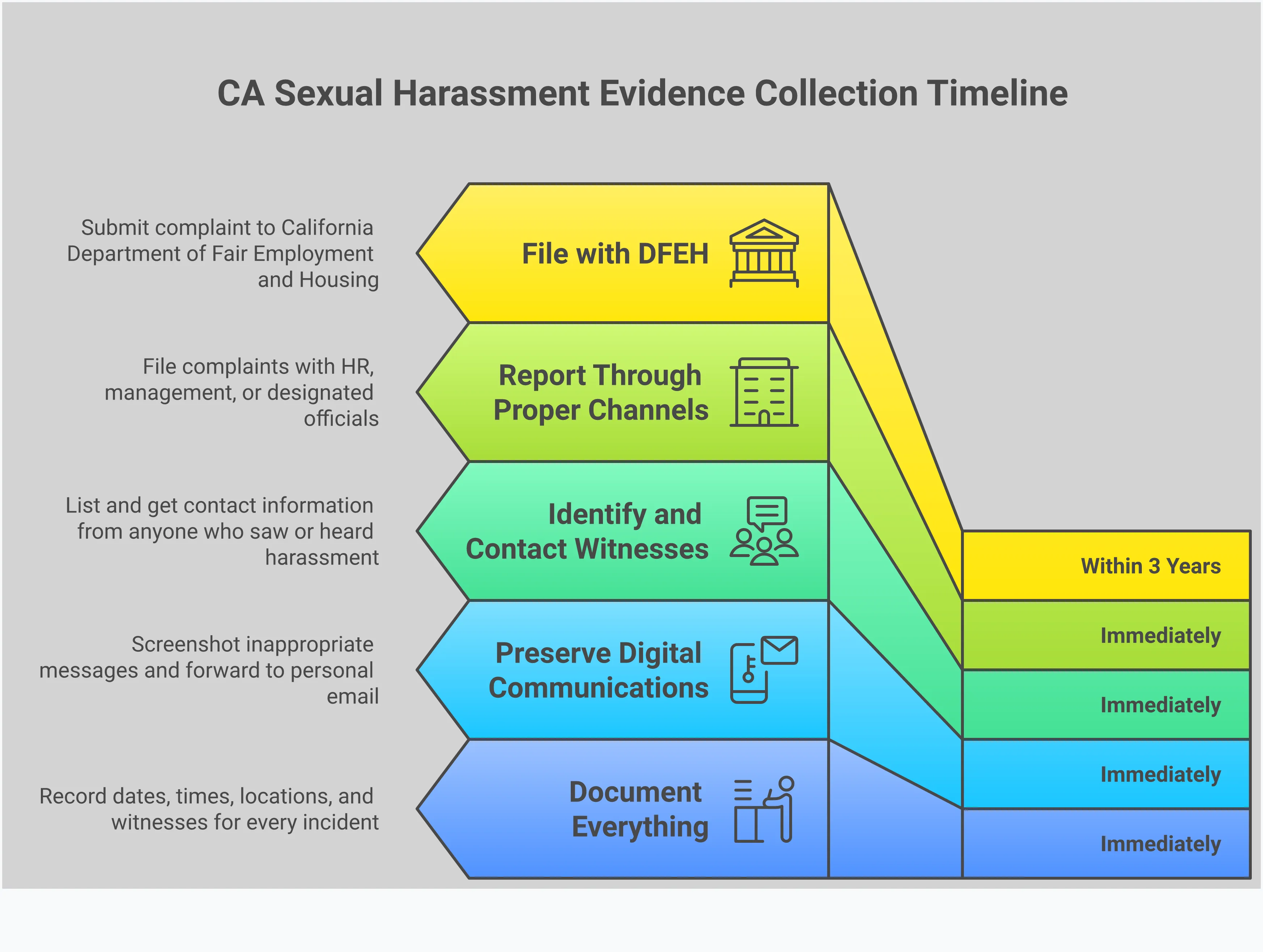
Your goal is to carefully and safely collect all the pieces that tell your story. This process can feel overwhelming, but breaking it down into manageable steps makes it much easier. From saving text messages to noting down names of potential witnesses, every piece of information matters. Let’s walk through the key types of evidence you should focus on collecting to support your sexual harassment claim. Each item, no matter how small it might seem, can become a crucial part of the puzzle.
Gather Written and Digital Communications
So much of our work communication happens in writing, which can become a powerful source of evidence. Make it a priority to save any emails, text messages, or direct messages from platforms like Slack or Teams that are inappropriate or contribute to a hostile work environment. Don’t delete anything. Even messages that seem minor on their own can help establish a pattern of behavior when viewed together. Create a dedicated folder on your personal computer or a private cloud account and forward or screenshot these communications. Be sure to capture the full context, including dates, times, and who sent them. This digital paper trail provides concrete, time-stamped proof.
Save Visual and Audio Evidence
If you have received inappropriate photos, memes, or videos, it is critical to preserve them. Do not leave them on a work-issued device where they could be remotely deleted or accessed by your employer. The best approach is to save these files to a secure, personal location, such as an external hard drive, a USB stick, or a private cloud storage account. This ensures you have a backup copy that is safe and entirely under your control. While audio recordings can also be compelling, it’s important to be aware of California’s laws on recording conversations, which we will cover later. For now, focus on safely storing any visual evidence sent to you.
Collect Witness Statements
You might feel isolated in your experience, but it’s possible that others have seen or heard what’s been happening. Witnesses can add significant credibility to your claim. Think about any coworkers who were present during an incident or someone you confided in immediately after it happened. Even a colleague who didn’t see the harassment directly but noticed how upset you were can provide a valuable account. If you feel comfortable, you can ask them if they would be willing to share what they saw. At a minimum, privately write down the names and contact information of anyone who might have relevant information.
Keep Your Employment Records
Your professional history at the company is another key piece of evidence. Gather documents like your performance reviews (especially if they were positive before the harassment started), your employee handbook, your job description, and any official complaints you’ve filed. It is also incredibly important to document any negative changes in your work life after you speak up. For example, were your hours suddenly cut? Were you excluded from important meetings or unfairly passed over for a promotion? These actions could be a form of illegal retaliation. Keeping a personal journal to log every incident of harassment and any subsequent negative treatment will create a detailed and invaluable record.
How to Document Harassment Incidents
When you’re dealing with harassment, your memory and your voice are powerful, but detailed documentation is your strongest ally. Keeping a clear, consistent record of what’s happening is one of the most important steps you can take to protect yourself. It transforms vague recollections into a factual account that can be used to build a strong case. While it can be difficult to write down painful or upsetting events, this process gives you a tangible record to rely on, ensuring that the details don’t get lost or fuzzy over time. Think of it as creating a private file that validates your experience and provides the concrete information needed for an internal complaint, an official claim with a state agency, or a legal action. This careful record-keeping is fundamental to holding harassers accountable and creating a safer work environment for yourself and others.
Record Key Details for Each Incident
As soon as you can after an incident occurs, find a private moment to write down exactly what happened. The more detail you can capture, the better. Your goal is to create a snapshot of the event that is clear and comprehensive. Be sure to include the date, the specific time, and the location where it took place. Write down the names of everyone involved, including the person who harassed you and anyone who may have witnessed it. Describe the behavior or comments in specific terms, using direct quotes whenever possible. Also, make a note of how the incident made you feel. This detailed entry serves as a credible piece of evidence.
Create a Detailed Timeline
Each record you make is a point on a timeline. By organizing these incidents chronologically, you can start to see and demonstrate a pattern of behavior. This is especially critical if you are experiencing a hostile work environment, where the harassment is ongoing and pervasive. A timeline clearly shows the frequency and escalation of the conduct. In addition to the harassing incidents, be sure to note any related changes in your job duties, performance reviews, or interactions with management. For example, if you were suddenly left out of important meetings after rejecting an advance, write that down. This context can help establish a connection between the harassment and any negative actions taken against you.
Preserve Your Digital Evidence
Harassment doesn’t just happen in person; it often leaves a digital trail. Inappropriate emails, text messages, and direct messages on platforms like Slack, Microsoft Teams, or social media are concrete evidence. It is absolutely crucial that you do not delete any of these communications. Take screenshots of the messages and make sure the date and time are visible. Save copies of emails as PDFs. Back up this digital evidence to a personal device or a secure cloud storage account that is not connected to your employer. This ensures you have access to it even if you lose access to your work accounts and creates a secure, personal copy of the proof.
Maintain Clear Written Records
Keep all of your notes organized in one secure place. You might use a physical journal that you keep at home or a password-protected document on your personal computer. The most important thing is that this log is private and stored away from your work devices and premises. This journal is for you and your attorney; it’s your personal account of the facts. Having a single, consolidated record makes it easier to recall details accurately when you need them. This organized approach will be invaluable when you decide it’s time to report the sexual harassment and seek legal guidance.
What Are the Next Steps After Documenting?
Once you have your documentation in order, it’s time to take action. This next phase is about using the evidence you’ve carefully collected to formally address the harassment and protect your rights. Moving forward requires a clear strategy, whether you’re reporting the behavior internally or filing a formal complaint with a state agency. Each step you take builds on the foundation you’ve created with your detailed records. Remember, the goal is to present a clear, factual account of what you’ve experienced. Taking these steps can feel overwhelming, but having your evidence organized will give you the confidence to proceed. It’s important to handle this process carefully to ensure your complaint is taken seriously and to shield yourself from potential retaliation at work. By following a structured approach, you can make sure your voice is heard and that your evidence effectively supports your case.
Report the Incident Internally
Your first formal step is often to report the harassment to your employer, typically through the Human Resources (HR) department or your direct supervisor, following your company’s official policy. Before you submit anything, review your notes to ensure they are accurate and consistent. When you write your report, stick to the facts. Describe the events objectively, including dates, times, locations, the names of everyone involved, and what was said or done. Avoid emotional language and focus on presenting a clear, chronological narrative. Attach copies of any supporting evidence you’ve collected, like screenshots of messages or photos. Submitting a formal, written complaint creates an official record that the company was notified, which is a critical step in holding them accountable for addressing the hostile work environment.
File a Claim with the California Civil Rights Department
In addition to reporting the issue internally, you have the right to file a formal complaint with a government agency. In California, you can file a claim with the California Civil Rights Department (CRD) or the federal Equal Employment Opportunity Commission (EEOC). These agencies are responsible for enforcing laws against workplace discrimination and harassment. It’s important to know that there are strict deadlines for filing; in California, you generally have three years from the date of the last incident to file with the CRD. You don’t have to wait until you’ve left your job to take action. You can file a claim even if you are still employed by the company, and the law protects you from retaliation for doing so.
Protect Your Evidence During the Process
As you move through the reporting and filing process, safeguarding your evidence is more important than ever. Keep all your notes, documents, and digital files organized by date. This chronological order helps create a clear timeline that can demonstrate a pattern of behavior, which is especially crucial for sexual harassment claims. Do not delete any electronic messages, videos, or audio recordings related to the harassment, as these are often the most compelling pieces of evidence. Make backups of all digital files and store them in a secure location that you can access outside of your work computer or phone, such as a personal cloud account or external hard drive. Your diligence in preserving this information ensures that you have everything you need to build a strong case.
Avoid These Common Evidence-Gathering Mistakes
When you’re facing harassment at work, your first instinct is to gather as much proof as you can. This is a great start, but it’s crucial to collect evidence the right way. How you gather your proof is just as important as what you find. Certain mistakes, even with the best intentions, can unfortunately weaken your claim or even create separate legal problems for you down the line. California has some of the strongest employee protections in the country, but it also has strict privacy laws that you need to be aware of.
This section is your guide to avoiding those common pitfalls. We’ll walk through the specifics of California’s privacy laws, especially as they relate to recording conversations in the workplace. We’ll also cover why documenting every single detail completely is non-negotiable and how to do it effectively. In a world of texts and instant messages, knowing how to prevent digital evidence from being lost or deleted is another critical skill. By understanding these rules and best practices from the start, you can build a stronger, more credible case without accidentally undermining your own efforts. Think of this as your roadmap to gathering evidence smartly and safely.
Know California’s Privacy Laws
California has some of the strongest privacy protections in the country, and these laws extend to the workplace. The most important one to know about for evidence gathering is the state’s “two-party consent” rule for recording conversations. This means you generally cannot record a private conversation with a coworker, manager, or HR representative without their permission. Doing so could not only make your recording inadmissible in court, but it could also expose you to civil or even criminal penalties. Before you hit the record button on your phone, make sure you understand the legal boundaries. Your evidence needs to help your case, not create a new legal issue for you to deal with.
Document Everything Completely
Your memory is powerful, but it’s not perfect, especially when you’re under stress. That’s why writing everything down is one of the most critical steps you can take. Immediately after an incident of harassment occurs, find a private moment to document it. Write down the date, time, and location. Who was involved? Who else was there to witness it? What was said, word for word, if you can remember? Describe what happened in as much detail as possible. This detailed log creates a credible timeline and helps establish a pattern of behavior, which is often essential for proving a hostile work environment. Keep these notes in a secure place outside of your work computer or accounts.
Prevent Evidence from Being Lost
In many modern workplaces, the most compelling evidence is digital: emails, instant messages, or texts. This evidence can also be the most fragile. Your company might have a policy to automatically delete old messages, or a harasser could try to erase their tracks. You need to act quickly to preserve these communications. Take clear screenshots of text or app-based messages. Forward incriminating emails from your work account to a personal email address. If possible, download and save copies of any relevant files or conversation threads to a personal device or secure cloud storage. Don’t alter anything; just make a copy. Preserving this evidence ensures you have what you need when you need it.
Understand Consent Rules for Recording
Let’s get more specific about California’s recording laws. The two-party consent rule applies to “confidential communications,” which is any conversation where the parties have a reasonable expectation of privacy. A one-on-one meeting in a closed office is a clear example. However, the rule may not apply if you’re recording a conversation in a public or common area where there’s no reasonable expectation of privacy, like a loud announcement in a busy lobby. Still, the line can be blurry, and the risks of getting it wrong are high. The safest approach is to avoid recording private conversations altogether and focus on other forms of documentation. An experienced sexual harassment lawyer can provide guidance based on your specific situation.
Legal Requirements for Evidence in California
Once you’ve started gathering your evidence, it’s helpful to understand how it fits into the legal framework of a sexual harassment claim. California has specific rules about what you need to prove, what kind of evidence is allowed, and the time limits you have to follow. Knowing these requirements will help you and your attorney build the strongest possible case. Think of it as learning the rules of the game so you can play effectively.
What Is the Burden of Proof?
In a legal case, the “burden of proof” is the responsibility to prove your claims are true. For a sexual harassment claim in California, the burden is on you, the employee, to show that the harassment occurred. A key part of this is demonstrating that your employer was aware, or “on notice,” of the behavior but failed to take reasonable steps to stop it. You can establish this by showing you reported the incidents to a manager or HR. You can also meet this burden if the harassment was so widespread and obvious that any reasonable employer should have known about it.
What Types of Evidence Are Admissible?
Many people think they need a single, dramatic piece of evidence to prove harassment, but that’s rarely the case. California courts accept a wide range of evidence to show a pattern of inappropriate behavior. This includes digital communications like emails, text messages, and direct messages from apps like Slack or Teams. Your own detailed notes, photos, and any relevant employment documents (like performance reviews that suddenly turned negative) are also powerful. The harassment does not have to be overtly sexual to be illegal; evidence that shows a hostile work environment based on your gender is also admissible.
Know the Deadlines for Filing a Claim
Acting quickly is essential because there are strict deadlines, known as statutes of limitations, for filing a claim. In California, you generally have three years from the date of the last harassing act to file a complaint with the California Civil Rights Department (CRD). If you also plan to file with the federal Equal Employment Opportunity Commission (EEOC), the deadline is 300 days. If you miss these deadlines, you could lose your right to seek justice. This is why it’s so important to document everything and speak with an employment law attorney as soon as possible to protect your rights.
Your Legal Protections as a Victim
If you’re experiencing sexual harassment at work, it’s easy to feel powerless. But it’s important to know that California law is on your side. The state has some of the strongest employee protections in the country, designed to shield you from harassment, protect you when you speak out, and help you recover from the harm you’ve suffered.
Your Rights Under FEHA
California’s Fair Employment and Housing Act (FEHA) is a powerful law that protects employees from all forms of workplace harassment. This law makes it illegal for an employer to allow unwelcome sexual advances, requests for sexual favors, or any other verbal or physical harassment of a sexual nature. FEHA applies to a wide range of employers and covers not just employees but also job applicants and independent contractors. Understanding your rights under this act is the first step toward holding your employer accountable and creating a safer work environment for yourself and others. It’s the legal foundation for any sexual harassment claim in the state.
Safeguards Against Retaliation
One of the biggest fears people have about reporting harassment is the possibility of losing their job. Thankfully, California law explicitly prohibits employers from punishing you for speaking up. This is known as protection against retaliation. If you file a complaint in good faith, your employer cannot legally fire you, demote you, cut your hours, or take any other negative action against you. These safeguards are in place to ensure you can report misconduct without fear. If your employer does retaliate, it creates a separate legal claim, giving you an additional layer of protection.
Available Remedies and Damages
When you pursue a sexual harassment claim, you are not just seeking justice; you are also entitled to compensation for the harm you’ve endured. California law allows victims to recover various damages. This can include compensation for lost wages if you were fired or forced to quit, as well as payment for medical bills or therapy costs. You can also seek damages for the emotional distress the harassment caused, such as anxiety or depression. In cases where an employer’s conduct was particularly malicious or reckless, you may also be awarded punitive damages. These remedies aim to make you whole after a wrongful termination or hostile work environment.
How an Employment Attorney Can Help Your Case
Navigating a sexual harassment claim can feel isolating and complex, but you don’t have to do it alone. Bringing in an employment attorney isn’t just about filing a lawsuit; it’s about having a dedicated advocate who can guide you through each step, protect your rights, and help you build the strongest possible case. They understand the specific legal requirements for evidence in California and can handle communications with your employer, taking a significant weight off your shoulders. An experienced lawyer can assess the details of your situation, explain your options clearly, and create a strategy tailored to your goals, ensuring you feel supported and confident moving forward.
When Should You Contact a Lawyer?
The best time to contact a lawyer is as soon as you believe you are experiencing harassment. Early legal advice is critical. An attorney can help you understand your rights from the outset and guide you on the proper steps to take, which can prevent you from making missteps that could weaken your claim later. Speaking with a professional who handles sexual harassment cases will give you immediate clarity on how to document incidents and what to expect from your employer’s internal investigation process. Getting this guidance early ensures you are protecting yourself and your potential claim from day one.
Get Expert Guidance on Collecting Evidence
An employment attorney is an invaluable partner in gathering and preserving the evidence you need. They know exactly what types of proof are most effective and can help you collect everything from digital communications to witness statements. For example, they can advise on how to legally and effectively save text messages, emails, and social media interactions that support your claim. Your credibility is a cornerstone of your case, and a lawyer will help you organize your documentation into a clear, consistent, and compelling timeline. This expert guidance ensures your evidence is presented effectively, preventing it from being dismissed on a technicality.
Build a Stronger Claim
Many people worry they don’t have enough evidence, especially if there wasn’t a direct witness to the harassment. This is where an attorney’s help is crucial. Even without a “smoking gun,” a strong claim can be built by establishing a pattern of behavior. A lawyer can weave together your detailed notes, witness accounts of related behavior, and employment records to demonstrate a hostile work environment. They will also ensure you are protected from retaliation after you report the incidents. By handling the legal strategy, your attorney allows you to focus on your well-being while they work to hold your employer accountable.
Where to Find Support in California
Dealing with sexual harassment can feel incredibly isolating, but you don’t have to go through it alone. California has a strong network of government agencies, non-profits, and legal professionals ready to help you understand your rights and take the next steps. Knowing where to turn for support is a powerful first move toward holding people accountable and starting your recovery process. These resources can provide everything from immediate crisis counseling to long-term legal guidance, ensuring you have the backing you need at every stage.
California Civil Rights Department
The California Civil Rights Department (CRD) is the state agency responsible for enforcing civil rights laws and investigating complaints of harassment and discrimination. If you’ve experienced sexual harassment at work, this is the official place to file a claim. It’s important to act promptly, as you generally have 300 days from the date of the incident to file your complaint with the CRD. This formal step is crucial for seeking justice and can be the starting point for legal action. The CRD’s process allows for an official investigation into your allegations, which can help validate your experience and hold your employer accountable.
Crisis Centers and Legal Aid
For immediate and confidential support, California’s crisis centers offer free services to survivors of sexual assault and abuse. These centers are staffed with trained advocates who can provide emotional support through crisis hotlines, counseling, and even assistance at the hospital. They can also offer referrals to legal aid services if you need guidance but aren’t ready to hire an attorney. Remember, if you need a forensic exam after an assault, it is provided at no cost in California. You can find more information about your rights and available victim services through the California Department of Justice.
Employee Rights Organizations
Beyond government agencies, many organizations are dedicated to educating workers about their rights and protections against workplace harassment. These groups can help you understand the specifics of California law, which strictly prohibits any form of retaliation against employees who report harassment in good faith. This means you are legally protected from being fired, demoted, or otherwise punished for speaking up. If you believe you have been a victim of sexual harassment, connecting with an employment law attorney can give you the clarity and support needed to handle the legal system and protect your career.
Related Articles
- Sexual Harassment: A Guide to Your Rights & Options
- 5 Examples of Workplace Harassment for LA Employees
- How to Sue for Workplace Harassment: 8 Steps
- Workplace Retaliation Lawyer: A Complete Guide
- Wrongful Termination Retaliation California: A Guide
Frequently Asked Questions
What if the harassment wasn’t physical? Does it still count? Absolutely. Sexual harassment in California covers a wide range of behaviors, many of which are not physical. Unwelcome verbal conduct, like persistent offensive jokes or comments about your appearance, can create a hostile work environment. The same goes for visual harassment, such as sharing explicit images or emails. The law focuses on whether the conduct is unwelcome and severe or pervasive enough to interfere with your ability to do your job, regardless of whether it involved physical contact.
I’m afraid I’ll be fired if I report what’s happening. What are my rights? This is a completely valid and common fear, but California law offers strong protections against it. It is illegal for your employer to punish you in any way for reporting sexual harassment in good faith. This protection, known as a safeguard against retaliation, means they cannot fire, demote, reduce your hours, or take any other negative action against you for speaking up. If they do, it creates grounds for a separate legal claim against them.
What if there were no witnesses to the harassment? Can I still build a case? Yes, you can. Many instances of harassment happen in private, and the legal system understands this. While witnesses are helpful, they are not required. Your own detailed, consistent documentation of each incident becomes critical evidence. This includes your personal notes on what happened, when, and where, along with any digital communications like texts or emails. An experienced attorney can help you weave these pieces together to establish a clear and credible pattern of behavior.
Can I secretly record my harasser to get proof? You should be very careful with this. California is a “two-party consent” state, which means it is generally illegal to record a private conversation without the other person’s permission. Illegally recording someone could not only make the evidence inadmissible in court, but it could also create separate legal trouble for you. It is much safer to focus on other forms of documentation, like writing down detailed notes immediately after an incident and saving all written communications.
How long do I have to file a formal complaint in California? There are strict deadlines, so it’s important to act promptly. In California, you generally have three years from the date of the last harassing incident to file a complaint with the state’s Civil Rights Department (CRD). Missing this deadline, known as the statute of limitations, could prevent you from being able to pursue your case. This is why it is so important to document everything and consult with an attorney as soon as possible to protect your rights.
Think you were wrongfully terminated?
Get a free, confidential case evaluation from our experienced employment law attorneys.
Request Your Free Consultation