
Let’s get straight to the point. Your primary concern is likely about what happens to your job after you report harassment. It’s the question that stops many people from ever speaking up. The short answer is that it is illegal for your employer to fire you in response to a harassment complaint. This isn’t just a company policy; it’s a right guaranteed by state and federal law. Reporting harassment is considered a “protected activity,” which means you are legally shielded from any negative consequences. So, can I be fired for reporting harassment for Alameda County employees? Absolutely not, and this guide will explain exactly why and what to do if your employer acts unlawfully.
Key Takeaways
- Your right to report is protected: Speaking up about workplace harassment is a legally protected activity. Both California and federal laws forbid employers from retaliating against you, which means they cannot legally fire, demote, or otherwise punish you for making a good faith complaint.
- Document everything to build your case: Retaliation is not always obvious, so write down every negative action that follows your report. Keep a private log with dates, what happened, and who was involved to create a clear timeline connecting the retaliation to your complaint.
- Explore your support options: If you face retaliation, you have several avenues for help. You can report the issue through official company channels, file a formal complaint with the California Civil Rights Department (CRD), or speak with an employment lawyer to understand your rights and plan your next steps.
What Laws Protect You When You Report Harassment?
If you’re thinking about reporting harassment at work, one of your biggest fears might be losing your job. It’s a completely valid concern, but you should know that strong legal protections are in place to prevent that from happening. Both California and the federal government have established laws specifically to shield employees who speak up about illegal workplace conduct. These laws make it illegal for your employer to punish you for reporting harassment or discrimination.
Understanding your rights is the first step toward feeling secure enough to take action. The most important law for California employees is the Fair Employment and Housing Act (FEHA), which offers robust protections against both harassment and the retaliation that can follow a report. Federal laws provide another layer of defense, and specific whistleblower statutes protect you when you report illegal activity. Knowing that these safeguards exist can give you the confidence to move forward and address the situation without the fear of unfair consequences.
How California’s FEHA Shields You
The California Fair Employment and Housing Act, or FEHA, is your primary line of defense against workplace misconduct. This powerful state law makes it illegal for employers to allow discrimination or harassment based on protected traits like your race, gender, age, or disability. More importantly, FEHA explicitly forbids employers from retaliating against you for reporting these issues. This means your boss cannot legally fire, demote, or otherwise punish you for filing a complaint about harassment. FEHA ensures you can stand up for your rights without having to risk your livelihood, making it a cornerstone of California employment law.
Understanding Federal Anti-Retaliation Laws
In addition to California’s FEHA, federal laws like Title VII of the Civil Rights Act of 1964 offer similar protections. These laws also make it illegal for an employer to retaliate against an employee for reporting harassment, participating in an investigation, or opposing discriminatory practices. This creates a dual layer of protection, ensuring that no matter the size of your company, you are shielded from punishment. If you experience any negative action after making a report, you may have a case for illegal workplace retaliation, which is a separate claim from the harassment itself and has its own legal remedies.
Your Rights as a Whistleblower
Sometimes, reporting harassment can overlap with what’s known as whistleblowing. A whistleblower is an employee who reports illegal activities, fraud, or safety violations within their company. State and federal whistleblower laws are designed to protect you from being fired, demoted, or treated unfairly for exposing wrongdoing. If the harassment you’re experiencing is part of a broader pattern of illegal behavior, such as a manager harassing anyone who reports safety concerns, these specific protections give you an additional shield against retaliation. This encourages you to bring serious issues to light without fear of losing your job.
What Qualifies as a “Protected Activity”?
The law protects you when you engage in a “protected activity.” This is a legal term for specific actions you can take that your employer cannot punish you for. Reporting harassment or discrimination to your manager or HR department is a classic example. Other protected activities include participating as a witness in a harassment investigation, requesting reasonable accommodation for a disability, or even telling a harasser to stop their behavior. Any time you assert your rights under these laws, you are engaging in a protected activity, and firing you for it could be considered wrongful termination.
Is It Harassment? California’s Legal Definition
Before you can decide on your next steps, it’s crucial to understand what harassment means under the law. While we often use the term to describe any difficult workplace behavior, the legal definition is much more specific. California law protects employees from conduct that is not just unpleasant, but is rooted in discrimination and creates an abusive atmosphere. Knowing this distinction is the first step toward recognizing your rights and figuring out what to do next.
Harassment Based on Protected Traits
In California, for behavior to be considered illegal harassment, it must be based on a protected characteristic. The state’s Fair Employment and Housing Act (FEHA) makes it illegal to harass someone based on their race, gender, sexual orientation, age, disability, religion, and other specific traits. This means a manager who is simply tough on everyone might not be breaking the law. But if that negative treatment is targeted at you because of a protected part of your identity, it likely crosses the line into illegal discrimination.
Defining Sexual Harassment vs. a Hostile Work Environment
Harassment often falls into two main categories: sexual harassment and a hostile work environment. Sexual harassment includes things like unwelcome advances or inappropriate comments of a sexual nature. This behavior can also contribute to a hostile work environment, which is a broader issue. A hostile environment is created when harassment is so severe or widespread that it makes your workplace intimidating or offensive. This is illegal even if you haven’t been fired or demoted, and it can stem from harassment based on any protected trait, not just sex.
When Offensive Conduct Becomes Illegal
Not every rude comment or thoughtless action qualifies as illegal harassment. For a work environment to be legally considered hostile, the behavior must be serious or frequent enough to create an abusive situation. A single, isolated remark usually isn’t enough to build a case, unless it is extremely severe (like a physical threat or assault). More often, a hostile environment is the result of a pattern of unwelcome conduct that, taken together, changes the conditions of your employment and makes it difficult to do your job.
Recognizing When Behavior Crosses the Line
It can be hard to know if what you’re experiencing is “bad enough” to report. Behavior that crosses the line often includes verbal abuse, slurs, offensive jokes, intimidation, or the display of offensive images. The law protects your right to speak up about this conduct without fear of punishment. Your employer cannot legally fire you for reporting harassment. If they do, you may be a victim of illegal retaliation. If the conduct makes you feel unsafe or unable to perform your job, it’s a sign that a legal line has likely been crossed.
Can You Be Fired for Reporting Harassment?
The short answer is no. It is illegal for your employer to fire you for reporting harassment. Speaking up about misconduct in the workplace is a legally protected right, and California law takes this protection very seriously. When you report harassment in good faith, you are helping to create a safer work environment for everyone, and you should not be punished for it. Unfortunately, some employers react poorly and engage in retaliation. Understanding what retaliation looks like and what your employer’s duties are is the first step in protecting yourself.
What Is Illegal Retaliation?
Illegal retaliation is any negative or adverse action an employer takes against an employee for engaging in a legally protected activity, like reporting harassment. While getting fired is the most obvious example, retaliation can also include being demoted, having your pay cut, receiving an unfair performance review, or being moved to a less desirable shift. The critical element is the employer’s motive. If the negative action is a direct response to your complaint, it is likely illegal. If you believe you have become a victim of retaliation at work, it’s important to understand that this behavior is against the law. These protections exist to ensure you can speak out against wrongdoing without fear of punishment.
Common Examples of Workplace Retaliation
Retaliation isn’t always as blatant as being fired right after you file a complaint. It can be subtle and designed to make your work life so difficult that you feel forced to quit. Besides wrongful termination, common examples include being demoted, receiving a sudden and unexplained negative performance review, or being excluded from important meetings and projects you would normally attend. Your manager might also start micromanaging your work, reassign you to a less desirable location, or create a hostile atmosphere. Any negative change in your employment that closely follows your harassment report could be a sign of illegal retaliation, and you should document every incident.
Why California Law Forbids Retaliation
California has strong laws against retaliation for a simple reason: if employees feared being punished for speaking up, very few would report illegal activity. This would allow harassment and discrimination to continue unchecked, creating toxic and unsafe workplaces. The law is designed to encourage people to come forward. By protecting employees from retaliation, the state ensures that employers can be held accountable for issues like sexual harassment and other forms of misconduct. These protections are not just about your individual rights; they are about upholding public policy and ensuring that all workplaces are safe, fair, and lawful for everyone.
Your Employer’s Legal Duties After a Report
When you report harassment, your employer cannot simply ignore it. They have a legal obligation to take your complaint seriously. This means they must conduct a prompt, fair, and thorough investigation into your allegations. They also have a duty to take reasonable steps to prevent further harassment from occurring, both during and after the investigation. Their ultimate goal should be to maintain a workplace free of any hostile work environment. This includes implementing and enforcing clear anti-harassment policies and ensuring all complaints are handled appropriately. If your employer fails to investigate or dismisses your complaint, they are not meeting their legal responsibilities.
What to Do if You’re Facing Retaliation
Experiencing retaliation after you’ve already dealt with harassment can feel incredibly isolating and unfair. But you are not powerless. California law provides strong protections for employees who speak up. If you believe you’re being punished for reporting harassment, there are clear, practical steps you can take to protect yourself and your career. Taking action can feel daunting, but moving forward methodically is the best way to build your case and stand up for your rights.
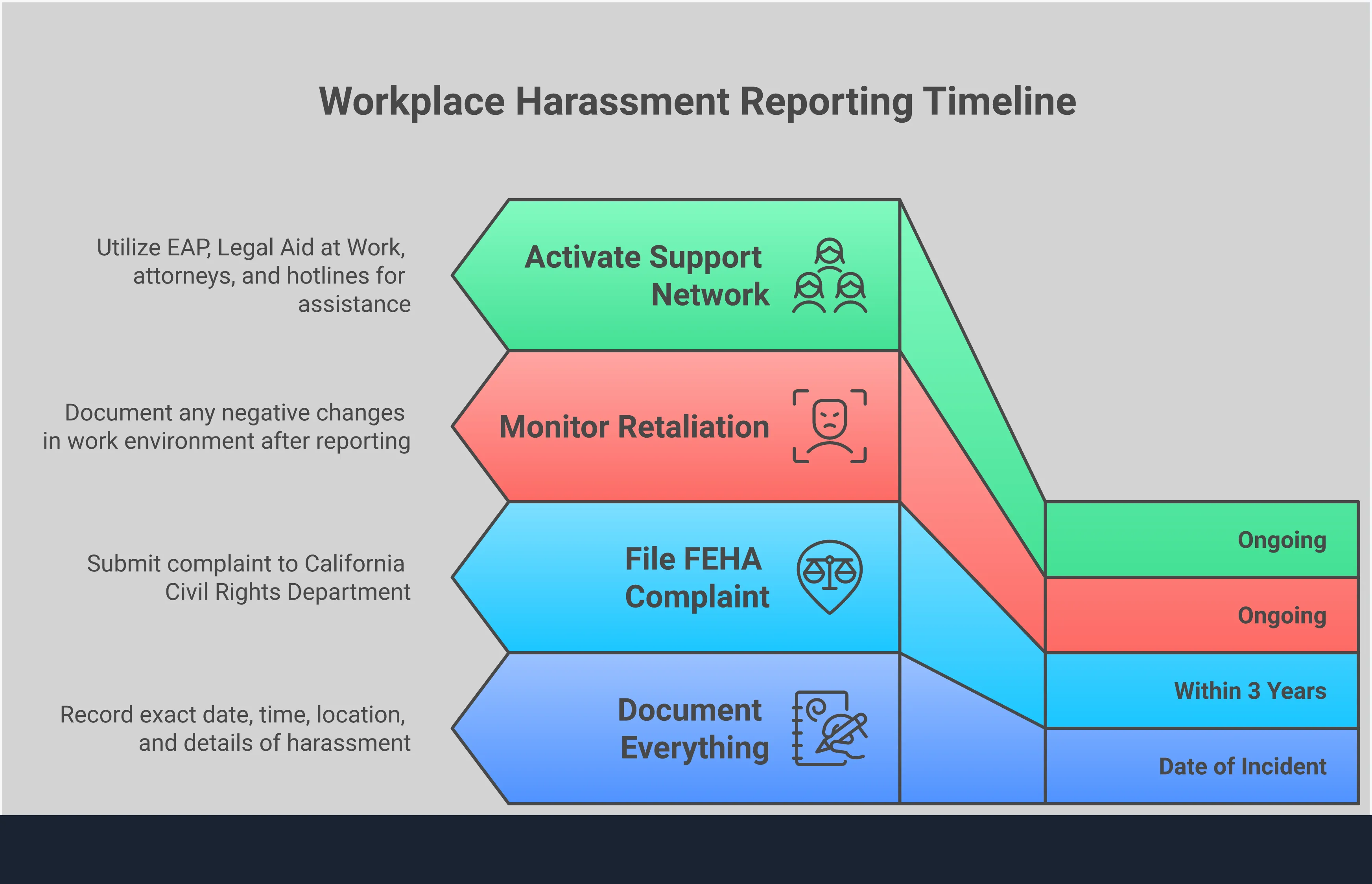
Document Every Incident
Your personal records are your strongest evidence. Start a private log, separate from your work computer or accounts, and write down every instance of potential retaliation. For each entry, include the date, time, and location. Describe exactly what happened and who was involved. If anyone witnessed the event, note their name. Be as specific as possible. Did your manager suddenly exclude you from key meetings? Did your performance reviews take a nosedive without explanation? Did your shifts get changed to less desirable times? These details connect the negative actions to your initial harassment report, creating a clear timeline that can be crucial for proving your case.
Report Retaliation Through the Right Channels
Just as you reported the initial harassment, you should also report the retaliation. Check your employee handbook or company intranet for the official procedure. Typically, this involves notifying Human Resources or a designated manager who wasn’t involved in the original incident. Put your complaint in writing (email is great for this) so you have a time-stamped record. State the facts clearly: explain that you believe you are facing negative treatment as a direct result of your previous harassment report. Remember, employers have a responsibility to investigate these claims and prevent further retaliatory behavior.
File a Formal Complaint with a Government Agency
If reporting internally doesn’t resolve the issue or you aren’t comfortable doing so, you can file a formal complaint with a government agency. In California, the Civil Rights Department (CRD), formerly the DFEH, handles these cases. The Fair Employment and Housing Act (FEHA) makes it illegal to discriminate or retaliate against employees for reporting harassment. Filing a complaint with the CRD initiates an official investigation into your employer’s conduct. This step formalizes your claim and provides a layer of government oversight, signaling to your employer that you are serious about defending your rights.
Talk to an Employment Attorney
Navigating the aftermath of a harassment report can be complicated, and you don’t have to do it alone. An experienced employment attorney can be your most valuable ally. They can review the details of your situation, explain your legal options, and help you decide on the best course of action. An attorney can also handle communications with your employer and government agencies on your behalf. If you feel you have become a victim of retaliation at work, consulting with a legal professional can provide the clarity and support you need to move forward with confidence and ensure your rights are protected.
Where to Find Support in Alameda County
Facing harassment or retaliation at work can feel incredibly isolating. It’s common to feel confused about what to do next, worried about your job security, and unsure of who you can trust. The good news is that you don’t have to figure this out on your own. In Alameda County and across California, a strong network of support exists to protect employees and help them stand up for their rights. Understanding these resources is the first step toward taking back control of your situation.
Whether you need a confidential space to talk, formal intervention from a state agency, or expert legal guidance, there is a path forward for you. Your options range from internal company programs designed for employee wellness to government bodies tasked with enforcing the law. You can also connect with dedicated legal professionals and community organizations that advocate for workers’ rights every day. This guide will walk you through the key resources available, so you can choose the one that feels right for you.
Your Company’s Employee Assistance Program (EAP)
Before taking formal action, you might want to start with your company’s Employee Assistance Program (EAP). Most medium to large employers offer an EAP as a free and, most importantly, confidential benefit. This service connects you with trained counselors who can provide immediate emotional support and help you process what you’re experiencing. An EAP is a safe, low-risk space to discuss the situation, learn coping strategies for stress, and confidentially explore your options for addressing the harassment. Your conversations are protected, so you can speak freely without fear that your employer will be notified. It’s a valuable first step to gain clarity and professional guidance.
The California Civil Rights Department (CRD)
When you are ready to make a formal report, the California Civil Rights Department (CRD), formerly known as the DFEH, is the state agency that enforces California’s anti-harassment and anti-retaliation laws. You can file a complaint with the CRD, which will then launch an official investigation into your claim. This is a critical step in the legal process, as it creates a formal record of the misconduct and is often required before you can file a lawsuit. The CRD has the power to investigate your employer, request documents, interview witnesses, and mediate a resolution. By filing with the CRD, you are putting your employer on notice and leveraging the power of the state to protect your rights.
Legal Aid and Local Employment Law Firms
While the CRD represents the state, an employment attorney works directly for you. Seeking advice from a local employment law firm provides you with a dedicated advocate whose sole focus is protecting your best interests. A lawyer can offer a confidential assessment of your case, explain your legal rights under state and federal law, and develop a clear strategy tailored to your specific situation. They can help you gather evidence, handle all communications with your employer, and negotiate a settlement on your behalf. Having an expert in your corner not only strengthens your position but also lifts the burden of fighting this battle alone.
Employee Advocacy Groups and Hotlines
In addition to government agencies and private law firms, several non-profit organizations and advocacy groups are committed to helping workers. Organizations like Legal Aid at Work offer free legal services, clinics, and informational resources for employees, particularly those with limited income. These groups often run hotlines where you can get immediate, confidential advice about your rights and options. They serve as a powerful community resource, connecting you with people who understand the challenges of workplace injustice. Reaching out to an advocacy group can be an empowering way to get reliable information and support, even if you aren’t ready to hire an attorney.
Related Articles
- Sexual Harassment: A Guide to Your Rights & Options
- How a CA Hostile Work Environment Lawyer Can Help You
- Wrongful Termination Retaliation California: A Guide
- How to Document Sexual Harassment: A Guide for Sac Co Employees
- Canoga Park Employment Lawyer – Bluestone Law
Frequently Asked Questions
What’s the difference between a difficult boss and illegal harassment? This is a great question because the line can feel blurry. A difficult boss might be demanding or have high expectations for everyone, which is generally not illegal. Illegal harassment, however, is unwelcome conduct that is specifically targeted at you because of a protected part of your identity, like your race, gender, age, or disability. If the negative treatment is tied to who you are and creates an intimidating or offensive work environment, it likely crosses the legal line from just poor management into harassment.
I’m afraid of being fired if I report harassment. Is that a valid concern? Your fear is completely understandable, but you should know the law is firmly on your side. Both California and federal laws make it illegal for an employer to punish you in any way for reporting harassment in good faith. This protection is called the right to be free from retaliation. While some employers unfortunately break the law, these protections exist to give you a powerful legal remedy if they do. Speaking up is a protected activity, not a fireable offense.
What kind of proof do I need to report harassment or retaliation? You don’t need a folder full of signed affidavits to take the first step. Your own detailed account is powerful evidence. The most helpful thing you can do is keep a private log of incidents. For each event, write down the date, time, what was said or done, and who was there. Save any relevant emails, text messages, or documents. This careful documentation creates a clear timeline and helps establish a pattern of behavior, which is incredibly valuable for building your case.
Does reporting harassment to HR mean I’m starting a lawsuit? Not at all. Reporting harassment to your company’s Human Resources department is an internal first step. It gives your employer a formal opportunity to investigate the issue and resolve it. Filing a lawsuit is a separate, more formal legal action that you would decide to take later, usually after filing a complaint with a government agency like California’s Civil Rights Department (CRD). You are in control of whether or not your situation escalates to a lawsuit.
What if the retaliation isn’t obvious, like being fired, but more subtle? Retaliation often isn’t as clear-cut as a termination. It can take many forms, such as being excluded from important meetings, getting a sudden negative performance review, being moved to a less desirable shift, or being micromanaged. These more subtle actions are still illegal if they are a direct result of you reporting harassment. This is another reason why documenting every negative change after you make a report is so important; it helps connect the dots and prove your case.
Think you were wrongfully terminated?
Get a free, confidential case evaluation from our experienced employment law attorneys.
Request Your Free Consultation