
Facing unfair treatment at work can leave you feeling isolated and unsure of what to do next. It’s one thing to know something is wrong, but it’s another to take action. The legal system can seem intimidating, filled with confusing forms and strict deadlines that make you second-guess yourself. This guide is here to change that. We’ll walk you through the entire process, step by step, so you feel prepared and confident. We will cover everything from documenting what’s happening to understanding your rights against retaliation. Learning exactly how to file a discrimination complaint against a business is the first step toward protecting yourself and holding your employer accountable.
Key Takeaways
- Document everything with detail: Your strongest evidence is a private log of each incident. Note the dates, times, specific words used, and any witnesses to build a factual foundation for your claim.
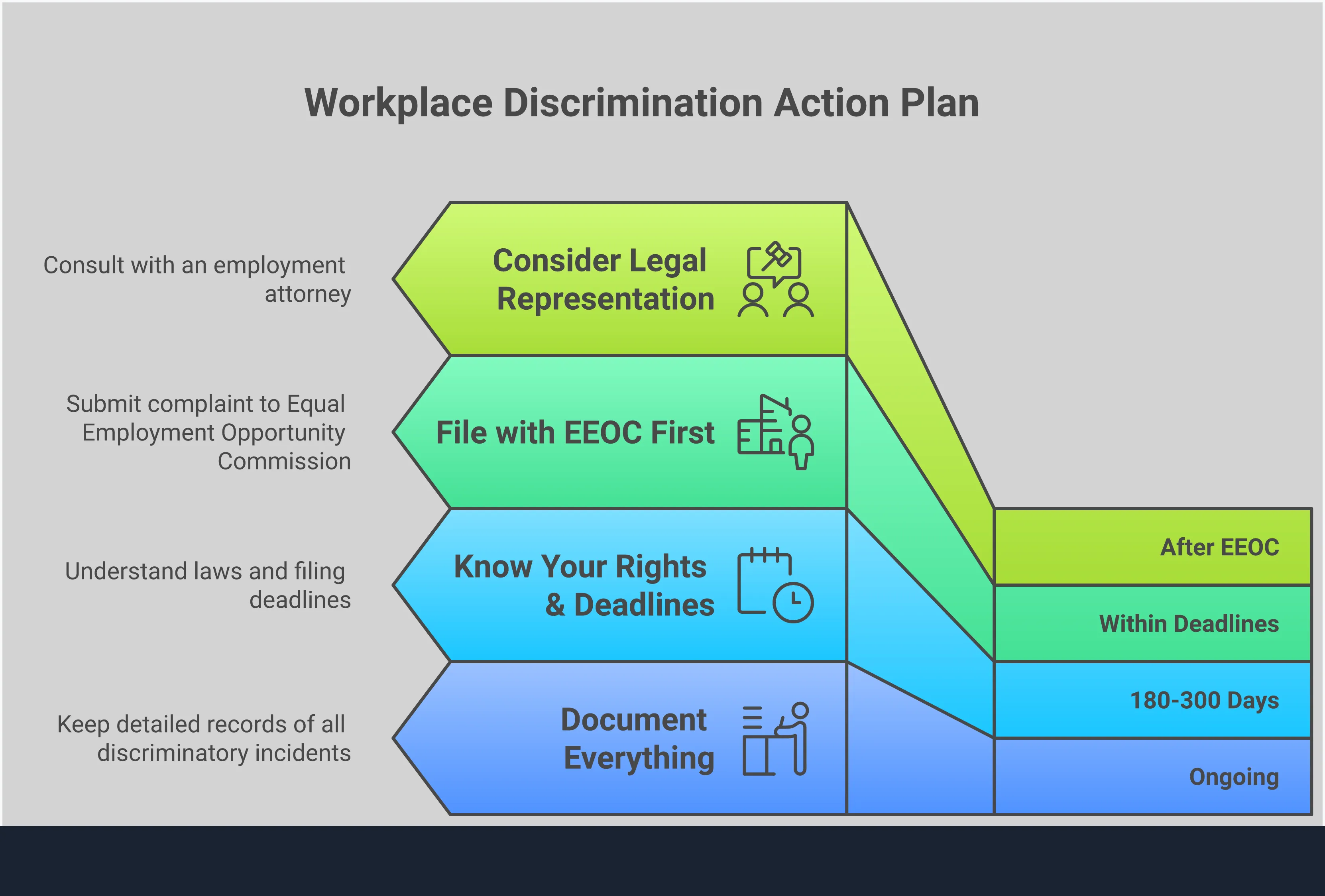
- Know the process and the deadlines: Start by using your company’s official complaint procedure. Then, pay close attention to the strict filing deadlines for government agencies, because missing them can jeopardize your right to take legal action.
- Understand your rights and get legal support: The law protects you from retaliation when you report discrimination, so document and report any punitive actions right away. This process is complicated, so speaking with an employment lawyer early is the best step to protect yourself and build a strong case.
Is What You’re Experiencing Illegal Discrimination?
It can be tough to know if unfair treatment at work crosses the line into illegal activity. Not every frustrating or negative experience qualifies as discrimination in a legal sense. The key is whether the unfair treatment is happening because you belong to a specific protected group. Understanding the legal definitions can help you clarify your situation and decide on your next steps. Let’s walk through what illegal discrimination looks like under the law.
If you believe your rights have been violated, our Workplace Discrimination Lawyer team can help you understand your options and pursue your claim.
Understanding Your Protected Characteristics
For an action to be considered illegal discrimination, it must be based on what the law calls a “protected characteristic.” These are specific aspects of your identity that your employer cannot use as a basis for their decisions. According to the U.S. Equal Employment Opportunity Commission, you are protected from workplace discrimination based on your race, color, religion, or sex, which includes pregnancy, gender identity, and sexual orientation. Other protected characteristics include your national origin, age (if you’re 40 or older), disability, or genetic information. If you believe you’re being treated unfairly because of one of these traits, you may have a valid claim.
Common Examples of Workplace Discrimination
Discrimination can show up in many ways, some more obvious than others. It might happen during the hiring process, like a company refusing to hire you because of your age or national origin. It can also occur after you’ve been hired. For example, being passed over for a promotion, being demoted, or being fired for reasons tied to a protected characteristic are all forms of wrongful termination and discrimination. Other examples include an employer asking for sexual favors in exchange for a raise or creating an uncomfortable work environment with persistent, offensive comments about your race or religion.
Harassment vs. Discrimination: What’s the Difference?
People often use the terms “harassment” and “discrimination” interchangeably, and it’s easy to see why. Legally, harassment is a form of discrimination. Think of discrimination as the broad category of unfair treatment based on a protected characteristic. Harassment is a specific type of discrimination that involves unwelcome conduct. When this conduct is severe or pervasive enough to create a work environment that a reasonable person would find intimidating or abusive, it becomes an illegal hostile work environment. So, while all harassment is a form of discrimination, not all discrimination takes the form of harassment.
How to Document Discrimination at Work
When you’re facing discrimination, it can feel like your word against your employer’s. That’s why documentation is one of the most powerful tools you have. Creating a clear, detailed record of what you’re experiencing is the first step in building a strong case and protecting your rights. Think of it as creating a timeline of the facts. This record helps organize your thoughts, provides concrete evidence for any formal complaint, and ensures that crucial details aren’t forgotten over time.
Solid documentation shifts the focus from subjective feelings to objective facts. Instead of just saying you were treated unfairly, you can point to specific instances, dates, and patterns of behavior. This evidence is vital whether you’re reporting the issue internally, filing a complaint with a government agency, or speaking with an attorney. Taking the time to document everything carefully and consistently can make all the difference in how your claim is evaluated. It’s a proactive step you can take right now to advocate for yourself.
Create a Detailed Log of Events
Start a private log to record every incident of discrimination. Use a personal notebook or a secure document on your personal computer, not a work device. For each entry, be as specific as possible. Write down what happened, including the exact date and time of the event. Note who was involved and list the names of anyone else who was present.
Describe the incident in detail. What was said or done? Try to capture direct quotes if you can. Also, record how the incident made you feel and how it impacted your ability to do your job. A consistent, factual diary of events can establish a pattern of discriminatory behavior and will be an invaluable resource for you and your attorney.
Gather Supporting Evidence
Your personal log is essential, but physical evidence can make your case even stronger. Collect any documents that support your claims of discrimination. This includes things like emails, text messages, direct messages on company platforms, or voicemails. Save copies of your performance reviews, especially if you notice a sudden negative shift after a specific event.
Keep records of work assignments, schedules, and pay stubs if they demonstrate unfair treatment. Make sure to save these files in a safe place that you can access outside of work, like a personal email account or cloud storage drive. This evidence provides tangible proof that corroborates the events you’ve recorded in your log, helping to build a comprehensive picture of your experience that could be related to a wrongful termination.
Identify and Record Witness Information
If a colleague witnessed a discriminatory act or conversation, their account can be incredibly valuable. In your private log, make a note of who was present for each incident. Write down their name, their role, and what you believe they saw or heard. You don’t need to discuss the situation with them directly, which could put them in an uncomfortable position.
Simply keeping a record of potential witnesses is enough for now. If you decide to move forward with a formal complaint, your attorney can determine the best way to approach them. Having a list of people who can back up your story can add significant credibility to your claim, especially in cases involving a hostile work environment.
What to Do Before You File a Complaint
Before you take the formal step of filing a complaint with a government agency, there are a few crucial actions you should take at work. Properly handling the situation internally can not only strengthen your potential legal case but sometimes even resolve the issue without further escalation. Think of these steps as building a solid foundation for your claim. By showing you made a good-faith effort to address the problem through the proper channels, you demonstrate your professionalism and create a clear record of your employer’s response, or lack thereof. This preparation is key to protecting your rights and setting yourself up for the best possible outcome.
Review Your Company’s Internal Policies
Your first move should be to locate your employee handbook or any official company policies on discrimination and harassment. Understanding your company’s internal rules is critical. These documents will outline the exact procedure for reporting issues, including who you should speak to, what information to provide, and the expected timeline for a response. Making a report to the correct person or department can dramatically affect how both your employer and outside agencies evaluate your discrimination claim later on. Taking the time to find and read these policies shows you are following the established protocol, which is an important detail in any employment case.
Follow Your Employer’s Complaint Process
Once you understand the policy, your next step is to follow it precisely. If the handbook says to report an issue to your direct supervisor or Human Resources, do that. If there’s a specific form to fill out, use it. Adhering to the established protocols is essential because failing to do so can sometimes jeopardize your case. Be sure to document every step you take. For example, if you report the issue via email, save a copy. If you have a conversation, follow up with an email summarizing what was discussed. This creates a paper trail that proves you gave your employer a fair chance to address the hostile work environment.
Consult with an Employment Lawyer
Navigating workplace policies and legal procedures can feel overwhelming, and you don’t have to do it alone. Before, during, or after you report the issue internally, it’s wise to speak with an experienced employment lawyer. An attorney can help you understand the complexities of the law, evaluate the strength of your claim, and advise you on the best path forward. They can guide you on how to communicate with your employer and what to expect next. Getting professional legal advice early in the process can make a measurable difference in the outcome of your claim and ensure you avoid common missteps. The team at our firm is dedicated to helping employees protect their rights.
Where Should You File Your Complaint?
Once you’ve documented the discrimination and reviewed your company’s policies, the next step is to file a formal complaint with a government agency. This is a critical move that officially puts your employer on notice and starts a legal investigation into your claims. The two main options are the federal U.S. Equal Employment Opportunity Commission (EEOC) and your state’s fair employment agency. In California, that agency is the Civil Rights Department (CRD).
Deciding where to file can feel complicated, but it doesn’t have to be. The key is to understand each agency’s role, the deadlines you need to meet, and the requirements for your complaint to be accepted. Getting this part right is essential for building a strong case and protecting your rights. An experienced employment lawyer can guide you through this process to ensure you file correctly and on time.
EEOC vs. Your State’s Agency
The EEOC is a federal agency that enforces federal laws against workplace discrimination. Your state agency, like California’s CRD, enforces state-level anti-discrimination laws. Often, state laws offer broader protections than federal ones. For example, California law protects employees from discrimination in businesses with five or more employees, while federal law generally applies to businesses with 15 or more.
The good news is that you don’t have to choose between them. These agencies have a “work-sharing agreement,” which means if you file with one, your complaint is automatically “dual-filed” with the other. This simplifies the process of filing a charge of discrimination and ensures your rights are protected under both state and federal law. Most people in California start by filing with the CRD, as it covers the state’s more extensive protections.
Choose the Right Agency for Your Case
The most important factor in filing your complaint is the deadline. Missing it can prevent you from ever being able to take legal action. For federal claims with the EEOC, you generally have 180 calendar days from the day the discrimination took place to file a charge. This deadline can be extended to 300 days if a state or local agency also enforces a law that prohibits employment discrimination on the same basis.
In California, the timeline is more generous. You have three years from the date of the discriminatory act to file a complaint with the CRD. While this gives you more time, it’s always best to act quickly while the evidence is fresh and witnesses’ memories are clear. Contacting the right agency to initiate the complaint process as soon as possible is the best way to protect your legal options.
Meet the Jurisdictional Requirements
For an agency to officially accept your complaint for investigation, it must meet certain criteria, often called “jurisdictional requirements.” This means your complaint must be filed on time and contain enough information to state a valid claim of discrimination. You also have a responsibility to cooperate with the agency throughout its investigation.
This is where your detailed documentation becomes invaluable. You’ll need to provide specific facts, dates, and names to support your claim. Failing to meet these requirements or cooperate with investigators could lead to your case being dismissed. Working with a legal professional can help you frame your complaint correctly and ensure you meet all the necessary procedural steps, giving your case the strongest possible start.
How to Fill Out the Complaint Forms
Once you’ve decided where to file your complaint, the next step is filling out the official forms. This paperwork is your first formal opportunity to state your case, so it’s important to be clear, accurate, and thorough. Taking the time to prepare your information beforehand can make the process much smoother and help you build a stronger foundation for your claim. Think of this as telling your story in a way that is easy for an investigator to understand and act on.
What Information You’ll Need to Provide
To start, you’ll need to gather all the essential details about your situation. The agency will ask for your name and contact information, as well as the name, address, and phone number of the employer you are filing against. Be prepared to provide the number of employees who work there, as this can affect which laws apply.
The core of your complaint will be the description of the events. You’ll need to provide the specific dates the illegal discrimination occurred, explain what happened in a clear, chronological order, and state why you believe you were discriminated against. This means identifying your protected characteristic (like race, gender, or disability) and connecting it to the negative action you experienced.
Tips for Writing a Strong Complaint
When you write your description of events, stick to the facts. Use the detailed log you created to provide a clear and concise narrative. Avoid emotional language or personal opinions and instead focus on what happened, who was involved, and when and where it took place. If you have documents or names of witnesses that support your claim, mention them in your statement. A well-organized, factual account is much more powerful and helps the investigator quickly grasp the key issues, especially in cases involving an ongoing hostile work environment. Be truthful and accurate, as the information you provide will become the basis of the official investigation.
Don’t Miss the Filing Deadline
This is one of the most critical parts of the process. Anti-discrimination laws have strict deadlines, known as statutes of limitations. In many cases, you must file a charge with the EEOC within 180 calendar days from the day the discrimination took place. This deadline can be extended to 300 days if a state or local agency also enforces a law that prohibits discrimination on the same basis. California has its own deadlines, which can be complex. Missing these deadlines can result in your case being dismissed, no matter how strong it is. Because these time limits are so unforgiving, consulting with an employment lawyer as soon as possible is a wise step to protect your rights.
What to Expect During the Investigation
Once you’ve filed your complaint, the agency will launch an official investigation into your claims. This part of the process can feel slow and intimidating, but knowing what’s coming can help you feel more in control. An investigator will be assigned to your case, and their job is to gather the facts from both you and your employer to determine if discrimination likely occurred. They act as a neutral fact-finder.
The investigation involves collecting documents, conducting interviews, and reviewing evidence from both sides. Your employer will be formally notified of the complaint and will have an opportunity to respond to your allegations. Throughout this period, it’s crucial to stay organized and responsive. The investigator may reach out with questions or requests for more information, and your timely cooperation is key to keeping your case moving forward.
The Initial Review and Interview
The investigation officially kicks off once the agency accepts your complaint. An investigator will review the information you provided and will likely schedule an interview with you. This is your chance to walk them through the events in detail, explain the evidence you’ve gathered, and answer any clarifying questions they have.
Think of this interview as the first step in building your case with the agency. Be prepared to discuss the specifics of the discrimination you faced, including dates, times, locations, and the names of everyone involved. The investigator will use this conversation to get a firm grasp of your allegations before they contact your employer. It’s a critical step that sets the foundation for the entire investigation.
Understanding the Timeline and Process
One of the first questions most people ask is, “How long will this take?” While every case is different, federal agencies like the EEOC aim to complete their investigation within 180 days of the complaint being filed. After your initial interview, the agency will notify your employer of the charge and ask for a formal written response, often called a “Position Statement.”
From there, the investigator will gather evidence, which might include requesting documents like personnel files, emails, and company policies. They may also interview witnesses, including coworkers and managers. The process can take several months, so patience is important. The goal is a thorough review, and that sometimes requires time to collect and analyze all the necessary information.
Your Role in the Investigation
During the investigation, your main job is to be a responsive and helpful resource for the investigator. Answer their calls and emails promptly, and provide any requested documents as quickly as you can. Delays can slow down your case and make it harder to gather fresh evidence. Keep all your documentation organized so you can easily find what you need.
It’s also vital to keep a record of any new incidents that happen at work, especially anything that feels like retaliation for filing your complaint. Inform your investigator immediately if you believe your employer is punishing you for speaking up. While you wait for the investigation to conclude, continue to be professional at your job and let the process play out.
What Are the Possible Outcomes?
After you’ve filed your complaint and the investigation is complete, the process moves toward a conclusion. This doesn’t always mean a dramatic courtroom scene. Instead, there are a few key paths your case can take, depending on the agency’s findings and the actions you and your employer choose to take. Understanding these potential outcomes can help you prepare for what’s next and make informed decisions about how to proceed. The investigation’s conclusion is a critical juncture, and it’s important to know what each result means for your fight for justice.
Potential Findings and Resolutions
Once the investigation wraps up, the agency will issue a finding. If they determine there is reasonable cause to believe discrimination occurred, they will notify both you and your employer. At this point, the agency will typically try to facilitate a settlement between you and your employer to resolve the issue. This process is called conciliation. If the agency cannot find enough evidence to support your claim, they will close the investigation. As one legal resource explains, “if the evidence obtained does not establish that discrimination occurred, this will be explained to the charging party, and a right-to-sue letter will be issued by the agency.” This doesn’t mean your case is over; it simply means the agency’s involvement has ended.
Exploring Mediation as an Option
At almost any stage of the complaint process, the agency may offer mediation. This is a voluntary and confidential meeting where you and your employer sit down with a neutral third-party mediator. The mediator’s job isn’t to take sides but to help you both communicate and see if you can reach a mutually agreeable solution. It’s a less formal alternative to a full-blown investigation or lawsuit. If you reach an agreement, it’s legally binding. If mediation doesn’t work out, your case simply returns to the standard process. For example, in some federal processes, “if mediation is not successful and a resolution is not reached…the EEO counselor will issue a notice of the right to file a formal complaint,” allowing the case to move forward.
What Is a “Right-to-Sue” Letter?
A “Notice of Right to Sue,” often called a “right-to-sue letter,” is a document from the investigating agency that gives you permission to file a lawsuit in court. You will receive this letter if the agency was unable to find cause for your claim, if a settlement wasn’t reached, or if you request it after 180 days have passed since you filed your charge. It’s crucial to understand that this letter is not a judgment on the merits of your case. It is a procedural key. As noted in legal guides, “a right-to-sue letter will be issued by the agency, closing the case and giving the charging party 90 days to file a lawsuit in federal court.” Pay close attention to that timeline, as the 90-day deadline to file your wrongful termination or discrimination lawsuit is strictly enforced.
Common Mistakes to Avoid When Filing
Filing a discrimination complaint is a significant step, and it’s easy to feel overwhelmed by the process. While you’re focused on getting your story heard, certain procedural missteps can unfortunately weaken your claim before it even gets off the ground. Knowing what to watch out for can help you present the strongest case possible.
The good news is that many of the most common errors are entirely avoidable. By paying close attention to your documentation, deadlines, and when to ask for help, you can feel more confident in your approach. Let’s walk through a few key areas where people often stumble so you can be prepared.
Avoid These Documentation Errors
One of the most critical mistakes you can make is not keeping a thorough record of what happened. When you file a complaint, you can’t just say you were treated unfairly; you need to show it. A detailed log of discriminatory behavior is your most powerful tool. For every incident, write down the date, time, location, and exactly what was said or done. Note who was present and how the event made you feel.
This documentation creates a clear, credible timeline that is difficult to dispute. It moves your claim from a “he said, she said” situation to a fact-based account of the discrimination you experienced. Without these records, key details can be forgotten, and it becomes much harder to prove a pattern of illegal behavior.
Watch Out for Timing and Procedural Missteps
Employment law is full of strict deadlines, and missing one can be devastating to your case. Government agencies like the EEOC and California’s Civil Rights Department (CRD) have specific time limits, known as statutes of limitations, for filing a complaint. If you wait too long, you could lose your right to take legal action altogether.
Acting promptly is essential. The sooner you file, the easier it is to gather fresh evidence and witness statements. Delaying can also send the wrong message, suggesting the issue wasn’t serious enough to report right away. Don’t let fear of retaliation at work stop you from protecting your rights within the required timeframe.
Why Legal Guidance Is Key
Trying to handle a discrimination claim on your own can be incredibly challenging. The laws are complex, the forms can be confusing, and your employer will almost certainly have legal representation. You don’t have to go through this alone. Seeking advice from an experienced employment attorney can make a huge difference in both the process and the outcome.
An attorney can help you understand your rights, ensure your complaint is filed correctly and on time, and represent your interests during the investigation. They know what evidence is needed to build a strong case and can help you avoid common pitfalls that could undermine your claim. Getting professional guidance from a dedicated employment law firm is one of the best ways to ensure your voice is heard.
Are You Protected From Retaliation?
It’s completely understandable to worry about what might happen after you file a discrimination complaint. The fear of making things worse at work is real, but you should know that the law is on your side. Federal and state laws don’t just protect you from discrimination; they also protect you from being punished for reporting it. This protection is crucial, and understanding how it works can give you the confidence to stand up for your rights without fear of payback from your employer.
Know Your Rights Against Retaliation
Simply put, retaliation is illegal. If your employer takes any negative action against you because you filed a complaint, participated in an investigation, or opposed discriminatory practices, they are breaking the law. This means you can file another complaint based on the retaliation itself. These protections exist to ensure that employees feel safe speaking up about unlawful treatment. Any attempt to punish you for asserting your rights is a separate violation. This could include being fired, demoted, reassigned to a less desirable position, or facing any other action that would discourage a reasonable person from making a complaint.
How to Recognize and Report Retaliation
Retaliation isn’t always as obvious as being fired. It can be subtle, like suddenly being left out of important meetings, getting an unfairly negative performance review, or facing disciplinary actions that don’t make sense. If you suspect you’re facing retaliation, you should document everything, just as you did with the initial discrimination. Note the date, time, people involved, and exactly what happened. You should report the behavior to your HR department or directly to the agency handling your case, like the EEOC. Reporting these incidents as soon as possible is the best way to protect yourself and strengthen your case.
Frequently Asked Questions
What if the discrimination was just a one-time comment? Can I still file a complaint? A single incident can sometimes be enough to file a complaint, especially if it was severe. For example, a major decision like being fired based on a discriminatory reason or a serious threat would qualify. However, for behavior to be considered a hostile work environment, it usually needs to be pervasive, meaning it’s ongoing or frequent. The best course of action is to document any incident, no matter how small it seems, as it could become part of a larger pattern.
Do I have to report the discrimination to my company before filing a complaint with a government agency? While it isn’t always a strict legal requirement, it is a very good idea. Following your company’s internal complaint process shows that you made a good-faith effort to resolve the problem directly. It also creates an official record of when your employer was made aware of the situation and how they chose to respond, which can be a critical piece of evidence for your case later on.
What if I don’t have emails or documents as proof? Is my personal log enough? Yes, your personal log is incredibly powerful evidence. Even without emails or texts, a detailed and consistent record of events creates a credible timeline of what you experienced. By noting dates, times, specific comments, and the names of any witnesses, you build a factual account that can effectively establish a pattern of discriminatory behavior. Your own detailed notes are a valid and essential form of proof.
I’m worried I’ve waited too long. Is there any flexibility with the filing deadlines? Unfortunately, the deadlines for filing a discrimination complaint, known as statutes of limitations, are very strict. These time limits are rarely extended, and if you miss the deadline, you will likely lose your right to take legal action. This is why it is so important to act quickly. If you are concerned about the timing of your situation, you should speak with an employment attorney right away to understand the specific deadlines that apply to your case.
My biggest fear is getting fired for filing a complaint. What actually happens if my employer retaliates? It is illegal for your employer to punish you in any way for filing a discrimination complaint. If they fire, demote, reassign, or take any other negative action against you because you reported discrimination, that is called retaliation. This gives you grounds to file a separate legal claim against them. If you believe you are facing retaliation, you should document it immediately and inform your attorney or the agency investigating your original complaint.
Related Articles
- EEOC Discrimination Cases Won: A Guide for Victims
- How to Prove Disability Discrimination: A Legal Guide
- How to Sue for Workplace Harassment: A Step-by-Step Guide
Treated unfairly because of who you are?
Workplace discrimination is illegal in California, at employers of every size covered by FEHA. Get a free, confidential case review.
Request Your Free Consultation