
Quick answer: The EEOC resolves the large majority of discrimination charges through settlement, mediation, or conciliation rather than litigation — and retaliation is both the most frequently filed charge and one of the most successfully resolved. Retaliation claims succeed at a high rate because they turn on timing and documentation: you engaged in protected activity, your employer knew, and something adverse followed. That sequence is often provable from the employer’s own records, even when the underlying discrimination is disputed.
California note: filing with the EEOC is not your only option. California employees can file instead with the Civil Rights Department under FEHA, which has a longer filing window (three years) and, unlike federal law, no statutory cap on compensatory or punitive damages.
It may surprise you to learn that retaliation is the single most common charge filed with the EEOC. It’s also one of the most successfully litigated. Why? Because it’s often easier to prove that your employer punished you for speaking up than it is to prove the original act of discrimination. The law is very clear: you cannot be penalized for asserting your rights. This focus on retaliation highlights a core principle of employment law. We’ll explain what legally constitutes retaliation and look at why so many EEOC discrimination cases won fall into this category, offering lessons you can apply to any type of claim you might be facing.
Key Takeaways
- Understand the EEOC’s role in your fight: The Equal Employment Opportunity Commission is the federal agency that investigates workplace discrimination, and it has the power to secure remedies like lost wages, job reinstatement, and mandatory policy changes from your employer.
- Build your case with strong evidence: Since direct proof of discrimination is rare, your most important step is to document everything. Keep a detailed log of incidents, save all relevant emails and messages, and note any potential witnesses to create a clear record of events.
- Know that retaliation is illegal and common: Your employer cannot legally punish you for reporting discrimination, and these retaliation claims are the most frequent type filed with the EEOC. Working with an employment lawyer is the best way to protect your rights and present a strong claim.
What Is the EEOC and How Does It Fight Discrimination?
If you’ve faced unfair treatment at work, you might have heard of the EEOC. The U.S. Equal Employment Opportunity Commission (EEOC) is the federal agency in charge of enforcing laws against workplace discrimination. Think of it as the government’s watchdog for your rights as an employee. Its main job is to make sure employers follow federal laws that protect you from being treated differently because of your race, color, religion, sex, national origin, age (if you’re 40 or older), disability, or genetic information.
If you believe your rights have been violated, our Workplace Discrimination Lawyer team can help you understand your options and pursue your claim.
When you file a complaint, the EEOC investigates your claim to see if your employer broke the law. This process is a critical first step for many people seeking justice. The agency not only looks into individual complaints but also identifies patterns of discrimination that can lead to larger, systemic changes. By holding companies accountable, the EEOC works to create fairer workplaces for everyone. Understanding its role is key to knowing your options and how to move forward if you believe your rights have been violated.
What Can the EEOC Actually Do?
When the EEOC finds that discrimination occurred, it has the power to secure real remedies for you. The goal is to put you in the position you would have been in if the discrimination had never happened. This often includes getting you reinstated to your job or placed in a similar one. The EEOC can also ensure you receive back pay for the wages you lost because of the unfair treatment.
Beyond individual relief, the EEOC can require your employer to change its policies, provide training to prevent future issues, and post notices about employee rights. In some cases, if the agency can’t reach a settlement with the employer, it may file a lawsuit to protect the public interest. This legal action sends a strong message that wrongful termination and other discriminatory practices will not be tolerated.
What Kinds of Discrimination Does the EEOC Handle?
The EEOC handles a wide range of discrimination claims, but some types are more common than others. While claims of retaliation are the most frequent, the agency also sees a high number of cases involving race, gender, disability, and age discrimination. Essentially, if you’ve been treated unfairly based on a protected characteristic, the EEOC is the place to turn.
To prevent these issues, the EEOC encourages employers to be proactive. This includes training managers on equal opportunity laws, promoting an inclusive culture, and using objective criteria for hiring and promotions. When employers fail to take these steps, it can lead to a hostile work environment and formal complaints. The EEOC investigates these situations to determine if an employer’s actions or inactions violated federal law.
How Does the EEOC Settle Cases Without a Lawsuit?
When you think about filing a discrimination claim, you might picture a dramatic courtroom battle. But the reality is that many successful cases are resolved long before they ever see a judge. The Equal Employment Opportunity Commission (EEOC) has a strong track record of settling disputes through alternative methods, saving everyone time, stress, and money. The agency’s main goal is to stop discriminatory practices, and often the most effective way to do that is through structured negotiation rather than litigation.
This process is designed to be less adversarial and more collaborative. It gives you and your employer a chance to reach a mutually agreeable solution with the help of a neutral party. The EEOC uses two primary methods to make this happen: mediation and conciliation. Both are powerful tools for achieving justice without a lengthy court fight. Understanding how these work can help you feel more confident as you move forward with your claim.
How Mediation and Conciliation Work
Mediation is a voluntary and confidential process where a neutral mediator helps you and your employer discuss the issues and work toward a resolution. It’s an informal meeting where you can explain your side of the story and what you need to make things right. The mediator doesn’t take sides or make decisions; their job is to facilitate a productive conversation. If you reach an agreement, it becomes a legally binding contract.
Conciliation is a bit different. It happens after the EEOC has investigated your charge and found reasonable cause to believe discrimination occurred. At this stage, the EEOC actively tries to negotiate a settlement with the employer on your behalf. The agency has a strong incentive to resolve cases this way, and its efforts are highly effective. In one recent fiscal year, the EEOC secured a record $528 million for victims through these pre-litigation settlements alone.
Success Rates for Early Settlements
The success of the EEOC’s early resolution programs is impressive. In 2024, the agency obtained approximately $700 million for workers through settlements and voluntary conciliations. Many employers prefer to settle claims early to avoid the high costs and negative publicity of a lawsuit. They often agree to provide financial compensation and change their internal policies, even without formally admitting they did anything wrong.
This is a significant win for employees. Not only can you receive compensation for damages, but you also contribute to creating a fairer workplace for your colleagues. These settlements can lead to new training programs, updated handbooks, and better accountability from management. Whether you’re dealing with a hostile work environment or another form of discrimination, a settlement can provide both personal relief and lasting change.
What Types of Discrimination Cases Does the EEOC Typically Win?
The EEOC handles a wide range of discrimination claims, and its track record shows a strong commitment to protecting employees. While every case is unique, looking at the types of cases the agency frequently wins can give you a clearer picture of how they might handle your situation. From race and disability to sex and age, the EEOC has secured significant victories that not only compensate victims but also push for systemic changes in the workplace. Let’s explore some of these key areas to understand where the EEOC has been most effective.
Winning Race and Color Discrimination Cases
The EEOC has a long history of successfully litigating cases of race discrimination. These cases involve unfair treatment based on race or physical characteristics associated with race, like skin color, hair texture, or facial features. The agency has secured justice for a wide range of employees, including African Americans, Hispanics, American Indians, and Asian Americans. Financial outcomes in these cases can be substantial, with settlements ranging from around $93,000 to as high as $12.7 million. These figures show the serious financial consequences for companies that engage in or tolerate racial discrimination. You can review some of the EEOC’s most significant cases to see how they have fought for employees across the country.
Winning Disability Discrimination Cases
Protecting employees with disabilities is a core part of the EEOC’s mission. The agency has achieved major victories for individuals who were denied opportunities because of their physical or mental impairments. For example, a jury awarded over $36 million in a case against a trucking company that illegally screened out drivers with disabilities. In another powerful case, the EEOC secured $1.675 million for a Deaf applicant who was denied a job. These wins send a clear message that employers cannot make hiring decisions based on stereotypes or assumptions about what a person with a disability can or cannot do. If you believe you’ve faced disability discrimination, these outcomes show that justice is possible.
Winning Sex and Gender Discrimination Cases
The EEOC is also a powerful advocate for employees facing discrimination based on sex, which includes issues like sexual harassment, pregnancy discrimination, and unequal pay. The agency has taken on companies of all sizes, from moving companies to major players in the tech industry. For instance, one moving company agreed to pay up to $2 million to settle claims that it refused to hire women for certain roles. In another high-profile case, the EEOC secured an $18 million settlement for female employees at a video game company who endured widespread harassment and retaliation. These victories highlight the agency’s commitment to creating workplaces where gender is not a barrier to safety or success.
Winning Age and Religious Discrimination Cases
Age and religious discrimination are also key areas where the EEOC has made a significant impact. The agency has fought to ensure that older workers are not pushed out of their jobs and that employees of all faiths can practice their beliefs without facing workplace hostility. In a landmark age discrimination case, the Supreme Court sided with the EEOC, confirming that age protection laws apply even to small public employers. On the religious discrimination front, a major food processing company paid a $5.5 million settlement for failing to accommodate its Muslim employees’ prayer schedules and for retaliating against Black, Somali, and Muslim workers. These historic EEOC cases show that no employee should be penalized for their age or their faith.
Why Are Retaliation Cases the EEOC’s Biggest Wins?
It might seem surprising, but retaliation cases are consistently the most common charge filed with the EEOC, and the agency has a strong track record of winning them. The reason is simple: the law is very clear that your employer cannot punish you for asserting your rights. When you report discrimination, participate in an investigation, or even discuss workplace concerns with a manager, you are engaging in a legally protected activity. If your employer takes a negative action against you because of it, like firing, demoting, or harassing you, they are breaking the law in a way that is often straightforward to prove.
The EEOC takes these claims very seriously because retaliation can discourage other employees from speaking up, creating a culture of fear and silence that allows illegal behavior to continue unchecked. By aggressively pursuing these cases, the agency sends a powerful message that every worker has the right to a safe and fair workplace without fear of reprisal. If you believe you have been a victim of retaliation at work, it’s important to know that the law is designed to protect you, and the EEOC has made it a top priority to enforce those protections.
The Rise of Retaliation Claims
More than ever, employees are standing up for their rights, and the data shows it. Retaliation has become the most prevalent type of case filed with the EEOC, surpassing all other individual forms of discrimination. This trend doesn’t necessarily mean that retaliation is happening more often. Instead, it suggests that employees are more aware of their legal protections and feel more empowered to act when their rights are violated. It’s a sign that people are refusing to stay silent about unfair treatment, which is a crucial step toward creating better, more accountable work environments for everyone.
How the EEOC Protects Employees Who Speak Up
The EEOC acts as a shield for employees who report discrimination. The agency strongly encourages employers to prevent retaliation by providing clear training on EEO laws, promoting an inclusive culture, and ensuring employment decisions are fair and objective. But the EEOC’s protection goes further. The agency actively investigates and litigates cases where employers try to intimidate workers, especially those in vulnerable positions. Through its focus on systemic enforcement, the agency tackles widespread issues, including fighting back against threats of deportation or other forms of abuse aimed at silencing employees. The goal is to ensure everyone can voice their concerns without risking their job or well-being.
What Compensation Can You Expect from a Successful EEOC Case?
If you’ve experienced discrimination at work, you’re likely wondering what a successful claim could mean for you financially. While every case is unique, understanding the potential outcomes can help you decide on your next steps. The goal of legal action is to make you “whole” again, as if the discrimination never happened. This often involves financial compensation for lost wages and other damages. Let’s look at recent trends, the types of compensation available, and what factors can influence a settlement amount.
Recent Settlement Amounts and Trends
Victims of workplace discrimination can see significant financial relief through successful EEOC cases. In recent years, the EEOC has secured substantial settlements that highlight the potential for large recoveries. For example, the agency reached a $20.5 million settlement with a company for harassment and secured a $36 million jury award against another for disability discrimination. Another case involving race and national origin discrimination resulted in a $5.5 million settlement. These outcomes show that when discrimination is proven, the financial compensation can be considerable, helping victims recover and move forward.
Types of Financial Compensation Available
When the EEOC finds that an employee was discriminated against, its goal is to provide remedies that place the victim in the position they would have been in without the discrimination. This often starts with back pay, which covers the wages and benefits you lost. You may also be entitled to compensatory damages for emotional distress caused by the discrimination, as well as punitive damages, which are intended to punish the employer for their conduct. In many cases, your employer may also be required to cover your attorney’s fees and other legal costs.
What Affects Your Settlement Amount?
Several factors influence the final compensation in a discrimination case. The specific details of your situation, the strength of your evidence, and the complexity of the case all play a major role. Employment discrimination cases can be challenging to win because they require clear proof of an employer’s discriminatory actions. The outcome can also be affected by whether your employer had implemented measures to prevent discrimination before your claim. Because so many variables are at play, settlement amounts can differ greatly from one case to the next.
What Evidence Strengthens a Discrimination Case?
Winning a discrimination case often comes down to the quality of your evidence. Because employers rarely admit to illegal bias, you have to build a case that shows their actions were motivated by discrimination. This means collecting proof that connects their behavior to your protected status, whether it’s your race, gender, disability, or another characteristic. The stronger your evidence, the clearer your story becomes, making it much harder for an employer to justify their actions.
The Importance of Strong Documentation
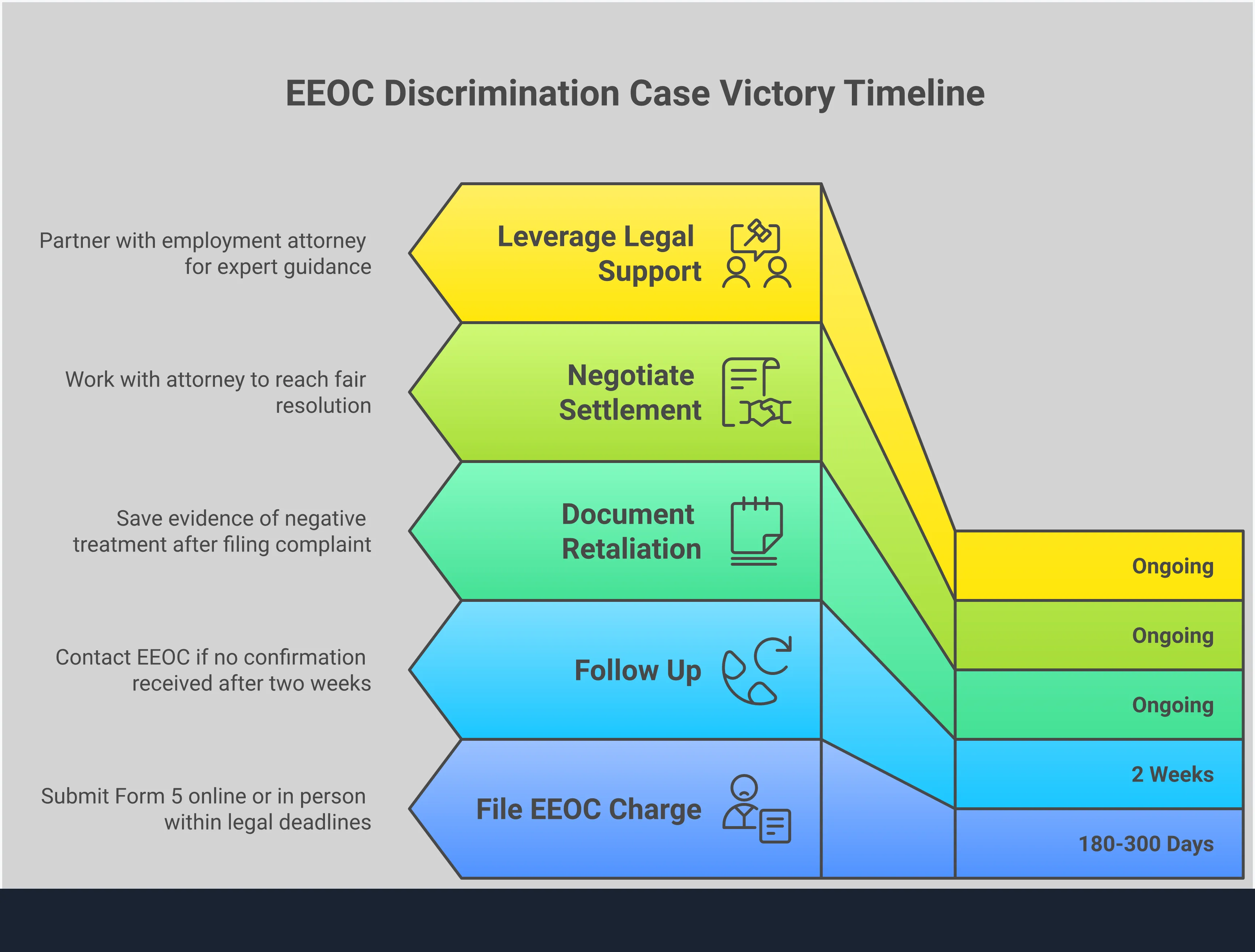
Think of yourself as a detective building a case file. Since it’s rare to find a “smoking gun” email where a manager admits to discrimination, you need to rely on circumstantial evidence. Your most powerful tool is documentation. Keep a detailed log of every incident, including dates, times, locations, what was said, and who was present. Save copies of emails, text messages, performance reviews, and any other written communication that feels relevant. If you have positive feedback or awards, keep those too, as they can contradict an employer’s later claims of poor performance.
How to Prove a Pattern of Discrimination
One isolated incident can be hard to prove, but a pattern of behavior is compelling. A pattern shows that what happened to you wasn’t a one-off event but part of a larger issue. Look for evidence that others in your protected group are treated similarly, or that people outside your group receive better treatment. For example, are women consistently passed over for promotions that go to men with less experience? Are older workers the first to be laid off? Documenting these trends can help establish a hostile work environment and strengthen your claim significantly.
Meeting the “Burden of Proof”
In employment law, the “burden of proof” is on you, the employee. This means you are responsible for presenting enough evidence to convince the EEOC or a court that discrimination likely occurred. It’s a high bar to clear, which is why documentation and showing a pattern are so important. You need to build a clear, logical narrative that connects the dots for investigators. Simply feeling that you were treated unfairly isn’t enough; you need to support that feeling with concrete facts. An experienced employment lawyer can help you organize your evidence to meet this legal standard.
What Challenges Does the EEOC Face?
While the EEOC is a crucial resource for employees facing discrimination, it’s important to understand the agency has its own set of challenges. It operates within a complex legal system and faces significant practical limitations that can impact how, and if, a case moves forward. Knowing these hurdles can help you prepare a stronger claim and set realistic expectations for the process.
Employers often have sophisticated legal teams and HR departments dedicated to defending against these claims. They are well-versed in building a case to protect the company’s interests. At the same time, the laws themselves can be difficult to apply to the nuances of modern workplaces. Understanding these challenges isn’t meant to discourage you, but to empower you with a clear picture of the landscape. When you know what you’re up against, you can better prepare to advocate for yourself effectively, whether you’re working with the EEOC or pursuing other legal avenues.
Limited Resources and High Caseloads
The EEOC is responsible for enforcing federal anti-discrimination laws across the entire country, which is a massive undertaking. Unfortunately, the agency often operates with limited funding and staffing relative to the sheer volume of complaints it receives each year. According to the Center for Public Integrity, this resource gap means many workers who face discrimination are left to fend for themselves.
With investigators handling heavy caseloads, your complaint may not get the in-depth attention it deserves. This reality underscores the importance of presenting a well-documented and compelling case from the very beginning. An experienced employment law attorney can help ensure your claim is clear, complete, and positioned for serious consideration.
Common Employer Defenses
Employers and their legal teams have standard strategies for defending against discrimination claims. A common defense is to point to official company policies and mandatory employee training sessions on EEO laws as proof that they are committed to a fair workplace. They may also argue that the decision affecting your employment, whether it was a termination, demotion, or being passed over for a promotion, was based on neutral and objective criteria, not discriminatory bias.
These defenses are designed to create doubt and suggest that the company acted appropriately. Overcoming them requires more than just your personal account; it requires concrete evidence that can challenge the employer’s official story and expose the wrongful termination or discriminatory act for what it was.
Complex Laws and Modern Workplace Issues
Employment law is not always straightforward. Proving discrimination can be incredibly difficult, especially when it’s subtle or masked by other workplace issues. As one LSU Law Review article notes, employment discrimination cases are among the most challenging to win. The issues are becoming even more complex as workplaces evolve. For example, the EEOC now handles cases involving threats of deportation against immigrant workers who complain or other forms of abuse against vulnerable employees.
These situations create unique barriers that make it harder for employees to come forward and prove their case. Navigating a claim involving a hostile work environment or retaliation requires a deep understanding of both federal and state laws, which is why having expert legal guidance is so valuable.
How EEOC Victories Reshape the Workplace
When the EEOC secures a victory for an employee, the impact goes far beyond a single person or a settlement check. These wins send a powerful message to employers everywhere: discriminatory and illegal practices have consequences. More importantly, they often force companies to fundamentally change how they operate, creating safer and more equitable environments for all employees. An EEOC case can be the catalyst that overhauls outdated policies, introduces meaningful training, and sets a new standard for what is acceptable in the workplace. This ripple effect is one of the most significant outcomes of holding employers accountable for their actions.
Forcing Policy Changes and New Training
A successful EEOC case rarely ends with just financial compensation. The agency is focused on corrective action to prevent the same thing from happening again. This often means the employer is required to implement sweeping policy changes. For instance, a company might be ordered to rewrite its employee handbook to clarify anti-harassment rules or establish a clear, confidential process for reporting discrimination. The EEOC can also mandate comprehensive training for all employees, managers, and HR staff on federal anti-discrimination laws. These are not just check-the-box exercises; they are structured programs designed to foster a more inclusive culture and ensure everyone understands their rights and responsibilities.
Creating Lasting Changes in Company Practices
EEOC victories create lasting change by setting legal precedents and pushing industries toward better practices. When one company is held accountable for unfair treatment, others take notice and often review their own internal policies to avoid similar legal trouble. A significant ruling can influence how employers handle everything from hiring and promotions to accommodations and terminations. For example, a case might lead a company to adopt more objective, skills-based criteria for promotions to reduce the influence of unconscious bias. These systemic shifts help prevent future instances of wrongful termination and protect countless workers who might have otherwise faced the same unfair treatment.
How to Strengthen Your EEOC Claim
Filing a claim with the EEOC is a significant step toward holding your employer accountable. But simply filing isn’t always enough. The strength of your case depends heavily on the preparation and strategic actions you take from the very beginning. Building a solid claim requires careful attention to detail, a clear understanding of the process, and often, the right professional support. By focusing on a few key areas, you can present the strongest possible case and give yourself a better chance at a just outcome.
Meeting Critical Deadlines and Filing Rules
The world of employment law runs on strict deadlines. For EEOC claims, you generally have 180 to 300 days from the date of the discriminatory act to file a charge. Missing this window can mean losing your right to seek justice. Once you file, the clock on the statute of limitations for your federal claims stops until the EEOC finishes its process. This makes timely filing absolutely critical. These rules can be confusing, so it’s vital to understand which deadlines apply to your specific situation. Keeping organized records of incidents, including dates and times, will help ensure you meet every important cutoff and build a clear timeline for your employment law claim.
Why You Should Partner With an Employment Lawyer
Navigating the EEOC process can feel isolating. As one report notes, “Despite legal protections, most workers who face discrimination are on their own.” An experienced employment lawyer acts as your advocate, ensuring you aren’t alone. They understand the specific evidence the EEOC looks for and can help you gather and present it effectively. A lawyer can handle communications with investigators, articulate the legal basis for your claim, and help you avoid common mistakes that could weaken your case. Partnering with a dedicated legal team like our firm means having a professional in your corner who is committed to protecting your rights every step of the way.
Avoid These Common Pitfalls
One of the biggest hurdles in a discrimination case is proving your employer’s intent. Employers rarely admit to discrimination, and as legal experts point out, they “rarely leave clear evidence of discrimination.” This makes your documentation essential. Keep a detailed log of every incident, save relevant emails or messages, and note any witnesses. Another pitfall is letting emotions guide your actions. Always communicate with your employer professionally. Finally, don’t wait too long to act. The longer you wait, the more memories can fade and evidence can disappear, making it more difficult to build a compelling case.
Frequently Asked Questions
What’s the difference between filing with the EEOC and hiring my own lawyer? Think of the EEOC as a neutral government investigator and a lawyer as your personal advocate. The EEOC’s job is to enforce federal law and investigate whether your employer’s actions were illegal. A lawyer’s job is to represent your specific interests, guide you through the entire process, and fight for the best possible outcome for you. An attorney can help you file a stronger EEOC charge and can also pursue legal action on your behalf outside of the EEOC system.
How long will the EEOC investigation take? It’s best to be prepared for a lengthy process. Because the EEOC handles a huge number of claims with limited resources, an investigation can take many months, and sometimes over a year, to complete. The timeline isn’t a reflection of your case’s strength, but rather the reality of the agency’s workload.
Will my employer know I filed a claim, and can they fire me for it? Yes, the EEOC will notify your employer of the charge as part of its investigation. However, it is illegal for your employer to punish you in any way for filing a claim. This is called retaliation, and it’s the most common charge the EEOC handles. If your employer fires you, demotes you, or takes any other negative action after you file, that could form the basis of an additional, and often very strong, legal claim.
What happens if the EEOC decides not to take my case or finds no discrimination? This is not necessarily the end of your case. If the EEOC closes its investigation, it will issue you a document called a “Notice of Right to Sue.” This gives you 90 days to file a lawsuit in federal court. The EEOC’s decision is often based on its limited resources, not the merits of your claim. This is a critical moment where an employment lawyer can assess your options and help you pursue a private lawsuit if you have a strong case.
Do I need a “smoking gun” email to prove my case? Not at all. In fact, it’s extremely rare to find direct proof of discrimination. Most successful cases are built on a collection of circumstantial evidence that, when viewed together, tells a clear story. This includes your detailed notes, emails, performance reviews, and evidence of how others were treated differently. Your goal is to show a pattern of behavior that points to discrimination, and consistent documentation is the best way to do that.
Related Articles
- Workplace Retaliation Lawyer: A Complete Guide
- How Million Dollar Discrimination Settlements Are Won
- Hostile Work Environment Settlement Amounts: A Guide
Treated unfairly because of who you are?
Workplace discrimination is illegal in California, at employers of every size covered by FEHA. Get a free, confidential case review.
Request Your Free Consultation