
If you are experiencing inappropriate behavior at work, your first question is likely, “What do I do now?” The uncertainty can be paralyzing, but taking clear, deliberate steps can help you protect yourself and build a strong case. This article provides a practical, action-oriented guide for what to do if you are facing workplace harassment. We will cover the most important first steps, including how to document every incident in detail, how to officially report the conduct to your company, and how to recognize the red flags of a toxic work environment. We’ll also explain when it’s time to contact a sexual harassment attorney Los Angeles County ca to ensure your rights are fully protected.
Key Takeaways
- Understand and document what’s happening: Harassment includes both quid pro quo demands and hostile work environments; keeping a detailed, private record of each incident is a powerful first step you can take.
- Your rights are protected by law: California law protects you from the harassment itself and any retaliation for reporting it, but you must file a claim within a specific timeframe, which is generally three years.
- You can afford an expert advocate: Specialized employment attorneys handle the legal complexities for you, and most work on a contingency fee basis, meaning you pay no legal fees unless they win your case.
What Counts as Sexual Harassment in California?
It can be tough to know if what you’re experiencing at work crosses the line from uncomfortable to illegal. The term “sexual harassment” covers a wide range of behaviors, and California law is very clear about what is not acceptable in the workplace. Understanding the legal definitions can help you identify your situation and figure out your next steps.
If you believe your rights have been violated, our California Sexual Harassment Lawyer team can help you understand your options and pursue your claim.
Related articles: How to Find an Attorney for Sexual Harassment at Work | Can I Sue My Boss for Sexual Harassment in LA County? | How to Document Sexual Harassment in Sacramento County
Under both state and federal law, there are two main categories of illegal workplace sexual harassment. Knowing the difference can help you understand your rights and how your employer might be held responsible. Both forms of sexual harassment are unlawful, and you are protected from having to endure them as a condition of your employment.
The Two Main Types of Harassment
The first type is called “quid pro quo” harassment. This is a Latin phrase that means “this for that.” It happens when a supervisor, manager, or someone else in a position of power demands sexual favors in exchange for a job benefit (like a raise or promotion) or threatens negative consequences (like being fired or demoted) if you refuse. With this type of harassment, the company is automatically held responsible for the supervisor’s actions.
The second type is a hostile work environment. This occurs when unwelcome sexual conduct is so severe or frequent that it creates an intimidating, offensive, or abusive workplace. This can include everything from inappropriate jokes and comments to unwanted touching or the display of offensive images.
Harassment Inside and Outside the Office
A common misconception is that harassment only counts if it happens at the office during work hours. That’s simply not true. Harassment can occur anywhere and at any time, including at off-site work events, through text messages, on social media, or via email. If the behavior is connected to your job and contributes to a hostile work environment, it can be part of a legal claim.
The behavior itself can range from offensive comments and unwelcome sexual advances to direct threats and even physical assault. The key is that the conduct is unwelcome and affects your ability to do your job in a safe and respectful setting. No one should have to tolerate this kind of behavior to earn a living.
How Can a Sexual Harassment Lawyer Help You?
When you’re dealing with sexual harassment at work, the thought of taking legal action can feel incredibly daunting. This is where a lawyer steps in. Think of them not just as a legal expert, but as your dedicated advocate who can manage the entire process for you. They handle the complex legal procedures, communicate with your employer on your behalf, and build a strong case, allowing you to focus on your own well-being. From the very first conversation, their goal is to understand your situation, protect your rights, and work toward the best possible outcome for you.
Evaluating Your Case and Explaining Your Options
The first thing a lawyer will do is listen. During an initial consultation, you’ll have the chance to share your story in a safe, confidential space. They will carefully evaluate the details of your situation to determine if it meets the legal criteria for sexual harassment under California law. Based on this assessment, they can explain your rights and lay out all the available options. This might include filing a complaint with a government agency, negotiating a settlement, or pursuing a lawsuit. This step is all about giving you clarity and a strategic roadmap so you can make informed decisions about what to do next.
Gathering Evidence to Build Your Claim
A successful harassment claim depends on strong evidence, but it’s not always obvious what you need or how to get it. Your attorney will guide you through this critical process. They know what types of evidence are most compelling, such as emails, text messages, witness testimonies, performance reviews, and personal notes documenting each incident. They can help you organize these details into a clear timeline that demonstrates a pattern of inappropriate behavior or a hostile work environment. This professional guidance ensures your claim is built on a solid foundation, taking the guesswork out of proving your case.
Filing Official Complaints on Your Behalf
Navigating the administrative side of a harassment claim can be a maze of paperwork and deadlines. To file a claim in California, you typically need to go through agencies like the Department of Fair Employment and Housing (DFEH) or the Equal Employment Opportunity Commission (EEOC). An experienced lawyer will handle all of these filings for you. They will draft the official complaint, make sure it’s submitted correctly and on time, and manage all communications with the agency. This not only prevents procedural errors that could harm your case but also creates a professional buffer between you and your employer, protecting you from potential retaliation.
Negotiating a Settlement or Taking Your Case to Court
Many sexual harassment cases are resolved without ever going to trial. Your lawyer is a skilled negotiator who will advocate for a fair settlement that compensates you for lost wages, emotional distress, and other damages. They will handle all discussions with your employer’s legal team, fighting for your best interests. However, if a fair agreement cannot be reached, they will be fully prepared to represent you in court. Whether at the negotiating table or in front of a judge, their job is to champion your case so you can focus on your future. At Bluestone Law, we are prepared to see your case through every step of the way.
What to Do If You’re Facing Workplace Harassment
Experiencing harassment at work can leave you feeling isolated and unsure of what to do next. It’s important to remember that you have rights and there are concrete steps you can take to protect yourself and hold the responsible parties accountable. Taking action can feel intimidating, but by following a clear process, you can build a strong foundation for your case and start the path toward a resolution. The following steps can help you regain a sense of control and prepare for what comes next.
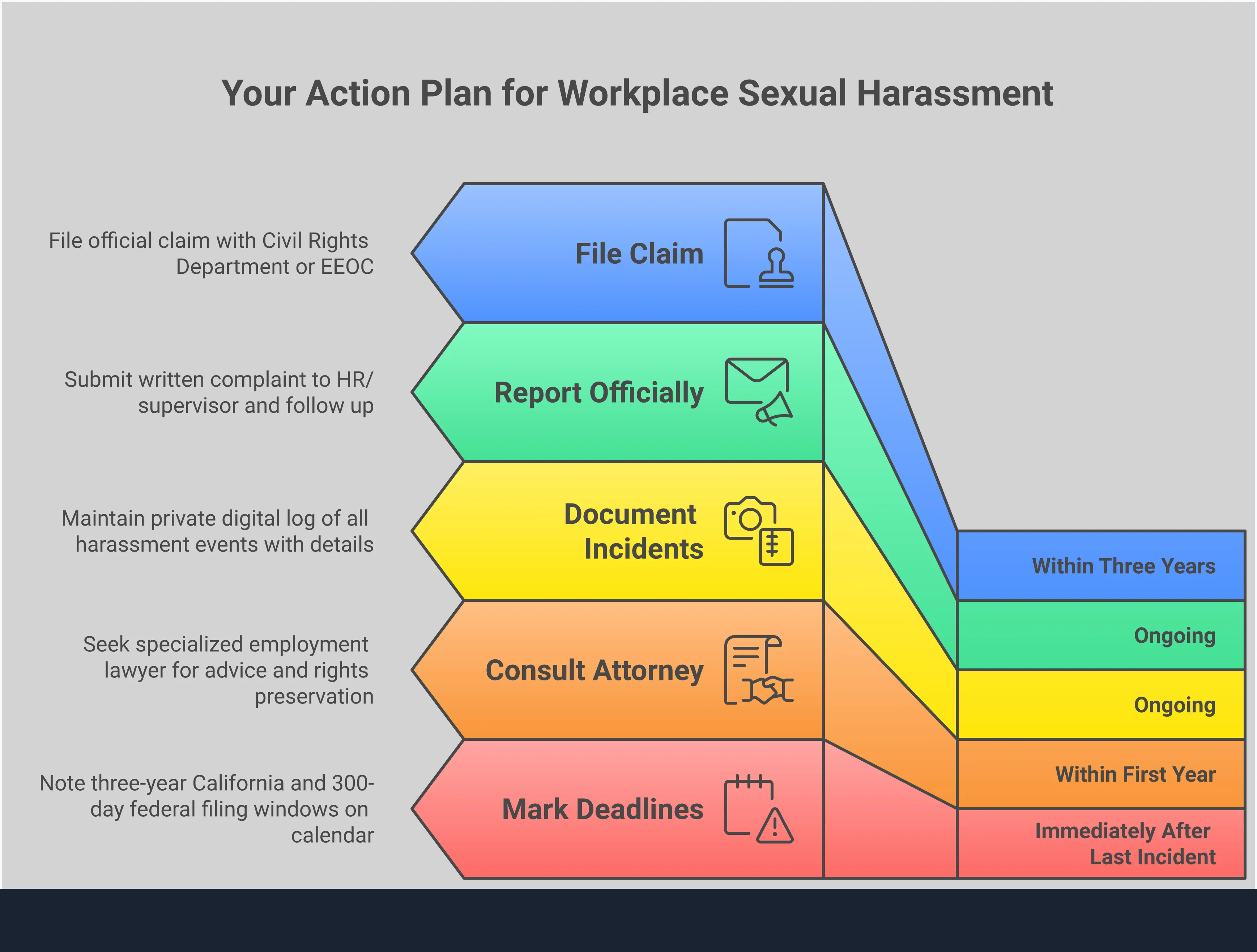
First Steps to Protect Yourself
If you believe you are experiencing sexual harassment, the most important first step is to acknowledge it and not dismiss your feelings. Trust your instincts. Your safety and well-being are the priority. It’s crucial to understand your rights from the very beginning. California law protects you from being punished for speaking up. It is illegal for your employer to take any negative action against you, such as firing, demoting, or reassigning you, for reporting harassment. This protection against retaliation is a fundamental part of your rights as an employee, giving you a secure foundation to voice your concerns without fear of losing your job.
How to Document Everything
Careful documentation is one of the most powerful tools you have. If you decide to take legal action, a detailed record can become the backbone of your claim. Start a private log, separate from your work computer or accounts, and record every incident. For each entry, include the date, time, and location of the event. Write down exactly what was said or done, and who was involved. If anyone else was present, note their names as potential witnesses. Save any related emails, text messages, or other digital communications in a secure place. This detailed record helps create a clear timeline and demonstrates a pattern of behavior, which is essential for a sexual harassment case.
Reporting Harassment Within Your Company
Once you have documented the incidents, the next step is often to report the behavior internally. Check your employee handbook for your company’s official reporting policy. Typically, you should report the harassment to your supervisor or the Human Resources department. Put your complaint in writing, such as in an email, so you have a record of when you reported it and what you said. Under California law, employers are legally required to take your complaint seriously, conduct a fair investigation, and take action to stop the harassment. Reporting internally is a critical step that shows you gave your employer a chance to fix the hostile work environment.
Red Flags of a Toxic Work Environment
Sometimes harassment is a symptom of a larger cultural problem within a company. One of the biggest predictors of harassment is a workplace culture where inappropriate behavior is tolerated or ignored. Pay attention to the environment around you. Do leaders or colleagues make inappropriate sexual jokes or comments? Is there a pattern of unwanted touching, staring, or personal questions? These behaviors are often dismissed as “just joking,” but they can be clear signs of a toxic atmosphere. Recognizing these red flags can validate your experience and show that the issue is not isolated. A workplace that permits this kind of discrimination is failing to provide a safe environment for its employees.
Finding the Right Sexual Harassment Attorney for You
Choosing a lawyer to represent you is a significant decision, especially when you’re dealing with the stress of workplace harassment. The right attorney does more than just file paperwork; they become your advocate, your guide, and your trusted advisor. You need someone who not only has the right legal skills but also makes you feel supported and understood. Think of your initial consultations as interviews where you’re deciding who is the best fit for you and your case. To help you make an informed choice, focus on a few key areas: their specific experience, their overall legal focus, their communication style, and their familiarity with local courts.
Look for Specific Experience in Harassment Cases
When you’re looking for legal help, you want a specialist, not a generalist. An attorney who regularly handles sexual harassment claims will have a deep understanding of the specific challenges these cases present. They know what kind of evidence is needed, how to counter common defense tactics, and what it takes to build a strong claim. A qualified sexual harassment lawyer can properly evaluate your situation, clearly explain your rights, and guide you through the process. Their focused experience means they won’t be learning on your time. They’ve been down this road before and can help you anticipate what’s ahead.
Confirm Their Focus is Employment Law
Sexual harassment is a specific violation that falls under the broader umbrella of employment law. It’s crucial that your attorney has a practice dedicated to this area of law. California’s Fair Employment and Housing Act (FEHA) and federal laws like Title VII of the Civil Rights Act provide powerful protections for employees, but they are complex and constantly evolving. An attorney who lives and breathes employment law will be current on all relevant statutes and case law. This expertise is vital for protecting you not just from harassment but also from illegal workplace retaliation for speaking up.
Find a Communication Style That Fits Your Needs
This process is personal and can be emotionally draining. The last thing you need is an attorney who makes you feel uncomfortable or unheard. During your consultation, pay attention to how the lawyer communicates. Do they listen to your story without interrupting? Do they explain legal concepts in a way you can understand? You should never feel embarrassed or ashamed when discussing what happened. A good attorney creates a safe space for you to be open and honest. Trust your gut. You’ll be working closely with this person, so find someone whose approach makes you feel respected and confident.
Ask About Their Local Court Experience
While many cases settle out of court, you need an attorney who is prepared to go to trial if necessary. Having a lawyer who is familiar with the Los Angeles County court system is a distinct advantage. They will know the local court rules, the tendencies of different judges, and the reputations of opposing law firms. This local knowledge can be invaluable in shaping case strategy and handling the legal landscape effectively. Don’t hesitate to ask about their experience in local courts. An attorney who is confident in their home turf can give you an edge.
How Much Does a Sexual Harassment Lawyer Cost?
Let’s talk about one of the biggest concerns people have when thinking about getting legal help: the cost. It’s completely understandable to worry about how you’ll afford a lawyer, especially when you’re already dealing with the stress of a hostile work environment. The good news is that hiring an attorney is often more accessible than you might think. Many people believe they need a lot of money saved up to even speak with a lawyer, but that’s usually not the case for sexual harassment claims.
Most employment law firms that represent employees understand that their clients aren’t in a position to pay hefty legal bills upfront. Because of this, they have fee structures designed to remove the financial barrier to getting justice. The most common arrangement is the contingency fee, which means you don’t pay anything out of pocket. Other attorneys might use different methods, like hourly rates, but the goal is to provide a path forward. Don’t let assumptions about cost stop you from exploring your options. A good lawyer will be transparent about their fees from the very first conversation.
Understanding Contingency Fees
The most common payment structure you’ll find for sexual harassment cases is the contingency fee. In simple terms, this means the lawyer’s payment is contingent on them winning your case. You pay no legal fees upfront or during the process. If your lawyer secures a settlement or a court award for you, their fee is a pre-agreed-upon percentage of that amount. If you don’t win, you don’t owe them any attorney fees.
This model is incredibly helpful because it allows you to pursue a claim without any financial risk. It also means your lawyer is fully invested in getting you the best possible outcome, since their payment depends on it. It aligns your interests and ensures they believe in the strength of your case before they take it on.
What About Hourly Rates?
While contingency fees are standard, some attorneys may work on an hourly basis. In this arrangement, you pay the lawyer for each hour they spend working on your case. The rate can vary widely depending on the lawyer’s experience, reputation, and the complexity of your situation. Some lawyers might also ask for a retainer, which is an upfront payment that they draw from as they work.
Hourly rates are less common for employees filing harassment claims, but you might encounter them. Some attorneys may also propose a flat fee for a specific service, like reviewing a severance agreement. It’s important to clarify the billing method during your initial consultation so you know exactly what to expect and can decide what works best for your circumstances.
Clearing Up Common Myths About Legal Costs
One of the most persistent myths is that quality legal representation is out of reach for the average person. This idea prevents many people from seeking the help they deserve. The reality is that the employment law field has evolved to make justice more accessible. Fee structures like the contingency model were created specifically to help people stand up to employers with deep pockets, leveling the playing field.
Don’t let fear of the cost keep you from making a call. Most reputable sexual harassment lawyers offer a free, confidential consultation to discuss your case. This is your opportunity to learn about your rights, evaluate your options, and understand exactly how the attorney’s fees work, all without any financial commitment. It’s a no-risk first step toward protecting yourself.
Know Your Rights: California’s Harassment Laws
When you’re dealing with harassment at work, it can feel incredibly isolating. But it’s important to remember that you are not alone, and the law is on your side. California has some of the strongest employee protection laws in the country, designed to ensure your workplace is a safe and respectful environment. Understanding these rights is the first step toward taking action and reclaiming your peace of mind. Let’s walk through the key legal protections you should know about.
Your Protections Under the Fair Employment and Housing Act (FEHA)
In California, your primary shield against workplace harassment is the Fair Employment and Housing Act (FEHA). This powerful state law makes it illegal for an employer to allow harassment based on a wide range of protected categories, including your gender, gender identity, gender expression, or sexual orientation. FEHA’s goal is simple: to guarantee that every employee has the right to a job environment free from hostility and discrimination. It applies to all employers with five or more employees, offering broad coverage to workers across the state. This act is the foundation of your right to feel safe and respected on the job.
How Federal Law Protects You
Alongside California’s state laws, you also have protections under federal law. Title VII of the Civil Rights Act of 1964 prohibits sex discrimination, which includes sexual harassment. Federal law defines this as any unwelcome sexual behavior that creates a hostile work environment or results in an adverse employment decision. This can include visual, verbal, or physical conduct. Importantly, these protections apply regardless of your gender or the gender of the harasser. This means federal law recognizes that harassment can happen to anyone, by anyone, and provides a path to hold employers accountable on a national level.
Your Right to Be Free from Retaliation
One of the biggest fears people have about reporting harassment is the possibility of backlash from their employer. The law recognizes this and provides strong protections against it. It is illegal for your employer to punish you or take any negative action against you for filing a harassment complaint. This is known as being protected from retaliation. Retaliatory actions could include being fired, demoted, receiving a pay cut, or being reassigned to a less desirable position. These laws exist to ensure you can stand up for your rights without fearing for your job, allowing you to speak out against misconduct safely.
What Your Employer Is Legally Required to Do
Your employer isn’t just supposed to react to harassment; they have a legal duty to proactively prevent it. In California, companies with five or more employees must provide sexual harassment training to all staff members. They are also required to develop and distribute a written policy that clearly outlines their stance against harassment, discrimination, and retaliation. This policy should detail the complaint process so you know exactly what steps to take. By holding employers responsible for creating a safe culture, the law puts the onus on them to prevent and address sexual harassment before it escalates.
How Long Do You Have to File a Harassment Claim?
When you’re dealing with workplace harassment, the last thing on your mind is a legal calendar. However, strict deadlines, known as statutes of limitations, govern how long you have to take legal action. Missing these deadlines can unfortunately mean losing your right to file a claim altogether. Both California and federal laws have their own timelines, and understanding them is the first step toward protecting your rights and holding your employer accountable. It’s crucial to know these timeframes so you can make informed decisions without feeling rushed.
California’s Statute of Limitations
In California, you generally have three years from the date of the last harassing incident to file a claim with the state’s Civil Rights Department (CRD), formerly known as the DFEH. This three-year window is designed to give you enough time to process what happened, collect evidence, and seek legal advice without the pressure of a rapidly approaching deadline. While it may seem like a long time, it’s always best to start the process as soon as you feel ready. An experienced attorney can help you understand how this timeline applies to your specific case of workplace harassment.
Understanding Federal Deadlines
Federal law offers a different, and much shorter, timeline. Under Title VII of the Civil Rights Act, you typically have just 180 days from the incident to file a charge with the Equal Employment Opportunity Commission (EEOC). The good news for Californians is that this deadline is extended to 300 days because California has its own agency (the CRD) that investigates these claims. While California’s state law often provides broader protections, knowing the federal deadline is still important. Figuring out which law to file under can be complex, which is why discussing your situation with an employment law attorney is a critical step.
Are There Exceptions to the Deadline?
While these deadlines are firm, there are some rare exceptions. For example, if the harassment was ongoing, the clock might not start until the very last incident occurred. This is sometimes called the “continuing violation doctrine.” An extension might also be possible if you were unable to file for reasons outside your control, like a serious medical condition, or if your employer intentionally misled you about your rights. However, you should never assume an exception will apply to your case. These situations are legally complex, so it’s vital to act quickly and consult a lawyer to ensure you don’t miss your window to seek justice.
What Compensation Can You Receive in a Harassment Case?
If you’ve experienced workplace harassment, you might wonder what kind of financial recovery is possible. A successful legal claim can lead to different types of compensation, often called “damages.” These are designed to cover not only the money you lost but also the emotional harm you endured. The specific compensation you can receive depends on the details of your situation, but it generally falls into a few key categories. Understanding these can help you see what a potential outcome might look like and why pursuing a claim can be a crucial step toward justice.
Recovering Lost Wages and Financial Costs
One of the most direct financial impacts of harassment is the loss of income. If the situation forced you to quit, take unpaid leave, or resulted in a wrongful termination, you may be able to recover those lost wages. This compensation covers the money you would have earned if the harassment hadn’t occurred, including back pay for the time you were out of work. In some cases, it can also include “front pay,” which is an estimate of future earnings you’ll lose while you search for a new job. The goal is to make you financially whole again, addressing the tangible costs of the unlawful workplace conduct.
Compensation for Emotional Distress
Workplace harassment takes a significant emotional toll, and California law recognizes this. You can be compensated for the psychological harm you’ve suffered, which is known as emotional distress damages. This can include things like anxiety, depression, sleeplessness, and the general pain and suffering caused by the experience. While it’s impossible to put a price tag on your mental well-being, this compensation acknowledges the very real, non-economic impact of a hostile work environment. It’s a way for the legal system to hold your employer accountable for the harm that goes beyond your bank account.
Punitive Damages: Punishing the Employer
Sometimes, an employer’s behavior is especially reckless or malicious. If they knew about the harassment and did nothing to stop it, or if they actively participated in it, the court may award punitive damages. Unlike the other forms of compensation, these aren’t meant to repay you for a specific loss. Instead, their purpose is to punish the employer and send a clear message that such conduct will not be tolerated. Punitive damages are a powerful tool for deterring other companies from allowing sexual harassment and other forms of misconduct to happen in their workplaces.
Reading Between the Lines of Client Reviews
Choosing an attorney is a deeply personal decision, especially for something as sensitive as sexual harassment. Client reviews offer a window into what it’s really like to work with a lawyer. They go beyond credentials, giving you a feel for an attorney’s communication style, empathy, and dedication. As you read testimonials, look for patterns. Do clients consistently mention feeling heard and respected? Or are there recurring complaints about communication breakdowns? Paying attention to these details helps you find a legal partner who will not only fight for you but also support you through a challenging time.
What Positive Reviews Tell You
When looking at positive reviews, seek out specifics. Vague praise is nice, but detailed accounts are far more telling. Look for testimonials where clients talk about how the attorney made them feel safe, understood, and empowered. Reviews that highlight a lawyer’s commitment to fighting for their clients’ rights show you’re looking at someone with tenacity and integrity. When former clients describe how an attorney explained complex legal processes in a clear, patient way, it signals you’ve found a true advocate. These stories reveal a lawyer who sees you as a person, not just a case file.
Warning Signs to Watch For
Just as positive reviews can be illuminating, negative ones serve as important warnings. A major red flag is any review that mentions feeling dismissed or unheard. Your experience is valid, and an attorney who downplays your situation is not the right fit. Be wary of reviews that complain about a lack of communication. If clients consistently report that their calls went unreturned or they were left in the dark, you can expect a similar experience. This pattern suggests a law firm that is disorganized or overloaded, which can put your case at risk in a hostile work environment.
Key Questions to Ask During a Consultation
Your initial consultation is your chance to interview a potential attorney. Go in prepared with questions to see if they are the right advocate for you. Ask about their specific experience with cases like yours and how they handle communication. A crucial question is how they would protect you from becoming a victim of retaliation at work, as this is a common fear. Pay close attention to how they answer. Do they listen carefully and explain things clearly, without legal jargon? You should leave the conversation feeling more informed and confident, not more confused.
Let Bluestone Law Fight for You
Facing harassment at work can make you feel isolated and powerless, but you don’t have to go through it alone. Choosing the right legal partner is a critical step toward protecting your rights and holding your employer accountable. At Bluestone Law, we are dedicated to standing with employees and providing the guidance and advocacy you need to seek justice. Our team understands the complexities of California employment law and is committed to fighting for a fair outcome for you. We handle the legal burdens so you can focus on your well-being and future.
Our Focus is on Employee Rights
Bluestone Law is a plaintiff’s employment law firm, which means our entire practice is built around protecting employees. We are deeply familiar with the laws that protect you from sexual harassment, including California’s Fair Employment and Housing Act (FEHA) and federal laws like Title VII. Our mission is to ensure your rights are upheld and that you have a powerful advocate in your corner. We believe everyone deserves to work in an environment free from harassment and discrimination, and we are here to help make that a reality for our clients.
How We Provide Full-Service Representation
We offer comprehensive legal support for victims of harassment and other related workplace issues. Our services extend beyond a single incident to cover the full scope of your experience, including cases of discrimination, retaliation, and wrongful termination. Many of our clients have faced backlash for reporting harassment or participating in an investigation, and we are prepared to fight against that as well. We manage every aspect of your case, from filing complaints to negotiating with your employer, providing clear, steady guidance at every turn.
A Proven Record of Success in Employment Law
Our attorneys are skilled negotiators who can often secure a fair settlement without a lengthy court battle. However, when an employer is unwilling to do the right thing, we are always prepared to take a case to trial. Our goal is to hold employers accountable for their actions and secure the compensation you deserve for what you’ve endured. This can include recovering lost wages, compensation for emotional distress, and other damages. At Bluestone Law, we are committed to achieving the best possible result for you.
Related Articles
- How a CA Hostile Work Environment Lawyer Can Help You
- How to Document Sexual Harassment: A Guide for Sac Co Employees
- When to Call a Hostile Work Environment Lawyer in LA
- Sexual Harassment: A Guide to Your Rights & Options
- Harassment & Hostile Work Environment Lawyer | Bluestone Law
Frequently Asked Questions
What if the harassment was just “jokes” or comments, not physical? Yes, that can absolutely be considered sexual harassment. California law recognizes that a hostile work environment can be created by severe or frequent verbal conduct, not just physical actions. This includes inappropriate jokes, offensive comments about someone’s appearance, sexual remarks, or displaying offensive images. If this behavior is unwelcome and makes it difficult for you to do your job, it can be the basis for a legal claim.
I’m afraid I’ll be fired if I report what’s happening. What protections do I have? This is a very common and valid fear, but the law is on your side. Both California and federal laws make it illegal for your employer to retaliate against you for reporting harassment. Retaliation includes any negative action, such as being fired, demoted, having your hours cut, or being reassigned to a worse position. These protections are in place specifically so you can speak up without risking your livelihood.
Do I need a lot of evidence like emails or texts to have a case? While digital evidence like emails and texts can be very helpful, it is not required to build a strong case. Many harassment situations happen in person without a digital trail. Your own detailed notes about each incident, including dates, times, what was said or done, and who was present, are a powerful form of evidence. Testimony from you and any witnesses can also be crucial. An attorney can help you identify and gather all the relevant proof for your claim.
Do I have to report the harassment to my HR department before I can take legal action? In many situations, it is a good idea to report the harassment internally through your company’s official channels, like HR. This gives your employer a formal opportunity to investigate and fix the problem, which is a step the law expects them to take. However, if you feel unsafe doing so or if your company doesn’t have a clear process, you should speak with an attorney to understand the best course of action for your specific circumstances.
How can I afford to hire a lawyer when I’m worried about my job? Most employment lawyers who represent employees, including our firm, work on a contingency fee basis. This means you do not pay any attorney fees upfront or out of your own pocket. The lawyer’s fee is a percentage of the settlement or court award they win for you. If you don’t win your case, you don’t owe any attorney fees. This structure makes it possible for anyone to get high-quality legal help, regardless of their financial situation.
Think you were wrongfully terminated?
Get a free, confidential case evaluation from our experienced employment law attorneys.
Request Your Free Consultation