
When you experience misconduct at work, it can leave you feeling confused and isolated, questioning what just happened and what you should do next. You might wonder if a line was crossed or if you’re overreacting. Please know that your feelings are valid, and you have rights. California law provides strong protections, but to use them effectively, you need to understand the legal language. This article will help you do just that. We will explore the critical differences in workplace sexual harassment vs assault for Ventura County employees, so you can move forward with confidence, armed with the knowledge to protect your safety and your career.
Key Takeaways
- Harassment isn’t limited to physical contact: Unwelcome verbal or visual conduct can create a hostile work environment, while sexual assault specifically involves unwanted physical touching. Knowing this distinction helps you identify the misconduct and understand your legal path forward.
- Create a detailed record and report the incident: Write down everything you can remember about what happened, including dates, times, and any witnesses. Use your company’s official reporting channels, and remember that storing your notes in a personal, non-work account is best for privacy.
- California law protects you from retaliation: Your employer has a legal responsibility to provide a safe workplace and investigate complaints. Most importantly, you are legally protected from being fired, demoted, or punished in any way for making a good-faith report about harassment.
What Is Workplace Sexual Harassment in California?
It can be tough to know where the line is between an uncomfortable moment at work and illegal harassment. Thankfully, California law provides clear definitions to help you understand your rights. Workplace sexual harassment isn’t just one thing; it falls into two main categories recognized by the courts: “quid pro quo” and “hostile work environment.” Knowing the difference is the first step in identifying what you’re experiencing and figuring out what to do next.
Defining the Legal Boundaries
In California, the Fair Employment and Housing Act (FEHA) is the key law that protects you. It defines sexual harassment as any unwelcome sexual advance or conduct of a sexual nature that affects your employment. This is a broad definition that covers a lot of ground. It includes unwanted physical touching, but it also applies to verbal conduct, like making offensive comments about someone’s body or telling lewd jokes. It can even cover visual harassment, such as displaying sexually suggestive images or sending explicit emails. The most important word here is “unwelcome.” If the conduct makes you feel uncomfortable and it’s sexual in nature, it could be considered harassment under the law.
Quid Pro Quo vs. Hostile Work Environment
Let’s break down the two main types of sexual harassment. The first is “quid pro quo,” a Latin phrase that means “this for that.” This happens when a supervisor or someone in a position of power links job benefits to sexual favors. For example, a manager might offer you a promotion if you go on a date with them or threaten to cut your hours if you refuse their advances. The second type is a hostile work environment. This occurs when unwelcome sexual conduct is so severe or pervasive that it creates an intimidating, offensive, or abusive workplace. It’s not about a single, isolated comment but rather a pattern of behavior that interferes with your ability to do your job.
What Counts as Sexual Assault at Work?
While sexual harassment can include a wide range of verbal and non-verbal behaviors, sexual assault is much more specific. It involves a physical violation that crosses a serious legal and personal boundary. This distinction is incredibly important because it affects your legal options and the steps you should take to protect yourself. When behavior moves from inappropriate comments or gestures to non-consensual physical contact, it is no longer just harassment; it is assault. Understanding this difference is the first step in seeking justice and holding the responsible person, and potentially your employer, accountable for what happened.
Understanding Unwanted Physical Contact
At its core, sexual assault is defined by unwanted physical sexual contact. This is the key element that separates it from many other forms of workplace misconduct. The contact must be sexual in nature and happen without your explicit permission or consent. Examples of sexual assault can range from an unwanted kiss or the touching of private body parts to attempted or completed rape. It is a direct violation of your physical safety and personal autonomy. If you did not consent to a sexual physical act, it is assault, regardless of your relationship with the perpetrator or any prior interactions.
Criminal Charges vs. Civil Lawsuits
When a sexual assault occurs, it can trigger two different legal processes: criminal and civil. Because sexual assault is a crime, the person who assaulted you can face criminal charges prosecuted by the state. Separately, you have the right to file a civil lawsuit to recover damages for the physical and emotional harm you endured. Under California law, employers have a legal duty to prevent sexual harassment and assault. If your employer failed to protect you, they may be held liable in a civil case. It’s also vital to know that you have up to ten years from the incident to file a civil lawsuit for sexual assault.
Harassment vs. Assault: What’s the Difference?
While people often use the terms “harassment” and “assault” interchangeably, they have distinct legal meanings. Understanding these differences is crucial because it affects how you report an incident, what legal actions you can take, and what kind of protection you have. Both are serious and unacceptable in the workplace, but they follow different legal paths. Let’s break down the key distinctions in behavior, legal consequences, and your employer’s responsibilities.
Key Differences in Behavior
Think of sexual harassment as a broad category that covers a wide range of unwelcome conduct of a sexual nature. This can include inappropriate jokes, unwanted comments about your appearance, requests for sexual favors, or showing you explicit images. It doesn’t have to be physical to be illegal.
Sexual assault, however, is much more specific: it always involves unwanted physical sexual contact. This includes any form of touching, grabbing, or physical attack of a sexual nature. It’s important to know that sexual assault is a severe form of sexual harassment. If a sexual assault occurs at work, it is automatically considered sexual harassment, often creating a hostile work environment.
Different Legal Consequences
Because the behaviors are different, the legal outcomes are too. Workplace sexual harassment is primarily a civil matter. In California, the Fair Employment and Housing Act (FEHA) protects employees from this kind of misconduct. When you file a harassment claim, you are seeking remedies like monetary damages or changes in your workplace through a civil lawsuit.
Sexual assault, on the other hand, is both a civil wrong and a criminal act. This means a perpetrator can face criminal charges brought by the state, which could lead to fines or jail time. In addition, you can also file a separate civil lawsuit against the individual and potentially your employer to recover damages for the harm you suffered. This dual-track legal process is a major difference between assault and other forms of harassment.
How Employer Responsibility Varies
Your employer has a legal duty to protect you from all forms of harassment, including assault. Under California law, employers with five or more employees must provide sexual harassment prevention training and take reasonable steps to prevent and correct harassing behavior. If they fail to do this, they can be held liable for the damages you experience from workplace harassment.
When an assault occurs, the employer’s responsibility is examined closely. If they knew, or should have known, that an employee posed a threat and did nothing to stop it, they could be found negligent. The focus is on whether they failed to provide a safe work environment. This responsibility underscores the importance of employers creating and enforcing strong anti-harassment policies and responding immediately to all complaints.
What to Do If You Experience Harassment or Assault
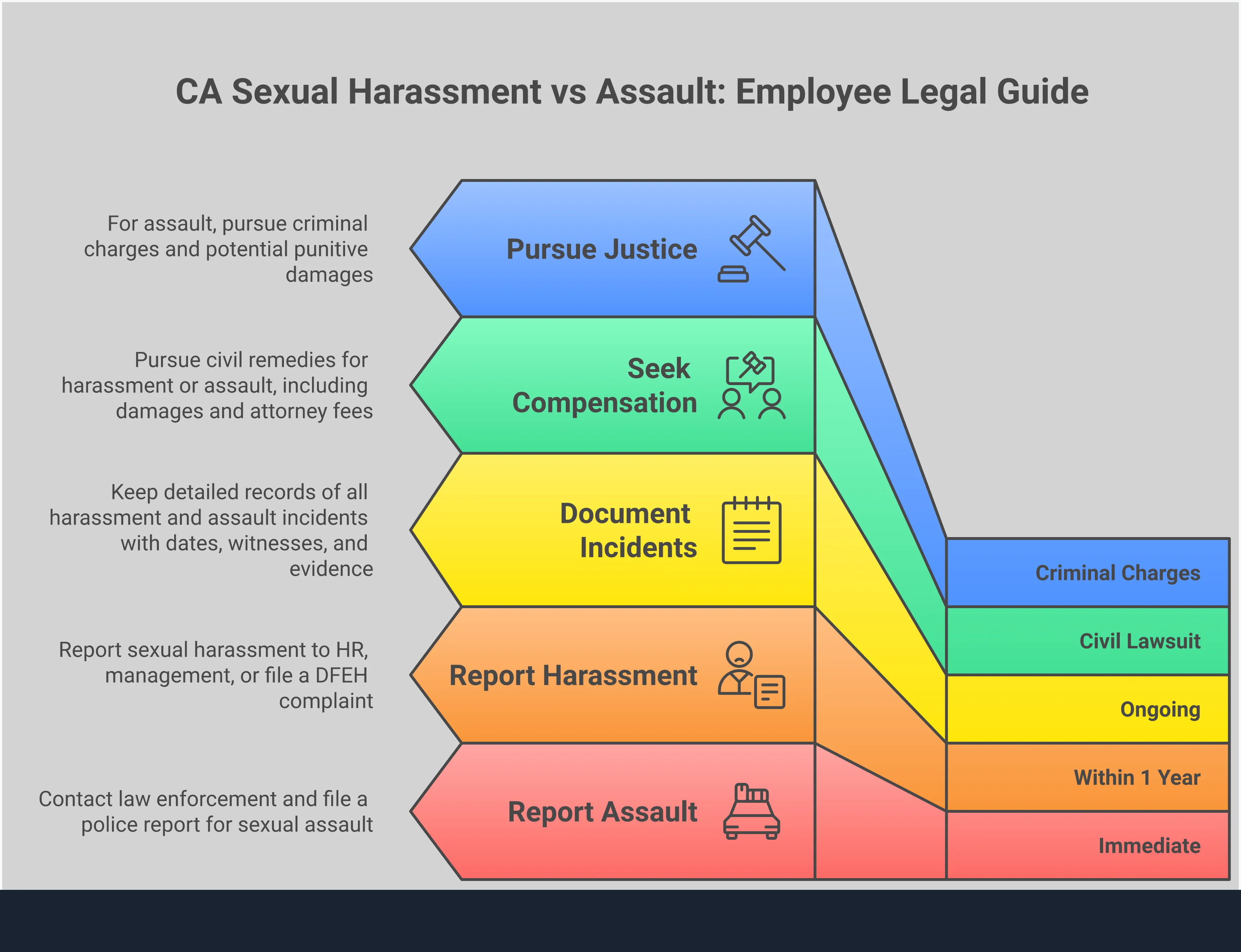
Facing harassment or assault at work can feel isolating and overwhelming. It’s a deeply personal violation that happens in a professional space, leaving you unsure of where to turn. Please know that you are not alone, and you have rights. Taking action can feel daunting, but by following a few clear steps, you can protect yourself and begin to hold the responsible parties accountable. The following guide will walk you through what to do immediately after an incident, how to report it, the importance of documentation, and the legal deadlines you need to know.
Your Immediate First Steps
Your safety is the top priority. If you are in immediate danger, remove yourself from the situation and contact law enforcement. Once you are safe, one of the most important first steps you can take is to speak with an employment lawyer. An attorney can listen to what happened, help you understand your legal options, and provide confidential advice tailored to your specific circumstances. You don’t have to figure this out on your own. Getting professional guidance early on can help you make informed decisions about how to proceed and ensure your rights are protected from the very beginning.
How to Report the Incident Internally
Most companies have a formal process for reporting misconduct. You can typically report what happened to your manager, a supervisor you trust, or the Human Resources department. Your employee handbook should outline the specific steps to take. California law requires employers to take these complaints seriously and conduct a fair investigation. The law also offers protection against being punished for speaking up. Your employer cannot legally fire, demote, or otherwise penalize you for reporting harassment or participating in an investigation. This is a critical protection that allows you to assert your rights without fear of losing your job.
Tips for Documenting Everything
Creating a detailed record of what happened is crucial. As soon as you can, write down everything you remember about each incident. Include the date, time, and location. Describe exactly what was said or done and who was there to witness it. Keep copies of any related emails, text messages, or photos. It’s best to store this information in a safe, personal place, like a private journal or a personal email account, not on a work computer or device. This documentation creates a timeline of events that can serve as powerful evidence if you decide to take legal action for workplace harassment.
Understanding Important Deadlines
When pursuing a legal claim, you must act within a specific time frame, known as the statute of limitations. These deadlines vary depending on the type of claim. For example, a recent change in California law allows someone to file a civil lawsuit for sexual assault within 10 years of the incident or three years from the date they discovered their resulting injuries, whichever is later. Other claims, like those for harassment, have different, often shorter, deadlines. Because these time limits are strict, it is essential to speak with an employment law attorney as soon as possible to make sure you don’t miss your opportunity to seek justice.
Know Your Rights as a Ventura County Employee
Understanding your rights is the first step toward protecting yourself in the workplace. California has some of the strongest employee protection laws in the country, and it’s important to know that these laws are on your side. You are not expected to endure harassment or assault as part of your job. The law provides clear protections and places specific responsibilities on your employer to maintain a safe work environment. Knowing these rules can help you identify when your rights have been violated and what you can do about it.
Protections Under California’s FEHA Law
In California, your primary shield against workplace misconduct is the Fair Employment and Housing Act, or FEHA. This powerful state law protects employees from both discrimination and harassment based on protected characteristics like sex, gender, race, and disability. FEHA applies to all employers with five or more employees, making its protections incredibly broad. It explicitly makes sexual harassment illegal, ensuring you have a legal foundation to stand on if you experience inappropriate behavior at work. This law is designed to ensure every employee has the right to a workplace free from intimidation and hostility.
What the Law Requires of Your Employer
Your employer has a legal duty to prevent harassment. Under California law, it is unlawful to harass an employee because of their sex. To proactively address this, employers with five or more employees are required to provide sexual harassment prevention training to everyone on staff, not just supervisors. This isn’t just a suggestion; it’s a mandate. The goal is to educate the entire workforce on what constitutes sexual harassment, how to report it, and how to create a respectful workplace culture. This requirement shows that the state expects employers to take an active role in stopping harassment before it starts.
Your Right to Be Safe from Retaliation
Speaking up about harassment is a protected act. California law makes it illegal for your employer to retaliate against you for reporting harassment, participating in an investigation, or even just raising concerns about inappropriate conduct. Retaliation can take many forms, such as being fired, demoted, receiving a pay cut, or being reassigned to a less desirable role. These protections are in place because the system only works if people feel safe coming forward. You should never have to choose between your safety and your job.
Common Myths That Prevent People from Seeking Help
Many people hesitate to speak up about workplace harassment because of common misunderstandings about what it is and what happens when you report it. These myths can make you second-guess your own experiences and feel isolated, creating a powerful barrier to getting the help you deserve. Believing these falsehoods can prevent you from recognizing illegal behavior for what it is. Let’s clear up some of the most persistent and damaging misconceptions. Understanding the truth is the first step toward protecting yourself and holding others accountable.
Debunking Misconceptions About Victims
One of the most harmful myths is that harassment is just a clumsy attempt at flirting or a simple misunderstanding. In reality, harassment is often about power and control, not attraction. It can leave you feeling vulnerable and cause serious emotional and psychological harm that affects your career and personal life. Many people also fear that reporting the conduct will jeopardize their job. This fear is understandable, but it’s important to know that the law offers protection against becoming a victim of retaliation at work. Your employer is legally prohibited from firing, demoting, or otherwise punishing you for making a good-faith complaint about harassment.
The Truth About Physical Contact
Many people incorrectly believe that for behavior to be considered sexual harassment, it must involve physical touching. This is simply not true. Harassment can be verbal, visual, or non-physical. Unwelcome comments about your appearance, sexually charged jokes, intrusive questions about your personal life, or sending explicit emails and images can all contribute to a hostile work environment. The key element is that the conduct is unwelcome and severe or pervasive enough to alter the conditions of your employment. You don’t have to be physically touched to have a valid legal claim.
Moving Past Gender Stereotypes and Victim-Blaming
The outdated stereotype of a male harasser and a female victim is another myth that needs to be left behind. The truth is that anyone can be a target of harassment, and anyone can be a perpetrator, regardless of gender. Sexual harassment can occur between people of the same gender or different genders. Statistics show that a significant number of men also experience workplace sexual harassment, though it is often underreported due to social stigma. Focusing on the behavior itself, rather than the gender of the people involved, is essential to understanding and addressing the problem correctly.
Why Impact Matters More Than Intent
You might hear a harasser say, “I was just joking” or “I didn’t mean anything by it.” Their intent, however, is not what matters most under the law. The focus is on the impact of their behavior on you and your ability to do your job. If the conduct is unwelcome and creates an intimidating or offensive work environment, it can be illegal harassment. Another common myth is that the behavior must be repeated over a long period. While harassment often involves a pattern of conduct, a single, severe incident can be enough to create a hostile work environment and justify legal action.
How Employers Can Build a Safer Workplace
Creating a safe workplace is an employer’s responsibility. It requires a proactive approach to building an environment where every employee feels secure and respected. A truly safe workplace is built on clear expectations, accessible support systems, and a genuine commitment to respect from the top down. While you can’t control your employer’s actions, you can understand what they should be doing to protect you under California employment law. Understanding these obligations is the first step in recognizing when your workplace falls short.
Creating Clear Policies and Effective Training
Every California employer is required to have a written policy that clearly defines and prohibits sexual harassment. This policy shouldn’t be buried in a dusty employee handbook; it should be easy to find and understand. It needs to outline what behaviors are unacceptable and explain the consequences. Alongside a strong policy, your employer must provide effective, interactive training for all employees. This means going beyond a generic video. Good training uses realistic examples, encourages discussion, and makes it absolutely clear how to report an incident and who to report it to. It’s about empowering everyone to recognize and stop sexual harassment.
Establishing Safe Reporting Systems
A policy is only as good as the system in place to enforce it. You should have a safe and confidential way to report any concerns without fearing for your job. This means having multiple reporting options, since your direct supervisor could be the person causing the problem. A trustworthy system might include reporting to HR, a designated manager, or even an anonymous third-party hotline. The process should be designed to make you feel heard and taken seriously. Most importantly, a safe reporting system protects you from being punished for speaking up. Any form of punishment for reporting an issue makes you a victim of retaliation at work, which is illegal.
Building a Culture of Respect
Ultimately, policies and procedures work best when they are part of a larger culture of respect. This starts with leadership. When managers and executives model respectful behavior, it sets the standard for the entire company. In a positive work culture, inappropriate comments are addressed, not ignored, and everyone understands that harassment can happen between any two people, regardless of gender. This kind of environment makes it clear that the focus is on the impact of the behavior, not the intent behind it. A workplace committed to respect doesn’t just prevent a hostile work environment; it creates a place where people can do their best work without fear.
When Is It Time to Call an Employment Lawyer?
Deciding to involve a lawyer can feel like a big step, but you don’t have to wait for a crisis to seek legal advice. An employment lawyer is an advocate who can help you understand your rights and protect your interests, often before a situation gets worse. If you’re feeling unsure about what to do next or feel like your employer isn’t listening, it might be the right time to get a professional opinion.
Signs You Need Legal Advice
It’s time to contact a lawyer when internal reporting fails or the situation feels too serious to handle alone. If you’ve reported harassment and the behavior continues, or if your employer dismisses your concerns, that’s a clear sign you need support. Another major red flag is any form of retaliation at work. If you’re suddenly demoted, have your hours cut, or are fired after making a complaint, you should seek legal counsel immediately. Any incident involving unwanted physical contact or assault warrants a call to a lawyer. A consultation can provide the clarity you need to move forward confidently.
The Benefits of Professional Legal Help
Bringing in an employment lawyer does more than just give you legal representation; it gives you a strategic partner. A lawyer clarifies your rights under California law, so you know exactly where you stand. They can lay out all your potential options, from filing a formal complaint to negotiating a settlement. Your employer likely has a legal team advising them, and having your own advocate levels the playing field. They handle the difficult conversations and complex paperwork, allowing you to focus on your well-being while they work to stop the sexual harassment you’ve endured.
What to Expect from the Legal Process
The legal process often starts with a simple, confidential conversation. During an initial consultation, you’ll share your story and any evidence you’ve collected. The attorney will listen, ask questions, and give you an honest assessment of your case. If you have a valid claim, they will explain the next steps. This might involve filing an official complaint with a state agency or sending a formal letter to your employer. The goal is to hold your employer accountable for maintaining a hostile work environment and to secure a remedy for the harm you’ve experienced. A good lawyer will guide you through each stage, ensuring you feel informed and supported.
Where to Find Support in Ventura County
Facing harassment or assault at work can feel incredibly isolating, but you don’t have to go through it alone. Ventura County has several local resources dedicated to providing the immediate and long-term support you need. Whether you need someone to talk to right now, legal guidance, or help understanding your rights, these organizations are here for you. Taking the step to reach out is a sign of strength, and there are people ready to listen and help you figure out what to do next.
Local Hotlines and Support Services
If you need to speak with someone immediately, confidential help is just a phone call away. The Coalition for Family Harmony offers support and can be reached at (805) 983-6014. For bilingual assistance, the Ventura County Rape Crisis Hotline is available at (805) 300-2181. These services are designed to provide a safe space for you to talk about what happened and explore your options without pressure. Reaching out to a hotline can be a powerful first step in getting the help you deserve and starting on the path to recovery.
Government Agencies That Can Help
In California, you have strong legal protections against workplace misconduct. The Fair Employment and Housing Act (FEHA) makes it illegal for an employer to harass an employee based on sex or other protected characteristics. This includes everything from unwanted advances to creating a hostile work environment. State agencies are responsible for enforcing these laws and investigating complaints. Understanding these protections is key to holding your employer accountable and ensuring your workplace is safe for everyone. These laws exist to protect you, and you have the right to use them.
Counseling and Advocacy Groups
Navigating the aftermath of harassment can be complex, but legal aid organizations throughout Ventura County can help. Many offer low-cost representation and can guide you through the legal system. For example, Grey Law provides consultations and can be reached at (805) 658-2266 to discuss your specific situation. These groups can help you understand your rights and protect you from becoming a victim of retaliation at work for speaking up. An experienced attorney can offer the dedicated advocacy you need to move forward with confidence.
Related Articles
- Sexual Harassment: A Guide to Your Rights & Options
- How to Document Sexual Harassment: A Guide for Sac Co Employees
- California sexual harassment lawyer – Bluestone Law
- Suing for Sexual Harassment: What You Need to Know
Frequently Asked Questions
What if the harassment is from a coworker, not my boss? Yes, that still counts as workplace harassment. California law protects you from harassment by anyone in your workplace, including supervisors, coworkers, and even non-employees like clients or customers. The key is that the behavior is unwelcome and creates a hostile work environment. Your employer has a legal responsibility to address the situation and stop the behavior once they are aware of it, regardless of who the harasser is.
I’m worried about reporting because I don’t have physical evidence like emails or texts. What should I do? You should still report the behavior. Many harassment cases don’t have a “smoking gun” piece of evidence. Your own detailed, written account of what happened is a powerful form of documentation. Write down dates, times, locations, what was said or done, and who else might have seen or heard the incident. This personal log can be crucial evidence. The law doesn’t require you to have a perfect case before you speak up; it requires your employer to investigate your complaint seriously.
How bad does behavior have to be to create a “hostile work environment?” There isn’t a magic formula, but the law looks at whether the conduct is severe or pervasive enough to interfere with your ability to do your job. “Pervasive” means it happens frequently, like daily inappropriate comments or jokes. “Severe” means a single incident was so serious that it created an abusive environment on its own, such as a physical assault. Simple teasing or an isolated offhand comment might not meet the legal standard, but a pattern of unwelcome conduct or a single egregious act certainly can.
What should I expect my employer to do after I file an internal complaint? Once you report harassment, your employer is legally obligated to take immediate and reasonable steps to investigate your complaint. This usually involves a prompt, fair, and thorough investigation conducted by a neutral party, like HR. They should interview you, the person you accused, and any potential witnesses. After the investigation, they must take appropriate action to stop the harassment and prevent it from happening again. They should also inform you of their findings and the actions taken.
Does contacting a lawyer mean I have to file a lawsuit? Not at all. Speaking with an employment lawyer is simply a way to get confidential advice about your specific situation. The first conversation, or consultation, is for you to understand your rights and explore your options. A lawyer can help you decide the best course of action, which might include helping you navigate your company’s internal reporting process or sending a formal letter on your behalf. Filing a lawsuit is only one of many possible outcomes, and the decision to proceed is always yours.
Think you were wrongfully terminated?
Get a free, confidential case evaluation from our experienced employment law attorneys.
Request Your Free Consultation