
Retaliation isn’t always a dramatic firing scene. Sometimes it’s much quieter. It’s being left out of meetings you used to lead. It’s a sudden, unexplained negative performance review after years of positive feedback. It’s your boss micromanaging every task you do, right after you reported a safety concern. These subtle shifts are designed to make your work life so difficult that you quit on your own. This article will break down what is employer retaliation in all its forms, from the obvious to the insidious, so you can identify it and know your rights. It’s about recognizing the patterns and understanding that these actions are illegal.
Key Takeaways
- Recognize retaliation in all its forms: Employer retaliation isn’t limited to being fired. It includes any negative action, like demotions, reduced hours, or even social exclusion, that happens after you assert a workplace right.
- Know which actions are legally protected: You are shielded from punishment when you report harassment, request medical leave, ask for a reasonable accommodation, or participate in a workplace investigation.
- Act quickly and document everything: If you suspect retaliation, keep a detailed record of every incident. Strict deadlines apply to legal claims, so it’s critical to gather evidence and seek advice without delay.
What Is Employer Retaliation?
It’s one of the most common fears employees have: if I speak up about a problem at work, will my boss punish me for it? Standing up for your rights can feel risky, but the law is on your side. When an employer takes negative action against you for exercising a legal right, it’s not just unfair, it’s illegal. This is known as employer retaliation, and it’s a serious violation of your workplace rights.
Understanding what retaliation is can help you identify it and take the right steps to protect yourself. It’s not always as obvious as being fired on the spot. Retaliation can take many forms, but the intent is always the same: to punish you for asserting your rights and to discourage others from doing the same.
The Legal Definition of Retaliation
At its core, retaliation is when your employer punishes you for engaging in a legally protected activity. According to the U.S. Equal Employment Opportunity Commission, this includes any action that might stop a reasonable employee from speaking up about their rights in the future. This could mean being fired, demoted, reassigned to a less desirable shift, having your pay cut, or even being excluded from meetings and projects you were previously a part of.
The key is the connection between your action and your employer’s reaction. If you report harassment and suddenly find your hours cut the next week, that could be retaliation. The law protects your right to a workplace free from this kind of punishment.
Why Do Employers Retaliate?
Employers usually retaliate to silence an employee and send a warning to others. When you report an issue like discrimination or unsafe working conditions, it can put a spotlight on problems the company would rather ignore. By punishing you, a manager might be trying to regain control and discourage anyone else from speaking out. This creates a culture of fear where employees feel they can’t raise legitimate concerns without risking their jobs.
This behavior doesn’t just harm the targeted employee; it can poison the entire workplace, leading to a hostile work environment. The goal of anti-retaliation laws is to ensure that every employee feels safe enough to report wrongdoing without fear of reprisal.
What Actions Are Legally Protected from Retaliation?
To have a valid retaliation claim, you must first show that you engaged in a “protected activity.” This is a legal term for specific actions you have a right to take without fear of punishment from your employer. The law shields you when you stand up for your rights or the rights of others. If an employer takes negative action against you after you’ve engaged in one of these activities, you may have a case for retaliation. Understanding what counts as a protected activity is the first step in recognizing if your employer has crossed a legal line.
Reporting Discrimination or Harassment
One of the most common protected activities is reporting workplace misconduct. According to the U.S. Equal Employment Opportunity Commission (EEOC), retaliation occurs when an employer punishes an employee for “standing up for their rights against job discrimination or harassment.” This includes making an internal complaint to your manager or HR department, filing a formal charge with a government agency, or even telling a manager you intend to file a complaint. You are protected whether you are reporting mistreatment directed at you or at a coworker. The key is that you are opposing conduct you reasonably believe is unlawful.
Exposing Illegal or Unsafe Practices
Speaking up about illegal or unsafe activities in the workplace is another critical protected activity. This is often called whistleblowing. As the Whistleblower Protection Program explains, retaliation happens when an employer punishes an employee for engaging in an activity that is protected by whistleblower laws. This could involve reporting financial fraud, violations of environmental regulations, or unsafe working conditions that put people at risk. Both federal and California laws offer strong protections for employees who have the courage to expose wrongdoing, ensuring they don’t have to choose between their job and doing the right thing.
Cooperating in Workplace Investigations
Your protection doesn’t end with your own complaint. You are also shielded from retaliation when you participate in an investigation into someone else’s claim. The EEOC clarifies that protected activities include filing a complaint or being a witness in a discrimination case. For example, if a coworker files a harassment complaint and you provide testimony to HR or an external investigator about what you saw, your employer cannot legally punish you for it. This protection is vital because it allows for fair and thorough investigations, as employees can speak truthfully without fearing for their jobs.
Taking Protected Medical or Family Leave
You have the right to take job-protected leave for specific family and medical reasons. Your employer cannot retaliate against you for exercising this right. The U.S. Department of Labor states that you are protected from retaliation if you use family and medical leave. This includes taking leave under the Family and Medical Leave Act (FMLA) or the California Family Rights Act (CFRA) for reasons like your own serious health condition, caring for a sick family member, or bonding with a new child. An employer who demotes you, reduces your pay, or fires you for taking legally protected leave is engaging in retaliation.
Asking for a Reasonable Accommodation
Requesting a change at work to accommodate a disability or a sincerely held religious belief is also a protected activity. The EEOC confirms that protected activities include asking for help with a disability or religious practice. For instance, if you need a modified work schedule to attend physical therapy or an ergonomic chair for a back condition, your employer cannot punish you for making the request. Similarly, asking for an exception to the dress code for religious reasons is protected. The law requires employers to engage in a good-faith process to find a solution, and penalizing you for starting that conversation is illegal.
What Does Employer Retaliation Look Like?
Retaliation isn’t always as dramatic as a scene from a movie. It can range from blatant, undeniable actions to subtle shifts in your work life that are hard to pin down. The key is that the negative action is a direct response to you engaging in a legally protected activity. Understanding what retaliation can look like is the first step in identifying if it’s happening to you.
Obvious Forms of Retaliation
The most straightforward forms of retaliation are adverse employment actions that directly impact your job status and income. These are often clear-cut and happen shortly after you’ve taken a protected action, like filing a complaint. Think of any action that would discourage a reasonable employee from speaking up.
Common examples include being fired, which could be grounds for a wrongful termination claim. Other obvious forms are demotions, salary reductions, or having your hours drastically cut. It could also look like being reassigned to a less desirable position or location, or even receiving a sudden, negative performance review after a history of positive feedback.
Subtle Ways Employers Retaliate
Retaliation can also be more insidious. These subtle actions are designed to make your work life difficult and unpleasant, hoping you’ll quit on your own. This can be harder to prove, but it’s just as illegal.
Subtle retaliation might include being excluded from important meetings or projects you were previously a part of. Your manager might start micromanaging your work, scrutinizing everything you do. You could be socially isolated, with colleagues or supervisors ignoring you. Other examples include being denied a promotion you were qualified for, having your requests for time off unfairly denied, or being subjected to false accusations or increased criticism. These actions can poison your work life and create a hostile work environment.
How Retaliation Can Create a Hostile Work Environment
When an employer retaliates against one person, it sends a chilling message to everyone else: “Don’t speak up, or you’re next.” This fear can poison the entire workplace culture. A single act of retaliation can make other employees afraid to report harassment, discrimination, or safety violations.
This creates an environment where misconduct goes unchecked and employees feel powerless. According to the U.S. Department of Labor, retaliation not only harms the targeted individual but can also degrade working conditions for the entire team. When people are afraid to exercise their rights, the workplace becomes less safe, less fair, and ultimately, hostile for everyone involved.
Know Your Rights: Laws That Protect You from Retaliation
If you’ve spoken up about something wrong at work, you might worry about what happens next. Fortunately, you don’t have to live in fear. A strong network of federal and state laws exists to protect you from employer retaliation. Understanding these rights is the first step toward protecting yourself. These laws ensure you can assert your rights without being unfairly punished for doing the right thing.
Federal Laws on Your Side
On a national level, several powerful laws make it illegal for your employer to punish you for exercising your rights. The U.S. Department of Labor defines retaliation as any negative action that would discourage a reasonable employee from speaking up. This includes laws like the Fair Labor Standards Act (FLSA), which protects your right to fair pay, and the Family and Medical Leave Act (FMLA). If you file a complaint about unpaid overtime or request protected family and medical leave, federal law says your employer cannot hold it against you by firing you, demoting you, or cutting your hours.
California’s Employee Protections
California provides some of the strongest employee protections in the country. State laws, like the Fair Employment and Housing Act (FEHA), make it clear that your employer cannot punish you for opposing practices forbidden by law, such as discrimination or harassment. This protection applies whether you’re filing a formal complaint or simply telling a manager that you believe a certain behavior is wrong. The goal is to ensure you feel safe enough to report misconduct. Employers are prohibited from taking any action that would create a chilling effect or make someone afraid to complain in the future.
Special Protections for Whistleblowers
If you report illegal or unethical activities at your company, you have special legal protections as a whistleblower. These laws encourage employees to expose wrongdoing without fearing for their jobs. Retaliation against a whistleblower happens when an employer punishes an employee for reporting things like fraud or safety violations. This could be an obvious action like being fired, or something more subtle. According to the Whistleblower Protection Program, these protections are crucial because they not only safeguard the individual who speaks up but also help maintain an ethical workplace for everyone.
How to Spot Retaliation at Work
Retaliation isn’t always a dramatic, movie-style firing scene. While getting fired right after you complain about discrimination is a clear red flag, many employers use more subtle tactics. They might try to make your work life so difficult that you quit on your own, or they might create a paper trail of poor performance to justify their actions later. The key is to trust your gut. If you feel like you’re being treated differently after speaking up, you probably are. Knowing the specific signs can help you identify what’s happening and understand when it’s time to seek help.
It’s important to remember that any negative action that would discourage a reasonable employee from making a complaint can be considered retaliation. This broad definition covers a wide range of behaviors, from obvious punishments to more insidious changes in your work environment. These actions are not just unfair; they are illegal, designed to silence employees and sweep problems under the rug. Learning to recognize these patterns is the first step toward protecting your rights and holding your employer accountable for creating a workplace where people feel safe to speak up without fear of punishment.
Look for Suspicious Timing
One of the most telling signs of retaliation is suspicious timing. If your employer takes negative action against you shortly after you’ve engaged in a legally protected activity, it can be strong evidence of their motive. For example, did you get a sudden negative performance review a week after you reported sexual harassment? Were your hours cut the day after you requested a reasonable accommodation for a disability? The closeness in time between your action and your employer’s reaction is what lawyers call “temporal proximity,” and it’s a powerful indicator. This is often the easiest way to connect their behavior to your complaint and show that you have become a victim of retaliation at work.
Notice Changes in How You’re Treated
Sometimes, retaliation shows up in the way your day-to-day work life changes. Pay attention to shifts in how you’re managed and included. Are you suddenly being left out of meetings you always attended? Is your boss micromanaging your every move when they used to be hands-off? Maybe you’ve been reassigned to a less desirable project, moved to an isolated office, or are being socially ostracized by management and even colleagues. These actions might seem small on their own, but together they can create a hostile work environment designed to punish you for speaking out. The goal is often to make you feel so uncomfortable that you decide to leave voluntarily.
Key Warning Signs to Watch For
Beyond subtle shifts, there are several clear warning signs of retaliation. These are significant, negative actions that directly impact your job, pay, or career path. Be on the lookout for things like being demoted, having your pay reduced, or being denied a promotion you were clearly in line for. Other red flags include being disciplined for a minor issue that is usually ignored, receiving an unfair performance evaluation, or having your job duties changed to something menial or outside your expertise. In the most serious cases, an employer’s actions can lead to a wrongful termination, either by firing you outright or by making your work conditions so unbearable that you have no choice but to resign.
What to Do if You Suspect Retaliation
Suspecting your employer is punishing you for doing the right thing is incredibly stressful. It’s easy to feel powerless, but you have rights and there are concrete steps you can take to protect yourself. Acting methodically is key. Here’s a clear plan for what to do if you believe you’re facing retaliation at work.
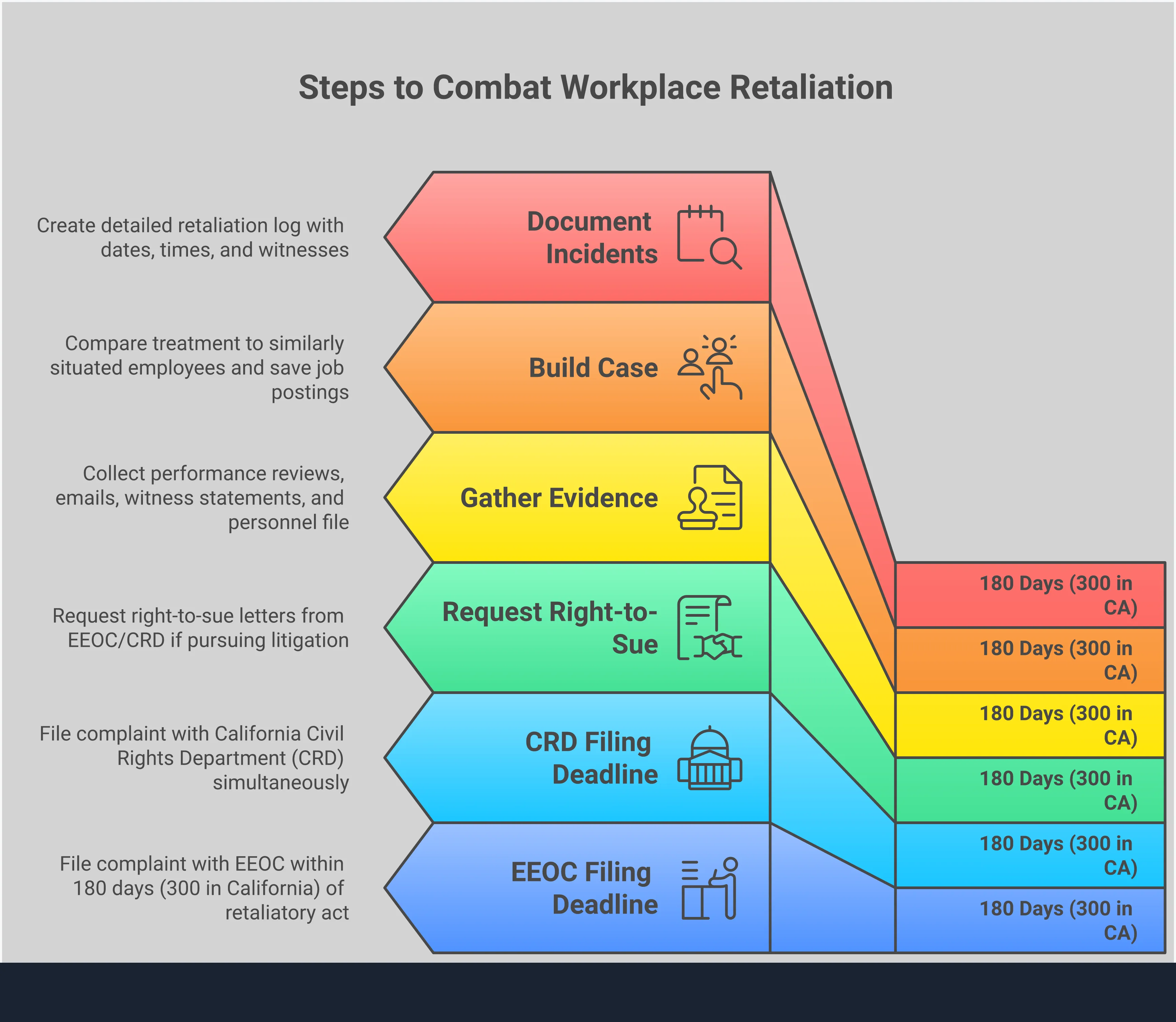
Step 1: Document Everything
Your first and most critical step is to document everything. Keep a detailed log of every incident you believe is retaliatory. Retaliation isn’t always obvious; as the Whistleblower Protection Program points out, “Even small things, like being left out of meetings, can count as retaliation.” For each event, write down the date, time, and location. Note who was involved, what was said, and if there were witnesses. Save relevant emails or documents to a personal account, not your work computer. This detailed record is crucial evidence and will be your most powerful tool if you are a victim of retaliation at work.
Step 2: Report It Internally (If Possible)
If you feel safe doing so, consider reporting the behavior internally. Your employee handbook should outline the official procedure, which usually involves contacting HR or a manager. Putting your concerns in writing creates an official record and gives the company a chance to correct the issue. This isn’t always a viable or safe option for everyone. If internal reporting fails or feels too risky, you can file a complaint with an external agency like the U.S. Department of Labor. Knowing all your options helps you make the best decision for your situation.
Step 3: File a Formal Complaint
When internal channels fail or aren’t appropriate, your next step is filing a formal complaint with a government agency like the EEOC or California’s Civil Rights Department (CRD). This action provides you with significant legal protection. The EEOC states, “You are protected from retaliation if you file a complaint about your worker rights.” This protection holds true even if your original claim isn’t ultimately proven, as long as you made it in good faith. Participating in a formal complaint process is a protected activity. Because this is a significant legal step, consulting with an employment lawyer can help you prepare a strong case.
How Can You Prove Retaliation?
Proving that your employer retaliated against you can feel like a huge challenge, but it’s not impossible. It comes down to building a strong case with the right kind of proof. The key is to show a clear connection between your protected action, like reporting harassment, and the negative treatment you received afterward. Let’s break down what that looks like and how you can demonstrate that you were a victim of retaliation at work.
Gathering the Right Evidence
To build a retaliation case, you need evidence showing the negative action was serious enough to discourage a reasonable person from speaking up. According to the U.S. Equal Employment Opportunity Commission (EEOC), the standard is whether the action “might deter a reasonable person from opposing discrimination.” This doesn’t have to be a firing or demotion. It could be a sudden transfer to a less desirable role, an unfair performance review, or being excluded from important meetings. Collect any documents that support your claim, including emails, text messages, performance reviews before and after your complaint, and personal notes detailing dates, times, and what was said.
Connecting Their Action to Your Complaint
A crucial piece of the puzzle is linking the negative action directly to your protected activity. Often, the most compelling evidence is timing. If you were fired or disciplined shortly after you filed a complaint or participated in an investigation, it creates a strong inference of retaliation. For example, if you had a stellar work record for years but were suddenly written up for minor issues just days after reporting discrimination, that suspicious timing can serve as powerful evidence. This connection is essential, especially in cases of wrongful termination. The closer the two events are, the easier it is to draw a line between them.
Understanding the Burden of Proof
Be prepared for your employer to offer a different reason for their actions. They will likely claim they fired you or cut your hours for a legitimate, non-retaliatory reason, like poor performance or budget cuts. The EEOC notes that employers can discipline or fire you for valid reasons that are unrelated to your complaint. Your task, with the help of an attorney, is to show that their stated reason is just a pretext, or a cover-up for the real, retaliatory motive. This is why your documented evidence is so important. It helps poke holes in their story and reveal the true reason for their actions.
What Can You Recover in a Retaliation Case?
If you’ve successfully proven that your employer retaliated against you, the law provides several ways to make things right. These remedies are designed not only to compensate you for what you’ve lost but also to restore you to the position you were in before the illegal action took place. The goal is to address the financial, professional, and emotional harm you’ve experienced. Depending on the specifics of your situation, you could be entitled to financial damages, getting your job back, or other solutions.
Potential Compensation and Damages
Facing retaliation takes a significant financial and emotional toll, and the law recognizes that. You may be able to recover several types of monetary damages. This often starts with “back pay,” which covers the wages and benefits you lost due to the employer’s actions. You can also seek damages for emotional distress, like the anxiety or stress caused by the retaliation. In cases where an employer’s conduct was particularly malicious, you might be awarded punitive damages. These are meant to punish the employer and discourage them from harming others. Understanding your options is a key part of fighting back as a victim of retaliation at work.
Getting Your Job Back and Other Solutions
For many people, the goal is to get their career back on track. One of the most powerful remedies in a retaliation case is reinstatement, where your employer is ordered to give you your job back. If returning to that workplace isn’t a good option, perhaps because the environment has become too hostile, you may be awarded “front pay.” This compensates you for future wages you’re likely to lose while searching for a new job. These solutions are especially critical in cases of wrongful termination, where an employee was illegally fired for exercising their rights.
Important Deadlines for Filing Your Claim
This is one area where you cannot wait. There are strict time limits, known as statutes of limitations, for filing a retaliation claim. If you miss the deadline, you could lose your right to take legal action. For example, claims with the federal EEOC must generally be filed within 180 days of the retaliatory act, though in California this can extend to 300 days. These timelines can be confusing. It’s crucial to speak with an attorney as soon as you suspect retaliation. They can help you understand the deadlines and ensure everything is filed correctly, protecting your employment law rights.
How Bluestone Law Can Help You Fight Back
Facing retaliation from your employer can feel incredibly isolating and stressful. It’s an unfair punishment for simply exercising your rights, and it’s easy to feel like you have nowhere to turn. But you don’t have to face this challenge alone. At Bluestone Law, we are dedicated to standing with employees and protecting them from unlawful treatment. We understand what you’re going through and are here to help you fight for your rights.
Our experienced team knows exactly how to handle these complex cases. We start by listening to your story to understand every detail of what happened. From there, we can help you file a formal complaint with the right government agencies and build a powerful case on your behalf. We are committed to holding employers accountable when they punish employees for legally protected activities, like reporting harassment or taking medical leave. Being the victim of retaliation at work can derail your career, and our goal is to get you the justice you deserve.
Retaliation isn’t always as obvious as a demotion or termination. Sometimes, it’s more subtle, like being excluded from important meetings, receiving a sudden negative performance review, or being moved to a less desirable shift. The U.S. Department of Labor makes it clear that any adverse action taken by an employer to punish an employee for a protected action can be considered retaliation. Our attorneys are skilled at identifying these hidden tactics and connecting them back to your protected activity.
We will work tirelessly to gather the necessary evidence, from emails and internal communications to witness statements, to prove your claim. If you believe you’re being punished for doing the right thing, contact our team for a consultation. We can help you understand your options and create a strategy to move forward.
Related Articles
- Workplace Retaliation Lawyer: A Complete Guide
- Canoga Park Employment Lawyer | Get Free Consult Today
Frequently Asked Questions
What if my boss says I was fired for poor performance, not retaliation? This is a very common defense employers use. They will often try to create a paper trail to justify their actions. Your role, with the help of an attorney, is to show that their stated reason is a cover-up for the real, retaliatory motive. This is where your documentation becomes essential. If you have a history of positive reviews that suddenly turned negative right after you reported an issue, that contrast can be powerful evidence that their reason isn’t genuine.
Do I have to report the retaliation to my company’s HR department first? While it can be helpful to follow your company’s internal reporting procedures, it is not always required or safe to do so. If you fear that reporting to HR will only make the situation worse, or if HR has already dismissed your concerns, you can file a complaint directly with a government agency like the EEOC or California’s Civil Rights Department. An employment lawyer can help you decide the best course of action for your specific circumstances.
What kind of proof do I actually need? I don’t have a recording of my boss admitting it. You don’t need a “smoking gun” confession to build a strong case. Most retaliation cases are built on circumstantial evidence. This includes emails, text messages, performance reviews, and your own detailed notes about what happened and when. The most powerful piece of evidence is often the timing. If a negative action occurred very soon after you reported misconduct or requested an accommodation, that close timing can create a strong link between the two events.
Can I be protected from retaliation even if my original complaint isn’t proven? Yes, absolutely. The law protects you for engaging in a protected activity, like reporting harassment, as long as you made the report in good faith, meaning you reasonably believed that what you were reporting was wrong. The protection isn’t dependent on you winning your initial claim. The goal of the law is to ensure employees feel safe speaking up without fear of punishment, regardless of the final outcome of the investigation.
How long do I have to take action if I think I’m being retaliated against? There are very strict deadlines, called statutes of limitations, for filing a retaliation claim. In California, you generally have to file a complaint with a state or federal agency within 300 days of the retaliatory act. If you miss this window, you could lose your right to seek justice. Because these timelines can be complex, it is incredibly important to contact an employment attorney as soon as you suspect you are facing retaliation.
Think you were wrongfully terminated?
Get a free, confidential case evaluation from our experienced employment law attorneys.
Request Your Free Consultation