
That “quick question” from your boss during your unpaid lunch break might seem harmless, but it could be illegal. In California, your right to a 30-minute, uninterrupted, and duty-free meal period is protected by law. Many employers blur the lines, asking you to answer an email, handle a customer, or stay on-site while you’re clocked out. These small interruptions aren’t just annoying; they are violations that can add up to significant unpaid wages and penalties. Understanding the difference between a demanding job and an illegal practice is the first step to protecting yourself. This guide will help you identify the signs of a violation and explain how a meal break violation lawyer can help you get the compensation you deserve.
Key Takeaways
- Know What Constitutes a Violation: A meal break violation isn’t just being denied a break. It also includes being interrupted with work, asked to remain on-call, or having break time automatically deducted when you worked, all of which are illegal in California.
- Document Every Incident in Detail: Your personal record is powerful evidence. Keep a private log of every missed or interrupted break, noting the date, time, and specific details of the violation. This detailed account creates a clear pattern that strengthens your potential legal claim.
- You Can Afford to Protect Your Rights: Many employment lawyers work on a contingency fee basis, so you don’t pay attorney fees unless you receive compensation. This arrangement makes professional legal help accessible and ensures your lawyer is fully invested in the success of your case.
What Is a Meal Break Violation?
A meal break violation happens when your employer doesn’t provide the legally required meal periods you’re entitled to. This could mean they fail to give you a break, interrupt you with work tasks, or otherwise prevent you from taking your full, uninterrupted time away from your duties. It’s a surprisingly common issue, and many employees aren’t aware of their specific rights. Understanding what constitutes a violation is the first step toward protecting yourself and ensuring you’re treated fairly at work.
California’s Meal Break Requirements
While there is no federal law that requires employers to provide meal breaks, California has some of the strongest protections for workers in the country. If you work a shift that is more than five hours long, your employer must provide you with a 30-minute, unpaid meal break. During this time, you must be completely relieved of all job duties. If your shift extends beyond 10 hours, you are entitled to a second 30-minute meal break. Your employer can’t require you to stay on-site or control what you do during this unpaid time. These meal and rest breaks are your right, not a privilege.
Common Ways Employers Violate Break Laws
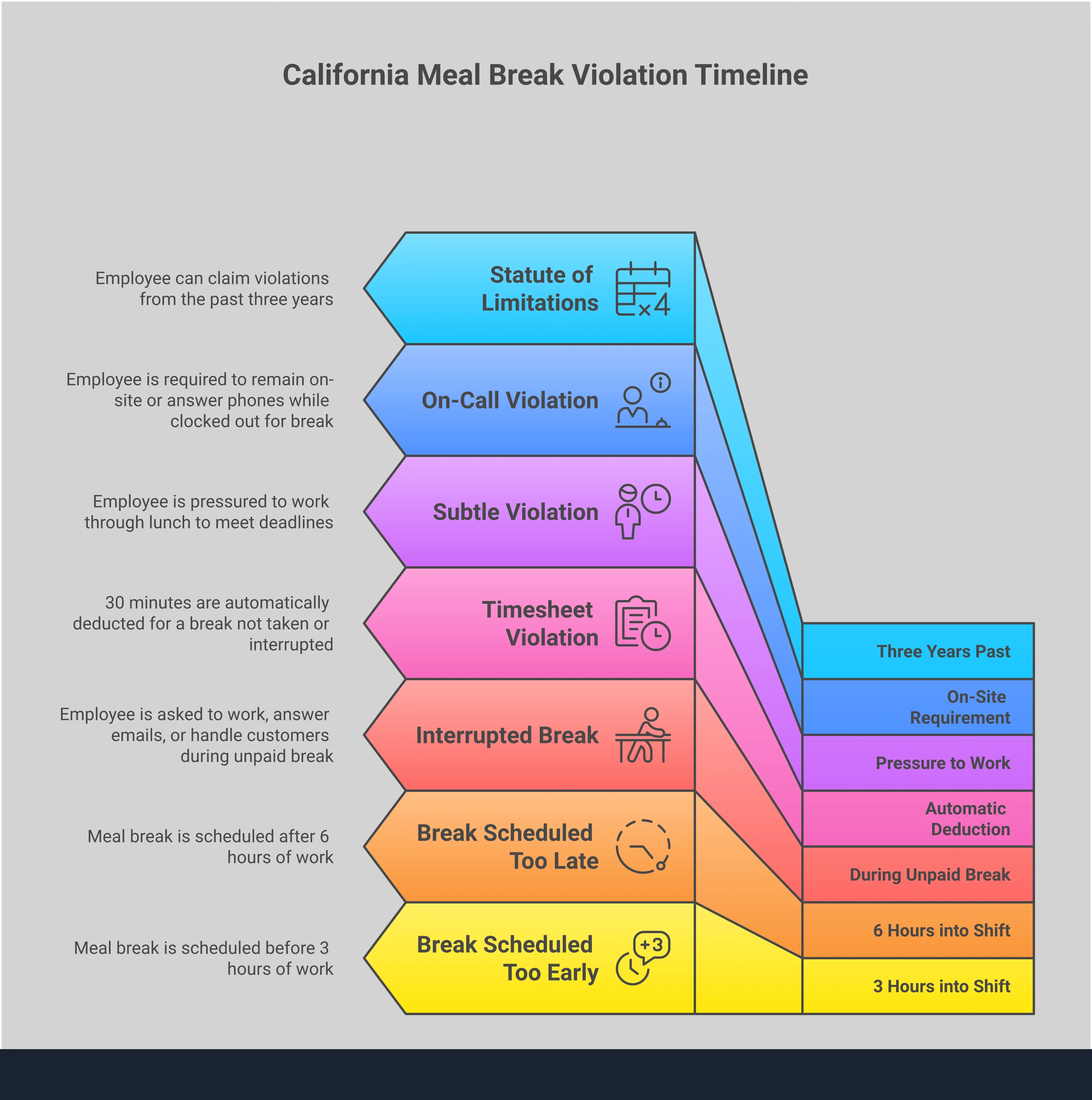
Violations aren’t always as obvious as an employer outright denying you a lunch break. Often, they happen in more subtle ways. For example, your employer might ask you to answer emails or handle a “quick” task while you’re on your break, which means it’s no longer an uninterrupted, duty-free period. Other common violations include automatically deducting 30 minutes from your timesheet for a break you never took, pressuring you to work through lunch to meet a deadline, or scheduling your break too early or too late in your shift. These actions can lead to significant wage and hour claims because you should be paid for that time.
Busting Common Myths About Your Break Rights
There’s a lot of misinformation out there about workplace rights, so let’s clear a few things up. One common myth is that you can “agree” to waive your meal break. In California, your right to a meal break is protected by law and generally cannot be signed away. Another misconception is that if it’s a busy day, your employer can require you to work through lunch. Unless you fall under a very specific and rare exception, your break must be duty-free, regardless of how busy the workplace is. Simply offering a break isn’t enough; your employer has a legal duty to ensure you can actually take it without interruption. Understanding the full scope of employment law helps you recognize when your rights are being ignored.
How Can a Lawyer Help with Your Meal Break Claim?
If you believe your employer is violating your right to meal breaks, you might feel unsure about what to do next. The thought of confronting your employer or navigating the legal system can be intimidating. This is where an experienced employment lawyer becomes your most important ally. They can clarify your rights, handle the complexities of the legal process, and advocate for the compensation you deserve.
Evaluating Your Potential Case
The first thing a lawyer will do is help you determine if you have a valid claim. California law is specific about meal and rest breaks, but the details of your situation matter. For instance, if your employer provides a genuine opportunity for an uninterrupted break but you choose to work through it, you may not have a case. However, if your boss requires you to stay on-call, answer emails, or perform any work duties during your break, your rights are likely being violated. An attorney can analyze your circumstances, explain the legal standards, and give you a clear, honest assessment of your options.
Filing a Claim and Representing You
Once you decide to move forward, your lawyer will manage every aspect of your case. This process involves much more than just filling out paperwork. Your attorney will gather crucial evidence, such as timecards, emails, and witness statements, to build a strong foundation for your claim. They will handle all communications with your employer and their legal team, representing your interests in negotiations or in court. Their goal is to secure the back pay and penalties you are owed, allowing you to focus on your work and life while they handle the legal fight.
Protecting You From Employer Retaliation
Many employees worry that reporting a meal break violation will lead to negative consequences at work. It is illegal for your employer to punish you for asserting your legal rights, but that doesn’t mean it never happens. Having a lawyer on your side provides a critical layer of protection. If your employer fires, demotes, or otherwise mistreats you for filing a claim, your attorney can take immediate action. They will hold your employer accountable for any unlawful retaliation, which can lead to additional damages and penalties on top of your original meal break claim.
How to Choose the Right Meal Break Lawyer
Finding the right lawyer can feel like a huge task, especially when you’re already dealing with a stressful situation at work. But the right legal partner can make all the difference in your case. Think of it as finding a teammate who will guide you through the process and fight for your rights. To make sure you find the best fit, focus on a few key areas: their experience, how they communicate, and how they handle fees. Getting these things right from the start will set you up for a much smoother journey.
Look for Proven Employment Law Experience
When you’re looking for a lawyer, you want someone who specializes in employment law. This area of law is incredibly nuanced, with specific rules that can change. A lawyer who focuses exclusively on workplace issues will have the deep expertise needed to handle the complexities of meal and rest break laws. They understand the tactics employers use and know how to build a strong case for their clients. Don’t settle for a general practitioner; find a dedicated advocate who lives and breathes this stuff. Their specialized knowledge can be the deciding factor in the outcome of your claim.
Prioritize Clear Communication and Support
Legal proceedings can be confusing, so you need a lawyer who makes you feel heard and understood. From your very first conversation, pay attention to how they communicate. Do they explain things in a way that makes sense? Are they patient with your questions? A good lawyer will be approachable and ready to discuss your case in detail, ensuring you feel supported every step of the way. This isn’t just a transaction; it’s a partnership. You should feel confident that your legal team is not only fighting for you but is also there for you. The right firm will make you feel like a priority, not just another case number.
Understand the Fee Structure Upfront
Talking about money can be awkward, but it’s a conversation you must have before hiring a lawyer. Ask about their fee structure right away to avoid any surprises down the road. Many employment lawyers work on a contingency fee basis, which means they only get paid if you win your case. This arrangement can make legal help accessible, as you won’t have to pay fees out of pocket. Be sure to get a clear explanation of how their percentage is calculated and if there are any other costs you might be responsible for. Understanding the financial side of your wage and hour claim from the beginning allows you to focus on your case with peace of mind.
How to Build a Strong Meal Break Violation Case
If you believe your employer is violating your right to meal breaks, you can take action. Building a strong case starts with gathering solid evidence, and you are in the best position to collect it. Think of yourself as the lead investigator of your own experience. The more detailed and organized your information is, the better you can support your claim. Taking a few simple, consistent steps now can make a significant difference down the road. Here’s how you can start building a powerful case.
Document Everything to Build Your Evidence
Your memory is a good starting point, but a written record is your best tool. When you’re dealing with repeated violations, the details can start to blur together. That’s why it’s so important to document every single incident as it happens. Keep a personal log or journal, separate from your work computer or company-provided devices. For each violation, note the date, the time your break was supposed to start, and what happened instead. Was your break interrupted, cut short, or denied completely? Write down who was involved and what you were asked to do. If there were any emails or text messages about it, save them. This detailed log helps establish a clear pattern of meal and rest break violations.
Gather Witness Statements and Company Policies
You are likely not the only one experiencing these issues. Your colleagues’ experiences can add significant weight to your claim. Identify coworkers who have either witnessed your break violations or have had their own breaks denied. While you shouldn’t discuss legal action at work, you can collect their personal contact information. Their statements can corroborate your account and show that the problem is widespread. Additionally, get a copy of your employee handbook or any official company documents that outline the meal break policy. This can be used to show a direct contradiction between the company’s stated rules and its actual practices, which is powerful evidence.
Know the Steps for Filing a Claim
Once you have gathered your evidence, the next step is to understand the formal process for filing a claim. Navigating California’s legal system can be complicated, and there are strict deadlines you must meet. This is where seeking professional guidance becomes essential. An experienced employment lawyer can review your documentation, confirm the strength of your case, and explain your options. They will handle the paperwork, communicate with your employer on your behalf, and ensure your rights are protected throughout the process. Consulting with a lawyer helps you confidently pursue the compensation you deserve for your wage and hour claims.
What Compensation Can You Receive?
If your employer has violated your right to meal breaks, you are entitled to compensation. California law is very clear on this. Understanding what you could receive can help you decide on your next steps. The goal is to recover the pay you’re owed and hold your employer accountable for their actions.
Understanding Potential Damages and Penalties
When an employer fails to provide a compliant meal break, they owe you a penalty. The most direct form of compensation is one additional hour of pay at your regular rate for each day a meal break was missed or non-compliant. This isn’t just about getting paid for the time you worked; it’s a specific penalty designed to discourage employers from breaking the law.
If you were forced to work during your unpaid break, you could also be owed back pay for that time. These violations can add up quickly, especially if they’ve been happening for a long time. Beyond what they owe you, employers can also face fines and other legal consequences for failing to follow state laws for meal and rest breaks.
Factors That Influence Your Settlement
Several factors can affect the value of your claim. The strength of your evidence is the most important one. Detailed records, such as timecards showing missed or short breaks, emails from your manager, and statements from coworkers, can make your case much stronger. The more documentation you have, the better.
The nature and frequency of the violations also play a big role. Was this a one-time mistake, or is it a company-wide policy to skip breaks? Common violations include altering timecards to hide missed breaks or pressuring employees to work while clocked out. These patterns of misconduct can lead to a higher settlement. Ultimately, every case is unique, but a clear pattern of violations supported by solid evidence is key to securing fair compensation for wage and hour claims.
How Much Does a Meal Break Lawyer Cost?
Let’s talk about one of the biggest concerns people have when thinking about hiring a lawyer: the cost. It’s completely understandable to worry about legal bills, especially when you’re already dealing with a stressful workplace issue. The good news is that most employment law firms, including ours, handle meal break violation cases in a way that makes legal help accessible to everyone, regardless of their financial situation. You don’t need a lot of money saved up to fight for your rights.
Most meal and rest break lawyers work on a contingency fee basis. This payment structure is designed to remove the financial risk from your shoulders. It means your lawyer’s payment is contingent on them winning your case. This approach allows you to pursue justice without paying hefty fees upfront. It also ensures that your legal team is just as motivated as you are to achieve a successful outcome. We’ll break down exactly how this works and what other costs you should be aware of.
How Contingency Fees Work
A contingency fee arrangement is straightforward: your lawyer only gets paid if you win your case, either through a settlement or a court verdict. If you don’t receive any compensation, you don’t owe your lawyer any attorney fees for their time. When your case is successful, the lawyer’s fee is a pre-agreed-upon percentage of the total amount you recover. Typically, this ranges from 33% to 40% of the settlement. This model ensures that your lawyer is a true partner in your case, fully invested in getting you the best possible result. It levels the playing field, allowing you to stand up to your employer without worrying about upfront legal costs.
What About Other Legal Costs?
While the contingency fee covers your attorney’s work, it’s important to understand that every legal case comes with other potential legal costs. These are the operational expenses required to move your case forward. Common examples include court filing fees, costs for ordering transcripts, or fees for hiring expert witnesses if they are needed to strengthen your claim. In many contingency agreements, you may be responsible for reimbursing these expenses from your settlement at the end of the case. A trustworthy lawyer will be completely transparent about these possibilities from the very beginning. Be sure to discuss how these costs are handled during your initial consultation so you have a clear picture of the entire financial process.
Why Choose Bluestone Law for Your Case?
When you’re dealing with a potential meal break violation, the law firm you choose can make all the difference. You need a team that not only understands the law but also understands what you’re going through. At Bluestone Law, we focus exclusively on representing employees. This isn’t just one part of our practice; it is our entire practice. We are dedicated to advocating for workers across California, ensuring their rights are protected and their voices are heard. Our attorneys bring a deep knowledge of state-specific regulations to every case, combined with a genuine commitment to achieving the best possible outcome for you.
Our Specialized Focus on Employment Law
Employment law is a complex and constantly changing field. Unlike general practice firms that handle a little bit of everything, our team is completely dedicated to employment law. This singular focus means we have an in-depth understanding of the nuances of California’s wage and hour laws, including the specific rules for meal and rest periods. While federal law doesn’t mandate meal breaks, California law does, and we know exactly what is required of employers. This specialized knowledge allows us to build stronger cases for our clients and effectively counter the tactics that companies and their legal teams often use. We are always up to date on the latest legal precedents, giving you a significant advantage.
Our Commitment to Protecting Your Rights
We believe every employee deserves to be treated fairly and with respect. If your employer required you to work during an unpaid meal break or controlled what you did during your time off, they violated your rights. Our commitment is to hold them accountable. We work tirelessly to protect you from the moment you contact our firm. We will stand up for your right to take uninterrupted, duty-free breaks and ensure you are compensated for any violations. At Bluestone Law, you are more than just a case file. We take the time to listen to your story, explain your options clearly, and support you through every step of the legal process for your meal and rest break claim.
Related Articles
- California Meal Break Law & Rest Period Rights | Bay Area
- Meal and Rest Break Law CA | Know Your Employee Rights
- California Meal Break Law: A Simple Guide
- California Meal & Rest Break Law — Your Legal Guide
- California Meal Break Law | Know Your Rights at Work
Frequently Asked Questions
What if my boss says it’s okay to skip my break on a busy day? Even if things are hectic at work, your employer generally cannot ask you to skip your legally required meal break. California law protects your right to a 30-minute, duty-free period. Simply getting your permission isn’t enough to make it legal. Your employer has an active duty to provide the break, and pressuring you to waive it, even for good reasons like a deadline, can still be a violation.
What’s the difference between a meal break penalty and getting paid for the time I worked? These are two separate forms of compensation you could be owed. If you were forced to perform tasks during your unpaid break, you are entitled to back pay for that time because you were technically working. The meal break penalty is an additional amount, equal to one hour of your regular pay, that your employer owes you for the violation itself. You can be eligible for both for the same incident.
I’m worried about getting fired if I complain about missed breaks. What can I do? This is a valid and very common concern. It is illegal for your employer to retaliate against you in any way, including firing, demoting, or cutting your hours, for asserting your right to meal breaks. If you do face retaliation, it creates grounds for a separate legal claim against your employer. Speaking with an employment lawyer first can help you understand how to protect yourself as you move forward.
How far back can I claim missed meal breaks? In California, there are time limits, known as statutes of limitations, for filing wage and hour claims. Generally, you can claim penalties for meal break violations going back three years from the date you file your claim. Because these deadlines are strict, it is important to act promptly if you believe your rights have been violated.
What if I don’t have written proof like emails or texts? Can I still have a case? Yes, you can absolutely still have a strong case without written evidence. While emails are helpful, they aren’t required. A detailed personal log where you consistently record the dates and circumstances of each missed or interrupted break is powerful evidence. Statements from coworkers who witnessed the violations or experienced them too can also be very effective in supporting your claim.
Think you were wrongfully terminated?
Get a free, confidential case evaluation from our experienced employment law attorneys.
Request Your Free Consultation