When your job starts to take a physical and mental toll, it’s easy to dismiss it as just part of the grind. But persistent headaches, sleepless nights, and a constant feeling of dread aren’t normal job requirements. Your health should never be the price you pay for a paycheck. If your stress is a direct result of a hostile work environment, ongoing harassment, or discriminatory treatment, it’s more than just a personal problem; it’s a potential legal issue. Your employer has a responsibility to provide a safe workplace, and that includes protecting your well-being. This article will walk you through your rights, how to document what’s happening, and when to get legal advice work related stress.
Key Takeaways
- Know when stress crosses into illegal territory: A demanding job is one thing, but you may have a legal claim if your stress stems directly from unlawful conduct such as discrimination, harassment, or retaliation for speaking up.
- Create a detailed record of your experience: Your case depends on evidence. Keep a private journal of incidents, save all relevant emails, and ask your doctor to document the connection between your work environment and your health symptoms.
- Use your rights to get support: You can take proactive steps to protect your well-being. This includes requesting reasonable accommodations under the ADA, taking protected medical leave through the FMLA, and consulting an attorney to understand your options.
What is Work-Related Stress?
Work-related stress is what happens when the demands of your job consistently outweigh your ability to cope. A little pressure can be motivating; it’s what helps us meet deadlines and stay focused. But when that pressure never lets up, it turns into chronic stress, which can seriously damage your health and well-being. It’s more than just having a few tough days. It’s a persistent feeling of being overwhelmed that can make you feel unhappy and unwell, both physically and mentally.
This kind of harmful stress isn’t always a natural part of the job. Sometimes, it’s a symptom of a bigger problem in the workplace. It can be caused by unrealistic expectations, excessive workloads, or a lack of support from management. In some cases, it stems from illegal conditions, such as ongoing harassment, discrimination, or a hostile work environment. Recognizing the difference between normal job pressure and harmful, chronic stress is the first step toward protecting yourself and understanding your rights. If your job is making you sick, it’s time to pay attention.
How Stress Affects Your Health and Well-being
Chronic stress isn’t just a feeling; it can show up as real physical and mental health problems. Mentally, it can lead to anxiety, depression, and trouble concentrating. Physically, you might experience headaches, high blood pressure, stomach issues, and constant fatigue. These symptoms can disrupt every part of your life, making it difficult to sleep, enjoy time with family and friends, or simply feel like yourself. The toll of workplace stress doesn’t stop when you clock out. It can follow you home, impacting your personal relationships and overall quality of life. If your health is suffering, you may need to take time off to recover, which is where protections like family and medical leave can be critical.
The Impact on Your Job Performance and Career
When you’re dealing with constant stress, your work is bound to suffer. It’s incredibly difficult to stay motivated and productive when you’re feeling emotionally and physically exhausted. This state is often called burnout, and it can make you feel completely depleted and detached from your job. You might find yourself making more mistakes, missing deadlines, or feeling unable to handle your daily tasks. This isn’t a reflection of your skills or work ethic; it’s a natural response to an unsustainable situation. When work-related stress becomes severe enough to affect your health and ability to do your job, it’s more than a personal problem. It can become a legal issue, and it’s important to understand the basics of employment law to know what protections are available to you.
Know Your Legal Protections
When your job becomes a source of overwhelming stress, it’s easy to feel powerless. But you have more rights than you might think. While workplace stress itself isn’t always a legal issue, the circumstances causing it often are. Federal and state laws are in place to protect you when that stress stems from illegal actions like discrimination, harassment, or an unsafe work environment. Understanding these protections is the first step toward taking control of the situation.
Several key laws provide a safety net for employees. The Americans with Disabilities Act (ADA) can protect you if your stress is linked to a mental health condition. The Family and Medical Leave Act (FMLA) allows you to take time off to recover without risking your job. And if you live in California, you have additional state-level protections that often go beyond federal standards. Knowing how these laws apply to your situation can help you find the right path forward. If you believe your stress is a result of illegal workplace practices, it’s important to understand your options under employment law.
Your Rights Under the Americans with Disabilities Act (ADA)
If work-related stress has led to or worsened a mental health condition like anxiety or depression, the Americans with Disabilities Act (ADA) may offer protection. The law recognizes that mental health conditions can be just as debilitating as physical ones. According to the U.S. Department of Labor, workers with mental health conditions are protected from unfair treatment and harassment. This means your employer cannot fire, demote, or otherwise penalize you because of your condition. You also have a right to privacy and to ask for reasonable changes at work to help you perform your job, such as a modified schedule or a quieter workspace.
Taking Medical Leave with the FMLA
Sometimes, the best thing you can do for your mental health is to step away from a stressful environment. The Family and Medical Leave Act (FMLA) gives you that right. If your company is covered by the FMLA and you are an eligible employee, you can take up to 12 weeks of unpaid leave for a serious health condition, including mental health conditions, without losing your job. This time can be crucial for seeking treatment and recovering without the added pressure of work. To be eligible, you generally need to have worked for your employer for at least 12 months and for a company with 50 or more employees.
California’s Specific Employee Laws
California provides some of the strongest employee protections in the country. State laws go further than federal regulations in shielding workers from toxic work environments. California’s workplace laws extend protections against hostile and unsafe work environments, which can include the excessive stress and anxiety that come from having to work in these unsafe conditions. If your stress is a direct result of a workplace culture that is abusive, intimidating, or discriminatory, you may have a strong case under California law. These protections are designed to ensure every employee has a right to a safe and healthy workplace.
How Workers’ Compensation Can Help
In some cases, you may be able to file a claim for work-related stress through the workers’ compensation system. This system is designed to provide benefits to employees who get injured or sick because of their job. While it’s more commonly associated with physical injuries, Workers’ Compensation can sometimes cover work-related stress and anxiety. However, these claims can be difficult to prove. You will need strong evidence, including a diagnosis from your doctor that directly links your psychological condition to specific events or conditions at your job. It’s a complex process, but it is another potential avenue for receiving support and covering medical expenses.
Do You Have a Legal Case?
It’s one thing to feel stressed at work, but it’s another to wonder if that stress is legally actionable. While a demanding job isn’t illegal, your employer does have a responsibility to provide a safe work environment. When stress is the direct result of illegal activities like discrimination, harassment, or retaliation, you may have grounds for a legal claim. The key is to distinguish between the normal pressures of a job and a situation where your well-being is compromised due to unlawful conduct.
Understanding this difference is the first step. If your work-related stress is causing significant health problems or stems from a toxic or hostile workplace, it’s time to look closer at your rights. Proving a case like this requires clear evidence connecting your employer’s actions (or inaction) to the harm you’ve suffered. This is where careful documentation and professional guidance become essential.
Signs Your Stress Warrants Legal Action
Every job comes with some pressure, but chronic stress that affects your health is a major red flag. If you’re experiencing anxiety, depression, high blood pressure, or constant fatigue because of your work environment, don’t ignore it. The source of the stress is what really matters from a legal standpoint. Is it coming from an unreasonable workload, or is it tied to something more serious?
Your stress may warrant legal action if it’s caused by illegal behavior such as ongoing sexual harassment, discrimination based on your race or a disability, or retaliation for reporting misconduct. Constant criticism from a bad boss, impossible deadlines, and poor communication can also contribute to a hostile work environment, which may be illegal. If the stress is severe and directly linked to unlawful actions, you might have a case.
How to Prove Your Stress is Work-Related
One of the biggest challenges in a work-related stress case is proving that your job is the direct cause of your health problems. Your employer might argue that other factors in your life are to blame. To build a strong case, you need to establish a clear and convincing link between your work conditions and your physical or mental health. This requires more than just your own account of what happened.
Solid evidence is crucial. This includes medical records detailing your symptoms and a professional opinion from your doctor connecting your condition to your job. You should also gather details about your work environment, such as emails, performance reviews, and project timelines that demonstrate unreasonable pressure or mistreatment. Statements from coworkers who have witnessed your situation can also be powerful. An experienced employment lawyer can help you organize this evidence to build a compelling claim.
The Importance of Documenting Everything
If you believe your workplace stress is due to illegal treatment, start documenting everything immediately. Think of it as creating a detailed timeline of your experience. Keep a private journal where you write down every conversation, request, and incident related to your stress. Note the date, time, people involved, and what was said or done. This written record can be invaluable later on.
Be sure to also track your symptoms, medical diagnoses, and doctor’s appointments. When you speak with your doctor, be specific about how your job is affecting you and ask them to make notes in your file that clearly connect your stress to your health condition. Save all relevant emails and messages. This paper trail provides concrete evidence and prevents your claim from becoming a “he said, she said” situation.
Your Action Plan for Workplace Stress
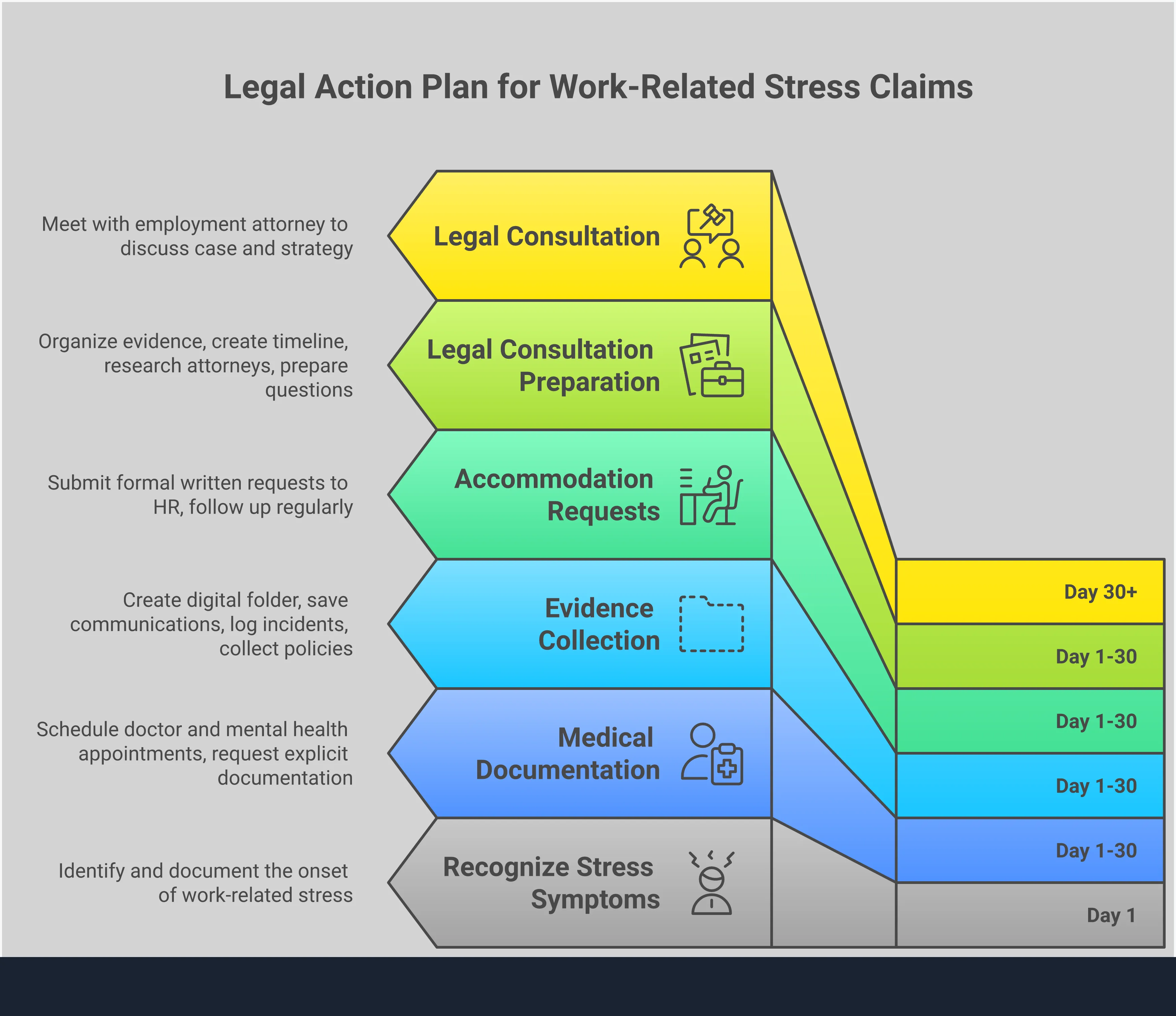
Feeling overwhelmed by workplace stress is tough, but you don’t have to face it alone. Taking clear, deliberate steps can help you regain control and protect your well-being. If your job is causing significant distress, it’s important to address it proactively. This action plan will walk you through getting medical help, documenting your situation, working with your employer, and knowing when it’s time to seek legal advice.
Step 1: Talk to a Medical Professional
Your health should always be your top priority. If work-related stress is affecting you physically or mentally, schedule an appointment with a doctor or a mental health professional. They can provide a proper diagnosis, recommend treatment, and offer the support you need to manage your symptoms. This step is not just for your well-being; it’s also crucial for any future actions. A medical professional’s notes can formally link your health issues to your work environment, which is essential if you need to request accommodations or take family and medical leave. Don’t downplay your symptoms; be open and honest about what you’re experiencing.
Step 2: Document Your Experience
Creating a detailed record of your experience is one of the most powerful things you can do. Keep a private journal or a secure digital file and log everything related to your workplace stress. Note specific incidents, conversations, and requests, including dates, times, and who was involved. Also, track your symptoms, medical diagnoses, and any appointments you have. This log serves as a timeline and can reveal patterns of behavior that contribute to a hostile work environment. Consistent documentation provides concrete evidence, moving your situation from a simple complaint to a well-documented case should you need to take further action.
Step 3: Request Accommodations from HR
If a diagnosed medical condition is making it difficult to perform your job, you have the right to ask for reasonable accommodations. Start by formally notifying your employer, usually through the Human Resources department. Be prepared to provide a note from your doctor that explains your limitations without necessarily disclosing your specific diagnosis. The goal is to open a dialogue about what changes could help you do your job without causing undue hardship to the company. This is a key part of your rights under laws that prevent disability discrimination, as severe stress and anxiety can sometimes qualify as a protected disability.
Step 4: Know When to Call a Lawyer
If you’ve tried to address the issue with your employer and nothing has changed, or if they have retaliated against you for speaking up, it’s time to seek legal advice. You shouldn’t have to endure a work environment that is damaging your health. An experienced attorney can help you understand your rights and explore your options. Consulting with an employment law firm can bring clarity to a confusing and stressful situation. You can learn whether your employer’s actions were illegal and what steps you can take next to protect yourself and your career.
What Workplace Accommodations Can You Request?
If work-related stress is affecting your ability to do your job, you have the right to ask for changes that can help. The law requires employers to work with you to find solutions, known as “reasonable accommodations.” This isn’t about getting special treatment; it’s about getting the support you need to perform your job successfully while managing your health. The process is meant to be a collaborative conversation, and knowing what you can ask for is the first step toward finding a better balance.
Understanding “Reasonable Accommodations”
A “reasonable accommodation” is any change to your work environment or the way your job is usually done that allows you to continue working despite a health condition. If your stress is linked to a diagnosed medical condition, like anxiety or depression, your employer is legally required to consider your request. These changes can include adjustments to your schedule, a temporary move to a different role, or permission to work from home. The key is that the accommodation must be “reasonable,” meaning it doesn’t create an undue hardship or excessive expense for your employer. This process is a cornerstone of disability discrimination law and is designed to keep valuable employees in their roles.
Examples of Helpful Workplace Changes
The right accommodation depends entirely on your situation and what’s causing your stress. Common sources of workplace stress, like impossible deadlines, a difficult manager, or a hostile work environment, can often be addressed with practical changes. You could request a modified schedule with more frequent breaks, a transfer to a quieter workspace, or even a change in supervisors. Other examples include receiving instructions in writing rather than verbally, getting assistance with minor job duties, or being reassigned to a vacant position that better suits your needs. The goal is to find a practical solution that reduces the specific stressors impacting your performance.
How to Work with Your Employer on a Solution
To start the process, you should formally notify your employer, usually the HR department, about your situation. It’s best to put your request in writing so you have a record. Explain that you have a medical condition that is affecting your work and that you need an accommodation. You don’t have to disclose all the private details of your condition, but you should be prepared to provide a doctor’s note that confirms your limitations and supports your request. This kicks off what’s known as the “interactive process,” which is simply a dialogue between you and your employer to find a workable solution. Understanding your rights under employment law can make this conversation much more productive.
Can You Get Compensation for Work-Related Stress?
When your job is the source of overwhelming stress, the financial impact can be just as damaging as the emotional toll. You might be facing medical bills, lost income from taking time off, and the general instability that comes with a difficult work situation. The good news is that California law provides several avenues for you to seek financial relief. Depending on your circumstances, you may be able to get compensation to cover your expenses and losses.
Understanding your options is the first step toward protecting your financial well-being. Whether it’s through a workers’ compensation claim, a lawsuit, or accessing disability benefits, you don’t have to carry the financial burden alone. These legal protections are in place to help you recover what you’ve lost and give you the stability to move forward. Let’s look at the specific types of compensation you may be able to pursue.
Covering Medical Bills and Treatment
If your job has caused or worsened a mental health condition like chronic stress, anxiety, or depression, you may be entitled to compensation for your medical care. This can cover a wide range of treatments, including therapy sessions, psychiatrist appointments, medication, and any other care your doctor deems necessary for your recovery. The goal is to ensure you can get the professional help you need without worrying about the cost. To make a successful claim, you will need clear medical documentation that connects your psychological condition to your work environment or duties.
Recovering Lost Wages
Severe workplace stress can sometimes make it impossible to continue working, leading to significant lost income. If you were fired, forced to quit due to an intolerable or hostile work environment, or had to take unpaid time off, you may be able to recover those lost wages. A legal claim could help you get back pay, future lost earnings, and even the value of lost benefits like health insurance or retirement contributions. This type of compensation is designed to make you financially whole again, as if the negative work situation had never occurred.
Filing a Workers’ Compensation Claim
California’s workers’ compensation system is another path for addressing work-related stress. This is a type of insurance that employers are required to have, and it can cover “psychiatric injuries” that arise from your job. However, these claims can be complex. You’ll need strong evidence, including a diagnosis from a medical professional, proving that your employment was the predominant cause of your psychological condition. Because the standards are specific and the process can be challenging, getting guidance on your claim is often a good idea.
Accessing Disability Benefits and Leave
Sometimes, the most immediate need is to take a step back from work without losing your job. Laws like the Family and Medical Leave Act (FMLA) and the California Family Rights Act (CFRA) allow eligible employees to take protected, unpaid leave for serious health conditions, which can include severe stress. This isn’t direct payment, but it provides crucial job security while you focus on your health. In some cases, you may also be eligible for short-term or long-term disability benefits, which would provide partial income replacement during your family and medical leave.
How to Build a Strong Legal Case
If you decide to take legal action for work-related stress, the strength of your case will depend on the evidence you can provide. The biggest challenge is often proving that your job is the direct cause of your stress and any related health issues. This isn’t about simply feeling overwhelmed; it’s about building a clear, documented connection between your work conditions and the harm you’ve experienced. Proving this link is essential if you hope to get compensation for medical care or disability payments.
A strong case is built on a foundation of careful documentation. This includes everything from medical records and doctor’s notes to emails and personal journals. By gathering these materials, you create a detailed timeline that can show how your work environment has impacted your health. Think of yourself as a diligent record-keeper of your own experience. This preparation is a critical step in protecting your rights and holding your employer accountable for creating a safe and healthy workplace. It transforms your personal experience into concrete proof that can be presented in a legal setting, making it much harder for your employer to dismiss your claims.
Gather Key Documents and Evidence
Start by collecting any documents that paint a picture of your work environment and performance. This includes your official job description, performance reviews (both positive and negative), and any company policies related to workplace conduct or employee well-being. Save emails, text messages, or internal chat logs that show unreasonable demands, harassment, or a dismissive attitude from management regarding your concerns.
It’s also incredibly helpful to keep a personal journal. Write down specific incidents that caused you stress, noting the date, time, people involved, and what happened. This detailed log can help establish a pattern of behavior and show the ongoing nature of the stressful conditions. This documentation is especially vital if you believe you are dealing with a hostile work environment.
The Role of Medical Records in Your Claim
Your medical records are one of the most powerful pieces of evidence you can have. These official documents provide a professional assessment of your condition and can directly link your health problems to your job. Make sure your doctor’s notes are thorough and clearly connect your symptoms, like anxiety, high blood pressure, or insomnia, to your work-related stress.
Useful evidence includes not just your medical records but also formal opinions from your doctors. A letter from your physician or therapist explaining how your work conditions are causing or worsening your health issues can be incredibly persuasive. These records are essential for any potential disability discrimination claim or workers’ compensation filing, as they validate the harm you’ve suffered.
Using Emails and Witness Statements
Beyond your own records, communications with your employer are key. Keep copies of any emails where you discussed your workload, requested support, or reported issues to HR. These records can show that you attempted to address the problem and whether your employer took appropriate action. If you have trusted colleagues who have witnessed the stressful conditions or seen the negative impact on you, their statements can also strengthen your case.
Witnesses can corroborate your account of events, confirming that the workplace environment was objectively stressful. Their testimony can help demonstrate that the issue isn’t just a personal struggle but a result of systemic problems or specific actions by management. Having this kind of third-party validation can make a significant difference when presenting your employment law case.
When to Contact an Employment Lawyer
Deciding to speak with a lawyer can feel like a big step, but you don’t have to wait until your situation is unbearable. If you’ve tried to address work-related stress with your employer and nothing has changed, or if you’re afraid to speak up, it might be time to get legal advice. An employment lawyer can help you understand your rights and figure out the best path forward, whether that involves negotiating with your employer, filing a formal complaint, or simply knowing your options. Think of it as getting an expert opinion to protect your health and your career.
Red Flags That You Need Legal Advice
It’s not always easy to know when workplace stress crosses the line into a legal issue. However, certain signs indicate you should seek professional advice. If your job is causing or worsening a chronic health condition, including anxiety or depression, it’s a major red flag. You should also be concerned if your requests for reasonable accommodations are ignored or denied without a valid reason. Another critical sign is if you face retaliation, like a demotion or unfair performance review, after reporting your stress or a related workplace problem. When stress is a direct result of a hostile work environment, it’s definitely time to explore your legal options.
How Bluestone Law Can Support You
Facing a difficult situation at work can be isolating, but you don’t have to handle it alone. Our team at Bluestone Law is dedicated to advocating for employees. We can help you make sense of complex employment laws and determine if your employer has acted unlawfully. During a consultation, we’ll listen to your story, review your evidence, and explain your options in clear, simple terms. Our goal is to help you hold your employer accountable and find a resolution that allows you to move forward. Having an experienced legal team on your side can make a significant difference in the outcome of your case.
Prepare for Your First Legal Consultation
To make the most of your first meeting with an attorney, it helps to come prepared. Start by gathering any relevant documents you have. This includes medical records related to your stress, performance reviews, your employment contract, and any emails or messages between you and your employer about your work conditions. It’s also incredibly helpful to write down a timeline of events. Note when your stress began, specific incidents that contributed to it, and any steps you took to address the issue with HR or your manager. This preparation allows us to get a clearer picture of your situation and provide you with more effective advice.
Find Additional Support and Resources
Dealing with work-related stress can feel isolating, but you don’t have to go through it alone. While exploring your legal options is a critical step, it’s just as important to find resources that support your immediate mental and emotional well-being. Think of it as building a full support system. Your lawyer can handle the legal fight, while other resources can help you manage the day-to-day impact of stress. Tapping into these programs and professionals can provide relief, guidance, and a safe space to process what you’re experiencing. It ensures you’re taking care of yourself on all fronts, which is essential when you’re facing a challenging situation at work.
Using Employee Assistance Programs (EAPs)
Many companies offer an Employee Assistance Program (EAP) as a confidential benefit for their staff. An EAP is a service designed to help you with personal or work-related problems that might be affecting your job performance or well-being. This can include free, short-term counseling, referrals to mental health professionals, and resources for stress management. It’s completely confidential, so your employer won’t know you’ve used it. If you’re unsure whether your company has an EAP, check your employee handbook or the HR section of your company’s intranet. It’s a valuable, often underutilized, first step toward getting help without any cost to you.
Contacting Government Agencies
You have rights, and government agencies are in place to protect them. The U.S. Equal Employment Opportunity Commission (EEOC) and California’s Civil Rights Department (CRD) are responsible for enforcing laws against workplace discrimination and harassment. If you believe your stress is a result of illegal treatment, such as a hostile work environment, you can file a complaint with these agencies. They can investigate your claim and may take action on your behalf. Remember, workers with mental health conditions are protected from unfair treatment and have a right to privacy and reasonable accommodations at work. These agencies serve as a powerful ally in holding employers accountable.
Finding Mental Health Professionals
Speaking with a therapist, counselor, or psychologist can make a significant difference in how you cope with workplace stress. These professionals can provide you with strategies to manage anxiety, document the impact the stress is having on your health, and offer an objective perspective on your situation. Your primary care doctor can often provide a referral, or you can use online directories to find a provider who fits your needs. Prioritizing your mental health is not just good for you personally; it’s also a key part of building a strong foundation to address the issues you’re facing at work. Their support can be invaluable as you move forward.
Related Articles
- Canoga Park Disability Discrimination Lawyer | Bluestone Law
- FMLA Violations by Employers | Know Your Rights
- How Long Must an Employer Accommodate a Disability?
Frequently Asked Questions
My boss is just a difficult person. Is that enough to be considered a hostile work environment? Unfortunately, having a demanding or unpleasant boss isn’t illegal on its own. For a situation to be considered a legally hostile work environment, the behavior usually needs to be severe or pervasive and connected to your protected status, such as your race, gender, religion, or a disability. If the stress comes from bullying that is specifically targeting you because of one of these characteristics, then it may cross the line into illegal territory.
Do I have to tell my employer my specific diagnosis to request an accommodation? No, you typically don’t have to share your exact diagnosis. While you do need to inform your employer that you have a medical condition that requires a change at work, your privacy is protected. You will likely need to provide a note from your doctor that confirms you have a medical limitation and suggests accommodations, but it doesn’t need to name your specific condition. The focus is on the limitations, not the label.
What if I report the problem and my boss starts treating me worse? This is called retaliation, and it is illegal. Your employer cannot punish you for engaging in legally protected activities, which includes reporting harassment, asking for a reasonable accommodation, or filing a complaint. If you notice your hours are cut, you’re left out of meetings, or you receive an unfair performance review after you speak up, document it immediately. This is a serious issue and a very strong reason to seek legal advice.
Can I get fired for taking medical leave for stress? If you are eligible for leave under the Family and Medical Leave Act (FMLA) or the California Family Rights Act (CFRA), your job is protected. These laws are designed to allow you to take unpaid time off for a serious health condition, which can include severe stress or anxiety, without fear of losing your position. When you return, your employer must generally restore you to your same job or an equivalent one.
Is it worth talking to a lawyer if I’m not sure I have a strong case? Absolutely. You don’t need to have all the answers or a perfect case before seeking advice. An initial consultation with an employment lawyer is a chance to get clarity on your situation. A lawyer can help you understand your rights, evaluate the facts, and explain what your options are. Sometimes, just learning what is and isn’t legal can give you the confidence to decide on your next steps.
Think you were wrongfully terminated?
Get a free, confidential case evaluation from our experienced employment law attorneys.
Request Your Free Consultation