

Your job title might be “independent contractor,” and you might even get a 1099 tax form, but that doesn’t mean it’s the truth. What really matters is the reality of your day-to-day work. If your client acts more like a boss—setting your hours, telling you how to do your job, and controlling the financial side of things—you might actually be an employee in the eyes of the law. The government uses a specific framework to look past the labels and see the real nature of your working relationship. This framework is known as the IRS Independent Contractor Test. Understanding how it works is the first step to figuring out if you’re being denied the rights and protections you legally deserve.
Key Takeaways
- Your Job Title Doesn’t Define Your Status: What truly matters is the reality of your work situation, not what your contract calls you. The law looks at who actually controls your work—how, when, and where it’s done—to determine if you are an employee.
- Analyze the Three Areas of Control: To understand your classification, consider who directs your daily tasks (behavioral), who covers costs and takes financial risks (financial), and the long-term nature of your agreement, including benefits (relationship).
- Protect Yourself with Records and Legal Advice: If you suspect you’re misclassified, start documenting everything about your job, from instructions to expenses. Consulting an employment lawyer is the most effective way to understand your rights and decide on your next steps.
What is the IRS Independent Contractor Test?
Figuring out if you’re an employee or an independent contractor isn’t just about what your boss calls you or what’s written in a contract. The IRS has a specific set of guidelines, often called the Independent Contractor Test, to make this determination. While it once involved a long list of 20 different factors, the IRS has since simplified it. Now, the test focuses on three key areas that examine the reality of your working relationship: Behavioral Control, Financial Control, and the Type of Relationship between you and the company. Understanding these categories is the first step in figuring out if you’ve been properly classified and are receiving the protections you deserve.
Why Your Worker Status Matters
Your classification as an employee versus an independent contractor has huge implications. It affects everything from your tax obligations to your eligibility for critical workplace protections and benefits like unemployment insurance, workers’ compensation, and overtime pay. For employers, getting this wrong can lead to serious penalties, including being forced to pay back taxes. For you, being misclassified means you could be missing out on fundamental rights and benefits you’re legally owed. This is why correctly identifying your status is so important for protecting your financial well-being and your rights under California’s wage and hour laws.
The Rules Behind Worker Classification
At its core, the difference between an employee and an independent contractor comes down to one main thing: control. To determine a worker’s status, the IRS looks at the entire relationship and considers the degree of control a business has over the person doing the work. These are known as the “Common Law Rules.” They aren’t a simple checklist, but rather a guide to see who’s really in the driver’s seat. The rules are grouped into the three categories we mentioned earlier: Behavioral, Financial, and the Type of Relationship. Each one helps paint a picture of who dictates the terms of your work and whether your role truly fits the definition of an independent contractor.
The 3 Key Tests for Worker Classification
When the IRS examines your work situation, they don’t just look at one single thing. Instead, they consider the entire relationship between you and the company. Think of it less like a checklist and more like painting a complete picture of your job. To do this, they group the details into three main categories: Behavioral Control, Financial Control, and the Type of Relationship.
Understanding these three tests is the first step in figuring out if you’ve been misclassified. No single answer will decide your status. For example, having a contract that calls you an “independent contractor” doesn’t automatically make it true if the company controls every aspect of your workday. The IRS is interested in the reality of your situation, not just the labels used. By looking at who really has the power in the working relationship—over your actions, your finances, and the terms of your work—the true nature of your classification comes to light. This framework is central to many issues in employment law.
Behavioral Control: Who Directs Your Work?
This test is all about who has the right to direct and control how you do your job. If a company tells you exactly how to complete your tasks, what tools to use, and where and when you need to work, that’s a strong sign you’re an employee. Think about it: Does your boss give you detailed instructions or require you to attend specific training to do the work their way? An independent contractor is typically an expert who is hired to produce a result and uses their own methods to get there. They aren’t managed on the day-to-day process. The more control a company has over your work process, the more you look like an employee.
Financial Control: Who Manages the Money?
Financial control looks at the business side of your job. Are you able to make decisions that affect your own bottom line? Independent contractors often have a significant investment in their own equipment and can realize a profit or suffer a loss. Employees, on the other hand, are typically paid a set wage and have their business expenses reimbursed by the company. If the company handles all the financial aspects—like paying you a regular salary and covering your costs—it suggests an employer-employee relationship. This is a critical distinction when it comes to wage and hour claims, as employees have rights to overtime and minimum wage that contractors do not.
Type of Relationship: What’s the Nature of Your Agreement?
This category examines how you and the company perceive your relationship. This includes looking at written contracts, but it goes deeper. Does the company provide you with benefits like health insurance, paid vacation, or a retirement plan? These are hallmarks of an employee relationship. The permanency of the relationship is also a factor. Is the work you’re doing a key aspect of the business, with the expectation that it will continue indefinitely? While a contract might state you’re a contractor, the reality of an ongoing relationship with employee-style benefits can point toward a different conclusion, especially in cases of wrongful termination.
Breaking Down Behavioral Control
One of the biggest factors the IRS looks at is behavioral control. This test boils down to a simple question: Does the company have the right to direct and control how you do your job? It’s not just about the final product; it’s about the process of getting there. If a business dictates the how, when, and where of your work, it’s a strong indicator that you should be classified as an employee.
Think of it this way: an independent contractor is hired to achieve a specific result but is generally free to decide how to accomplish it. They are the expert. An employee, on the other hand, is given instructions and follows the company’s procedures. This control can show up in many ways, from the tools you’re required to use to the specific steps you must follow to complete a task. The more detailed the instructions, the more likely it is that the business is exerting the kind of control that defines an employer-employee relationship. Understanding this distinction is a critical first step in determining if you might be facing a wrongful termination or other employment issue stemming from misclassification.
Who Gives Instructions and Supervises?
A key sign of an employee-employer relationship is the level of instruction you receive. If the company tells you exactly how to perform your work, you are likely an employee. This includes being told what tools or equipment to use, where to purchase supplies, or what order to follow when completing tasks. An independent contractor, by contrast, typically uses their own methods.
Consider whether you have a supervisor who regularly checks your work and directs your day-to-day activities. If someone is managing your process and not just the final outcome, that points toward employee status. The more control the business has over the details of your job, the stronger the case that you are an employee, not a contractor.
Is Training Provided by the Company?
Does the company require you to attend training sessions? If so, this is a significant indicator of employee status. Businesses train their employees to perform a job in a particular way, ensuring consistency and adherence to company standards. This investment in your skills shows that the company is controlling the methods you use to do your work.
An independent contractor is expected to be an expert in their field already. They are hired for their existing skills and don’t typically receive training from the client on how to do the job. If your company paid for you to learn its specific systems, attend mandatory workshops, or shadow other workers, it’s treating you like an employee.
Who Sets Your Hours and Work Location?
Think about your work schedule. Do you have set hours, or can you create a schedule that works for you? A business generally has the right to set the work hours for its employees. If you are required to work specific days or times—for example, Monday through Friday, 9 a.m. to 5 p.m.—that’s a strong sign of behavioral control.
The same principle applies to your work location. If the company requires you to work on its premises or at a specific site, it suggests an employer-employee relationship. True independent contractors usually have the flexibility to choose where they work. This control over your time and location is often a central issue in wage and hour claims, as it directly impacts how you are compensated.
Understanding Financial Control
The second major test looks at the financial and business aspects of your job. The IRS wants to know who really controls the money. This isn’t just about your paycheck; it’s about who invests in the work, who covers costs, and who stands to profit or lose from the arrangement. Examining these financial details helps paint a clearer picture of whether you’re operating as a separate business or as an integrated part of the company. If the company holds all the financial power, you might be an employee, regardless of your title. This is a critical area in employment law because it directly impacts your financial stability and rights.
How Are You Paid?
Think about how you receive your money. Employees are typically paid a regular, predictable wage—whether it’s hourly, weekly, or a set salary. The payment schedule is consistent, and you know what to expect. Independent contractors, on the other hand, are usually paid a flat fee for a specific project or task. They often submit invoices to get paid, and their income can be less predictable. If your pay structure looks more like a steady salary than a per-project fee, it’s a strong indicator of an employee relationship. This distinction is fundamental to many wage and hour claims.
Who Covers Expenses and Tools?
Who foots the bill for work-related expenses? If you’re an employee, your employer typically covers or reimburses you for necessary costs like office supplies, software, or travel. They provide the tools you need to do your job. In contrast, independent contractors are running their own businesses, so they are generally responsible for their own expenses. They pay for their own tools, supplies, and other overhead costs without reimbursement. If you find yourself paying for essential business expenses out-of-pocket that aren’t reimbursed, it’s a sign that the company may be treating you like a contractor while benefiting from your work as an employee.
Can You Make a Profit or Suffer a Loss?
One of the biggest signs of being an independent contractor is the opportunity to make a profit or incur a loss. A contractor can increase their profit by working more efficiently or finding ways to reduce their costs. They also bear the risk of losing money if a project goes over budget or takes longer than expected. Employees don’t have this same risk or opportunity. You receive your regular paycheck whether the company makes a huge profit on your project or takes a loss. Your financial outcome is tied to your agreed-upon wage, not the success of the work itself.
Do You Invest in Your Own Equipment?
Consider the tools and equipment you use every day. Do you work on a company-provided laptop in an office they pay for? Or did you make a significant investment in your own equipment, like specialized machinery, a dedicated home office setup, or expensive software licenses? Independent contractors often have a substantial personal investment in the facilities and tools required for their work. Employees, however, typically rely on the employer to provide everything they need to perform their duties. A significant personal investment in your work setup suggests you are operating more like an independent business.
Common Myths About Independent Contractors
When it comes to worker classification, there’s a lot of confusing information out there. It’s easy to rely on what seems like common sense, but these assumptions can be misleading and may prevent you from accessing the rights and protections you deserve as an employee. Let’s clear up some of the most common myths about being an independent contractor so you can better understand your true employment status.
“But My Contract Says I’m a Contractor”
This is one of the most frequent misconceptions. You might have signed an agreement that explicitly labels you an “independent contractor,” but that piece of paper isn’t the final word. While a contract is considered, what truly matters to the IRS and California courts is the reality of your working relationship. The law looks past the labels and examines the actual control the company has over your work. A contract can’t override the law, so if your employer directs your work like an employee, you may be considered an employee, regardless of what your agreement says. This distinction is critical, especially in cases of wrongful termination.
“I Get a 1099, So I Must Be a Contractor”
Receiving a 1099-NEC form at tax time instead of a W-2 is another point of confusion. Many people believe this form automatically makes them an independent contractor. However, a 1099 form simply reflects how your employer has chosen to classify and pay you. It is not a legal determination of your status. The company’s decision to issue a 1099 doesn’t change the facts of your work situation. If you are treated like an employee in your day-to-day role, you could still be an employee in the eyes of the law, which can significantly impact your eligibility for things like overtime pay.
Overlooking the Day-to-Day Realities of Your Job
It’s easy to get caught up in titles and paperwork and forget to look at the most important factor: how you actually perform your job every day. The core of the classification test is control. Ask yourself: Does the company tell you when, where, and how to do your work? Do they provide extensive training, set your hours, or require you to work at their location? The more control a company exercises over your work, the more likely it is that you are an employee. Don’t let a title distract you from the daily realities that define your employment law rights.
Forgetting That State Laws Also Apply
While the IRS has its own set of guidelines, you also need to consider state law, which can be even more protective of workers. In California, the “ABC test” makes it much harder for companies to classify workers as independent contractors. This means that even if you might qualify as a contractor under federal rules, you could still be considered an employee under California law. State agencies will use their own laws to determine your status, which is why understanding local regulations is so important for protecting your rights regarding wage and hour claims.
What to Do If You Think You’re Misclassified
If the lines between being an employee and an independent contractor feel blurry, you’re not alone. Realizing you might be misclassified can be unsettling, but there are clear, proactive steps you can take to find answers and protect your rights. It’s about gathering information, seeking expert advice, and understanding what’s at stake. Here’s a straightforward guide on what to do next.
Ask the IRS for an Official Determination
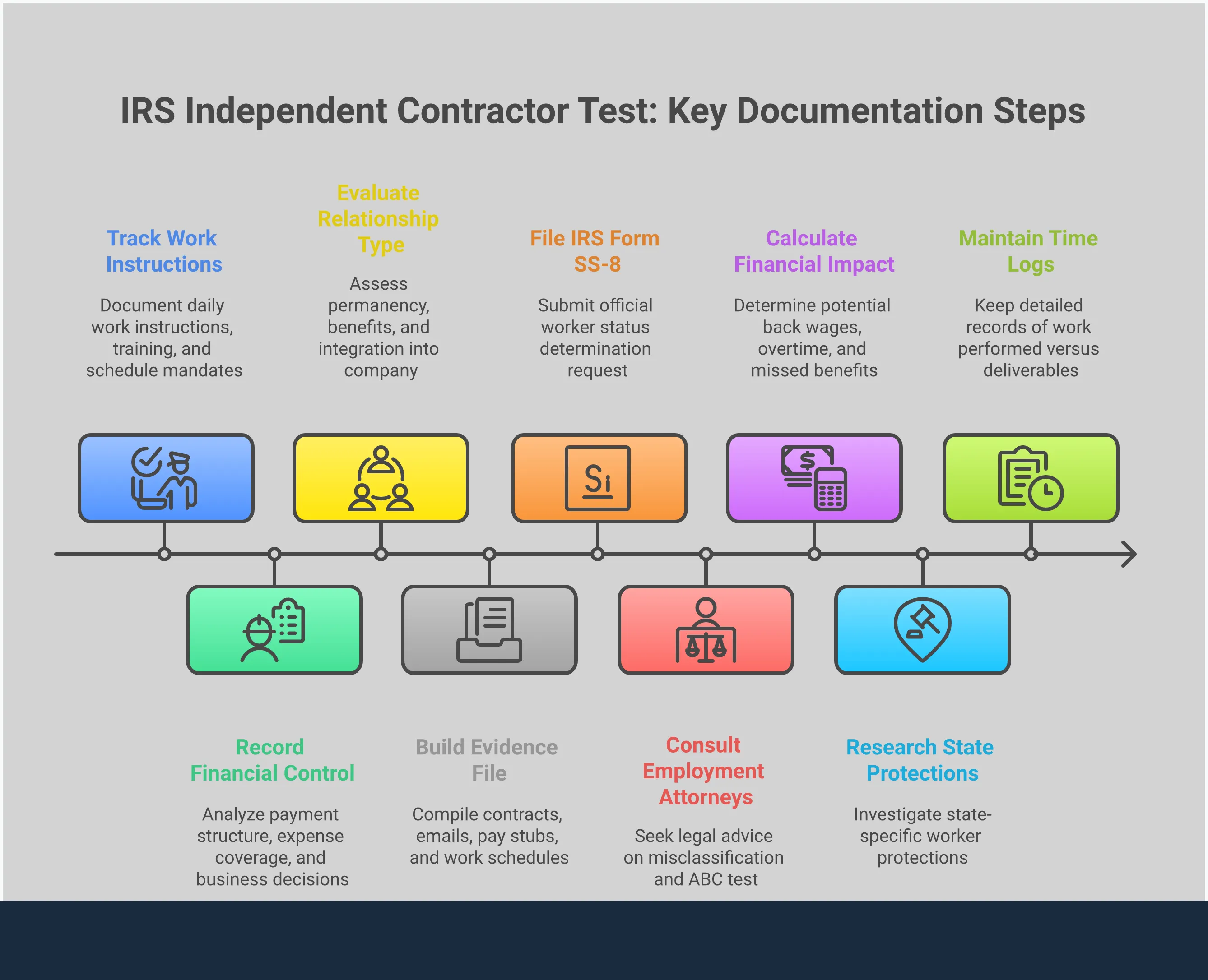
When you need a definitive answer on your worker status, you can go straight to the source. The IRS allows you to request an official ruling by filing Form SS-8, Determination of Worker Status. By submitting this form, you’re asking the IRS to review the specific details of your working relationship and issue a formal determination. This isn’t just for peace of mind; getting the correct classification is essential for handling your taxes properly and ensuring you receive the benefits you’re entitled to. It’s a powerful step toward gaining clarity and resolving any uncertainty about your employment situation.
Consult an Experienced Employment Lawyer
Worker classification laws are notoriously complex, and trying to figure them out on your own can be overwhelming. If you suspect you’ve been misclassified, speaking with an experienced employment lawyer is one of the smartest moves you can make. A legal professional can review the specifics of your situation, explain your rights under both federal and California law, and outline your best course of action. They can help you understand the nuances that IRS tests might not fully capture and provide the guidance you need to move forward confidently. Getting expert advice early on can make all the difference in protecting your interests.
Keep Detailed Records of Your Work
Whether you’re filing a form with the IRS or speaking with an attorney, having solid documentation is key. Start keeping detailed records of your work immediately. This includes contracts, emails, and any other communications that outline your duties, how you receive assignments, and who controls your work. Log your hours, save your pay stubs or invoices, and keep track of any business-related expenses you cover yourself. This evidence creates a clear picture of your day-to-day reality on the job. Strong documentation will be your best asset if you need to build a case to prove you are, in fact, an employee.
Understand the Consequences of Misclassification
Misclassification isn’t just a simple mistake—it has serious financial repercussions for everyone involved. When a company improperly labels an employee as an independent contractor, it avoids paying its share of payroll taxes, unemployment insurance, and workers’ compensation premiums. If the IRS determines a worker was misclassified, the employer can be held liable for back taxes and steep penalties. For you, the worker, it can mean missing out on critical protections and benefits. Understanding these significant tax implications is often the first step in pursuing wage and hour claims to recover what you’re owed.
Related Articles
- Misclassified As An Independent Contractor – Bluestone Law
- Penalties for Misclassifying Employees | Bluestone Law
- Misclassified Employees Awarded $1.3 Million: Are You Owed?
Frequently Asked Questions
What’s the single most important factor the IRS looks at when determining worker status? It’s tempting to look for one single thing that decides your status, but the IRS doesn’t work that way. Instead of a checklist, they look at the entire working relationship. The central theme is the degree of control a company has over the worker. No single factor is the deciding one; it’s about how all the pieces of behavioral control, financial control, and the nature of your relationship fit together to form a complete picture.
My contract calls me an independent contractor. Doesn’t that settle it? Not at all. This is one of the biggest myths out there. While a written agreement is part of the picture, it can’t override the law. The reality of your day-to-day work is what truly matters. If a company directs your work, controls your schedule, and treats you like an employee in practice, then you are likely an employee in the eyes of the law, regardless of what a contract says.
Is the IRS test the only one that matters in California? No, and this is a critical point for California workers. While the IRS test is used for federal tax purposes, California has its own, much stricter standard called the “ABC test.” Under this test, a worker is considered an employee unless the company can prove all three specific conditions are met. This means you could be considered an employee under state law even if your status is less clear under the federal guidelines.
What am I actually losing out on if I’m misclassified? Being misclassified means you could be missing out on fundamental rights and financial benefits. This includes access to overtime pay, meal and rest breaks, unemployment insurance, and workers’ compensation if you get hurt on the job. Your employer is also not paying their share of Social Security and Medicare taxes, which can affect your future benefits.
I think I’m misclassified. What is the very first thing I should do? The best first step is to start documenting everything. Keep detailed records of your hours, save any emails or documents that show the company controlling your work, and track any expenses you pay for out-of-pocket. Once you have some information gathered, consulting with an employment lawyer can help you understand your specific situation and your rights under both federal and California law.