


You handed in your resignation, walked out the door, and took a deep breath of freedom. But the injustice of what you endured at work still lingers. It’s a common myth that quitting your job means you forfeit your right to take legal action. In reality, the law is much more understanding. When an employer allows a workplace to become so abusive that any reasonable person would feel forced to leave, your resignation can be treated as a form of wrongful termination. If you’re asking yourself, can I sue for hostile work environment after I quit?, you’re on the right track. This article will explain how your departure can actually strengthen your case and what evidence you need to prove you had no other choice.
Key Takeaways
- Your resignation isn’t the end of the story: The law recognizes that being forced to quit due to an unbearable environment is a form of wrongful termination, known as constructive discharge, which allows you to take legal action.
- Documentation is your most powerful tool: To prove your case, you need evidence that the hostility was severe or pervasive. Collect everything—emails, messages, performance reviews, and a personal journal detailing each incident.
- Strict deadlines apply, so act promptly: You must file a formal complaint with a government agency like the CRD or EEOC before you can sue, and missing these critical deadlines can permanently close the door on your case.
What Is a Hostile Work Environment?
Many of us have dealt with a difficult boss or an annoying coworker, but that doesn’t automatically mean the workplace is legally “hostile.” The term has a specific legal meaning that goes far beyond typical office frustrations. A hostile work environment is created when unwelcome conduct based on a protected characteristic becomes so severe or pervasive that it interferes with your ability to do your job.
It’s not about isolated incidents of rudeness or a manager who is tough on everyone equally. Instead, it’s about a pattern of behavior or a single, serious event that makes you feel intimidated, threatened, or abused at work because of who you are. Understanding this distinction is the first step in figuring out if you have a legal claim and what you can do about it.
The Legal Definition of a Hostile Workplace
Legally speaking, a hostile work environment is a form of workplace harassment. It arises when an employee is subjected to unwelcome comments or conduct based on their race, gender, religion, disability, or another protected status. For the behavior to be considered illegal, it must be so severe or pervasive that a reasonable person would find the work environment intimidating, hostile, or abusive. This means the conduct has to be more than a simple annoyance or a one-off insensitive joke. The key is whether the behavior is persistent enough to create a toxic atmosphere or if a single incident is so extreme that it poisons the workplace.
Examples of Hostile Behavior
Hostile behavior can take many forms, and it isn’t always obvious. It can range from verbal abuse to physical intimidation. Common examples include sharing offensive jokes or images, using racial slurs, or making derogatory comments about someone’s gender or sexual orientation. It might also involve unwanted touching, threats, or constantly mocking someone’s disability or religious beliefs. This type of conduct isn’t just unprofessional—it can be a form of illegal sexual harassment. The behavior doesn’t have to be directed at you personally; witnessing it can also contribute to a hostile environment that makes it nearly impossible to focus on your work.
How the Law Protects Certain Groups
The critical element that makes a workplace legally hostile is that the bad behavior targets someone because they belong to a protected group. Federal and California laws prohibit discrimination based on characteristics like race, color, religion, sex (including pregnancy and gender identity), national origin, age (40 and older), disability, and genetic information. If your boss is just a jerk to everyone, it’s probably not an illegal hostile work environment. But if that behavior is aimed specifically at you or others because of a protected trait, the law steps in. The harassment must be discriminatory in nature for you to have a valid legal claim.
Can You Sue After Quitting a Hostile Job?
Making the decision to leave a job because the environment has become unbearable is incredibly difficult. You might feel like you’re giving up or letting your employer off the hook. The good news is that resigning doesn’t automatically mean you forfeit your legal rights. The law recognizes that sometimes, working conditions are so intolerable that any reasonable person would feel they have no choice but to quit.
The short answer is yes, you can absolutely sue your former employer for a hostile work environment even after you’ve resigned. However, your case will look a little different than if you were fired. Instead of a standard harassment or discrimination claim, you will likely file what’s known as a “constructive discharge” claim. This legal concept is key to holding your employer accountable for forcing you out. It argues that by allowing the hostile conditions to persist, your employer effectively terminated your employment.
Your Legal Rights After You Resign
Many people believe that once they hand in their resignation letter, they lose all power to take legal action. This simply isn’t true. Quitting does not erase the illegal treatment you endured. Your legal rights are tied to the unlawful actions of your employer, not your employment status. When you are forced to resign due to an intolerable work environment, the law may view your departure as a form of wrongful termination. This is called constructive discharge. In fact, a court may see your resignation as powerful evidence that the employer failed in its duty to provide a safe and lawful workplace, making your case even stronger.
Common Myths About Quitting and Lawsuits
One of the most persistent myths is that quitting is a sign of weakness that will hurt your case. In reality, it can be the opposite. Proving that the environment was so hostile that you had to sacrifice your job and financial stability can powerfully illustrate the severity of the situation. Another common misconception is that you can sue for any unpleasant or stressful job. Legally, a hostile work environment isn’t just about a difficult boss or a high-pressure atmosphere. The hostility must be based on illegal discrimination or harassment tied to your race, gender, age, disability, or another protected status. While quitting can complicate your case, it certainly does not eliminate your right to seek justice.
What Is “Constructive Discharge”?
Even if you were the one who submitted a resignation letter, you might still have a legal claim against your former employer. The law recognizes that sometimes, quitting isn’t a choice but a necessity. This is known as “constructive discharge,” a legal concept that treats your resignation as a form of wrongful termination because your employer created intolerable working conditions.
Defining When You’re Forced to Quit
Constructive discharge occurs when your employer’s actions make your work environment so unbearable that any reasonable person in your position would feel compelled to leave. It’s not about having a bad boss or a stressful week; the conditions must be exceptionally difficult or offensive. Think of it as being pushed out the door, even if you were the one to turn the handle. The law essentially views this as a firing in disguise, which can form the basis of a wrongful termination claim. Your resignation wasn’t truly voluntary—it was a forced response to an unacceptable situation created by your employer.
How to Prove You Had No Other Choice
Proving constructive discharge means showing you had no other reasonable option but to quit. The legal standard is high: you must demonstrate that the working conditions were so intolerable that a reasonable person would have felt forced to resign. This often involves documenting a pattern of mistreatment. For example, you might have been subjected to constant harassment, demoted without cause, had your pay cut drastically, or been forced to work in unsafe conditions. Simply disliking your job isn’t enough. You need to establish that the hostile work environment was the direct cause of your departure.
Why This Strengthens Your Case
While it may feel like quitting weakened your position, it can actually do the opposite. When you leave a job due to a severe hostile work environment, your resignation serves as powerful evidence of just how bad things were. A court or jury may see your decision to walk away from your livelihood as proof that the conditions were truly intolerable. It demonstrates that you exhausted your options and that the situation was beyond repair. This act of self-preservation can underscore the severity of the employer’s misconduct, whether it stemmed from ongoing discrimination or another form of illegal treatment, and make your overall case more compelling.
What Evidence Do You Need to Build a Strong Case?
To successfully sue your former employer, you need to do more than just describe a toxic workplace. You need to prove it. A strong case is built on solid evidence that shows the hostility was severe or pervasive and directly linked to a protected characteristic, like your race or gender. It also needs to show that the situation was so unbearable that any reasonable person would have felt compelled to resign. Before you even think about quitting, you should start gathering proof. The more documentation you have, the better you can demonstrate the reality of your work environment and hold your employer accountable for their failure to provide a safe workplace.
Key Documents to Gather
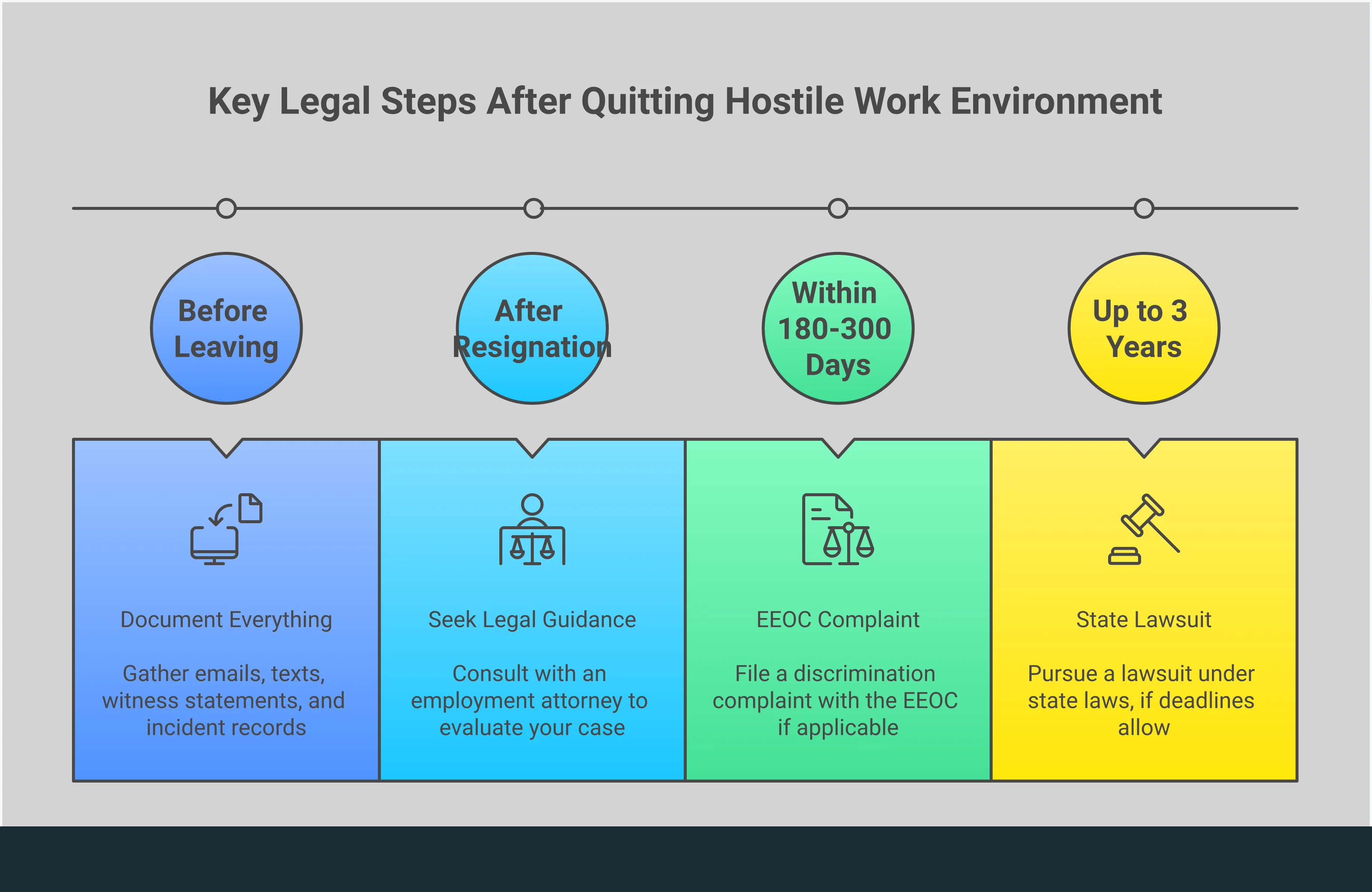
Start by collecting any written evidence of the hostile behavior. This includes emails, text messages, instant messages, or any other form of communication that illustrates the harassment or discrimination you faced. Save everything. If your performance reviews were positive before the hostility began, those documents are also important—they can counter any claims from your employer that you quit because of poor performance. These documents create a paper trail that can prove the hostile work environment was not just a one-time incident but a persistent problem your employer was aware of and failed to address.
The Role of Witness Statements
You may feel isolated, but it’s likely that others have seen what you’re going through. Statements from coworkers who witnessed the harassment can be incredibly valuable. They can confirm your account of events and help establish that the hostile behavior was common knowledge in the workplace. Even if a colleague wasn’t targeted directly, their testimony about what they saw or heard can help prove that the environment was objectively hostile. These supporting accounts add significant weight to your claim and are a key part of California employment law cases.
Records of HR Complaints and Company Responses
If you reported the harassment to Human Resources or your manager, that paper trail is one of the most critical pieces of evidence you can have. Keep copies of every email you sent, detailed notes from any meetings, and any written responses you received from the company. This documentation proves you gave your employer a chance to fix the problem. Their failure to take meaningful action is often the final piece needed to show that you were constructively discharged. It demonstrates that you exhausted your internal options before being forced to resign, which can also protect you if you become a victim of retaliation at work.
Why You Should Keep a Personal Journal
Your memory can fade over time, especially when you’re dealing with stress. That’s why keeping a private journal is a great idea. In a notebook or a secure personal document, write down every incident of hostile behavior as it happens. Be specific: include the date, time, location, and exactly what was said or done. Note who was there and if anyone else witnessed it. Also, describe how the incident made you feel. This detailed timeline will be an invaluable resource for your wrongful termination attorney in California and will help you recall key facts with clarity and confidence.
What Legal Requirements Must You Meet?
Deciding to take legal action is a big step, but it’s important to know that you can’t just file a lawsuit right away. The legal system has a specific process for handling hostile work environment claims, and following these steps is essential to protecting your rights. Think of it as a roadmap you have to follow to get to your destination. Missing a turn or a deadline can unfortunately stop your case before it even gets started. This is where understanding the procedural requirements becomes just as important as the evidence you’ve gathered. Let’s walk through the key legal hurdles you’ll need to clear.
Filing an Official Complaint Before a Lawsuit
Before you can sue your former employer in court for harassment, you must first file an administrative complaint with a government agency. This is a mandatory step known as “exhausting your administrative remedies.” In California, you can file with the state’s Civil Rights Department (CRD), or with the federal Equal Employment Opportunity Commission (EEOC). This official complaint details your allegations and gives the agency a chance to investigate. Once the agency completes its investigation or issues a “Right-to-Sue” letter, you can then proceed with a lawsuit. This initial filing is critical—without it, a court will likely dismiss your case, regardless of how strong your evidence is.
Critical Deadlines You Cannot Miss
Timing is everything when it comes to employment law. Strict deadlines, called statutes of limitations, govern how long you have to take legal action. In California, you generally have three years from the date of the last hostile act to file your complaint with the CRD. For federal claims with the EEOC, the deadline is much shorter—typically 300 days. If you miss this window, you lose your right to sue forever. Because quitting can sometimes complicate the timeline, it’s crucial to act quickly. Consulting with an attorney can help you pinpoint the exact deadlines for your specific situation, ensuring you don’t accidentally forfeit your claim for wrongful termination.
How to Prove Your Employer Is Responsible
Even with clear evidence of a hostile environment, you still have to prove your employer is legally responsible. This concept, known as employer liability, is a cornerstone of your case. If the harassment came from a supervisor, the company is often automatically liable. However, if the hostile behavior came from a coworker, you typically need to show that the company knew, or should have known, about the conduct and failed to take immediate and appropriate corrective action. This is why your records of reporting the issue to HR are so important. They help establish that the company was aware of the problem but didn’t fix it, which is especially critical if you became a victim of retaliation at work after your complaint.
How Do You Prove the Environment Was Severe Enough?
One of the biggest hurdles in a hostile work environment case is proving that the situation was more than just unpleasant or difficult. The law doesn’t protect employees from rude bosses or annoying coworkers. Instead, you have to show that the conduct you endured was legally “severe or pervasive.” This is a specific legal standard that looks at the frequency and intensity of the hostile behavior. A single, isolated incident might be enough if it’s extremely serious, but more often, a case is built on a pattern of behavior that, taken together, creates an abusive atmosphere.
Meeting the Legal Standard for “Severe or Pervasive”
To build a successful claim, the behavior you experienced must be considered either “severe” or “pervasive.” A severe act is typically a single, outrageous incident, such as a physical threat or a deeply offensive racial slur. Pervasive conduct, on the other hand, involves a pattern of less severe but persistent actions that add up over time. This could include daily inappropriate jokes, constant undermining comments, or ongoing intimidation. The key is that the conduct must create a work environment that a reasonable person would find hostile or abusive. A court will look at the totality of the circumstances to determine if your hostile work environment claim meets the legal threshold.
Showing a Pattern of Hostile Conduct
A one-off rude comment is rarely enough to build a case. Instead, you need to demonstrate a consistent pattern of behavior. This is where meticulous documentation becomes your most powerful tool. Keep a detailed log of every incident, noting the date, time, location, what happened, and who was present. This record helps establish the “pervasive” nature of the harassment. When you can show a timeline of ongoing hostility, it becomes much easier to argue that you were forced to resign. In fact, leaving your job because of a severe and hostile environment can actually strengthen your case for wrongful termination, as a court may see your resignation as powerful evidence that the conditions were truly intolerable.
Demonstrating the Impact on Your Ability to Work
It’s not enough to show that the behavior was offensive; you also have to demonstrate how it negatively affected your ability to do your job. Did the stress cause you to miss deadlines? Did you avoid meetings to steer clear of a harasser? Did you have to take sick days because of anxiety? The hostile conduct must have altered the conditions of your employment. Evidence of this impact can include performance reviews that show a decline after the harassment started, emails to HR about the issues, or even testimony from coworkers who witnessed the change in your work habits. This helps prove that the underlying discrimination or harassment was so significant that it created an abusive working environment.
What Are Your First Steps After Quitting?
Leaving a job is a major decision, and when you’re forced out by a toxic atmosphere, it can feel overwhelming. Now that you’ve taken that step for your well-being, it’s time to focus on protecting your legal rights. Taking a few key actions right away can make a significant difference in your ability to hold your former employer accountable. Think of these as the foundational steps for building your case and seeking the justice you deserve.
Preserve Your Evidence Immediately
Your ability to prove what you went through is the cornerstone of your case. To build a strong claim for a hostile work environment, you need evidence showing the conduct was severe or pervasive. Gather any emails, text messages, photos, or internal communications that illustrate the harassment or discrimination you faced. If you kept a personal journal detailing incidents, dates, and witnesses, it can be incredibly valuable. Make copies of your performance reviews, especially if they were positive before the hostility began. The fact that you felt compelled to resign can itself be powerful evidence of how intolerable the conditions were.
Track Important Filing Deadlines
The law sets strict time limits for filing employment claims, and missing a deadline can unfortunately mean losing your right to sue. Before you can file a lawsuit, you typically must first file a complaint with a government agency like the U.S. Equal Employment Opportunity Commission (EEOC) or California’s Civil Rights Department (CRD). Each agency has its own deadlines, which can be as short as a few months from the last discriminatory act. These timelines are complex and unforgiving, so it’s critical to understand which ones apply to your situation as soon as possible. Don’t let a technicality prevent you from moving forward.
Consult with an Employment Attorney
Trying to handle a legal claim on your own is incredibly challenging, especially when you’re recovering from a difficult work experience. Consulting with a legal professional is the most important step you can take. An experienced attorney can assess the details of your situation, explain your options, and determine if your resignation qualifies as a constructive discharge. They will handle the complicated legal procedures, from filing agency complaints to meeting every deadline. Getting expert guidance ensures you can build the strongest possible case and focus on your own well-being while a dedicated advocate fights for you.
What Compensation Can You Recover in a Lawsuit?
If you were forced to leave your job because of a hostile work environment, you’ve likely dealt with significant financial and emotional fallout. The goal of a lawsuit is to help you recover what you’ve lost and hold your former employer accountable for the harm they caused. The compensation, legally known as “damages,” is designed to address the specific losses you suffered.
These damages typically fall into three main categories. First, there are economic damages, which cover the tangible financial losses like your lost salary and benefits. Second, you can seek non-economic damages for the emotional and psychological toll the experience took on you. Finally, in cases where an employer’s behavior was particularly outrageous, you might be able to recover punitive damages, which are intended to punish the company and prevent similar conduct in the future. Understanding what you can claim is a critical step in deciding to move forward with legal action.
Recovering Lost Wages and Benefits
When a workplace becomes so intolerable that you have no reasonable choice but to resign, the law may view it as a “constructive discharge.” This means your resignation is treated as a form of wrongful termination, opening the door for you to recover your financial losses. You can file a claim to recoup the income and benefits you lost after being forced out. This includes not just your salary but also any bonuses, commissions, and the value of benefits like health insurance and retirement contributions. As one firm notes, “it is possible to sue for a hostile work environment after you quit by filing a constructive discharge claim,” but your success will depend on proving your case.
Compensation for Emotional Distress
The impact of a hostile work environment goes far beyond your bank account. The constant stress, anxiety, and humiliation can cause significant psychological harm, and the law recognizes this. You can seek compensation for the emotional distress you endured. This covers the pain and suffering caused by the hostile conditions, which can manifest as depression, anxiety, sleepless nights, or other mental health challenges. As legal experts confirm, “you could sue for the emotional distress you suffered while you still worked there.” This ensures you are compensated for the full scope of the harm you experienced, not just the financial part.
Punitive Damages and Attorney’s Fees
In some situations, an employer’s conduct is so reckless or malicious that the court may award punitive damages. These are not meant to compensate you for a specific loss but to punish the employer and deter other companies from allowing similar hostile work environments to exist. However, securing these damages requires strong evidence. It’s important to remember that “unless one can prove that the employer is liable, there may be no remedy for the plaintiff.” Additionally, many employment laws allow you to recover your attorney’s fees if you win your case, making it more financially feasible to stand up for your rights.
What Challenges Should You Prepare For?
Filing a lawsuit after leaving your job comes with its own set of challenges, but being prepared can make all the difference. Your former employer will likely have a legal team ready to defend their position, and the legal process itself has specific requirements you’ll need to meet. Knowing what to expect can help you build a stronger case from the start. It’s about understanding the arguments they might use, what you’ll need to prove, and the procedural steps you must follow. Facing these hurdles with clear eyes and the right support is the first step toward holding your former employer accountable for the hostile work environment they created.
Common Arguments Employers Use
Your former employer will likely try to poke holes in your claim. A common defense is arguing that even if the behavior was inappropriate, it wasn’t severe or pervasive enough to legally qualify as hostile. They might also claim they were unaware of the harassment or that they had proper reporting channels you failed to use. Another tactic is to argue that they are not legally responsible for the actions of a specific employee, especially if that person was a coworker and not a supervisor. Their goal is to shift the blame or downplay the severity of the situation, which is why your detailed documentation is so important to counter these arguments.
Understanding the Burden of Proof
In any legal claim, the responsibility to prove the case—known as the burden of proof—falls on you. For a constructive discharge claim, you must provide evidence showing the work environment was so intolerable that any reasonable person would have felt compelled to resign. It’s not enough to say you didn’t like your job; you have to connect the hostile conditions directly to your decision to leave. This means demonstrating a clear pattern of severe or pervasive conduct and showing that you gave your employer a chance to fix the situation, unless doing so would have been futile. Proving you were a victim of wrongful termination in this way requires strong, compelling evidence.
Potential Hurdles When Suing After You’ve Left
Before you can even file a lawsuit, you typically must file a formal complaint with a government agency like the California Civil Rights Department (CRD) or the federal Equal Employment Opportunity Commission (EEOC). Missing the strict deadlines for these filings can prevent you from ever taking your case to court. Another hurdle is that by quitting, you may limit the amount of lost wages you can claim. However, leaving a toxic job can also strengthen your case, as a court may see your resignation as powerful evidence of just how unbearable the conditions truly were. Navigating these procedural and strategic challenges is where an experienced employment law attorney becomes invaluable.
Related Articles
- Constructive Dismissal California: A Complete Guide
- How to Document Sexual Harassment: A Guide for Sac Co Employees
- Sexual Harassment: A Guide to Your Rights & Options
- Canoga Park Employment Lawyer – Bluestone Law
Frequently Asked Questions
What if my boss was just a jerk to everyone? Is that still a hostile work environment? This is a great question because it gets to the heart of the legal definition. For a workplace to be considered legally hostile, the bad behavior usually has to be tied to a protected characteristic, like your race, gender, religion, or disability. If a manager is an equal-opportunity jerk and treats everyone poorly, it’s definitely a toxic situation, but it might not meet the legal standard for a hostile work environment claim. The law is designed to protect against discriminatory harassment, not general rudeness or poor management.
I never reported the harassment to HR before I quit. Does that ruin my case? Not necessarily, but it can make things more complicated. Reporting the issue internally gives your employer a chance to fix the problem, and showing that they failed to do so strengthens your claim. However, the law understands that reporting isn’t always a safe or realistic option. If you had a legitimate fear of retaliation or if the harasser was the head of the company, for example, your failure to report might be excused. It’s a detail that an attorney would look at closely to understand the full context of your situation.
How long do I have to take action after I quit? You need to act quickly because there are strict legal deadlines, known as statutes of limitations. In California, you generally have three years from the last act of harassment to file a complaint with the state’s Civil Rights Department (CRD). For federal claims, the window is even shorter. These deadlines are firm, and if you miss them, you could lose your right to sue altogether. It’s one of the most important reasons to speak with an attorney as soon as you can after leaving your job.
Does filing a lawsuit mean I’ll definitely have to go to court and testify? Not at all. In fact, the vast majority of employment cases are resolved long before they ever reach a courtroom. Many cases are settled through negotiations between your attorney and your former employer’s legal team, or through a process called mediation. The goal is often to reach a fair agreement without the time and stress of a full trial. While you should be prepared for the possibility of going to court, it’s much more likely that your case will be resolved outside of it.
What is “constructive discharge” in simple terms? Think of it this way: your employer made your job so unbearable that you had no real choice but to leave. Even though you were the one who handed in your resignation, the law sees it as if you were fired because the company’s actions forced you out. This legal concept is what allows you to pursue a wrongful termination claim even after you’ve technically quit. It acknowledges that your resignation wasn’t truly voluntary but a necessary response to an intolerable situation.