
Many people believe that a workplace threat is a dispute between two individuals, but the law sees it differently. Your employer has a legal obligation to provide a safe work environment, free from harassment and intimidation. This duty isn’t optional. If they know, or should have known, about threatening behavior and fail to take effective action to stop it, they can be held legally responsible for the harm you suffer. Their inaction makes them complicit. This is a critical distinction because it shifts the focus from a coworker’s bad behavior to the company’s failure to protect you. If your employer has ignored your complaints, you may be wondering, “can I sue for being threatened at work?” This guide will explain your employer’s specific responsibilities and what you can do when they fail to meet them.
Key Takeaways
- Document Every Detail Immediately: Threats can be verbal, written, or digital, and your best defense is a detailed record. Write down what happened, when, where, and who was involved as soon as possible, as this documentation is crucial evidence.
- Put Your Employer on Notice—In Writing: Your employer has a legal duty to provide a safe workplace, but they can’t act on a problem they don’t know about. Reporting the threat in writing to HR or management creates an official record and legally obligates them to investigate.
- Understand When a Threat Becomes Illegal: For a threat to be legally actionable, it often must be severe or pervasive enough to create a hostile work environment and be linked to a protected status like your race, gender, or disability. Consulting an employment attorney is the best way to determine if your situation meets this legal standard.
What Counts as a Workplace Threat?
When you think of a “threat” at work, your mind might jump to a dramatic, movie-like confrontation. But in reality, workplace threats can be much more subtle and varied. They aren’t limited to physical violence; they can be verbal, written, or even digital. A threat is any behavior that makes you feel unsafe, intimidated, or harassed, and it can seriously interfere with your ability to do your job. Recognizing what legally constitutes a threat is the first step toward protecting yourself.
It’s important to understand that these actions are not just personality clashes or a “tough” work culture. They can be clear violations of your right to a safe work environment. Whether it’s an intimidating comment from a coworker, an aggressive email from a manager, or a physical act of aggression, these behaviors are unacceptable. California law provides strong protections for employees, and understanding the different forms a threat can take helps you identify when a line has been crossed. If you’re feeling uneasy or targeted, it’s crucial to trust your instincts and know that you don’t have to endure it.
Understanding Verbal and Physical Intimidation
Verbal and physical intimidation includes any conduct that threatens, harasses, or frightens you. This isn’t just about outright physical assault, though that is certainly a severe example. It also covers verbal threats of violence, aggressive gestures, or physically blocking your path. Even actions that interfere with your work in an intimidating way can count. For example, a manager who consistently stands over your shoulder and makes menacing comments could be creating a hostile work environment. These behaviors are prohibited because they compromise your safety and well-being on the job.
Identifying Written or Digital Threats
In our connected world, threats are no longer confined to in-person interactions. Harassment and intimidation can easily happen through emails, text messages, company chat platforms, or even social media. A threatening email from a supervisor or a campaign of harassing messages from a coworker are just as serious as verbal threats. These digital threats can feel particularly invasive because they can follow you home, blurring the line between your work life and your personal time. The law recognizes that a threat is a threat, regardless of the medium used to deliver it.
Common Myths About Workplace Threats
Many people have misconceptions about what constitutes a real threat at work. One common myth is that workplace violence only happens in high-risk industries. The truth is, threatening behavior can occur in any setting, from an office to a retail store. Another damaging myth is that only physical violence is serious enough to report. This simply isn’t true. Verbal threats and intimidation are just as harmful and can be grounds for legal action. Don’t let anyone downplay your experience; your right to a safe workplace is protected by employment law.
What Are Your Legal Protections Against Workplace Threats?
When you’re facing threats at work, it can feel like you’re completely on your own. The good news is that you’re not. A framework of federal and state laws exists specifically to protect you from harm and ensure your employer takes threats seriously. These laws establish your right to a safe workplace and give you a path to take action if your employer fails to provide one. Understanding these protections is the first step toward standing up for your rights and holding your employer accountable.
Federal Laws That Protect You
At the federal level, several laws establish your right to a workplace free from harassment and danger. The most prominent is Title VII of the Civil Rights Act of 1964, which prohibits employment discrimination based on race, color, religion, sex, and national origin. When threats are tied to one of these protected categories, they can be considered a form of illegal harassment. Federal labor laws and worker protection also require employers to maintain a fair and safe environment. These laws set a national standard, giving you a baseline of rights no matter where you work.
Your Protections Under California Law
California is known for having some of the strongest employee protections in the country. The Fair Employment and Housing Act (FEHA) goes even further than federal law, prohibiting harassment and hostile work environments based on a wider range of protected characteristics, including sexual orientation and gender identity. Under FEHA, your employer has a legal duty to take reasonable steps to prevent and correct threatening behavior. This means they can’t just ignore your complaints; they must investigate them and take appropriate action to stop the conduct.
OSHA’s Role in Workplace Safety
The Occupational Safety and Health Administration (OSHA) is a federal agency tasked with ensuring safe working conditions. While many people associate OSHA with physical hazards like faulty equipment, its mandate also covers workplace violence. Under OSHA’s General Duty Clause, employers must provide a workplace free from recognized hazards that could cause serious physical harm. This includes preventing and addressing threats of violence. According to OSHA, employers have a responsibility to assess their workplaces for risks and establish a prevention program. If your employer ignores credible threats, they could be violating their obligations.
Can You Be Fired for Reporting a Threat?
It is illegal for your employer to fire you for reporting a threat or any other form of harassment. This is called retaliation, and it’s one of the most common claims filed against employers. Both federal and state laws protect your right to speak up about unsafe or illegal conditions without fear of losing your job. If you report a threat and are suddenly demoted, disciplined, or fired, you may have a strong case for wrongful termination. The law is designed to protect employees who act in good faith to stop illegal behavior.
When Can You Take Legal Action for Workplace Threats?
It’s one thing to deal with a difficult boss or an annoying coworker, but it’s another thing entirely to feel threatened at work. Knowing when a threat crosses the line from being merely unprofessional to being illegal is the first step in protecting yourself. The law has specific standards for what constitutes an actionable offense, and understanding them can help you decide on your next steps. It’s not just about feeling uncomfortable; it’s about whether the behavior is severe or pervasive enough to change your work environment in a legally significant way.
When Does Behavior Cross the Legal Line?
Not every rude comment or unpleasant interaction is illegal. For a threat or other behavior to be legally actionable as harassment, it generally needs to meet a specific standard. According to the U.S. Equal Employment Opportunity Commission (EEOC), behavior becomes unlawful when you must endure it to keep your job, or when it’s so severe or frequent that it creates a work environment a reasonable person would find intimidating, hostile, or abusive. A single, severe threat of violence could be enough to cross this line, as could a consistent pattern of intimidating comments over time. The key is whether the conduct fundamentally alters your conditions of employment.
How Your Protected Status Plays a Role
For a threat to form the basis of a harassment or hostile work environment claim, it often must be linked to your protected status. Federal and California laws protect employees from discrimination based on characteristics like race, religion, gender, sexual orientation, age, disability, or national origin. If someone is threatening you because of one of these traits, their behavior is not just inappropriate—it’s illegal. For example, if a coworker makes threatening remarks tied to your race or makes intimidating advances because of your gender, you have a strong basis for a legal claim. This connection is what elevates a personal conflict to a matter of employment law.
Does It Create a Hostile Work Environment?
Threats are a common element in creating a legally recognized hostile work environment. This doesn’t just mean your workplace is unpleasant or stressful; it means the hostility is so severe or pervasive that it interferes with your ability to do your job. The threatening behavior must be based on your protected status. A manager who constantly makes veiled threats about firing you after you report sexual harassment, or coworkers who intimidate you with racial slurs, are creating this type of illegal environment. The goal of the law is to ensure that no one has to work in a place where they feel threatened or abused because of who they are.
Immediate Danger vs. Ongoing Harassment
It’s critical to distinguish between a situation that poses an immediate physical danger and one that constitutes ongoing harassment. If you believe a threat is credible and you are in immediate danger of physical harm, your first call should be to the police. Your safety is the top priority. For ongoing threats, intimidation, and harassment that make you feel unsafe over time but don’t present an immediate physical risk, the proper channel is to report it to your company’s HR department and document everything. If the company fails to act, that’s when you should explore your legal options with an employment attorney to address the hostile work environment.
What to Do if You’re Threatened at Work
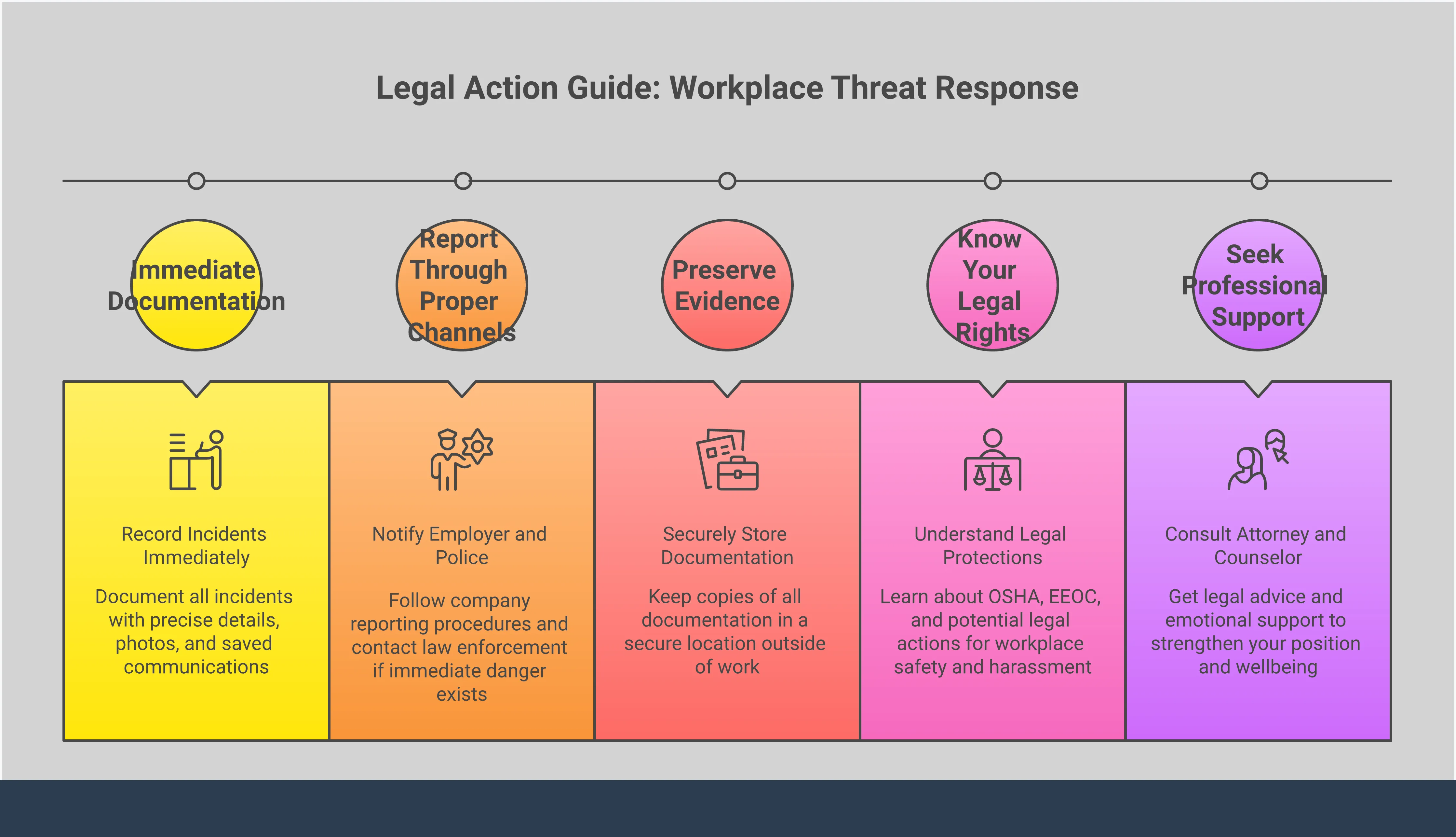
Facing a threat at work can leave you feeling scared, isolated, and unsure of what to do next. It’s a serious situation, and how you respond is critical for your safety and your legal rights. Taking clear, deliberate steps can protect you and create a record of what happened. If you find yourself in this position, focus on these four actions.
Document Everything in Detail
Your most powerful tool is a detailed record of every incident. As soon as you can, write down exactly what happened. Include the date, time, and location of the threat. Note who was involved and list any witnesses who saw or heard the incident. Be specific about the words used or the actions taken. Also, describe how the threat made you feel—scared, intimidated, or unsafe. Save any physical evidence like emails, text messages, or voicemails. This documentation creates a timeline that is essential if you decide to report the behavior or pursue legal action for creating a hostile work environment.
Report the Threat to HR and Management
Your employer can’t address a problem they don’t know about. Check your employee handbook for the company’s official reporting procedure and follow it. It’s always best to submit your complaint in writing, such as in an email, so you have a time-stamped record of your report. Stick to the facts you’ve documented. Once you report the threat, your employer has a legal obligation to investigate and take reasonable steps to ensure your safety. Many people worry about making a report, but it’s illegal for your employer to punish you for it. Understanding your rights against workplace retaliation is key to feeling secure in this process.
Know When to Call the Police
If you believe you are in immediate physical danger, do not hesitate—call 911. Your personal safety is the number one priority. A direct threat of violence is not just an HR issue; it can be a criminal offense. Trust your instincts. If the behavior has escalated to the point where you fear for your safety or the safety of others, involving law enforcement is the right call. A police report also serves as another official record of the incident, which can be valuable later. Knowing your general rights under employment law can help you understand when a situation crosses from a workplace dispute to a matter for the authorities.
Find Support Systems and Resources
Dealing with threats is emotionally and mentally draining. It’s important to build a support system to help you through it. See if your company offers an Employee Assistance Program (EAP), which provides confidential counseling and resources. Lean on trusted friends and family who can offer emotional support. You don’t have to go through this alone. Another crucial resource is an experienced employment lawyer. Speaking with a legal professional can give you clarity on your options and provide a strategic path forward. The right legal team, like the one at our firm, can be a powerful advocate and a source of stability during a difficult time.
Can You Sue Your Employer for Workplace Threats?
Yes, you can sue your employer for workplace threats, but it’s not always a straightforward process. A lawsuit typically isn’t based on a single, isolated comment. Instead, legal action often depends on whether the threats are part of a larger pattern of illegal behavior, such as harassment, discrimination, or retaliation. For a threat to be legally actionable, it usually needs to be connected to your status as a member of a protected class or have created a hostile work environment that your employer failed to address.
Successfully holding your employer accountable means understanding the specific legal standards that apply. You’ll need to show how the threatening behavior was not only inappropriate but also violated specific state or federal laws designed to protect employees. The following steps outline what’s involved in building a case and what you need to prove to move forward with a lawsuit.
The First Step: Filing an EEOC Complaint
Before you can file a federal lawsuit for harassment or discrimination, you almost always have to file a formal complaint, known as a “charge,” with the Equal Employment Opportunity Commission (EEOC). This government agency is responsible for enforcing federal laws that make it illegal to discriminate against a job applicant or an employee. In California, you can also file with the Civil Rights Department (CRD).
Filing this charge is a critical first step that preserves your right to sue. The agency will investigate your claim, and this process officially documents the incidents. There are strict deadlines for filing, so it’s important to act quickly. This formal complaint signals to your employer that you are serious and creates an official record of the threats and any related misconduct you’ve endured.
What You Need to Prove for a Lawsuit
To win a lawsuit based on workplace threats, you can’t just say you felt threatened. You have to prove a few key things. First, the behavior must have been unwelcome. Second, it must be connected to a protected characteristic, like your race, gender, age, or disability. Finally, the conduct must be considered “severe or pervasive” enough to create a hostile work environment.
“Severe” could mean a single, terrifying threat of violence, while “pervasive” refers to a pattern of ongoing intimidation and harassment that disrupts your ability to do your job. The goal is to show that the threats fundamentally changed your work conditions and created an abusive atmosphere.
When Is Your Employer Legally Responsible?
Your employer’s responsibility for threats often depends on who is making them. If a supervisor or manager threatens you and it results in a negative employment action—like being fired, demoted, or passed over for a promotion—the company is typically held automatically liable. This is because supervisors act as agents of the company.
If the threats come from a coworker, the company is legally responsible if they knew or should have known about the behavior and failed to take prompt and effective action to stop it. This is why reporting threats to HR or management is so important. It puts the company on notice and legally obligates them to intervene and protect you from further harm. If they fail, you may have a strong case for wrongful termination or harassment.
Linking Threats to Discrimination or Retaliation
The strongest legal cases often link workplace threats directly to illegal discrimination or retaliation. If you are being threatened because of your gender, religion, national origin, or another protected status, the behavior is a form of discriminatory harassment. The threats are not random; they are a tool used to intimidate you based on who you are.
Similarly, if the threats began after you engaged in a protected activity—like reporting sexual harassment, complaining about unpaid overtime, or acting as a whistleblower—it is likely illegal retaliation. In these situations, the threats are a form of punishment intended to silence you. Establishing this connection is key to proving your employer broke the law.
What to Expect from the Legal Process
Deciding to take legal action can feel overwhelming, but knowing what to expect can make the journey feel more manageable. The legal process follows a structured path, from filing your initial complaint to reaching a final resolution. While every case is unique, the core stages are generally the same. Understanding these steps helps you prepare for what’s ahead and work effectively with your attorney to build the strongest case possible.
Understanding Key Deadlines and Timelines
One of the most critical parts of any legal claim is timing. Strict deadlines, known as statutes of limitations, govern how long you have to file a complaint. For instance, you typically have 180 days to file a charge of discrimination with the Equal Employment Opportunity Commission (EEOC), though this can sometimes be extended under state law. Missing a deadline can unfortunately mean losing your right to sue. This is why it’s so important to speak with an attorney as soon as possible. They can help you identify the specific time limits that apply to your situation and ensure all paperwork is filed correctly and on time, protecting your ability to seek justice for the discrimination you’ve faced.
The Investigation and Discovery Phase
After you file a complaint, the investigation begins. An agency like the EEOC will look into your claims by gathering facts and examining the context of the incidents. They will assess all the evidence to determine if the behavior was severe or pervasive enough to be illegal. This is where your detailed documentation becomes invaluable. Following this initial investigation, your case enters the “discovery” phase. This is a formal process where both sides exchange information. It can involve written questions, requests for documents, and depositions, which are interviews conducted under oath. This stage is all about uncovering the facts needed to support your claim of a hostile work environment.
Settling Your Case vs. Going to Trial
Most employment law cases are resolved before they ever reach a courtroom. Often, your attorney will negotiate with your employer to reach a settlement agreement. A settlement is a voluntary resolution where you agree to drop the lawsuit in exchange for compensation or other remedies. This can be a faster, less stressful, and more private way to resolve your case. However, if a fair agreement can’t be reached, you have the right to take your case to trial. A trial means a judge or jury will hear the evidence and make a final decision. Your attorney will advise you on the best path forward based on the strength of your case and your personal goals.
What Compensation Can You Receive?
If your case is successful, you may be entitled to various forms of compensation, often called “damages.” The goal is to make you whole for the harm you suffered. This can include recovering lost wages and benefits if you were fired or forced to quit. You can also receive compensation for the emotional distress and mental anguish caused by the threats and harassment. In cases where an employer’s conduct was particularly reckless or malicious, you might be awarded punitive damages, which are intended to punish the employer and deter similar behavior in the future. An experienced attorney can help you understand the potential value of your wage and hour claims and other damages.
How to Protect Yourself During the Legal Process
Taking legal action can feel overwhelming, but you don’t have to go through it alone. By taking a few key steps, you can protect your rights, strengthen your case, and maintain control over your situation. It starts with being proactive and understanding the resources available to you.
Keep a Strong Record of Everything
Documentation is your most powerful tool. Every detail, no matter how small it seems, can help build a credible account of what you’ve experienced. Start a private log and record every incident, including the date, time, and location. Write down exactly what was said or done, who was present, and how it made you feel. Save any relevant emails, text messages, or other written communications in a secure place that you can access outside of work. By creating a detailed record, you’re not just gathering evidence; you’re taking an active step toward holding your employer accountable for a hostile work environment.
How to Handle Retaliation During Your Case
It is illegal for your employer to punish you for reporting a threat or filing a legal claim. Unfortunately, it still happens. This is called retaliation, and it can take many forms, such as being fired, demoted, reassigned to a less desirable role, or having your hours cut. If you suspect you’re facing retaliation, document it with the same level of detail as the original incident. A victim of retaliation at work may have a separate legal claim against their employer, which can sometimes be even stronger than the initial complaint. Don’t let the fear of retaliation stop you from standing up for your rights.
Why You Need an Employment Attorney
Trying to handle an employment dispute on your own puts you at a significant disadvantage. Your employer will have lawyers protecting their interests, and you deserve the same level of advocacy. An experienced employment attorney does more than just file paperwork; they become your strategic partner. They can assess the strength of your case, explain your legal options, and handle all communications with your employer. Consulting a skilled workplace lawyer is an invaluable step in defending your rights and ensuring your voice is heard. The team at Bluestone Law is dedicated to fighting for employees and can provide the guidance you need.
Know Your Rights Throughout the Process
Federal and California laws provide strong protections for workers, and these rights don’t go away once you begin the legal process. You have the right to be free from discrimination and harassment at every stage. Your employer cannot use the legal proceedings as an excuse to treat you unfairly or create an intimidating atmosphere. Understanding your fundamental rights helps you identify when they are being violated. An attorney can help you understand the specific protections that apply to your situation, ensuring you are treated with the dignity and respect you deserve from start to finish.
Related Articles
- Sexual Harassment: A Guide to Your Rights & Options
- Canoga Park Employment Lawyer – Bluestone Law
- How to Document Sexual Harassment: A Guide for Sac Co Employees
Frequently Asked Questions
What if the person threatening me is a client or customer, not another employee? Your employer’s responsibility to provide a safe workplace extends to protecting you from harassment by third parties, like clients or vendors. If you report threatening behavior from a non-employee, your company is still legally required to take reasonable steps to stop it. This could involve speaking to the client, reassigning you, or even ending the business relationship if the behavior continues. The key is that you must inform your employer so they have the opportunity to intervene.
I’m afraid to report the threat to HR because they might not take it seriously. What should I do? This is a completely valid fear, but reporting the issue is a necessary step to protect yourself legally. Put your complaint in writing, like an email, to create a clear record that you notified the company. Stick to the documented facts of what happened. If HR fails to act or, worse, dismisses your concerns, their inaction can become part of your legal claim. Remember, it is illegal for them to retaliate against you for making a good-faith complaint.
Does one inappropriate comment count as a legally actionable threat? It depends on the severity of the comment. While the law typically looks for a pattern of behavior that is pervasive, a single incident can be enough if it is sufficiently severe. For example, a direct threat of physical violence is a serious event that could immediately create a hostile work environment. However, a less severe but offensive comment might not meet the legal standard on its own unless it becomes part of a recurring pattern of harassment.
Can I still work at my job while pursuing a legal claim? Yes, you absolutely can. You do not have to quit your job to take legal action against your employer for harassment or a hostile work environment. In fact, it is illegal for your employer to fire you or treat you differently simply because you filed a complaint or a lawsuit. If they do, that is considered retaliation, which gives you grounds for an additional legal claim.
I’m worried I can’t afford a lawyer. How does payment for an employment attorney work? Most plaintiff’s employment law firms, including ours, work on a contingency fee basis. This means you do not pay any attorney’s fees upfront. The firm only gets paid if they win your case, either through a settlement or a court verdict. The fee is typically a percentage of the amount you recover. This arrangement allows you to get expert legal representation without having to worry about the cost while your case is ongoing.
Think you were wrongfully terminated?
Get a free, confidential case evaluation from our experienced employment law attorneys.
Request Your Free Consultation