
So, your employer denied your request for an accommodation. What now? It’s a frustrating and often confusing position to be in, but your response is critical. Instead of accepting the decision at face value, you can take clear, strategic actions to protect your rights and reopen the conversation. The law requires your employer to do more than simply say no; they must engage in a good-faith interactive process. If your ADA accommodation is denied, it’s time to get organized. We’ll show you exactly how to document every interaction, ask for a written explanation, propose alternatives, and formally appeal the decision, ensuring you have a solid foundation for whatever comes next.
Key Takeaways
- Document every interaction: From your first request to the final denial, keep a detailed log of all conversations, emails, and meetings. This timeline is your strongest evidence and helps you present the facts clearly.
- A denial is a chance to restart the conversation: Don’t accept a “no” as the final answer. Ask for a written reason, propose alternative accommodations, and use your company’s appeal process to show you’re committed to finding a solution.
- Act quickly to protect your legal rights: Strict deadlines apply for filing a formal complaint with agencies like the EEOC or California’s CRD. Missing these deadlines can prevent you from pursuing your case, so it’s critical to explore your legal options without delay.
What Are Your Rights Under the ADA?
Before you can challenge a denied accommodation, it’s important to understand the rights you have under the Americans with Disabilities Act (ADA). This federal law is designed to protect you from discrimination and ensure you have an equal opportunity to succeed at work. A key part of the ADA is the requirement that employers provide “reasonable accommodations” for qualified employees with disabilities. This isn’t just a suggestion; it’s a legal obligation.
The goal is to create a work environment where you can perform your job effectively, despite any limitations your disability may cause. California’s Fair Employment and Housing Act (FEHA) often provides even broader protections, but understanding your baseline rights under the ADA is the perfect place to start. These rights form the foundation of your request and any actions you might take if that request is denied. Knowing what the law says empowers you to advocate for yourself and ensures you approach the situation from a position of strength and knowledge.
What Qualifies as a Disability?
Under the ADA, the term “disability” has a specific legal meaning. You are protected if you have a physical or mental impairment that substantially limits one or more major life activities, like walking, seeing, hearing, or working. The law also protects you if you have a history of such an impairment (for example, a past illness that is in remission) or if your employer regards you as having one, even if you don’t. To receive an accommodation, you must also be “qualified” for your job, which simply means you can perform its essential functions, either with or without a reasonable accommodation. This is a key part of disability discrimination law.
Types of Reasonable Accommodations
A reasonable accommodation is any change to your work environment or the way your job is typically done that helps you perform your duties. The possibilities are broad and depend entirely on your specific needs. Common examples include making the workplace more accessible, providing special equipment or software, modifying your work schedule, or allowing you to work from home. It could also mean restructuring your job duties or reassigning you to a vacant position you’re qualified for. The key is that the accommodation must be effective; it doesn’t have to be the most expensive option or the exact one you requested, but it must allow you to do your job.
The “Interactive Process” Explained
Once you request an accommodation, your employer is legally required to engage in what’s called the “interactive process.” Think of this as a good-faith, back-and-forth conversation between you and your employer to find a workable solution. During this process, you should discuss your limitations and what accommodations might help. If your disability or need for accommodation isn’t obvious, your employer can ask for reasonable medical documentation to confirm it. This collaborative dialogue is a critical step. A breakdown in this process can sometimes be a violation of your employment law rights, especially if the employer is the one who stops communicating.
Why Employers Deny ADA Accommodation Requests
Receiving a denial for your accommodation request can feel like a major setback, but it’s important to understand that employers can only deny a request for specific, legally permissible reasons. They can’t simply say no because they don’t feel like it. Knowing the common reasons they cite can help you figure out your next steps and determine if their justification is valid. Often, a denial is just the start of a conversation, not the end of it. Let’s look at some of the most common arguments employers make when they turn down a request.
Claiming “Undue Hardship”
One of the most frequent reasons an employer will deny a request is by claiming it would cause an “undue hardship.” This means they believe the accommodation would be too difficult or expensive to implement given the company’s size and financial resources. For example, a major structural change to a building might be a hardship for a small business but not for a large corporation. However, an employer can’t just claim hardship for any minor inconvenience. They must be able to prove that the accommodation would create a significant operational or financial burden. If you face this situation, it’s important to understand your rights regarding disability discrimination.
Citing “Essential Job Functions”
An employer can legally deny an accommodation if it would prevent you from performing the core duties of your job. These are known as “essential job functions.” For instance, if a truck driver’s vision impairment can’t be corrected, an employer could deny a request to continue driving because operating the vehicle safely is an essential function. The key here is whether the duty is truly essential or just a minor part of the role. An employer cannot deny a request that affects a marginal, or non-essential, part of your job. It’s a distinction that can make all the difference in your case.
Questioning Your Medical Documentation
Sometimes, a denial comes down to paperwork. An employer may deny your request if they feel you haven’t provided enough medical information to justify the accommodation. Your documentation should clearly explain your condition, the limitations it causes, and why the specific accommodation you’re asking for is necessary. If your doctor’s note is vague or doesn’t connect your disability to your request, your employer might push back. Providing clear, sufficient information from your healthcare provider is a critical step in strengthening your request and showing your employer exactly what you need to succeed at your job.
Pointing to Cost and Resources
While it’s related to undue hardship, some employers will focus specifically on the cost of an accommodation. It’s a common misconception that all accommodations are expensive. In fact, the U.S. Department of Labor reports that more than half of all accommodations cost nothing at all, and the rest typically cost around $500. If your employer denies your request based on price, they need to demonstrate that the cost would cause significant financial difficulty. A vague claim that it’s “too expensive” isn’t enough. Understanding the nuances of employment law can help you challenge a denial that seems to be based on an exaggerated cost.
What to Do Immediately After a Denial
Receiving a denial for a reasonable accommodation request can feel like a major setback, but it’s not the end of the road. Your response in the moments and days following the decision is critical. Instead of accepting the denial at face value, you can take several proactive steps to understand the reasoning, protect your rights, and keep the conversation going. The goal is to stay engaged and build a clear record of your efforts to find a workable solution.
Taking immediate, thoughtful action shows your employer that you are serious about finding a resolution. It also creates a paper trail that can be incredibly valuable if the situation escalates. By approaching this strategically, you can often reopen the dialogue and explore other possibilities that your employer may not have considered. Think of this as the next phase of the process, not the final word. Here are four steps you can take right away to handle the denial effectively and set yourself up for a better outcome.
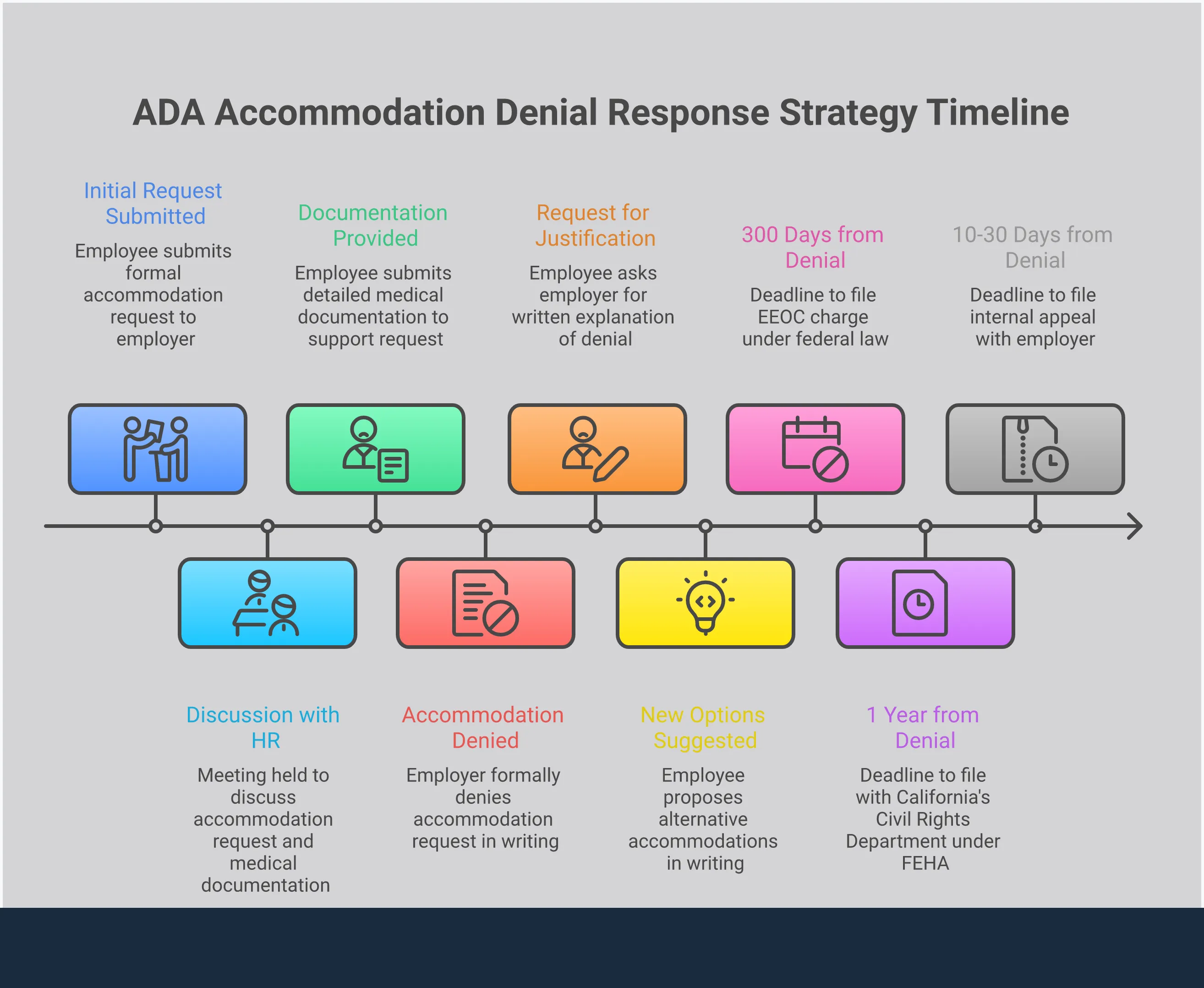
Ask for a Written Explanation
Your first move should be to ask your employer for the denial in writing. While the ADA doesn’t legally require them to provide a written reason, making a formal request is a smart step. A written explanation forces your employer to articulate their specific reasons for the denial, which can be very revealing. It might show that their decision was based on a misunderstanding of your request or your medical needs. This document clarifies their position and prevents them from changing their story later. Having their reasoning on paper gives you a solid starting point for addressing their concerns or challenging their decision if it seems unjustified.
Document Every Interaction
From this point forward, documentation is your best friend. Keep a detailed log of every conversation, email, and meeting related to your accommodation request. For each entry, note the date, time, who was involved, and a summary of what was discussed. Save all emails and letters in a dedicated folder. If you have a verbal conversation, send a follow-up email to the person you spoke with to confirm your understanding of the discussion. For example, you could write, “Just to recap our conversation today…” This creates a written record and helps prevent miscommunication. This detailed timeline is crucial evidence if you need to address disability discrimination down the line.
Review Your Company’s Policies
Take some time to locate and carefully read your company’s official policies on reasonable accommodations and the ADA. You can usually find these in your employee handbook or on the company’s internal website. Understanding your employer’s established procedures is essential. Did they follow their own rules when they denied your request? The policy might outline a specific appeals process or other steps you can take. If you find that your employer didn’t adhere to their own protocol, it can strengthen your position. Knowing the official policy helps you make sure you are following the correct procedure as you move forward with your appeal.
Suggest Alternative Accommodations
A denial of one specific accommodation doesn’t close the door on all accommodations. The ADA requires employers to engage in an “interactive process,” which is an ongoing dialogue to find a solution that works. If your initial request was denied, be proactive and propose some alternatives. Think about other adjustments that could help you perform your job’s essential functions. For example, if a request to work from home full-time was denied, perhaps a hybrid schedule or modified in-office hours would be a reasonable compromise. Presenting other options shows you are committed to finding a solution and encourages your employer to continue the conversation in good faith.
How to Document Your Case
The strength of your case often comes down to the quality of your documentation. When an employer denies your request, your memory of events isn’t enough. You need a clear, organized record of everything that happened. This isn’t just about collecting papers; it’s about building a factual narrative that shows you followed the process and that your request was handled improperly. Solid documentation is your best tool, whether you’re appealing internally or considering legal action. It removes ambiguity and focuses the conversation on the facts. Let’s walk through exactly what you need to gather.
Create a Communication Timeline
Start with the very first time you considered requesting an accommodation. Create a chronological log of every single event. Note the date you submitted your request, who you spoke with in HR, when you had meetings, and the day you received the denial. If you asked for a written explanation, log that date, too. This timeline will be the backbone of your case. It helps you see the full picture and can highlight any unreasonable delays or inconsistencies in your employer’s response. Keeping a detailed timeline makes it much easier to explain your situation clearly and accurately to anyone who needs to review it later.
Save All Written Correspondence
Every email, internal message, or formal letter related to your accommodation request is a crucial piece of evidence. Make sure you save everything. If your employer provided a written denial, that’s a key document. If they didn’t, your written request for one is just as important. It’s a good practice to forward important emails from your work account to a personal email address so you always have access to them. This paper trail creates an undeniable record of communication. It proves what was said, when it was said, and who said it, which is essential for a disability discrimination claim.
Keep a Record of Conversations
Not all important discussions happen over email. After any verbal conversation with a manager or HR representative about your accommodation, take a few minutes to write down what happened. Note the date, time, who was present, and a summary of the discussion. For extra protection, you can send a follow-up email confirming the details. A simple message like, “Hi [Manager’s Name], I just want to summarize our conversation from this morning to make sure I understood everything correctly…” creates a written record of a verbal exchange. This simple step can be incredibly powerful if there’s ever a dispute about what was discussed.
Organize Your Medical Evidence
Your accommodation request is built on the foundation of your medical documentation. Your employer needs enough information to understand your disability and why the accommodation is necessary. If your evidence is vague or incomplete, they may use it as a reason for denial. Work with your doctor to get clear, specific documentation that outlines your condition, your work-related limitations, and a professional recommendation for the accommodation you need. Having this information organized and ready shows that your request is well-supported and medically justified. It’s a critical step in demonstrating the legitimacy of your needs.
How to Appeal the Denial
Receiving a denial for an accommodation request can feel like a major setback, but it doesn’t have to be the end of the road. An appeal is your opportunity to formally ask your employer to reconsider their decision. By approaching it with a clear strategy, you can present a stronger case and reopen the conversation to find a solution that works for everyone. Think of this as the next step in the process, not a final defeat.
Follow Internal Grievance Procedures
Your first move should be to check your company’s official policies. Look through your employee handbook or search your company’s intranet for information on grievance or appeal procedures. Many organizations have a formal process for challenging decisions like an accommodation denial. Following these internal steps is crucial. It shows you are making a good-faith effort to resolve the issue directly with your employer before seeking outside help.
When you initiate the process, be sure to follow the instructions exactly, paying close attention to deadlines and required forms. This creates a formal record of your actions and strengthens your position if you need to take further steps later. It’s also another opportunity to request a written explanation for the denial if you haven’t received one yet.
Write a Strong Appeal Letter
A well-crafted appeal letter can make all the difference. Your goal is to be professional, clear, and persuasive, not confrontational. Start by formally stating that you are appealing the denial of your reasonable accommodation request. Reference the date of your original request and the date of the denial. If your employer gave a reason for the denial, address it directly. For example, if they claimed undue hardship, you can provide information or suggestions that counter that claim.
Learning why your request was denied helps you build a more effective appeal. While employers aren’t always required to provide a written reason, asking for one is a reasonable step. Your letter should clearly restate your need for the accommodation and how it will help you perform your job duties. Keep it focused and attach any new supporting documents.
Gather More Supporting Documents
Sometimes, a denial happens simply because the employer didn’t have enough information to approve the request. This is your chance to strengthen your case with more detailed evidence. Contact your doctor or other medical providers and explain that your accommodation request was denied. Ask them for a more specific letter that details your limitations and directly connects them to the accommodation you need.
This new documentation should clearly explain why the accommodation is medically necessary for you to perform the essential functions of your job. The more detailed and specific the medical evidence, the harder it is for an employer to argue that the accommodation isn’t necessary. Make sure to include these new documents with your appeal letter to give your employer a complete picture.
Re-engage in the Interactive Process
Your appeal isn’t just about submitting paperwork; it’s about restarting the conversation. The law encourages an “interactive process” where you and your employer work together to find a suitable accommodation. In your appeal letter, express your willingness to meet and discuss the situation further. This shows that you are committed to finding a workable solution.
Use this opportunity to be flexible. If your original request was denied for a specific reason, consider if there are alternative accommodations that could also meet your needs. Proposing other options demonstrates that you are a proactive problem-solver. An employer’s denial must be based on specific facts about the job, not vague excuses. Re-engaging in the process allows you to challenge unclear reasoning and collaborate on a path forward.
What Are Your Legal Options?
If you’ve tried to resolve the issue internally and your employer still won’t provide a necessary accommodation, it’s time to consider your formal legal options. This doesn’t always mean heading straight to a courtroom. It starts with understanding the official channels available for holding your employer accountable. These processes are designed to protect your rights, but they involve strict procedures and deadlines. Knowing what to expect can help you prepare for the road ahead and make informed decisions about how to proceed.
Filing a Complaint with the EEOC
The U.S. Equal Employment Opportunity Commission (EEOC) is the federal agency responsible for enforcing laws against workplace discrimination. If you believe your employer denied your accommodation request illegally, you can file a formal complaint, known as a “charge of discrimination.” This action prompts the EEOC to investigate your claim.
Filing a charge is a significant step. The agency will look into the details of your case, gather information from your employer, and determine if there’s reason to believe discrimination occurred. This process can lead to a resolution through mediation or, in some cases, legal action taken by the EEOC on your behalf. It’s a way to get an official, third-party review of your situation when direct conversations with your employer have hit a dead end.
Exploring State Agency Options
In California, you have another powerful ally: the Civil Rights Department (CRD), formerly known as the Department of Fair Employment and Housing (DFEH). The CRD enforces the state’s Fair Employment and Housing Act (FEHA), which often provides broader protections for employees than federal law. For instance, FEHA applies to employers with five or more employees, while the ADA applies to those with 15 or more.
You can file a complaint directly with the CRD. The state and federal agencies have a “work-sharing” agreement, which means that if you file with one, your complaint is typically cross-filed with the other to protect your rights under both state and federal law. An attorney can help you decide the best place to file first based on the specifics of your disability discrimination case.
Know the Filing Deadlines
This is incredibly important: you have a limited amount of time to take action. Missing these deadlines can mean losing your right to pursue your case. Under federal law, you generally have 300 days from the date of the discriminatory act (like the denial of your accommodation) to file a charge with the EEOC.
Under California’s FEHA, the deadline is more generous. You have one year from the date of the discriminatory act to file a complaint with the CRD. Because these timelines are so strict, it’s crucial to act quickly once you realize an informal resolution isn’t possible. Don’t wait until the last minute to start exploring your employment law options.
When to Contact a Lawyer
While you can file complaints with the EEOC or CRD on your own, the process can be complicated. An experienced employment lawyer can provide invaluable guidance. You should seriously consider contacting an attorney if the denial of your accommodation has led to other negative consequences, such as a demotion, a cut in pay, or even wrongful termination.
A lawyer can help you understand your rights, gather the necessary evidence, and build the strongest possible case. They will ensure all paperwork is filed correctly and on time, communicate with the agencies on your behalf, and represent your best interests every step of the way. Speaking with a lawyer from our firm can give you clarity and confidence as you decide what to do next.
Mistakes to Avoid During the Process
When your request for an ADA accommodation is denied, it’s easy to feel discouraged and unsure of what to do next. The process can feel complicated, but knowing the common pitfalls can help you stay on track and protect your rights. By avoiding a few key mistakes, you can approach the situation with more confidence and build a stronger case for the support you need to do your job effectively. Let’s walk through what not to do, so you can focus on finding a resolution.
Accepting a Denial at Face Value
It’s important to remember that an initial “no” from your employer isn’t necessarily the end of the conversation. While employers aren’t required by law to give you a written reason for a denial, you absolutely have the right to ask for one. Getting their reasoning in writing is a critical first step. It clarifies their position and helps you understand what you need to address next, whether it’s providing more information or correcting a misunderstanding. A denial is the start of a new phase in the process, not a final verdict on your right to a disability accommodation.
Missing Important Deadlines
After a denial, the clock starts ticking. Your company may have its own internal deadlines for filing an appeal or grievance, so check your employee handbook or HR policies right away. More importantly, there are strict legal deadlines for filing a complaint with government agencies like the Equal Employment Opportunity Commission (EEOC) or California’s Civil Rights Department (CRD). Missing these deadlines can mean losing your right to take legal action. Acting promptly is essential to keeping all your options open and ensuring you can fully pursue your case if needed. Understanding the timelines is a key part of employment law.
Submitting Weak Medical Evidence
Your employer needs enough information to understand your condition and why the accommodation is necessary. If your medical documentation is vague or doesn’t clearly connect your disability to your work limitations, your request might be denied. Work with your doctor to provide a letter that specifically outlines your diagnosis, the major life activities it affects, and how the requested accommodation will help you perform your essential job functions. Strong, clear medical evidence is the foundation of your request and makes it much harder for an employer to claim they don’t have sufficient information to approve it.
Communicating Ineffectively
Even if your employer denies your specific request, they still have a duty to engage in the “interactive process” with you. This means they should work with you to find an alternative accommodation that is both reasonable and effective. Don’t let the communication stop after a denial. Keep the conversation going by staying professional, documenting everything, and being open to discussing other options. Proposing alternative solutions shows you are committed to finding a resolution and reinforces your employer’s legal obligation to continue the dialogue. This proactive approach can prevent the situation from escalating into a potential retaliation claim.
How to Protect Yourself from Retaliation
After you’ve requested an accommodation, you might worry about being treated differently. It’s a valid concern, but you should know that laws are in place to protect you. Taking proactive steps can help safeguard your rights and build a strong case if your employer acts unfairly.
Know the Anti-Retaliation Laws
First things first, understand that the law is on your side. It is illegal for your employer to punish you for asserting your rights under the Americans with Disabilities Act (ADA). This means you cannot be fired, demoted, or disciplined simply for requesting a reasonable accommodation. The whole point of these protections is to ensure you can advocate for your needs without fearing negative consequences from your employer. If you feel you have become a victim of retaliation at work, know that you have legal recourse. This protection is your fundamental right, allowing you to participate fully and equally in the workplace.
Recognize the Signs of Retaliation
Retaliation isn’t always as obvious as being fired. It can be subtle, like suddenly receiving negative performance reviews, being excluded from important meetings, having your responsibilities changed, or being moved to a less desirable shift. If you believe you’ve been treated unfairly because of your disability or your accommodation request, it’s crucial to act. Trust your instincts. These actions can sometimes create a hostile work environment designed to make you feel uncomfortable. If something feels off after you’ve exercised your rights, pay close attention and don’t dismiss your feelings. It might be the first sign that you need to take action.
Document Any Changes in Your Treatment
Documentation is your most powerful tool. If you suspect retaliation, start keeping a detailed record of every incident. Keeping good records is incredibly important if you need to prove your case later. Write down the date, time, and specifics of any changes in your treatment, including conversations or new policies that affect you. Save all relevant emails and ask for important decisions, like an accommodation denial, to be put in writing. This meticulous record-keeping can be the key to defending your rights, especially in cases that could lead to wrongful termination. Your notes will provide a clear timeline and concrete evidence of the retaliatory behavior.
Related Articles
- What Is a Reasonable Accommodation? A Complete Guide
- Unable to Accommodate Work Restrictions Letter: Know Your Rights
- ADA Accommodation Letter to Employee: A Simple Guide
- ADA Accommodation Approval Letter: A Complete Guide
Frequently Asked Questions
My employer just denied my accommodation request. What’s the very first thing I should do? Before you do anything else, ask your employer for the reason for the denial in writing. A written explanation forces them to state their specific justification, which is incredibly helpful for your records. This document clarifies their position and gives you a clear starting point for your next steps, whether that’s providing more information or formally appealing their decision.
My boss said my request would be too expensive. Is that a valid reason to deny it? It can be, but only in specific circumstances. An employer can deny a request if it causes an “undue hardship,” meaning a significant financial or operational difficulty for the business. However, they can’t just say it’s too expensive without proof. Many accommodations cost very little or nothing at all, so a vague claim about cost isn’t enough. The burden is on them to show that your specific request would create a major strain on their resources.
What if my doctor’s note wasn’t specific enough? Can I provide more information? Yes, absolutely. If your employer’s denial was based on a lack of sufficient medical information, this is a great opportunity to strengthen your case. You can go back to your doctor and ask for a more detailed letter that clearly explains your condition, your work-related limitations, and exactly how the requested accommodation will help you perform your job’s essential duties. Providing stronger evidence is a key part of the appeal process.
I’m worried my employer will punish me for appealing the decision. What are my rights? The law is very clear on this: it is illegal for your employer to retaliate against you for requesting an accommodation or appealing a denial. You are protected from being fired, demoted, excluded, or treated unfairly simply for exercising your rights under the ADA. If you notice any negative changes in how you’re treated after you push back, you should document every incident immediately, as this could be a separate legal issue.
Do I have to accept their denial, or can I suggest another idea? You should definitely suggest another idea. A denial of one specific request does not end your employer’s obligation to work with you. The law requires an “interactive process,” which is a good-faith dialogue to find a solution. If your first idea was denied, proposing alternatives shows you’re committed to finding a resolution and encourages your employer to continue the conversation.
Think you were wrongfully terminated?
Get a free, confidential case evaluation from our experienced employment law attorneys.
Request Your Free Consultation