
Let’s clear up a common point of confusion: your genetic information is more than just the results from a 23andMe test. It also includes your family’s medical history, like a parent’s battle with cancer or a sibling’s heart condition. In the workplace, this sensitive information is protected by a specific federal statute. The GINA discrimination law forbids employers from using these details to make any decisions about your employment, from hiring and firing to job assignments and pay. This law acts as a privacy shield, allowing you to focus on your job without worrying that your family’s health history could be used against you.
Key Takeaways
- GINA Shields Your Genetic Privacy: This federal law prohibits employers with 15 or more employees and most health insurers from using your genetic information, including your family’s medical history, to make decisions about your job or health coverage.
- Recognize the Law’s Limitations: GINA’s protections do not apply to life, disability, or long-term care insurance, nor do they cover small businesses with fewer than 15 workers. The law protects you based on potential future health risks, while the Americans with Disabilities Act (ADA) covers existing conditions.
- Act Quickly if You Suspect a Violation: If you believe an employer has discriminated against you, document every incident in detail. You have a strict 180-day deadline to file a complaint with the EEOC, so consulting an employment lawyer promptly is essential to protecting your rights.
What is the Genetic Information Nondiscrimination Act (GINA)?
It might sound like something from a science fiction movie, but your genetic information is a real part of your life, and it deserves protection. The Genetic Information Nondiscrimination Act, or GINA, is a federal law designed to do just that. It prevents employers and health insurers from using your genetic information to make decisions about you. Think of it as a privacy shield for your DNA. This law ensures that your family’s medical history or your predisposition to certain conditions can’t be used against you when you’re applying for a job or seeking health coverage.
If you believe your rights have been violated, our Workplace Discrimination Lawyer team can help you understand your options and pursue your claim.
GINA is a crucial piece of civil rights legislation that addresses the unique challenges of our growing understanding of genetics. It allows people to take advantage of genetic testing and medical advancements without fearing that the results will lead to workplace or insurance discrimination. The law is split into two main parts: one that covers health insurance and another that applies specifically to employment. For anyone in the workforce, understanding your rights under GINA is a key step in protecting yourself from unfair treatment.
What Is GINA’s Purpose?
At its core, GINA’s purpose is to establish a baseline of fairness. The law makes it illegal for health insurers to use your genetic information to determine your eligibility for coverage or to set your premium rates. They can’t ask for your genetic information or use it to make decisions about you.
Similarly, GINA forbids employers from using your genetic information when making employment decisions. This includes everything from hiring and firing to promotions and job assignments. An employer can’t request, require, or purchase your genetic information. The goal is simple: to ensure that you are judged on your skills and qualifications, not on your genetic makeup or family health history.
What Counts as “Genetic Information”?
The term “genetic information” is broader than you might think. It’s not just about the results of a direct-to-consumer DNA test. Under GINA, this protected information includes your personal genetic tests, the genetic tests of your family members, and any manifestation of a disease or disorder in your family. This means your family’s medical history, like a history of heart disease or cancer, is considered protected genetic information. It also covers any request you or a family member makes for genetic services or participation in clinical research that includes genetic services.
Who Does GINA Protect?
GINA offers broad protections for employees across the country. The law applies to most employers, including private companies and state and local governments, as long as they have 15 or more employees. It also covers labor organizations and employment agencies. This means that whether you work for a small local business or a large corporation, you are likely protected. The U.S. Equal Employment Opportunity Commission (EEOC) is the federal agency responsible for enforcing GINA in the workplace, ensuring that employers comply with these important anti-discrimination rules.
What Kind of Discrimination Does GINA Prohibit?
The Genetic Information Nondiscrimination Act, or GINA, is a federal law with a clear and important goal: to prevent employers and health insurers from using your genetic information to make decisions about you. Since it took effect in 2009, GINA has served as a critical protection, ensuring that your genetic makeup doesn’t become a barrier to your career or your health coverage.
At its core, GINA makes it illegal for an employer to use genetic information when deciding who to hire, fire, or promote. This means your family’s medical history or the results of a genetic test can’t be held against you at work. The law establishes a boundary, keeping your personal genetic details private and separate from your professional life. This protection is a fundamental part of modern employment law, helping to create a fairer and more equitable workplace for everyone.
Your Rights at Work Under GINA
Under GINA, you are protected from being treated unfairly because of your genetic information. This law applies to most employers with 15 or more employees, which includes private companies, state and local governments, employment agencies, and labor unions. If your employer falls into one of these categories, they cannot use your genetic data as a basis for any employment decisions. This includes everything from hiring and firing to pay, job assignments, promotions, and training. GINA ensures that your career opportunities are based on your skills and qualifications, not on your DNA or family health history.
Your Health Insurance Rights Under GINA
GINA’s protections also extend to your health insurance. The law makes it illegal for health insurance companies to use your genetic information to determine your eligibility for coverage or to set your premium rates. This means an insurer can’t charge you more or deny you a policy because you have a genetic marker for a certain condition, like breast cancer or Huntington’s disease. They also cannot use your genetic information to decide what health services they will cover. This protection allows you to seek genetic testing and learn about your health without fearing that you’ll lose your insurance.
What Employers Cannot Do
The rules for employers under GINA are straightforward. They are strictly prohibited from using your genetic information to make any decisions related to your job. This means they cannot refuse to hire you, fire you, or deny you a promotion because of information found in a genetic test. It also means they can’t adjust your pay or change your job duties based on this private data. Essentially, any aspect of your employment must remain untouched by your genetic information. This is a key safeguard against discrimination and helps prevent a hostile work environment from developing.
How GINA Safeguards Your Family’s Medical History
When GINA talks about “genetic information,” it means more than just the results of a direct-to-consumer DNA test. The law’s definition is broad and includes your personal genetic tests, the genetic tests of your family members, and your family’s medical history. For example, if your mother had a history of heart disease or your father had diabetes, that information is protected under GINA. An employer cannot ask you about your family’s health history during an interview or use that information to assume you might develop a similar condition. This comprehensive protection ensures your entire genetic story remains private.
What Are GINA’s Limitations?
While the Genetic Information Nondiscrimination Act (GINA) offers crucial protections, it’s important to understand that it isn’t a catch-all law. Knowing its boundaries can help you better understand your rights and identify when a different law might apply to your situation. GINA has specific exceptions related to certain types of insurance, the size of your employer, and your current health status. Understanding these limitations is the first step in making sure you’re fully protected at work.
Insurance Plans Not Covered by GINA
One of the most significant limitations of GINA relates to insurance. Its protections primarily apply to group and individual health insurance plans. However, GINA does not extend to other types of insurance. This means insurers for life insurance, disability insurance, or long-term care insurance can still ask you for your genetic information. They may also use this information to make decisions about your eligibility, coverage, or premium rates. So, while your genetic makeup can’t be used against you for health insurance, these other insurance providers are not bound by the same rules.
The Small Business Exception
GINA’s rules for employers are not universal. The law’s employment provisions apply to employers with 15 or more employees. If you work for a small business with fewer than 15 employees, you are not covered by GINA’s protections against genetic discrimination. This exception means a very small company could potentially make employment decisions based on genetic information without violating this specific federal law. However, it’s worth noting that some state laws may offer similar protections that cover smaller employers, so it’s always wise to check your local regulations.
What About Existing Symptoms or Conditions?
It’s crucial to distinguish between a genetic predisposition and a manifested disease. GINA protects you from discrimination based on your genetic information that suggests a potential for a future condition. It does not apply if you are already showing symptoms or have been diagnosed with a genetic condition. For example, if you have a manifested genetic disorder, an employer cannot discriminate against you, but your protection would come from the Americans with Disabilities Act (ADA), not GINA. This is a key distinction, as GINA is forward-looking, aimed at protecting you from wrongful termination based on what your genes say might happen in the future.
Common Myths About GINA’s Protections
Many people believe GINA provides an impenetrable shield around their genetic information, but that’s not quite the case. While most people are aware that GINA protects them from health insurance discrimination, its other limitations are less understood. For instance, GINA doesn’t stop an employer from obtaining your genetic information in a few specific, accidental ways, such as overhearing a conversation or seeing it in a public social media post. The law focuses on preventing employers from using that information to make negative employment decisions. It’s designed to give you peace of mind when considering genetic testing, not to create an absolute privacy barrier.
What to Do If Your GINA Rights Are Violated
Discovering that your employer may have used your genetic information against you can feel overwhelming and unfair. The good news is that you have clear rights and a process for holding them accountable. Taking action not only protects you but also helps ensure that workplaces remain fair and free from this type of discrimination. If you believe your GINA rights have been violated, there are specific, actionable steps you can take to seek justice.
How to File an EEOC Complaint
If you believe an employer has discriminated against you based on your genetic information, your first formal step is to file a complaint. The U.S. Equal Employment Opportunity Commission (EEOC) is the federal agency responsible for enforcing GINA. The process begins by filing a charge of discrimination with the EEOC. This charge is a signed statement asserting that an employer engaged in employment discrimination, and it requests that the EEOC take action. You can file a charge online, in person at an EEOC office, or by mail. It’s a critical first step in the formal process of addressing the violation.
Understanding Key Deadlines
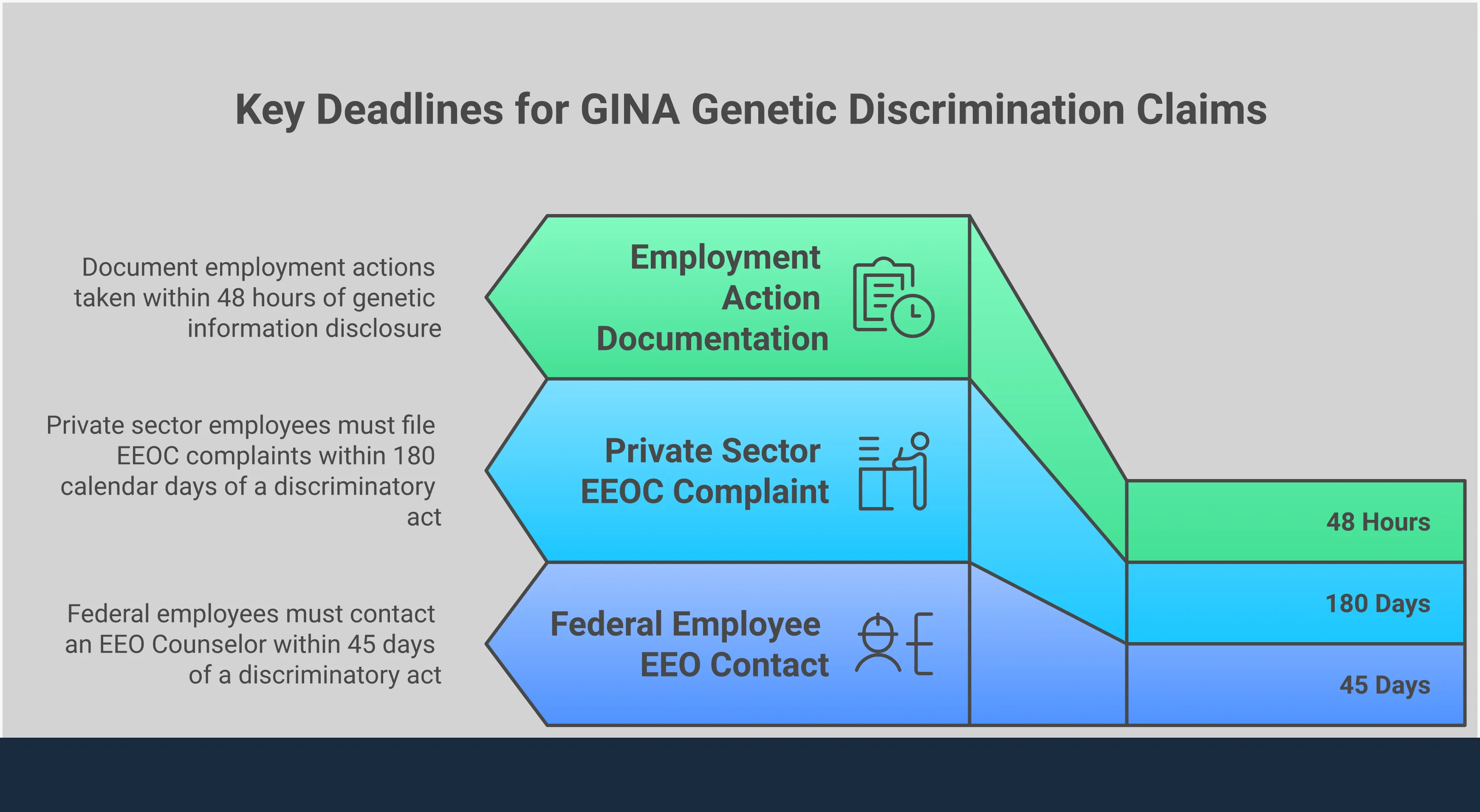
When it comes to filing a complaint, time is of the essence. In most cases, you have 180 calendar days from the day the discrimination took place to file a charge with the EEOC. This deadline is strict, so it’s important to act quickly to preserve your rights. For federal employees, the timeline is even shorter; you must contact an EEO Counselor within 45 days of the discriminatory act. Missing these deadlines can prevent you from moving forward with your case, so keeping track of these dates is essential as you decide on your next steps.
Consequences for Employers and Insurers
Employers who violate GINA don’t just get a slap on the wrist. The law has real consequences designed to deter this kind of behavior. When the EEOC finds that an employer has violated GINA, it can enforce corrective actions and even impose monetary penalties. The goal is to remedy the situation for you and prevent the employer from discriminating in the future. Knowing that there are tangible consequences can be empowering, as it shows that your complaint can lead to meaningful change and hold your employer accountable for their unlawful actions.
How an Employment Lawyer Can Help
While you can file an EEOC complaint on your own, the process can be complex. Consulting with an experienced employment law attorney can make a significant difference. A lawyer can help you understand your specific rights, gather the necessary evidence to support your claim, and ensure all paperwork is filed correctly and on time. They can also represent you in discussions with the EEOC or your employer. Having a professional advocate on your side provides peace of mind and ensures your case is presented in the strongest possible way.
How to Protect Your Rights Under GINA
Knowing your rights is the first step, but taking action to protect them is what truly matters. If you suspect your genetic information is being misused at work, being proactive can make a significant difference. The following steps can help you prepare, understand your privacy rights, and know when it’s time to get professional legal advice.
Documenting Potential Discrimination
If you feel you’re facing discrimination, keeping a detailed record is one of the most powerful things you can do. Start a private log and note any incidents that seem suspicious. Write down the date, time, and people involved in any conversation or action that concerns you. Save any relevant emails, messages, or documents. For example, if your manager makes an offhand comment about your family’s health history and your duties suddenly change, document both events. Your employer cannot use genetic information to make job decisions, even if they claim it’s for your own good, like moving you to a less stressful role because of a family history of heart disease. A clear, factual record helps build a timeline and provides concrete evidence if you decide to file a complaint.
Know Your Privacy Rights with Genetic Testing
Your genetic information is private, and GINA ensures it stays that way in the workplace. Employers are strictly forbidden from asking for, requiring, or purchasing your genetic information. This includes details about your family’s medical history. While there are a few very narrow exceptions, the rule is clear: your boss shouldn’t have this data. If your employer does somehow obtain your genetic information, such as through a voluntary wellness program, they are legally required to keep it confidential and store it in a separate, secure medical file. You can learn more directly from the U.S. Equal Employment Opportunity Commission. Be mindful of what you share, and know that you have the right to keep your genetic details private.
When to Seek Legal Help
If you believe your GINA rights have been violated, it’s important to act quickly. Federal law sets strict deadlines for filing a complaint, often as short as 180 days from the date of the discriminatory act. Missing this window can mean losing your right to take legal action. The complaint process can be complex, and the stakes are high. This is where an experienced attorney can be your strongest advocate. A lawyer can help you understand your options, gather the necessary evidence, and ensure your complaint is filed correctly and on time. Consulting with a firm that specializes in employment law can give you the clarity and support you need to move forward with confidence.
Where to Find More Information
Staying informed is key to protecting yourself. For a comprehensive overview of GINA, you can visit government and non-profit resources that break down the law in clear terms. The National Human Genome Research Institute offers a detailed explanation of Genetic Discrimination and how GINA works to protect you in both employment and health insurance contexts. Additionally, the American Society of Human Genetics provides helpful fact sheets and updates on the law. These resources are excellent for anyone wanting to better understand the specifics of the act and how it applies to their situation. Arming yourself with knowledge from trusted sources empowers you to recognize when your rights are being respected and when they are not.
Frequently Asked Questions
Does GINA protect me if I already have a genetic condition? This is a common point of confusion. GINA is designed to protect you from discrimination based on the potential for a future health issue suggested by your genes. If you already have a manifested disease or disorder, even one with a genetic basis, your protection against discrimination would come from the Americans with Disabilities Act (ADA), not GINA. Think of GINA as forward-looking protection for what your DNA says might happen.
What kind of information is actually protected as “genetic information”? The term is broader than just a DNA test kit result. Under GINA, protected genetic information includes your own genetic test results, the results of your family members (even distant ones), and your family’s medical history. So, if an employer asks about diseases that run in your family during an interview, that conversation could be a violation of your rights.
Does GINA apply to things like life or disability insurance? No, and this is one of the law’s most important limitations. GINA’s protections against insurance discrimination apply specifically to health insurance. It does not prevent providers of life insurance, disability insurance, or long-term care insurance from asking for your genetic information or using it to determine your rates and eligibility.
My boss found out about my family’s medical history by accident. Is that a GINA violation? Not necessarily. An employer accidentally learning about your genetic information, for instance by overhearing a conversation, isn’t automatically illegal. The violation occurs when they use that information to make a negative employment decision against you, such as firing you, denying a promotion, or cutting your hours. They are also required to keep that information confidential and separate from your regular personnel file.
What is the most important first step if I suspect my employer is discriminating against me? Start documenting everything immediately. Keep a private, detailed log of any comments, actions, or changes in your employment that you believe are linked to your genetic information. Note the dates, times, and people involved. Having a clear, factual record is the strongest tool you have if you decide to file a formal complaint or seek legal advice.
Related Articles
- Gender Discrimination Cases in the Workplace: A Guide
- Pregnancy Discrimination Lawyer: Your Legal Rights
- How to Report an Employer for Unfair Treatment
Think you were wrongfully terminated?
Get a free, confidential case evaluation from our experienced employment law attorneys.
Request Your Free Consultation