
It often starts with a comment you try to brush off or an interaction that leaves you feeling deeply uncomfortable. You might even question yourself, wondering if you’re overreacting. But when the behavior continues, creating a work environment that feels intimidating or offensive, the self-doubt turns into a serious concern. This uncertainty often leads to a critical question: can I sue my employer for sexual harassment for San Francisco County employees? The answer is complex, but you have more power than you think. This guide is here to provide clarity, helping you understand what legally constitutes harassment, what your rights are under California law, and the exact steps you can take to protect yourself and hold your employer accountable.
Key Takeaways
- Recognize the two main forms of harassment: Unlawful harassment isn’t just one thing; it can be “quid pro quo,” where job benefits are tied to sexual favors, or a “hostile work environment” created by severe or pervasive unwelcome conduct.
- Create a strong record to protect yourself: Your first steps should be to document every incident in a private log, report the behavior in writing through your company’s official channels, and save all related evidence like emails or texts.
- Understand your legal path and deadlines: You generally have three years to file a complaint with an agency like the CRD, a required step before a lawsuit. This process can help you recover compensation for financial losses and emotional distress, and it also protects you from illegal employer retaliation.
What Is Considered Sexual Harassment at Work?
It’s important to know that workplace sexual harassment isn’t just one specific action. It’s a form of sex discrimination that can take many forms, and California law offers strong protections for employees. Understanding what legally constitutes harassment is the first step toward knowing your rights. The behavior doesn’t have to be motivated by sexual desire to be illegal; it just has to be based on your sex.
If you believe your rights have been violated, our California Sexual Harassment Lawyer team can help you understand your options and pursue your claim.
Related articles: Your Guide: Sexual Harassment Attorney Los Angeles County CA | Suing for Sexual Harassment: A Step-by-Step Guide | What Counts as Sexual Harassment? A Clear Guide
Understanding the Types of Harassment
Sexual harassment covers a wide range of unwelcome conduct of a sexual nature, including unwanted advances, requests for sexual favors, offensive jokes, and inappropriate touching. It also covers visual harassment, like displaying suggestive images, or verbal harassment, such as making degrading comments. These actions are illegal when they create an intimidating or offensive work environment. Remember, sexual harassment can happen anywhere, from the office to online chats, and can come from a supervisor, coworker, or even a client.
Hostile Work Environment vs. Quid Pro Quo
Sexual harassment generally falls into two legal categories: “quid pro quo” and “hostile work environment.” Quid pro quo, meaning “this for that,” is when a manager or supervisor demands sexual favors in exchange for a job benefit, like a promotion or even keeping your job. A hostile work environment is different. It occurs when unwelcome sexual conduct is so severe or pervasive that it creates an abusive or intimidating workplace. This isn’t about a single off-color joke but a pattern of behavior or a single, serious incident that makes it difficult to do your job.
Real-World Examples for San Francisco County Employees
To make it clearer, here are some real-world examples. Quid pro quo harassment could be a boss promising a better review if you go on a date with them. A hostile work environment could be coworkers constantly making sexual jokes, commenting on your appearance, or displaying pornography openly. Other examples include catcalling, repeatedly asking you out after you’ve said no, or unwanted touching. These actions are illegal because they make you feel unsafe and disrupt your work, and California’s employment law is designed to protect you from them.
Your Legal Protections in San Francisco County
If you’re facing sexual harassment at work, it’s easy to feel powerless. But it’s important to know that you have powerful legal protections on your side. In San Francisco County, employees are shielded by a strong combination of state, federal, and local laws designed to keep workplaces safe and hold employers accountable. These laws aren’t just suggestions; they are enforceable rights that give you a clear path to take action.
Understanding these protections is the first step toward reclaiming your power. California’s Fair Employment and Housing Act (FEHA) offers some of the most comprehensive safeguards in the country against harassment and discrimination. On top of that, federal laws like Title VII provide another layer of defense. San Francisco even has its own local ordinances that promote fairness in the workplace. Together, these laws create a framework that ensures no one has to endure a hostile work environment. Let’s break down what these key protections mean for you.
California’s Fair Employment and Housing Act (FEHA)
Think of California’s Fair Employment and Housing Act (FEHA) as your primary line of defense. This powerful state law makes it illegal for an employer to allow or engage in sexual harassment. FEHA specifically prohibits a hostile work environment based on sex, which covers everything from inappropriate comments and unwanted advances to offensive images. The law is designed to empower you, giving you the right to hold your employer accountable for failing to provide a safe workplace. It applies to most employers in California, ensuring that nearly everyone has access to these critical protections against workplace sexual harassment.
Protections Under Federal Title VII
In addition to California’s state laws, you are also protected by federal law. Title VII of the Civil Rights Act of 1964 is a landmark piece of legislation that prohibits employment discrimination based on race, color, religion, sex, and national origin. Under Title VII, sexual harassment is considered a form of sex discrimination, making it illegal across the country. This means you have the option to file a complaint with the federal Equal Employment Opportunity Commission (EEOC) in addition to state agencies. This federal protection adds another strong layer of support for employees fighting against harassment.
San Francisco’s Fair Chance Ordinance
San Francisco takes employee rights a step further with local laws like the Fair Chance Ordinance. While not directly about sexual harassment, this ordinance shows the city’s commitment to creating equitable workplaces. It prevents employers from asking about a job applicant’s criminal history until after they’ve made a conditional job offer. This law helps ensure hiring is based on qualifications, not past mistakes, reducing the potential for discrimination that can create an unfair work environment. It’s another example of the robust legal framework in place to protect workers’ rights and promote fair treatment for everyone in the San Francisco employment law landscape.
Taking Action: What to Do After Experiencing Harassment
When you’re facing harassment at work, it’s easy to feel overwhelmed and unsure of what to do next. Taking clear, deliberate steps can not only help you regain a sense of control but also build a strong foundation if you decide to take legal action. Your experiences are valid, and there is a path forward. The key is to be methodical and proactive in protecting yourself and your rights. It’s about creating a clear, factual record of what you’ve endured, which is essential for holding people accountable.
By documenting incidents, following official procedures, and preserving evidence, you create a clear record that can support your claim. These actions are your first line of defense and the building blocks for a potential sexual harassment case. Think of it as gathering the tools you’ll need to fight back effectively. Each step you take, from writing down a comment to saving an email, strengthens your position. It shows that you took the situation seriously and followed the proper channels, which can be incredibly important later on. Let’s walk through exactly what you need to do to create this solid foundation for your claim, so you can move forward with confidence.
Document Everything
Your memory is powerful, but a written record is undeniable. Start a detailed log of every incident of harassment. For each entry, write down the date, time, and location. Describe exactly what happened and what was said, using direct quotes if you can remember them. Note who was involved and if there were any witnesses. It’s also important to record how the incident made you feel and how you responded at the moment. Keep this log in a safe, private place that you can access outside of work, like a personal journal or a secure document on your personal computer, not on a company device. This detailed timeline will be one of the most valuable pieces of your case.
Follow Your Company’s Reporting Process
While it can be intimidating, formally reporting the harassment through your company’s channels is a critical step. Check your employee handbook or company intranet for the official policy on reporting a hostile work environment. Typically, you will need to report the behavior to your supervisor, a manager, or the Human Resources department. Following this process puts your employer on notice, giving them a legal opportunity to investigate and correct the situation. If they fail to act appropriately, their inaction can strengthen your legal claim. Always put your report in writing (an email works well) so you have a timestamped record of when you notified the company.
File an External Complaint
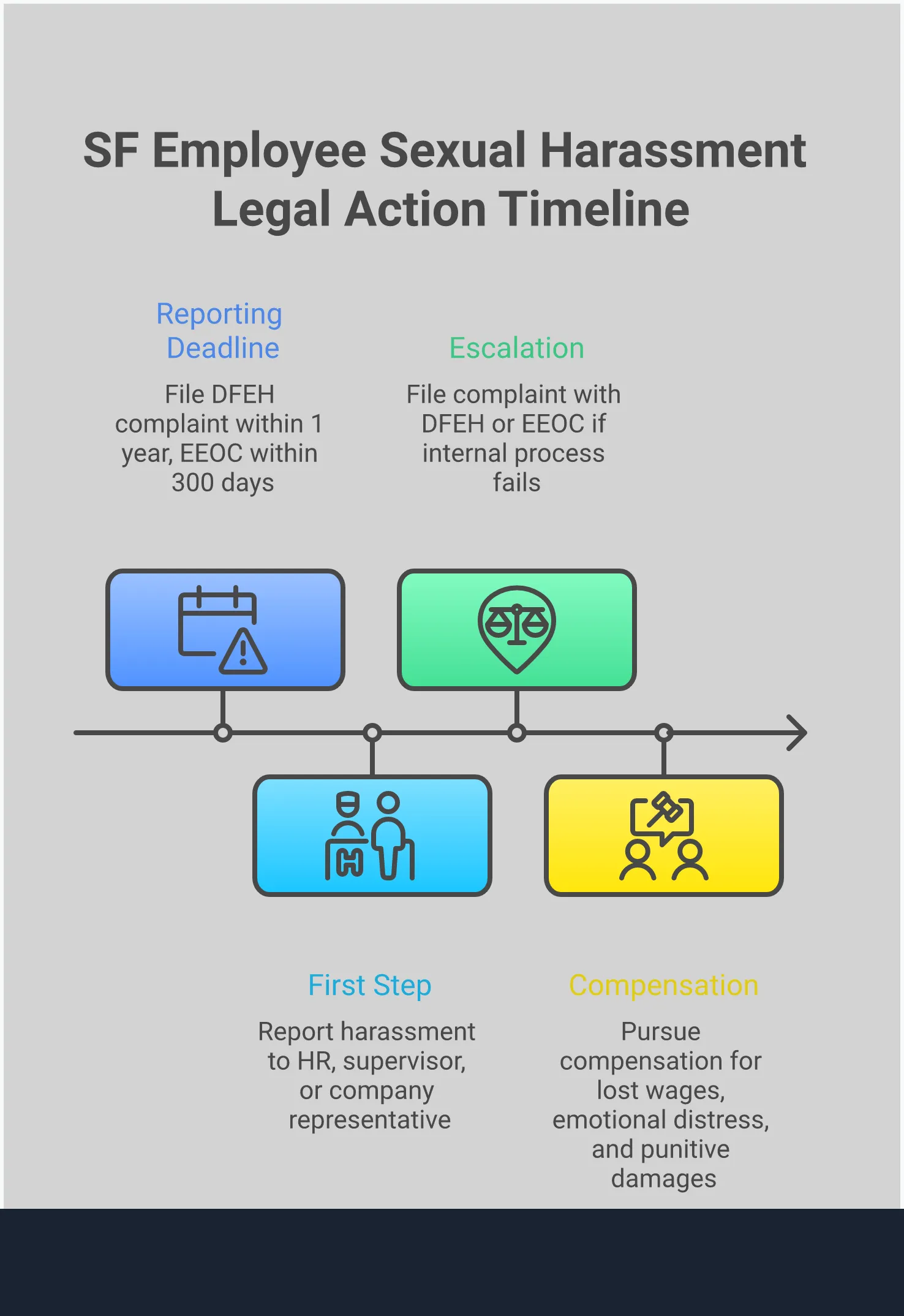
If your company’s internal process doesn’t resolve the issue, or if you don’t feel safe reporting internally, your next step is to file a complaint with a government agency. In California, you can file a complaint with the California Civil Rights Department (CRD). You can also file with the federal Equal Employment Opportunity Commission (EEOC). These agencies are responsible for enforcing anti-harassment laws and will conduct an impartial investigation into your claim. Filing an administrative complaint is a mandatory step you must take before you can file a lawsuit in court, so it’s essential to get this process started to protect your legal rights.
Save All Evidence
Beyond your personal log, gather and save any tangible evidence related to the harassment. This includes emails, text messages, direct messages on platforms like Slack or Teams, photos, or any other written communications. If your performance reviews suddenly became negative after you rejected an advance or reported an issue, save those as well. Make copies of everything and store them securely on a personal device or cloud account. If there were witnesses, keep a private list of their names and contact information. This collection of evidence will help corroborate your story and provide concrete proof to support your harassment claim.
Can You Sue Your Employer for Sexual Harassment?
Deciding to take legal action against your employer is a significant step, but sometimes it’s the only way to get justice and protect yourself. If you’ve experienced sexual harassment at work, you have legal rights. Understanding when and how to move forward can help you regain control of the situation. The law is on your side, and there is a clear path for holding your employer accountable for failing to provide a safe work environment.
When to Consider a Lawsuit
If you’ve reported sexual harassment and your employer isn’t taking your complaint seriously, it might be time to consider a lawsuit. An employer’s failure to investigate your claim, stop the behavior, or an attempt to sweep it under the rug are all red flags. The situation becomes even more serious if you face negative consequences for speaking up. If you experience any form of workplace retaliation, such as being demoted, having your hours cut, or being fired after making a complaint, you should explore your legal options immediately. These actions are illegal, and they strengthen your case for taking legal action against both the harasser and your employer.
When Is Your Employer Liable?
Your employer has a legal duty to protect you from harassment in the workplace. This isn’t just a suggestion; it’s the law. When they receive a complaint, they must act immediately to investigate it thoroughly and take steps to resolve the issue. California law also requires employers to have clear anti-harassment policies and provide training to their staff. If your employer knew about the harassment (or should have known about it) and failed to take reasonable action, they can be held legally responsible. This liability applies whether the harasser is a supervisor, a coworker, or even a client, creating a hostile work environment that your employer is obligated to prevent.
Steps to Take Before You Sue
Before you file a lawsuit, there are a few critical steps to take to build a strong foundation for your case. First, report the harassment internally, following your company’s official procedure. This usually means telling your supervisor or someone in the HR department. It’s also essential to document everything. Write down the details of each incident, including the date, time, location, what was said or done, and who was there. Keep copies of any harassing emails or messages. The next formal step is to file a complaint with an external agency like the California Civil Rights Department (CRD). This is a required step before you can sue your employer in court for violations of employment law.
How to File a Complaint with the California Civil Rights Department (CRD)
Before you can file a lawsuit for sexual harassment, you almost always need to take an important first step: filing a formal complaint with the California Civil Rights Department (CRD). The CRD is the state agency that enforces California’s civil rights laws, including the Fair Employment and Housing Act (FEHA), which protects you from workplace harassment. This process is known as “exhausting your administrative remedies,” and it’s a required step before the courts will hear your case.
Think of the CRD as a gatekeeper. By filing a complaint, you officially put your employer on notice and give the state a chance to investigate the situation. The agency will look into your allegations, gather evidence, and determine if a violation of the law occurred. This process not only creates an official record of your harassment claim but also opens the door for you to pursue legal action if the issue isn’t resolved at the agency level. Navigating this process correctly is critical, as any missteps could affect your ability to sue later on.
The CRD Filing Process
Starting a complaint with the CRD is more straightforward than you might think. You have three main options: filing online, by mail, or in person. The fastest and most efficient method is to submit your complaint online through the California Civil Rights System (CCRS). This portal guides you through the intake form and allows you to upload documents and manage your case. The CRD provides a comprehensive guide on how to file a complaint, which includes all the necessary forms and instructions. No matter which method you choose, be prepared to provide details about the harassment, including dates, names of individuals involved, and any actions you took to report it internally.
The Investigation Timeline
Once your complaint is filed, the CRD will launch an investigation to determine if there is enough evidence to support your claims. An investigator may interview you, your coworkers, and your employer, as well as review documents like emails and company policies. The timeline for this process can vary quite a bit. It depends on the complexity of your case, the investigator’s caseload, and how cooperative the parties are. While the CRD works to complete investigations in a timely manner, it’s important to be patient. This phase can take several months or even up to a year, so staying organized and in communication with your investigator is key.
Getting Your “Right to Sue” Notice
After the investigation is complete, or if you request it before the investigation is finished, the CRD will issue a “Right to Sue” notice. This document is exactly what it sounds like: it gives you the legal permission to file a private lawsuit against your employer in civil court. Receiving this notice is a crucial milestone. It’s important to act quickly, as you typically have only one year from the date the notice is issued to file your lawsuit. This deadline is strict, so missing it could mean losing your right to seek justice in court. An experienced employment law attorney can help ensure you meet this and all other critical deadlines.
What Evidence Will Support Your Claim?
When you decide to take action against workplace harassment, the strength of your claim often comes down to the evidence you can provide. While your personal testimony is powerful, supporting it with concrete proof makes your case much stronger. Think of yourself as a detective for your own case, carefully collecting and preserving anything that helps tell the full story of what you experienced. This documentation can establish a pattern of behavior, show the impact the harassment had on you, and demonstrate whether your employer took appropriate action.
Gather Written Communications
One of the most direct forms of evidence you can collect is any written communication related to the harassment. Save everything. This includes emails, text messages, direct messages from platforms like Slack or Microsoft Teams, or any other digital chat logs. These documents can be crucial in establishing a timeline and providing undeniable proof of inappropriate comments or requests. Be sure to save these files in a secure, personal location that you can access outside of your work network, like a personal cloud drive or external hard drive. This creates a clear record that can’t be disputed or deleted by your employer.
Collect Witness Statements
You may feel isolated, but it’s possible that others have seen or heard the harassment you’ve endured. Statements from coworkers can significantly strengthen your claim by corroborating your experience. A witness doesn’t need to have seen the most overt acts of harassment; they may have overheard inappropriate jokes, noticed a change in your demeanor after an interaction, or been present when you were treated unfairly. If you feel comfortable, reach out to trusted colleagues who may have witnessed the behavior. Ask them if they would be willing to provide a written statement about what they saw or heard. Make sure to collect their contact information for future reference.
Compile Medical and Counseling Records
Harassment takes a serious toll on your mental and physical health. If you have sought help from a doctor, therapist, or counselor, these records can serve as powerful evidence of the emotional distress you’ve suffered. Medical records can document symptoms like anxiety, depression, sleeplessness, or other stress-related health issues that began or worsened because of the hostile work environment. These documents help translate your experience into tangible proof of harm, which is a critical component when seeking compensation for the damages you’ve endured. Your well-being is the priority, and documenting your journey to recovery can also support your legal case.
Find HR Records and Policy Violations
When you report harassment, your employer has a legal obligation to take it seriously. Your own records of reporting the incident are vital. Keep copies of any formal complaints you filed with HR, along with any email correspondence confirming your report. Document who you spoke with, when the conversation happened, and what was discussed. It’s also helpful to get a copy of your company’s employee handbook. This allows you to point to specific policies your employer may have violated in their handling of the situation. This evidence is key to showing whether your employer failed to prevent or stop the sexual harassment, making them liable for the harm you suffered.
What Compensation Can You Receive?
If you’ve experienced sexual harassment at work, you know the damage goes far beyond just feeling uncomfortable. It can affect your career, your finances, and your mental health. When you take legal action, the goal is to recover compensation, also known as “damages,” to help make up for the harm you’ve endured. In California, the law is designed to help put you back in the financial position you would have been in if the harassment had never happened. This legal principle is about making you “whole” again, at least from a financial standpoint.
Of course, no amount of money can erase the experience, but it can provide a sense of justice and the resources needed to move forward. It can cover therapy costs, help you stay afloat while you find a new, safer job, and compensate you for the career opportunities you lost. The legal system recognizes that the impact of a hostile work environment is both tangible and intangible. That’s why compensation is broken down into different categories, each addressing a specific type of harm. An experienced employment law attorney is crucial in this process. They can meticulously document your losses, build a strong case for why you deserve compensation, and negotiate with your employer or argue on your behalf in court. They will help you understand the full value of your claim, which is often much more than just the paychecks you missed. We’ll explore the three main types of damages you can seek: economic damages for financial losses, non-economic damages for emotional suffering, and punitive damages to punish the employer for extreme misconduct.
Lost Wages and Financial Costs
One of the most direct impacts of sexual harassment can be on your wallet. If you were fired, forced to quit, or missed work because of the harassment, you can seek compensation for those lost wages. This includes back pay for the money you would have earned and, in some cases, front pay for future income you may lose while you search for a new job. It also covers other financial costs, like lost benefits, out-of-pocket medical expenses, or money you spent on job searching. To build a strong case for these wage & hour claims, it’s important to keep detailed records of your income, benefits, and any related expenses you’ve incurred.
Compensation for Emotional Distress
The harm from sexual harassment is rarely just financial. The experience can cause significant emotional and psychological distress, including anxiety, depression, insomnia, and mental anguish. California law recognizes that this suffering is a very real injury, and you can be compensated for it. While it’s difficult to put a price on your mental well-being, these damages are meant to acknowledge the pain you’ve gone through. Proving emotional distress often involves testimony from you, friends, family, or a therapist who can speak to the changes in your emotional state after the harassment began. Keeping a journal can also be a powerful way to document the emotional impact over time.
Punitive Damages
Punitive damages are different from the other types of compensation. They aren’t meant to repay you for a specific loss. Instead, they are designed to punish employers who acted with malice, oppression, or fraud. These damages are awarded in cases where the company’s conduct was particularly egregious, for example, if management knew about the severe sexual harassment and did nothing to stop it, or even tried to cover it up. The goal is to deter the company and others from allowing such behavior to happen again. Because they are reserved for the most serious cases of misconduct, punitive damages can be substantial and send a powerful message that such actions will not be tolerated.
How Long Do You Have to File a Claim?
When you’re dealing with workplace harassment, legal calendars are probably the last thing on your mind. But there are important deadlines, called statutes of limitations, for filing a claim. These time limits exist to ensure legal matters are handled while evidence is fresh. Missing these deadlines can mean losing your right to seek justice, so it’s critical to understand the timeline you’re working with from the start.
Understanding the Statute of Limitations
In California, the law gives you a specific window to take legal action for sexual harassment. Under the state’s Fair Employment and Housing Act (FEHA), you generally have three years from the date of the last incident of harassment to file a formal complaint. This timeframe is designed to give you a reasonable period to process what happened and decide on your next steps. It applies whether you experienced a single severe event or a pattern of inappropriate behavior. Knowing this three-year rule is the first step in protecting your rights.
Key Filing Deadlines
To start the legal process, you must file a complaint with either the California Civil Rights Department (CRD) or the federal Equal Employment Opportunity Commission (EEOC). This has to be done within three years of the most recent act of harassment. This deadline is firm and applies to both quid pro quo and hostile work environment claims. Filing with one of these agencies is a required step before you can file a lawsuit in court. It’s a crucial part of the process that preserves your legal options.
Are There Exceptions to the Deadline?
While the three-year deadline is the general rule, some situations can create exceptions. For example, if the harassment is ongoing, the clock might not start ticking until the behavior stops. This is known as the “continuing violation doctrine.” Other rare circumstances could also extend the filing period. Because these exceptions are complex and depend on the details of your case, it’s incredibly important to speak with an employment lawyer. An attorney can help you figure out your exact deadline and determine if any special circumstances apply to your situation.
What If Your Employer Retaliates?
One of the biggest fears people have when reporting sexual harassment is the possibility of backlash from their employer. It’s a valid concern, but you should know that the law is firmly on your side. Your employer cannot legally punish you for reporting sexual harassment, participating in an investigation, or filing a claim. This type of punishment is called retaliation, and it is illegal. If your employer takes negative action against you after you’ve spoken up, they are breaking the law and can be held accountable for their actions. Understanding what retaliation looks like and knowing your rights is a critical part of protecting yourself through this process.
How to Spot Retaliation
Retaliation is any adverse action your employer takes against you because you engaged in a legally protected activity, like reporting harassment. While firing is the most obvious example, retaliation can be much more subtle. According to the law, it is illegal for an employer to punish or get back at you for reporting sexual harassment. This can include cutting your pay, demoting you, reassigning you to a less desirable shift or location, or giving you an unfair performance review. It can even involve being excluded from meetings or projects you were previously part of. Keep detailed notes of any negative changes that occur after you report the incident.
Your Rights Against Retaliation
You have a legal right to report harassment without fear of punishment. California and federal laws make it clear that retaliation is illegal. Your employer cannot punish you for reporting sexual harassment, filing a claim, or even acting as a witness in someone else’s case. These protections are in place to ensure that employees feel safe coming forward. If you didn’t have these rights, many people would be too afraid to report misconduct, allowing toxic work environments to continue unchecked. These laws ensure you can stand up for yourself without risking your job or livelihood.
Filing a Separate Retaliation Claim
If you are punished for reporting harassment, this is a separate legal issue from the harassment itself. You may have grounds for a retaliation claim in addition to your original complaint. In some cases, a retaliation claim can be more straightforward to prove than the initial harassment because the evidence often shows a clear cause and effect: you reported an issue, and then your employer took negative action against you. If you believe you’re a victim of retaliation, it’s important to document everything and consider it a new legal violation, which could lead to a wrongful termination claim if you were fired.
Should You Hire an Employment Attorney?
Facing sexual harassment at work is incredibly stressful, and the thought of taking legal action can feel overwhelming. While you can file a complaint on your own, working with an employment attorney can make a significant difference. A lawyer acts as your guide and advocate, helping you understand your rights and build the strongest possible case. They handle the legal complexities so you can focus on your well-being. With an expert in your corner, you’re not just fighting back; you’re fighting smart.
Why You Need a Lawyer
If you’ve reported harassment and your employer has done nothing, or worse, you’re facing retaliation, it’s time to speak with a lawyer. Employment law is complex, and employers have legal teams to protect their interests. An attorney levels the playing field. They can assess your situation, explain your legal options, and handle all communication with your employer, which can be a huge relief. More importantly, they work to protect you from further harm and ensure your rights are upheld throughout the process. A lawyer can help you take formal legal action against the harasser and your employer, giving your claim the professional attention it deserves.
What to Expect from the Legal Process
The first step is usually a confidential consultation where you can share your story. An attorney will listen and ask questions to determine if your experience meets the legal definition of harassment. To prove a claim, the behavior generally must be unwanted, offensive, based on your gender, and severe or pervasive enough to create a hostile work environment. Your lawyer will evaluate the evidence you have and explain the strengths and weaknesses of your case. They will outline the next steps, whether that’s filing a complaint with the CRD or preparing a lawsuit. This initial assessment is crucial for creating a clear strategy and managing your expectations for the legal process.
How an Attorney Can Help Your Case
A strong case is built on solid evidence, and an attorney knows exactly what you need. They will help you gather and organize everything from emails and text messages to witness statements and performance reviews. An experienced lawyer can also identify if the behavior created a hostile work environment. They will handle filing all necessary legal documents correctly and on time, which is critical for avoiding procedural mistakes that could harm your case. Ultimately, your attorney’s goal is to build a compelling narrative that clearly demonstrates the harassment you endured and its impact on your life, putting you in the best position to secure fair compensation.
Related Articles
- Sexual Harassment: A Guide to Your Rights & Options
- How to Document Sexual Harassment: A Guide for Sac Co Employees
- Canoga Park Employment Lawyer | Get Free Consult Today
Frequently Asked Questions
What if the harassment wasn’t physical? Does it still count? Yes, it absolutely counts. Sexual harassment is not limited to unwanted touching. It includes a wide range of behaviors like offensive jokes, degrading comments about your gender, displaying suggestive images, or sending inappropriate emails or messages. The legal standard focuses on whether the conduct is unwelcome and creates a hostile or intimidating work environment because of your sex, regardless of whether it was physical.
I’m afraid of getting fired if I report this. What can I do? This is a completely valid fear, but it’s important to know that the law protects you. Reporting sexual harassment is a legally protected activity, and it is illegal for your employer to punish you for it. If you are fired, demoted, or face any other negative action after making a complaint, you may have a separate legal claim for retaliation, which can sometimes be even stronger than the original harassment claim.
Do I have to report the harassment to my company before I can take legal action? While it is a very good idea to report the harassment internally by following your company’s official policy, it is not always a strict legal requirement before you can file a complaint with a government agency. Reporting internally puts your employer on notice and gives them a chance to fix the problem. However, the mandatory step before filing a lawsuit is to file a formal complaint with an agency like the California Civil Rights Department (CRD).
What if the harassment was just a single incident? While harassment often involves a pattern of behavior, a single, isolated incident can be illegal if it is severe enough. For example, a physical assault or a serious threat would likely be considered severe enough to create a hostile work environment on its own. The law looks at whether the conduct was either “severe” or “pervasive,” so one extremely serious event can be enough to form the basis of a legal claim.
Is it too late to do anything if the harassment happened a while ago? In California, you generally have three years from the date of the last harassing act to file a complaint with a state agency. This deadline is known as the statute of limitations. If the harassment was ongoing, the clock might not start until the last incident occurred. Because these deadlines can be complex, it is best to speak with an employment attorney as soon as possible to understand the specific time limits that apply to your situation.
Think you were wrongfully terminated?
Get a free, confidential case evaluation from our experienced employment law attorneys.
Request Your Free Consultation