
Why would a company agree to pay a massive sum of money instead of fighting a claim in court? It’s rarely a simple admission of guilt. More often, it’s a calculated business decision driven by risk, cost, and the fear of a public relations disaster. A trial is unpredictable and expensive, and a loss can damage a company’s reputation for years. For many businesses, million dollar discrimination settlements are a way to control the outcome, keep the details private, and avoid an even bigger financial hit from a jury. This guide explains the strategic reasons companies choose to settle and what that means for you.
Key Takeaways
- Million-Dollar Settlements Are About Accountability, Not Luck: These large sums aren’t random windfalls; they are calculated to compensate for severe, documented harm and to hold companies financially responsible for failing to protect their employees.
- Your Power Lies in Your Proof: The value of a discrimination claim hinges on strong evidence. Your most crucial actions are to meticulously document every incident, save all relevant emails and texts, and identify colleagues who witnessed the behavior.
- Don’t Wait—Strict Deadlines Can End Your Claim: The law sets firm time limits for filing a discrimination case. Missing these deadlines can mean losing your right to seek justice, which is why speaking with an experienced lawyer as soon as possible is essential to protecting your options.
What Is a Million-Dollar Discrimination Settlement?
When you hear about a million-dollar settlement, it’s easy to think of it as a lottery win. But in the world of employment law, these figures represent something much more serious: a significant acknowledgment of harm done to an employee. These high-value settlements aren’t pulled out of thin air. They are the result of cases where an employer’s actions—like persistent discrimination or retaliation—caused severe professional, financial, and emotional damage. The settlement amount is carefully calculated to compensate for those damages.
If you believe your rights have been violated, our Workplace Discrimination Lawyer team can help you understand your options and pursue your claim.
These cases often involve clear, compelling evidence and a strong legal strategy. For example, the Equal Employment Opportunity Commission (EEOC) has secured major settlements, such as an $8.7 million agreement with a major shipping company over claims of race discrimination and a $20.5 million settlement with an insurance company for alleged harassment and retaliation. These aren’t just headlines; they are powerful examples of companies being held accountable for creating toxic or unfair work environments. A million-dollar settlement sends a clear message that illegal workplace conduct has serious financial consequences. It’s a tool for justice that not only compensates the victim but also pushes companies to change their ways.
The Legal Side of High-Value Settlements
High-value settlements are typically reserved for the most serious cases of workplace misconduct. They often arise when the discrimination is systemic, severe, or has gone on for a long time, deeply affecting an employee’s career and well-being. For a case to reach this level, there usually needs to be substantial evidence proving the employer’s illegal actions. This could involve a pattern of harassment, clear instances of being passed over for promotions due to race or gender, or direct proof of retaliation after an employee spoke up. The strength of your legal team plays a huge role in building a case that demonstrates the full extent of the harm you’ve suffered.
Settlement vs. Court Judgment: What’s the Difference?
It’s important to know that a settlement is different from a court judgment. A settlement is a private agreement negotiated between you (and your lawyer) and your employer to resolve the dispute outside of court. It’s a way to achieve a guaranteed outcome and avoid the stress, cost, and uncertainty of a trial. In contrast, a court judgment is a decision made by a judge or jury after a trial. While a trial can sometimes result in a larger award, it also comes with the risk of losing the case entirely. Most employment disputes, especially high-value ones, end in a settlement because it offers control and finality for both sides.
What Kinds of Discrimination Can Lead to Major Settlements?
It’s illegal for an employer to treat you unfairly, but not all cases of workplace discrimination result in the same outcome. The ones that lead to million-dollar settlements often have a few things in common: the harm is severe and ongoing, the discrimination affects multiple employees, or the company has a clear pattern of ignoring the law. When an employer’s actions are particularly egregious, the legal system responds with significant financial penalties, not just to compensate the victims but to send a clear message that this behavior won’t be tolerated. These high-value settlements show that when the evidence is strong and the injustice is clear, companies can be held accountable in a major way. The following real-world examples demonstrate how different forms of discrimination have led to multi-million dollar resolutions for employees who stood up for their rights.
Race and Ethnicity
Your race or ethnicity should never factor into decisions about your career. This type of discrimination can show up as being unfairly passed over for a promotion, being paid less than your peers, or having to endure a hostile work environment. When a company allows a pattern of this behavior, it can face serious legal consequences. For instance, DHL agreed to an $8.7 million settlement to resolve a race discrimination lawsuit brought by the U.S. Equal Employment Opportunity Commission (EEOC). The suit claimed the company treated its Black employees unfairly compared to their white coworkers, proving that systemic discrimination carries a heavy price.
Gender and Sexual Harassment
Discrimination based on gender, including sexual harassment, continues to be a significant problem in many industries. This can range from unequal pay for the same work to enduring unwanted advances or offensive comments that create an abusive atmosphere. Companies that fail to address these issues risk enormous financial and reputational damage. In one major case, Jackson National Life Insurance Company agreed to a $20.5 million settlement to resolve claims of harassment, discrimination, and retaliation against its female and Black employees. This outcome highlights the serious responsibility employers have to create a safe and equitable workplace for everyone.
Disability
The law requires employers to provide reasonable accommodations for employees with disabilities and prohibits them from making employment decisions based on a person’s physical or mental condition. When a company ignores these legal duties, it can be held financially responsible. A powerful example of disability discrimination resulted in a jury awarding $1.675 million in a case against McLane Northeast. The company was found liable for refusing to interview and hire a Deaf applicant simply because of her disability. This case underscores how seriously the courts take an employer’s obligation to provide equal opportunity to all qualified candidates.
Age
Your age should never be used against you at work, whether in hiring, firing, or promotion decisions. Unfortunately, older workers are often the first to be targeted during layoffs or are unfairly passed over for advancement. While proving ageism can be challenging, a successful claim can lead to a substantial settlement. The EEOC secured a $10 million settlement from Jet Propulsion Laboratory for age discrimination after finding that layoffs disproportionately impacted older employees. This case is a critical reminder that experience is an asset and that all employees, regardless of age, are entitled to fair treatment under the law.
What Factors Drive a Settlement’s Value?
No two discrimination cases are exactly alike, and there’s no magic formula for calculating a settlement amount. However, several key factors consistently play a role in determining the value of a claim. Understanding these elements can help you see the potential strengths of your case and why having an experienced legal team is so important. From the nature of the misconduct to the size of the company, each detail helps shape the final number.
The Severity and Length of the Discrimination
A one-off inappropriate comment is serious, but a year-long pattern of daily harassment is valued very differently. The longer the discrimination or harassment continues, and the more severe it is, the greater the emotional distress and damage to your career. When misconduct goes unaddressed by an employer, their liability grows. Courts and mediators look at the duration and intensity of the harm you suffered. A case involving a single incident of being passed over for a promotion will likely have a different value than a case where an employee endured a hostile work environment for months or years, which can have a profound psychological impact.
The Number of Employees Affected
A case’s value can increase significantly if the discriminatory behavior affected more than one person. If a manager consistently harasses female employees or a company policy results in lower pay for employees of a certain race, it shows a systemic problem, not just an isolated incident. When multiple employees come forward, it strengthens everyone’s claims and demonstrates a pattern of illegal behavior that is difficult for a company to dismiss. This is especially true in cases of widespread retaliation, where an employer punishes a group of workers for reporting an issue, leading to larger settlements and showing a clear disregard for the law.
The Company’s Size and Finances
The defendant’s ability to pay is a practical factor in any settlement negotiation. A large, multinational corporation has far greater financial resources than a small, family-owned business. The law recognizes this, and settlement amounts are often scaled to reflect the company’s size. A $1 million settlement might be a rounding error for a Fortune 500 company but could bankrupt a small business. The goal of a settlement is not just to compensate you but also to deter the company from repeating the behavior. For the penalty to be effective, it has to be significant enough for the company to feel its impact and implement meaningful changes.
The Strength of Your Evidence
A strong case is built on strong evidence. The more proof you have to support your claim, the more leverage you have in settlement negotiations. This includes emails, text messages, voicemails, performance reviews, and any other documents that can substantiate the discrimination. Witness testimony from colleagues who saw or experienced similar behavior is also incredibly powerful. When an employer is faced with a mountain of clear, compelling evidence, they are far more likely to offer a substantial settlement to avoid the risk and expense of a trial. This is why documenting everything is one of the most critical steps you can take to protect your rights.
The Potential for Punitive Damages
In cases where an employer’s conduct was particularly malicious or reckless, you may be entitled to punitive damages. These are not meant to compensate you for your losses but to punish the employer and make an example of them. For instance, if you reported blatant sexual harassment to HR and they not only ignored it but promoted the harasser, a jury might award punitive damages. The possibility of a jury awarding a large sum in punitive damages at trial is a major motivator for companies to offer a higher settlement. It represents a significant financial risk they often prefer to avoid.
How Does a Million-Dollar Settlement Happen?
A million-dollar settlement doesn’t happen overnight. It’s the result of a strategic process where the strength of your case, the severity of the harm, and the company’s conduct all come under a microscope. Understanding how these settlements come together can help you see the path forward if you’ve experienced serious workplace discrimination.
The Negotiation Process
The journey to a settlement begins long before anyone sits down at a negotiating table. It starts with documenting misconduct and building a strong legal claim. When serious issues like a hostile work environment are ignored, companies expose themselves to significant financial risk. As one analysis notes, “When workplace misconduct goes unaddressed, organizations will pay the price.” This potential cost is what brings a company to the table. During negotiations, your attorney presents the evidence and details the damages you’ve suffered. The company’s lawyers respond, and the two sides work toward a resolution. This process is a powerful reminder that employers should have clear policies to prevent these situations.
How the Settlement Money Is Divided
When a settlement involves multiple employees, the funds aren’t simply split evenly. Instead, the settlement amount is often divided among affected employees based on the severity of their claims and the damages they suffered. For example, an employee who was fired and lost significant income will likely receive a larger portion than someone who endured offensive comments but kept their job. Damages can cover lost wages, emotional distress, and other personal harm. In some cases, the lead plaintiffs—the individuals who took on the initial risk of stepping forward—may receive an additional amount for their efforts. Legal fees and costs are also paid from the total settlement.
The EEOC’s Role in Major Cases
The U.S. Equal Employment Opportunity Commission (EEOC) is a federal agency that enforces laws against workplace discrimination. In cases involving widespread misconduct, the EEOC may step in to investigate or file a lawsuit on behalf of employees. This involvement often leads to major settlements because it signals the seriousness of the claims. For instance, the EEOC secured a massive $20.5 million settlement with an insurance company over harassment and retaliation claims. In another case, DHL agreed to pay $8.7 million to settle a race discrimination lawsuit filed by the agency. When the EEOC gets involved, companies are under immense pressure to resolve the matter.
What Evidence Strengthens Your Claim?
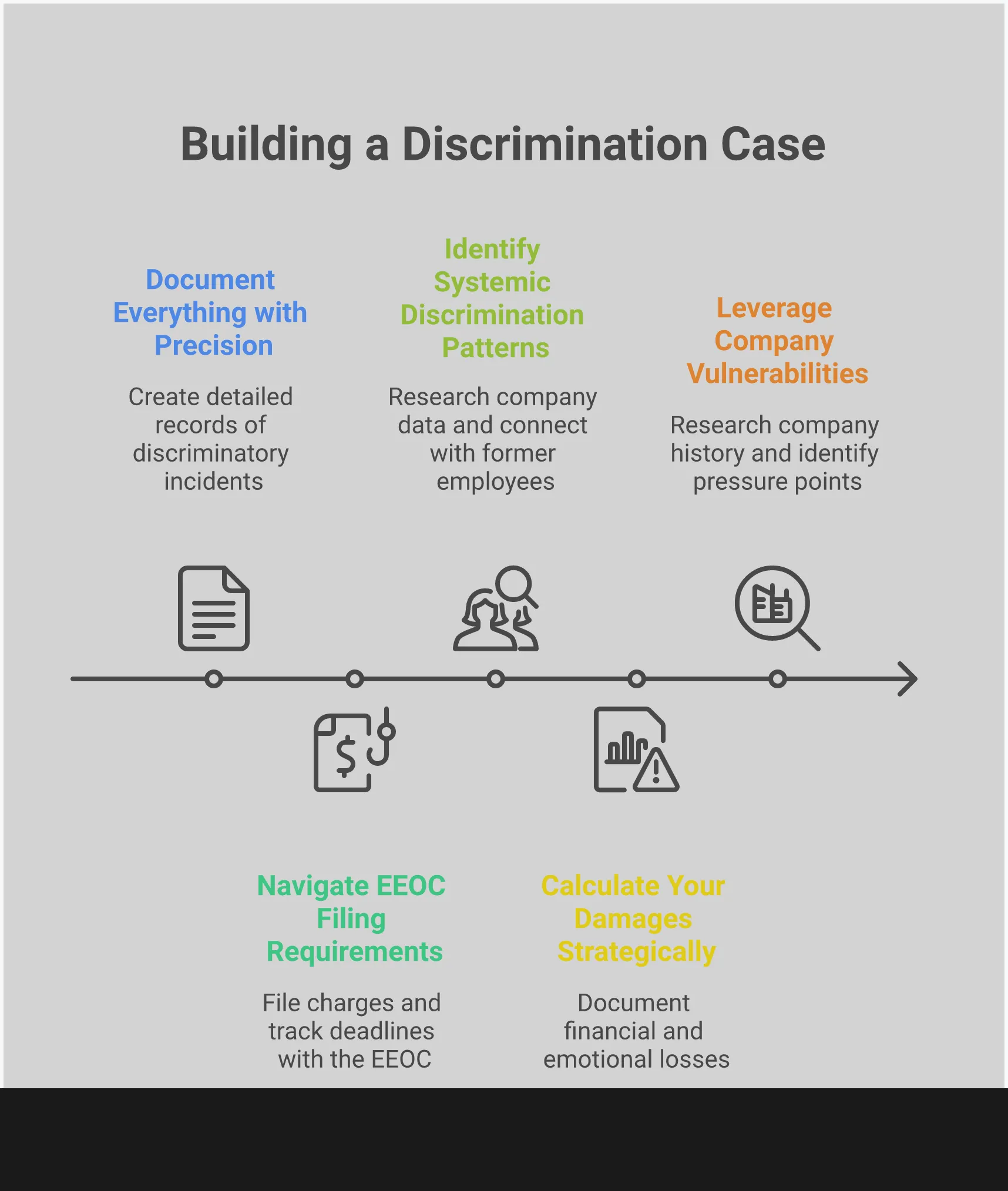
When you’re facing workplace discrimination, your feelings are valid, but a strong legal claim is built on solid proof. The more concrete evidence you can gather, the clearer the picture of your experience becomes. Think of it as building a case brick by brick. Each piece of evidence—an email, a witness account, a performance review—makes your claim stronger and gives you more leverage during settlement negotiations. It’s not about one single “gotcha” moment; it’s about showing a consistent pattern of unfair treatment.
Strong evidence demonstrates the severity and impact of the discrimination, which are key factors in determining a settlement’s value. It helps your attorney tell a compelling story and pushes the other side to take your claim seriously. While it can feel overwhelming to gather this information, especially while you’re still dealing with the situation, every document you save and every incident you note can make a significant difference in the outcome of your case.
Keeping a Paper Trail
Documentation is your best friend. Start by gathering all official documents related to your employment, including your contract, employee handbook, and performance reviews. These papers often outline the company’s official policies, which can be compared against their actual actions. More importantly, keep a detailed personal log of every discriminatory incident. For each entry, write down the date, time, and location. Describe exactly what happened, what was said, and who was there. This detailed timeline helps establish a pattern of discrimination and prevents details from being forgotten over time. This journal is a powerful tool that brings your experience to life in a clear, chronological way.
Witness Statements and Patterns of Behavior
You are likely not the only person who has noticed the unfair treatment. Statements from coworkers who have seen the discrimination or harassment firsthand can be incredibly powerful. Think about who was present during certain incidents or who you confided in shortly after they happened. Their testimony can corroborate your story and show that you’re not just imagining things. It’s also important to show if this is part of a larger pattern. Has your manager made similar comments to other women? Are people of a certain race consistently passed over for promotions? Evidence of a hostile work environment affecting multiple employees can turn a personal complaint into a much larger issue for the company.
Emails, Texts, and Digital Proof
In today’s workplace, some of the most compelling evidence is digital. Save any emails, text messages, or instant messages (like Slack or Microsoft Teams) that feel relevant to your claim. A seemingly offhand comment in a chat can be part of a larger pattern of bias. Be sure to preserve this evidence safely. You can forward work emails to your personal email address or take clear screenshots of text conversations. This digital proof can be the undeniable evidence that validates your claim, especially in cases of sexual harassment where inappropriate comments are often made in writing. Don’t delete anything—even if you’re unsure if it’s important.
Why Do Companies Settle Instead of Going to Trial?
When you imagine a major discrimination lawsuit, you might picture a dramatic courtroom battle. The reality, however, is that most cases never see the inside of a courtroom. The vast majority are resolved through a settlement, where the company agrees to pay a certain amount of money in exchange for the employee dropping the lawsuit. It might seem like an admission of guilt, but from a company’s perspective, it’s often a strategic business decision. There are several key reasons why even a large corporation might choose to write a check rather than face a jury.
Understanding these motivations can help you see the process from the other side of the table. Companies weigh the costs, the potential damage to their reputation, and the sheer unpredictability of a trial. For them, settling is often about controlling the outcome and minimizing the damage. Let’s break down the three main factors that push companies toward the settlement table.
The Cost of a Trial vs. a Settlement
One of the biggest drivers behind any settlement is simple math. The financial implications of a trial can be substantial, often exceeding the costs associated with a settlement. A lengthy court battle involves staggering legal fees, expert witness costs, and countless hours of lost productivity as executives and employees are pulled into depositions and hearings. These expenses add up quickly, with no guarantee of a win.
A settlement, on the other hand, offers a predictable, one-time cost. It allows the company to resolve the matter and move on without the risk of a runaway jury verdict, which could include not only compensation for the employee but also massive punitive damages. Even if a company feels it has a strong defense against a wrongful termination claim, settling is often the more financially sound path.
Protecting Their Public Image
A public trial can be a public relations nightmare. Every piece of evidence, every witness testimony, and every embarrassing internal email can become part of the public record, ready to be picked up by news outlets and shared on social media. Allegations of a hostile work environment or systemic discrimination can permanently tarnish a company’s brand, making it harder to attract customers and recruit talented employees.
Settling can help companies avoid the negative publicity that often accompanies a trial. Settlements almost always come with confidentiality agreements, meaning the details of the case and the amount paid are kept private. This allows the company to manage the narrative, protect its reputation, and handle the issue without a public spectacle. For many businesses, the cost of a settlement is a small price to pay to keep their name out of damaging headlines.
Avoiding the Risk of a Trial
At the end of the day, a trial is a gamble. No matter how confident a company’s lawyers are, there is no way to know for sure what a jury will decide. The unpredictability of a trial outcome can lead companies to prefer settlements, which provide a degree of control over the resolution. A jury could be swayed by a compelling personal story or angered by a company’s actions, leading to a verdict that far surpasses what anyone expected.
By settling, a company eliminates that risk. The negotiation process allows both sides to agree on a specific outcome, removing the uncertainty of leaving the decision in a jury’s hands. This control is incredibly valuable. Rather than rolling the dice on a potentially devastating loss in a retaliation case, a company can cap its losses and close the chapter on its own terms.
How Big Settlements Change Company Policies
A million-dollar settlement does more than just compensate a wronged employee—it sends a powerful shockwave through a company, forcing it to confront the issues that led to the lawsuit. The financial hit is significant, but the real, lasting impact often comes from the non-monetary terms of the agreement. These settlements are powerful tools for reform, compelling businesses to overhaul their internal cultures and create safer, more equitable workplaces for everyone. It’s not just about writing a check; it’s about making fundamental changes to prevent the same thing from happening again.
Forcing Policy Changes and New Training
One of the first things a major settlement triggers is a top-to-bottom review of company policies. Vague, outdated, or non-existent rules are often what allow a toxic culture to fester. As part of a settlement, a company is typically required to rewrite its handbooks to include clear, zero-tolerance policies on discrimination and harassment. But a new policy is only as good as the paper it’s printed on if employees don’t understand it. That’s why these agreements almost always mandate new, comprehensive training programs. This isn’t a one-time, check-the-box webinar; it’s often ongoing education for everyone, from new hires to senior executives, designed to foster a genuine culture of respect and inclusion.
Improving How Complaints Are Handled
A lawsuit often reveals that a company’s system for handling internal complaints is broken. Maybe employees were afraid to speak up, HR dismissed their concerns, or there was no clear process to follow. A settlement forces a company to fix this. It can lead to the creation of new, confidential reporting channels, like an anonymous hotline or a dedicated ethics officer, so employees feel safe raising issues. The goal is to build a system that takes every complaint seriously, investigates it thoroughly and impartially, and protects employees from a hostile work environment. By formalizing this process, companies can address problems early before they escalate into legal battles.
Creating Long-Term Oversight
To ensure these changes stick, many high-value settlements require long-term monitoring and accountability. This isn’t about trusting the company to police itself. Instead, an agreement might require the business to hire an independent, third-party monitor who regularly audits their HR practices and reports on their progress. Some companies may be required to establish a diversity and inclusion council or task force made up of employees at all levels. This creates an internal system of checks and balances, ensuring that the commitment to fairness is an ongoing effort, not a short-term fix. It also helps protect employees who speak up from facing illegal retaliation.
What to Know Before Filing a Major Claim
Deciding to take legal action against an employer is a significant step, and it’s normal to feel overwhelmed. But with the right preparation, you can move forward with confidence. Before you file a claim, there are a few critical things to understand about the process, from strict deadlines to the role of government agencies. Knowing what to expect can make all the difference in building a strong case and protecting your rights.
This isn’t just about paperwork; it’s about setting the foundation for your claim. Taking the time to understand these key elements ensures you don’t miss a crucial window of opportunity or make a misstep that could weaken your position. Let’s walk through what you need to know to get started on the right foot.
Important Deadlines You Can’t Miss
When you’re dealing with workplace discrimination, time is not on your side. There are strict time limits, known as statutes of limitations, for filing a claim. If you miss these deadlines, you could lose your right to seek justice altogether. For most claims under federal anti-discrimination laws, your first official step is to file a charge with the Equal Employment Opportunity Commission (EEOC).
In California, you generally have 300 days from the date of the discriminatory act to file with the EEOC, and one year to file with the state’s Department of Fair Employment and Housing (DFEH). These timelines can be complex and vary depending on the specifics of your case. That’s why it’s so important to act quickly and speak with a legal professional who can help you understand the specific deadlines that apply to your situation involving workplace discrimination.
Understanding the EEOC Process
The Equal Employment Opportunity Commission (EEOC) is the federal agency responsible for enforcing laws against workplace discrimination. Filing a charge with the EEOC is a required step before you can file a lawsuit for many types of claims. Once you file, the agency will notify your employer and may begin an investigation, which could involve gathering documents and interviewing witnesses.
The EEOC may also offer to mediate the dispute between you and your employer to reach a settlement. It’s worth noting that the EEOC reports that retaliation is one of the most common complaints it receives. This shows just how often employers react poorly when an employee speaks up. The EEOC process can be lengthy, but it’s a crucial part of holding employers accountable and formally documenting your complaint.
Why an Experienced Lawyer Matters
Trying to handle a discrimination claim on your own is incredibly challenging. An experienced employment lawyer does more than just file paperwork; they become your advocate and guide. They understand the nuances of the law, know how to meet every deadline, and can manage all communication with your employer and the EEOC, taking that stress off your shoulders. A skilled attorney knows how to gather the right evidence to build a compelling case.
More importantly, a lawyer can hold your employer accountable for their failures. Companies are supposed to provide training and create policies to prevent a hostile work environment, but many fall short. An attorney can pinpoint these failures and use them to strengthen your claim. Having the dedicated team at Bluestone Law on your side ensures your voice is heard and your rights are fiercely protected every step of the way.
The Ripple Effect of Million-Dollar Settlements
A million-dollar settlement does more than just compensate an employee for the harm they’ve suffered. It sends a powerful shockwave that extends far beyond the walls of one company. These landmark cases serve as a public announcement that illegal workplace behavior has serious financial consequences. They don’t just resolve a single dispute; they have the power to change how entire industries operate and empower other workers to stand up for their rights. When one person’s courage leads to a significant outcome, it creates a ripple effect of positive change for everyone.
Sending a Message to Other Companies
Nothing gets a company’s attention quite like a seven-figure payout. When a business is forced to pay a massive settlement for discrimination, other executives and HR departments take notice. It’s a clear warning that ignoring or enabling misconduct is a costly mistake. This often prompts other companies to review their own internal policies, improve their training programs, and take employee complaints more seriously. They see the financial and reputational damage suffered by another company and realize it’s far better to invest in creating a fair and respectful workplace than to risk a similar legal battle. This deterrent effect is one of the most important outcomes of a successful employment law claim.
Sparking Changes Across an Industry
Sometimes, a major settlement doesn’t just impact one company; it exposes a problem that’s common across an entire industry. A high-profile case involving racial bias in tech or sexual harassment in the entertainment world can trigger an industry-wide reckoning. It forces competitors to confront their own cultures and practices. This can lead to new codes of conduct, collaborative efforts to improve diversity and inclusion, and a shared commitment to better protecting employees. A single case can become the catalyst that pushes a whole sector to raise its standards, creating safer work environments for thousands of people.
Empowering Employees to Speak Up
For many employees suffering in a toxic workplace, the fear of not being believed or facing retaliation can be paralyzing. Seeing a major settlement reported in the news can change that. It provides powerful proof that employees have rights and that the legal system can hold even the largest corporations accountable. This validation gives other workers the courage to come forward with their own stories. Knowing that someone else successfully fought back against a hostile work environment and won can make all the difference. It shifts the balance of power, reminding employees that their voices matter and that speaking up can lead to justice.
Frequently Asked Questions
What’s the very first thing I should do if I believe I’m facing discrimination? Before you do anything else, start a private log of what’s happening. Write down every incident with the date, time, who was involved, and exactly what was said or done. This personal record is incredibly valuable. At the same time, gather any relevant documents like performance reviews or emails. Your next step should be to speak with an employment lawyer. They can help you understand your rights and figure out the best way to move forward before you officially report anything internally.
Can a single incident of discrimination lead to a major settlement? While many high-value cases involve a long pattern of misconduct, a single, severe action can absolutely be the basis for a significant claim. For example, being fired because of your age or being denied a promotion due to your race is a serious violation. The value of a case is determined by the severity of the harm done to your career and well-being, not just the number of times it happened.
Will I have to pay taxes on the money I receive from a settlement? This is a great question, and the answer is a bit complex. Generally, the portion of your settlement that is meant to replace lost wages is considered taxable income. However, the part that compensates you for emotional distress or physical injury may not be. The structure of your settlement agreement is very important here. It’s a key reason why having an experienced lawyer is so critical, as they can negotiate terms that are as tax-favorable as possible for you.
How long does it typically take to resolve a discrimination case? There really is no standard timeline, as every case is unique. Some cases can be resolved through negotiation in a matter of months, while others might take a year or more, especially if the employer is resistant to settling. The complexity of the case, the amount of evidence involved, and the court’s schedule all play a role. An attorney can give you a more realistic estimate based on the specific details of your situation.
If I file a claim, will I be blacklisted in my industry? This is a common and completely valid fear. It is illegal for a company to retaliate against you for filing a discrimination claim, and that includes trying to harm your reputation with future employers. Furthermore, most settlement agreements include a confidentiality clause, which prevents both you and the company from discussing the case. While no one can guarantee what individuals might do, the law is on your side to protect you from this kind of retaliation.
Related Articles
- The Real Discrimination Settlement Calculator: 5 Factors
- How Sexual Harassment Settlement Amounts Are Calculated
- How to File a Racial Discrimination Lawsuit: A Guide
Think you were wrongfully terminated?
Get a free, confidential case evaluation from our experienced employment law attorneys.
Request Your Free Consultation