
Does something about your recent firing just feel wrong? Sometimes, a termination isn’t just a business decision—it’s a violation of the law. While employers have a lot of leeway, their power isn’t unlimited. Certain red flags can signal that your dismissal was illegal. For example, were you let go shortly after reporting harassment or requesting a disability accommodation? Did you notice a pattern of older employees being pushed out? These situations are often more than a coincidence; they can be evidence of an unlawful termination. This article will help you recognize the common signs of a wrongful firing and understand the legal protections available to you. If any of these scenarios sound familiar, a wrongful termination California lawyer free consultation can help you connect the dots and determine if you have a strong case.
Key Takeaways
- Your Firing Must Be Illegal, Not Just Unfair: To have a valid claim, your termination must violate a specific law, such as those against discrimination based on race or gender, or retaliation for reporting harassment. An employer can legally fire you for a reason that feels unfair, as long as it isn’t illegal.
- Preserve Evidence and Act Promptly: Immediately write down every detail you can remember about your termination and gather any related documents like emails or performance reviews. Strict legal deadlines apply, so speaking with an attorney quickly is essential to protect your right to file a claim.
- You Can Afford Expert Legal Help: Don’t let financial worries stop you from exploring your options. Most employment lawyers offer free consultations and work on a contingency fee basis, which means you only pay attorney fees if they win your case.
What Counts as Wrongful Termination in California?
Losing a job is a stressful and often confusing experience. It’s easy to feel like you’ve been treated unfairly, especially if the reason for your termination seems baseless or just plain wrong. While many firings feel unjust, the term “wrongful termination” has a specific legal meaning in California. It doesn’t mean your employer needed a “good” reason to let you go; it means they fired you for an illegal reason.
If you believe your rights have been violated, our Wrongful Termination Attorney in California team can help you understand your options and pursue your claim.
Understanding the difference between an unfair firing and an illegal one is the first step in figuring out if you have a case. California law provides strong protections for employees, but it’s important to know how those protections apply to your situation. A termination becomes illegal when it violates laws designed to protect workers from discrimination, retaliation, or breaches of contract. For example, you can’t be fired for your race, for reporting illegal activity, or for taking protected medical leave. If you were fired for a reason that goes against these fundamental public policies, you may have grounds for a wrongful termination claim. Let’s break down what that really means and clear up some common confusion around the topic.
When Does a Firing Become Illegal?
A firing crosses the line from unfair to illegal when the reason behind it violates the law. You may have a valid wrongful termination case if your employer fired you for reasons that go against public policy. This includes being terminated because of your race, gender, age, or disability. It’s also illegal for an employer to fire you in retaliation for exercising your legal rights, such as reporting harassment, taking family medical leave, or acting as a whistleblower. Finally, if you have a written or implied employment contract that promises job security, being fired in violation of that agreement could also be illegal.
“At-Will” Employment: What It Really Means
You’ve probably heard that California is an “at-will” employment state. This means that, in most cases, an employer can fire an employee for any reason—or no reason at all—without warning. They can fire you because they don’t like your attitude or because they want to hire their nephew instead. It sounds harsh, but it’s the general rule. However, there’s a massive exception to this rule: an employer cannot fire you for an illegal reason. The at-will doctrine does not give companies a free pass to engage in discrimination or punish employees for standing up for their rights.
Common Myths About Getting Fired
One of the biggest misconceptions is that any firing that feels unfair is legally a wrongful termination. Many people believe that if their boss fired them without a good cause, they automatically have a case. In reality, not every unfair dismissal qualifies. Your employer doesn’t have to be fair, kind, or even logical. They can fire you over a simple personality clash or for a minor mistake. The key question is why you were fired. The action is only illegal if the underlying reason violates a specific law, such as those prohibiting harassment or protecting employees who report unsafe working conditions.
Signs You Might Have a Wrongful Termination Case
Losing a job is tough, but it feels even worse when the reason for your dismissal seems unfair or illegal. While California is an “at-will” employment state, which means an employer can fire you for almost any reason, that reason cannot be an illegal one. The key is knowing the difference. If something about your firing feels wrong, it’s worth looking closer. Certain red flags can suggest your termination wasn’t just unfair, but unlawful. Let’s walk through some of the most common signs that you might have a wrongful termination case.
Fired Because of Who You Are (Discrimination)
One of the clearest signs of wrongful termination is being fired because of your identity. The law protects employees from discrimination based on characteristics like your race, gender, religion, disability, or age. If you were let go shortly after telling your boss you were pregnant, or if you noticed a pattern of older employees being replaced by younger ones, your termination might be illegal. Think about the timing and any comments made by your managers or coworkers. If your dismissal was based on a protected part of who you are, it’s not just wrong—it’s against the law.
Fired for Doing the Right Thing (Retaliation)
Did you get fired shortly after reporting illegal activity or standing up for your rights? If so, you may have been a victim of retaliation at work. Employers are not allowed to punish you for engaging in legally protected activities. This includes things like reporting sexual harassment, filing a wage claim for unpaid overtime, taking protected family and medical leave, or acting as a whistleblower. If you did the right thing and lost your job because of it, the law is on your side. The timing is often a key piece of evidence here—a firing that happens right after you make a complaint is a major red flag.
Your Employer Broke a Promise or Contract
Sometimes, a firing is illegal because it violates a contract. This is straightforward if you have a written employment contract that specifies the terms of your employment and the reasons you can be terminated. But even without a formal document, you might have an implied contract. Did your employee handbook promise a specific disciplinary process before termination? Did your boss make verbal promises about job security? These situations can create an implied agreement that your employer may have violated. If your company broke its own rules or promises when it fired you, you could have a case for wrongful termination.
Forced to Quit? Understanding Constructive Discharge
What if you weren’t technically fired—you quit? You might still have a wrongful termination claim. This is called “constructive discharge,” and it happens when an employer makes your working conditions so intolerable that any reasonable person would feel forced to resign. This could be due to a hostile work environment, severe harassment, or being demoted to a demeaning position. If you can show that your employer knowingly created or permitted these unbearable conditions, the law may view your resignation as a firing. You shouldn’t have to endure an impossible situation just to protect your legal rights.
Know Your Rights: California’s Worker Protection Laws
Losing a job is tough, but it’s even harder when you suspect the reason was unfair or illegal. The good news is that California has some of the strongest worker protection laws in the country. These laws are designed to ensure you’re treated fairly and have legal options if you’re not. Understanding these key protections is the first step toward standing up for yourself. Think of them as your shield against unlawful actions by an employer. Whether it’s discrimination, retaliation for doing the right thing, or another violation, the law is often on your side. Let’s walk through some of the most important legal frameworks that protect California employees.
Your Right to a Fair Workplace (FEHA)
In California, the Fair Employment and Housing Act (FEHA) is a cornerstone of employee rights. This powerful law makes it illegal for an employer to fire you based on protected characteristics like your race, gender, religion, disability, sexual orientation, or age (if you’re over 40). Essentially, FEHA ensures that job decisions are based on your performance, not on who you are. If you were let go shortly after telling your boss you were pregnant or requesting a reasonable accommodation for a disability, you might have a case. These situations are prime examples of wrongful termination, and FEHA provides a clear path to hold your employer accountable.
How the California Labor Code Protects You
Beyond FEHA, the California Labor Code offers another critical layer of protection. It establishes that employers can’t fire you for reasons that violate public policy. This sounds complicated, but the idea is simple: you can’t be fired for doing something the law encourages. For example, your boss can’t fire you for taking time off for jury duty, for reporting a safety violation, or for refusing to participate in illegal activity. This also covers situations where you’ve been the victim of retaliation at work after filing a complaint about harassment or unpaid wages. The Labor Code reinforces that your job shouldn’t be at risk just because you exercised your legal rights.
Laws That Shield Whistleblowers from Retaliation
California law provides robust protections for employees who speak up about illegal activities in the workplace. If you report your company for breaking the law—whether it’s fraud, environmental violations, or unsafe working conditions—you are protected as a whistleblower. This means your employer cannot legally fire, demote, or otherwise retaliate against you for reporting your concerns. These whistleblowing laws exist to encourage people to do the right thing without fearing for their livelihood. If you raised a red flag about wrongdoing and were terminated shortly after, it’s a strong sign that you should speak with an attorney to explore your options.
How a Lawyer Can Make a Difference
Losing your job is overwhelming, and facing your former employer alone can feel impossible. This is where having a legal professional in your corner changes everything. An experienced employment lawyer does more than just file paperwork; they become your strategic partner, advocate, and guide through a complex legal system. They handle the heavy lifting so you can focus on moving forward. From the moment you share your story, they start building a strategy to protect your rights and fight for the justice you deserve.
Evaluating the Strength of Your Claim
You might feel like your firing was unfair, but was it illegal? That’s the first and most important question an attorney will help you answer. They’ll listen to your story and analyze the details against California’s complex employment laws. A lawyer can quickly identify if your termination involved unlawful discrimination or another violation of your rights. This expert evaluation gives you a clear, honest assessment of your case’s potential. Instead of guessing about your options, you’ll get a straightforward understanding of your legal standing and a solid foundation for deciding what to do next.
Gathering Evidence to Build Your Case
A strong wrongful termination claim is built on solid evidence. Your lawyer knows exactly what’s needed to prove your case and will guide you in collecting the right documentation. This isn’t just about finding a “smoking gun” email; it’s about piecing together a compelling narrative. They’ll help you gather performance reviews, employment contracts, text messages, pay stubs, and witness contact information. If you were fired as a form of retaliation for reporting misconduct, your attorney will know how to connect the dots. This thorough approach ensures every piece of supporting evidence is found and properly used to strengthen your position.
Fighting for You in Negotiations and in Court
Once your case is built, your lawyer becomes your champion. They will handle all communications with your former employer and their legal team, protecting you from pressure and intimidation. Many employment disputes are settled out of court, and a skilled negotiator can secure a fair settlement on your behalf. However, if your employer refuses to do the right thing, your attorney will be fully prepared to represent you in court. The team at Bluestone Law is dedicated to advocating for employees, ensuring your voice is heard and your rights are vigorously defended every step of the way.
Determining the Compensation You Deserve
A wrongful termination can have a devastating financial impact. A lawyer’s job is to make sure you are compensated for everything you’ve lost. This goes far beyond just your last paycheck. They will calculate your lost wages, benefits, and any future earnings you might miss out on. Depending on your case, you could also be entitled to damages for emotional distress or even punitive damages meant to punish the employer for their actions. An attorney will fight to secure the maximum compensation you’re entitled to, helping you regain your financial footing after an unlawful firing.
What to Expect in Your Free Consultation
Walking into a lawyer’s office can feel intimidating, but a free consultation is simply a conversation. It’s your chance to share your story and our chance to listen and see how we can help. The goal is to give you a clear understanding of your legal options so you can make an informed decision about what to do next. Think of it as a strategy session where you can get professional advice without any pressure or commitment. We’re here to provide clarity during a confusing and stressful time.
How to Prepare for Your First Meeting
To make the most of our time together, it helps to do a little prep work. Before you come in, try to write down a simple timeline of events. Note when you were hired, key moments in your employment, the events leading up to your termination, and the date you were fired. Who was involved? What was said? Having these details organized will help us understand your situation quickly. Also, think about any questions you have for us. There are no bad questions, and this is your opportunity to get answers from an experienced employment law attorney.
What a Lawyer Will Look for in Your Case
One of the most common misconceptions is that any unfair firing is an illegal one. While your termination may have felt unjust, a lawyer needs to determine if it violated a specific law. We will listen for key details that point to a potential case for wrongful termination. We’ll be looking to see if your firing was a breach of an employment contract, an act of illegal discrimination, or a form of retaliation for you exercising a legal right. Our job is to connect the facts of your story to the protections provided by California law.
Documents to Bring with You
Evidence is crucial for building a strong case. While your personal account is the most important piece of the puzzle, documents can provide the proof needed to support your claim. If you can, gather any relevant paperwork and bring it with you. This could include:
- Your official termination letter or notice
- Your employment contract or offer letter
- Recent performance reviews
- Emails, text messages, or other communications related to your firing
- Pay stubs and other wage statements
- Any notes you took about specific incidents
Don’t worry if you don’t have everything; just bring what you can find.
What Happens After the Consultation?
By the end of our meeting, you should have a much clearer picture of your legal standing. We will give you our honest assessment of your case, including its strengths and any potential challenges. If we believe you have a valid claim and we’re the right fit to help, we’ll explain the next steps. This typically involves discussing what our representation would look like, how we would proceed with filing a claim, and what kind of compensation you might be entitled to, such as lost wages or damages for emotional distress. Our goal is to empower you with the information you need to confidently decide how to move forward.
How Much Does a Wrongful Termination Lawyer Cost?
If you’ve just lost your job, the last thing you want to worry about is another bill. The good news is that you don’t need a lot of money upfront to get expert legal help. Most employment law firms are structured to make legal support accessible, especially when you’re in a vulnerable financial position. Let’s break down how the costs typically work so you can move forward with confidence.
Understanding Contingency Fees (You Don’t Pay Unless You Win)
Most reputable wrongful termination lawyers work on a contingency fee basis. In simple terms, this means you don’t pay any attorney’s fees unless and until your lawyer wins your case. If you don’t receive a settlement or a court award, you owe nothing in fees. This approach removes the financial risk from your shoulders and puts it on the law firm. It also means our goals are perfectly aligned with yours—we are motivated to get you the best possible outcome because we only get paid if you do. This model ensures that anyone with a valid claim can afford to seek justice, regardless of their current financial situation.
Are There Other Costs to Consider?
While you won’t pay attorney’s fees upfront, every lawsuit involves certain case costs. These can include court filing fees, the cost of ordering transcripts, and fees for expert witnesses. At Bluestone Law, we typically advance these costs on behalf of our clients. If we win your case, these expenses are then reimbursed from the settlement or award you receive. A successful wrongful termination case can secure compensation for things like lost wages and benefits, emotional distress, and sometimes even punitive damages. Your attorney will be completely transparent about these potential costs and what you can expect from the very beginning.
Why Your First Consultation Is Free
We believe everyone deserves to understand their legal rights without any financial pressure. That’s why we offer a free, confidential consultation to discuss your situation. This initial meeting is a no-risk, no-obligation conversation where you can share your story and get a professional opinion on your case. It’s your chance to ask questions and see if our firm is the right fit for you. It’s also our opportunity to evaluate the details of your termination and determine if you have a strong claim. This first step is all about giving you clarity and peace of mind, allowing you to make an informed decision about what to do next.
How to Choose the Right Lawyer for You
Finding the right legal partner after being fired can feel like another full-time job, but it’s one of the most important decisions you’ll make. You need more than just a lawyer; you need an advocate who understands what you’re going through and has the expertise to fight for you. The right attorney will not only know the law inside and out but will also be someone you trust and can communicate with openly. Think of this as building your personal support team. Focus on finding a specialist with a proven track record, a communication style that works for you, and a genuine commitment to your case.
Find a Specialist in Employment Law
When you’re dealing with a potential wrongful termination, you don’t want a jack-of-all-trades. You need a specialist. Employment law is a complex and constantly changing field, with intricate rules around issues like discrimination, retaliation, and wage violations. A lawyer who focuses exclusively on these cases will have a deep understanding of the specific challenges you’re facing. They know the tactics employers use and have the experience to build a strong case on your behalf. A general practice attorney simply won’t have the same level of focused knowledge to effectively represent you.
Ask About Their Track Record
Don’t be afraid to ask direct questions about an attorney’s experience with cases similar to yours. A confident and reputable lawyer will be open about their approach and past results. You can ask how many wrongful termination cases they’ve handled and what the outcomes were. You’re looking for someone who can clearly evaluate your situation, explain your options, and outline a strategy for moving forward. This isn’t about getting a guarantee—every case is unique—but it is about finding a lawyer who has a history of successfully fighting for clients in your shoes, especially in cases of wrongful termination.
Read Reviews and Check Communication Style
Client reviews and testimonials are an invaluable resource. They offer a real-world glimpse into what it’s like to work with a particular lawyer or firm. Pay attention to what former clients say about communication. Was the attorney responsive? Did they explain complex legal concepts clearly? The legal process can be long and stressful, and having a lawyer who keeps you informed and answers your questions patiently is crucial. You need an advocate who makes you feel heard and respected, not one who leaves you in the dark.
Key Qualities to Look For in an Attorney
Beyond specialization and experience, look for a lawyer who is both knowledgeable and compassionate. The best employment attorneys understand that you’re going through a difficult time. They should be able to explain your rights under California law and guide you through the legal process with clarity and empathy. A great lawyer doesn’t just see a case file; they see a person who has been wronged. They should be committed to protecting your rights and helping you pursue the justice you deserve, whether you were a victim of retaliation or faced another form of illegal treatment.
Your First Steps After Being Fired
The moments after being fired can feel overwhelming and confusing. It’s easy to get lost in the shock and uncertainty, but taking a few clear, deliberate steps right away can protect your rights and make a significant difference down the road. Focus on what you can control and start building a foundation for your next move.
Document Everything—Right Now
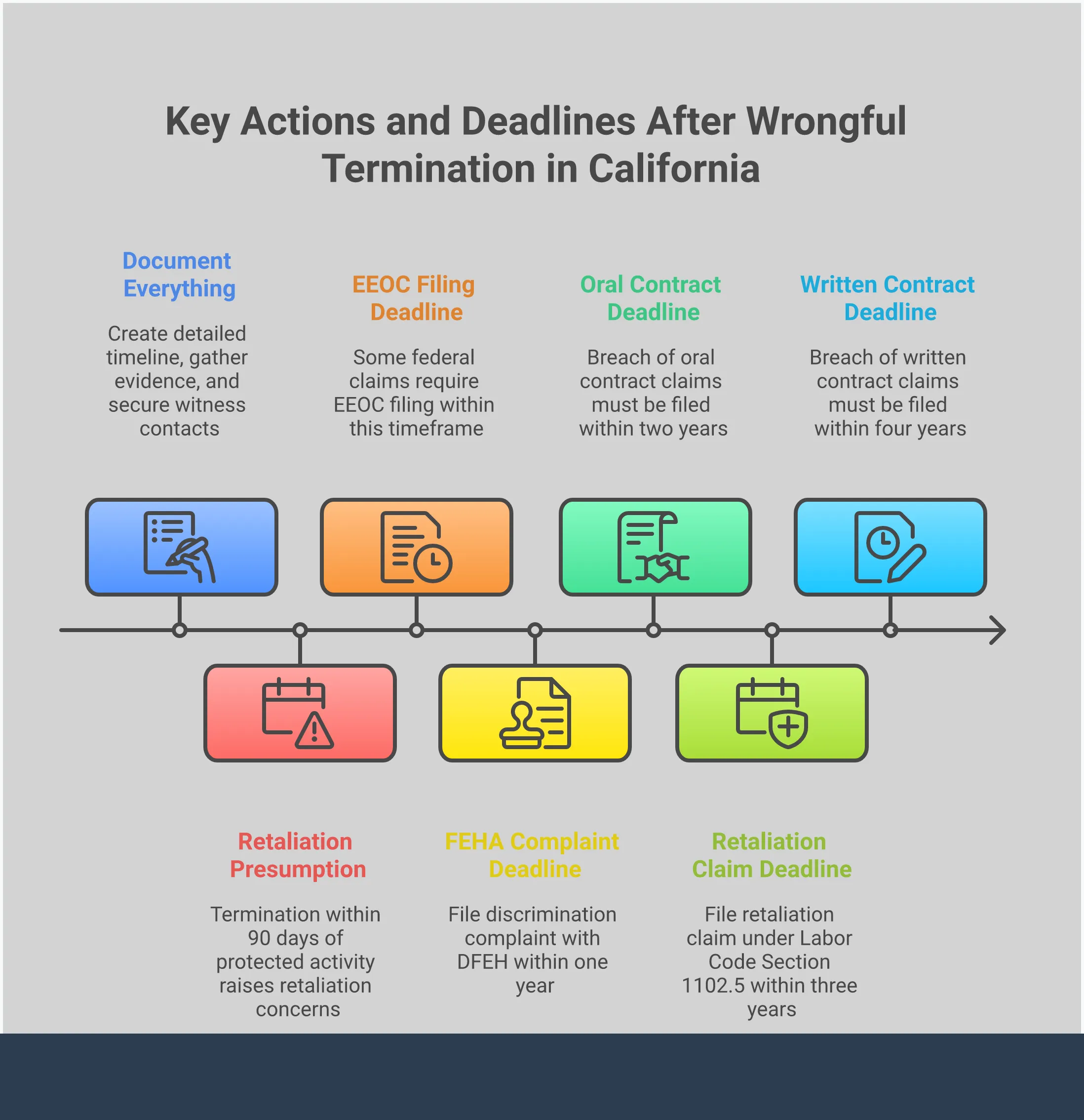
Before you do anything else, write down everything you can remember about your termination and the events leading up to it. Your memory is sharpest right now, and these details are crucial. Create a timeline of events, noting specific dates, times, and conversations. Who was present? What was said? If you have copies of emails, performance reviews, or your employment contract, gather them in a safe place. Proving a wrongful termination claim often comes down to the evidence you can provide. Your word is important, but supporting it with a detailed, written record and documentation makes your case much stronger.
Don’t Miss Your Filing Deadline
In California, you have a limited amount of time to take legal action after being fired. This window is called the statute of limitations, and if you miss it, you could lose your right to file a claim permanently. The exact deadline depends on the specifics of your case, such as the reason you believe you were fired. For example, claims for discrimination or retaliation have different timelines. Because these deadlines are strict and can be complex, it’s critical to understand which ones apply to your situation as soon as possible. Waiting too long is one of the most common mistakes people make, and it can unfortunately be an irreversible one.
Why You Should Talk to a Lawyer Quickly
You don’t have to figure this all out on your own. Speaking with an employment lawyer as soon as possible is the best way to understand your rights and options. An attorney can help you determine if your firing was illegal, explain the deadlines that apply to your case, and outline the next steps. They can review the documentation you’ve gathered and give you a professional assessment of your claim’s strength. Getting expert advice early on provides clarity and ensures you are taking the right actions to protect yourself. The team at Our Firm is here to listen to your story and help you find the best path forward.
Schedule Your Free Wrongful Termination Consultation
If you believe you were fired illegally, you’re likely dealing with a lot of stress and uncertainty. It’s a tough situation, and it’s completely normal to feel overwhelmed and unsure of what to do next. The most important thing to remember is that you don’t have to figure this out alone. Seeking legal advice is a critical first step to understanding your rights and protecting your future. An experienced employment lawyer can help you determine if your termination was not just unfair, but unlawful under California law.
This is precisely why we offer a free, confidential consultation. Think of it as a no-risk opportunity to tell your story to someone who understands the complexities of wrongful termination. There’s no financial commitment required from you. It’s simply a conversation designed to give you clarity and a professional opinion on your situation. We’ll listen to what happened, ask the right questions, and explain your legal options in plain English.
Taking the step to speak with an attorney can feel intimidating, but it’s the best way to get the answers you deserve. You can learn whether you have a strong case, what the legal process involves, and how to move forward. At Bluestone Law, we are dedicated to advocating for employees and ensuring their rights are upheld. Contact us today to schedule your free consultation and take the first step toward getting the justice you deserve.
Frequently Asked Questions
My boss didn’t give a reason for firing me. Is that illegal? In California, employers generally don’t have to give you a reason for letting you go. Because of “at-will” employment, they can fire you for a reason that seems unfair or for no reason at all. However, the lack of a clear explanation can sometimes be a red flag. If you were fired shortly after reporting harassment or requesting medical leave, the absence of a valid reason might suggest the real motive was an illegal one. The focus isn’t on whether they gave a reason, but on what the true reason was.
What if I was forced to quit instead of being fired? Do I still have a case? Yes, you might. This situation is known as “constructive discharge.” It applies when an employer makes your work environment so hostile or intolerable that any reasonable person would feel they had no choice but to resign. If you can show that your employer knowingly created or allowed these unbearable conditions to force you out, the law considers your resignation a termination. You shouldn’t have to endure an impossible situation to protect your rights.
How can I possibly prove my employer fired me for an illegal reason? They’ll just make something up. This is a very common concern, but proving a case doesn’t always require a “smoking gun” admission from your employer. A strong claim is often built by piecing together different kinds of evidence. This can include suspicious timing, emails or text messages, your performance reviews, and statements from coworkers. An experienced attorney knows how to use this information to show that the company’s stated reason for firing you was likely a cover for discrimination or retaliation.
I’m worried about the cost. How much money do I need to hire a lawyer? You don’t need any money upfront to hire a wrongful termination lawyer. Reputable employment law firms, including ours, work on a contingency fee basis. This means we only get paid if we win your case, either through a settlement or a court verdict. Our fee is a percentage of the money we recover for you. This approach allows you to seek justice without any financial risk, regardless of your current situation.
How long do I have to file a wrongful termination claim in California? There are strict deadlines, called statutes of limitations, for filing a legal claim, and if you miss them, you can lose your right to sue forever. The exact timeline depends on the specifics of your case, such as whether it involves discrimination, retaliation, or a breach of contract. Because these deadlines can be complicated and are not flexible, it is critical to speak with an attorney as soon as possible to understand the specific time limits that apply to you.
Related Articles
- Constructive Discharge Settlements: What to Expect
- Legal Advice for Work-Related Stress: Know Your Rights
Think you were wrongfully terminated?
Get a free, confidential case evaluation from our experienced employment law attorneys.
Request Your Free Consultation