
Enduring a hostile work environment isn’t just an emotional burden—it can have a real financial cost. You might be passed over for promotions, denied raises, or even forced to quit your job, leading to lost wages and benefits. California law recognizes that you deserve to be compensated for these losses, as well as for the emotional distress you’ve suffered. Filing a legal claim is about seeking justice and recovering the damages you are owed. This guide explains the types of compensation available, from back pay to punitive damages, and what factors influence a potential settlement. Understanding what’s at stake can empower you to consult a California hostile work environment lawyer.
What Makes a Hostile Work Environment Case Successful?
Winning a hostile work environment lawsuit in California requires more than just proving a boss is “mean.” To succeed, we must demonstrate that the conduct was pervasive or severe enough to alter the conditions of your employment.
If you believe your rights have been violated, our Workplace Discrimination Lawyer team can help you understand your options and pursue your claim.
Key Evidence for Your Case:
Frequency of Conduct: Is the harassment happening daily or weekly?
Nature of the Acts: Are they physically threatening, or are they humiliating verbal slurs?
Impact on Performance: Has your mental health or work output suffered significantly?
Company Knowledge: Did you report the behavior to HR, and did they fail to take corrective action?
Our firm has seen success in cases ranging from persistent racial slurs in the warehouse to retaliatory “ice-outs” by management after a whistleblower report. We focus on building a narrative that shows the jury exactly how the employer allowed a toxic culture to fester.
Key Takeaways
- The behavior must be discriminatory, not just difficult: To have a legal claim in California, the hostility you face must be linked to a protected part of your identity, like your race, gender, or disability, and be severe or pervasive enough to disrupt your work.
- Create a detailed record of everything: Your power lies in your proof. Keep a private log of dates, times, what was said, and who was present for every incident. This documentation is the most critical tool for proving your case.
- You must act within strict deadlines: California law sets firm time limits for filing a claim, so it’s crucial to act quickly. An experienced employment lawyer can protect your rights, manage these deadlines, and help you pursue the compensation you deserve without upfront costs.
Is Your Workplace Hostile? A Guide to Your Rights in California
It’s a term you’ve probably heard before, but what does a “hostile work environment” actually mean in a legal sense? It’s more than just having a difficult boss or a stressful day. In California, the law has a specific definition for what makes a workplace truly hostile, and understanding it is the first step toward protecting your rights. A workplace becomes hostile when the behavior of a supervisor or coworker makes doing your job impossible.
This guide will walk you through the key elements of a hostile work environment claim, from the types of behavior that qualify to the legal standards you’ll need to meet.
What Legally Qualifies as a Hostile Work Environment?
A hostile work environment isn’t just an unpleasant or unprofessional one. Legally, it’s created when unwelcome conduct, based on a protected characteristic, is severe or pervasive enough to make a reasonable person feel the workplace is intimidating, offensive, or abusive. The key here is that the behavior must be unwelcome and connected to a part of your identity that the law protects. This means that general rudeness or a demanding manager, while frustrating, usually isn’t enough to file a claim for a hostile work environment. The conduct has to cross a line from simply being difficult to being discriminatory and abusive.
Understanding California’s Protected Characteristics
The foundation of a hostile work environment claim is that you are being targeted because you belong to a protected class. California law protects employees from discrimination based on a wide range of characteristics. These include your race, religion, gender, age (if over 40), disability, sexual orientation, gender identity, medical condition, and national origin, among others. For the behavior to be legally considered hostile, it must be motivated by one of these protected traits. For example, if a coworker constantly makes offensive jokes about your ethnicity, that could contribute to a hostile environment because race and national origin are protected characteristics.
Real-World Examples of Hostile Conduct
Hostile conduct can take many forms, and it’s not always obvious. It can range from verbal abuse to physical intimidation. Common examples include offensive jokes, slurs, or negative comments about a protected trait. This could look like a manager repeatedly mocking an employee’s accent or coworkers sharing offensive cartoons about a particular religion. It can also include displaying inappropriate images, unwelcome touching, or interfering with your ability to work. Even actions that seem subtle on their own can add up to create an abusive atmosphere, especially when they are part of a pattern of sexual harassment or other targeted behavior.
Meeting the “Severe or Pervasive” Standard
To have a valid claim, the hostile conduct must be either “severe” or “pervasive.” Courts in California look at both the number of incidents and their seriousness to make this determination.
A severe act is something so serious that a single incident is enough to create a hostile environment. This could be a physical assault or a direct threat of violence.
Pervasive conduct refers to a pattern of behavior that, while less severe in each instance, becomes abusive over time. This could be daily “jokes,” insults, or comments that wear you down and make the workplace feel unsafe. A one-off, insensitive comment likely won’t meet the standard, but a constant barrage of them might. This is often the tipping point that leads to wrongful termination when an employee is forced to quit.
Clearing Up Common Myths About Hostile Workplaces
The term “hostile work environment” gets thrown around a lot, but its legal meaning is very specific. It’s not just about having a difficult boss or a job you don’t like. California law has clear standards for what qualifies, and understanding them is the first step toward protecting yourself. Let’s clear up some of the most common misconceptions so you can better assess your situation.
One-Time Incident vs. a Pattern of Behavior
A common myth is that any single offensive comment or action creates a hostile work environment. While a one-off rude remark is unprofessional, it usually isn’t enough to build a legal claim. California courts typically look for a pattern of behavior that is either “severe or pervasive.” This means the conduct is either a single, extremely serious event (like a physical assault) or a series of repeated incidents that, when combined, create an abusive atmosphere. Think of it as the difference between a single bad day and a constant, oppressive feeling of dread when you walk into the office. The key is whether the behavior fundamentally changes your work conditions.
When Is Your Employer Legally Responsible?
Another point of confusion is when an employer can be held accountable. For behavior to be considered illegal harassment, it must be based on a protected characteristic, such as your race, gender, age, or disability. A boss who is simply a jerk to everyone might not be breaking the law, but a boss who targets you because of a protected trait is. Your employer becomes legally responsible when they know (or should have known) about the discriminatory harassment and fail to take prompt, reasonable steps to stop it. This is why documenting and reporting incidents is so critical—it puts your employer on notice and obligates them to act.
It’s More Than Just Sexual Harassment
When people hear “workplace harassment,” their minds often jump to sexual harassment. While that is a serious and prevalent form of a hostile work environment, it’s far from the only one. Hostility can stem from any protected status. This includes persistent, offensive jokes about someone’s race, derogatory comments about an employee’s age, mocking a person’s disability, or creating an environment that is intimidating to someone based on their religion or national origin. The impact of this kind of environment can be devastating to your mental and physical health, and the law protects you from having to endure it, regardless of the form it takes.
Your Action Plan: What to Do If You’re in a Hostile Environment
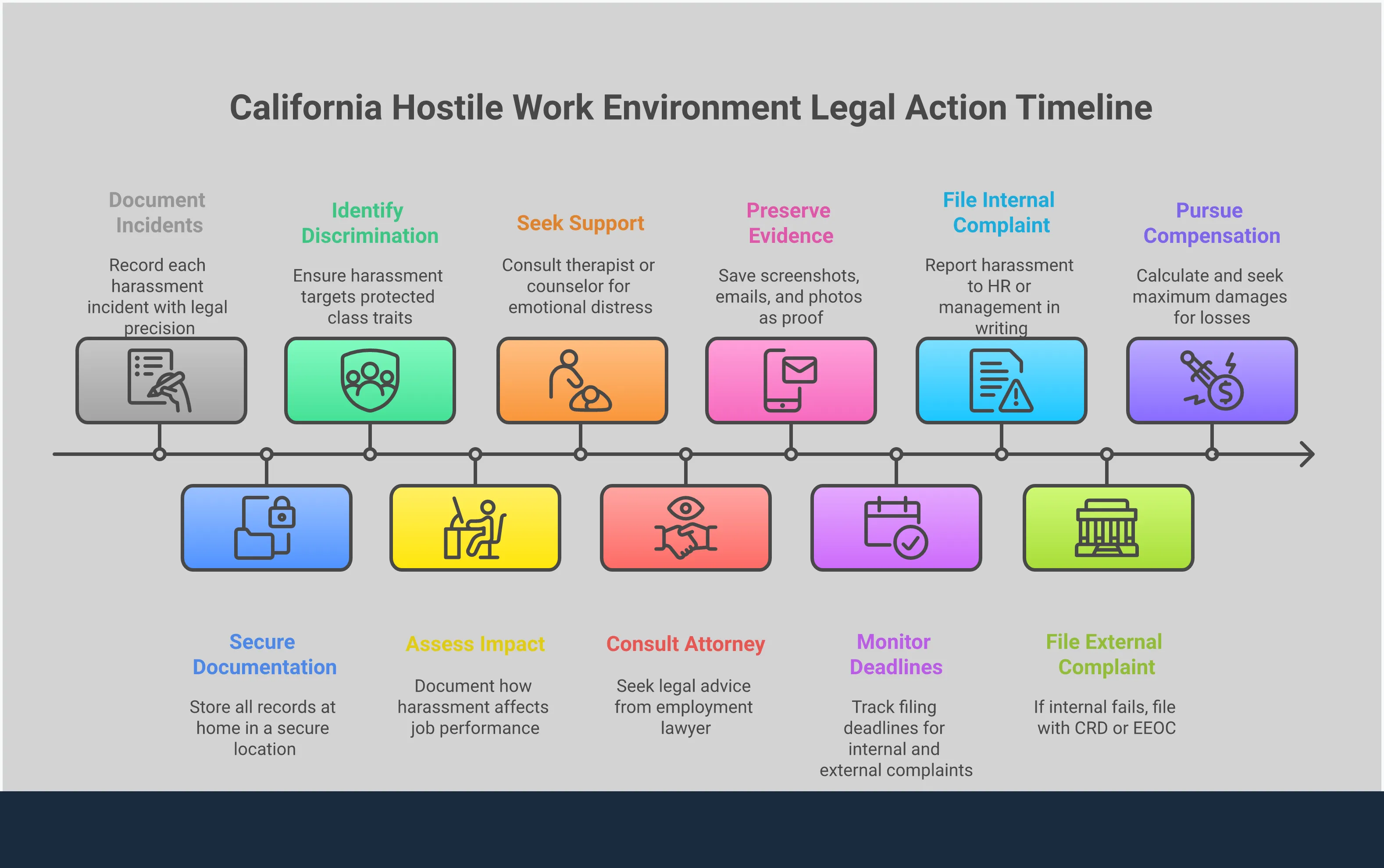
Feeling trapped in a toxic workplace can be paralyzing, but taking clear, deliberate steps can help you regain control and protect your rights. If you believe you’re experiencing a hostile work environment, your next moves are critical. It’s not just about enduring the situation; it’s about creating a clear record and understanding the path forward. This plan will walk you through the essential actions to take, from gathering evidence to meeting legal deadlines, so you can make informed decisions about your career and well-being.
How to Document Every Incident
Your memory is powerful, but a written record is undeniable. Start a private log, either in a notebook you keep at home or a personal digital file—never use a work computer. For every incident of harassing or offensive behavior, write down the date, time, and location. Note who was involved, including any witnesses. Describe exactly what happened and what was said, using direct quotes if you can. Save any physical evidence, like screenshots of inappropriate messages, emails, or photos. This detailed documentation is the foundation of a strong legal claim and can be essential for recovering lost wages or other damages.
Reporting the Issue Internally (and What to Expect)
Before you can take legal action, you generally need to give your employer a chance to fix the problem. Formally report the behavior to your Human Resources department or your manager, following the company’s official complaint procedure. Put your complaint in writing (an email is perfect) so you have a dated record. Keep a copy of your complaint and any response you receive from the company. Be prepared for a few outcomes: your employer might investigate and resolve the issue, they might ignore your complaint, or they could even make things worse. If the situation doesn’t improve, you’ve still taken a necessary step for any future legal action against workplace retaliation.
Filing a Formal Complaint in California
If reporting the harassment internally doesn’t work, your next step is to file a formal complaint with a government agency. In California, you can file a complaint with the Civil Rights Department (CRD). This is a mandatory step you must complete before you can file a lawsuit in court. The CRD will investigate your claim. After the investigation, the agency may try to mediate a solution, file a lawsuit on your behalf, or, most commonly, issue you a “right-to-sue” letter. This letter gives you the official green light to pursue your case in civil court with the help of an attorney.
Why You Can’t Afford to Miss Legal Deadlines
When it comes to legal action, the clock is always ticking. In California, you generally have three years from the date of the last incident of harassment to file your complaint with the CRD. If you also need to file with the federal Equal Employment Opportunity Commission (EEOC), that deadline can be as short as 180 days. These deadlines, known as statutes of limitation, are strict. If you miss them, you could lose your right to sue forever. Because these time limits can be confusing, it’s incredibly important to speak with an employment lawyer as soon as possible to understand the specific deadlines that apply to your wrongful termination or harassment case.
How to Choose the Right Hostile Work Environment Lawyer
Deciding to seek legal help is a major step, and finding the right lawyer is just as important. You need an advocate who understands California law and what you’re going through. The right attorney can make all the difference in your case. Think of this as building your support team—you want someone with the right skills and experience to guide you.
Why You Need an Employment Law Specialist
When you’re dealing with a toxic workplace, you need a specialist. Employment law is a complex field, and a lawyer who focuses on these cases knows the specific statutes that apply to your situation. They can accurately determine if the behavior you’ve endured meets the legal standard. Knowing your rights is the first step, and consulting with a specialist can validate your experience and show you a clear path forward.
Gauging a Lawyer’s Experience with Cases Like Yours
Not all employment lawyers have the same experience. Ask about their track record with hostile work environment cases. Have they handled situations similar to yours? An experienced attorney knows that having witnesses can be a crucial tool in a California case, as they can speak to the frequency and severity of the harassment. It’s reasonable to want to understand the depth of their expertise before you commit.
Understanding Legal Fees and Payment Options
The thought of legal fees can be intimidating, but don’t let it stop you. Most reputable plaintiff’s employment lawyers work on a contingency fee basis. This means you don’t pay any attorney’s fees unless they win your case. The lawyer’s fee is a percentage of the amount they recover for you. This arrangement allows people who couldn’t otherwise afford representation to get justice. Always ask for a clear explanation of the fee structure.
Key Questions to Ask in a Consultation
Your initial consultation is a two-way interview. It’s your chance to assess the lawyer as they assess your case. Come prepared with questions to make an informed decision.
Here are a few to get you started:
- Do you think I have a strong case?
- What is your strategy for a case like mine?
- Who will be my main point of contact?
- How will you keep me updated?
Pay attention to how they answer. You should leave feeling heard, respected, and confident in their ability. Trust your gut—choosing a lawyer you connect with is essential.
What Kind of Compensation Can You Expect?
If you’ve endured a hostile work environment, you’re likely dealing with more than just emotional stress. The experience can have a real financial impact, from lost income to medical expenses. Filing a legal claim is about holding your employer accountable and recovering compensation, often called “damages,” to help you get back on your feet. The goal is to restore you, as much as possible, to the financial position you would have been in if the illegal conduct had never happened.
The specific compensation you can pursue depends entirely on the details of your case. Generally, damages are broken down into a few key categories. You can seek recovery for the tangible financial losses you’ve suffered, like missed paychecks. You can also be compensated for the emotional and psychological toll the experience took on you. In some situations where an employer’s behavior was particularly outrageous, you might be awarded additional damages designed to punish the company and prevent similar conduct in the future. Understanding these different types of compensation can help you see what a potential legal outcome might look like.
Recovering Lost Wages and Medical Bills
The most direct financial impact of a hostile work environment is often lost income. This includes any salary, bonuses, or benefits you missed out on if you were wrongfully terminated, forced to quit, or passed over for a promotion. We call these “back pay” damages. If the situation has affected your ability to find a new job with similar pay, you may also be able to claim “front pay” for future lost earnings. Additionally, if the stress of the environment led to medical issues requiring therapy, medication, or other treatments, the costs of that care can be included in your claim. It’s about making you financially whole for the concrete losses you’ve suffered.
Getting Compensated for Emotional Distress
The harm from a hostile workplace isn’t just financial. The law recognizes that the anxiety, depression, and mental anguish you experience are very real injuries that deserve compensation. These are known as emotional distress damages. This part of a settlement or award acknowledges the sleepless nights, the damage to your self-esteem, and the overall impact the harassment had on your life and well-being. While no amount of money can erase the experience, this compensation is a formal recognition of the pain you endured and is a critical component of many hostile work environment claims. It validates that your suffering matters.
Punitive Damages and Attorney’s Fees
In cases where an employer’s conduct was especially malicious or reckless, a court may award punitive damages. This type of compensation isn’t about paying you back for your losses; it’s about punishing the company and sending a clear message that their behavior is unacceptable. Punitive damages are reserved for the most serious cases. On a more practical note, California law often allows successful employees to recover their attorney’s fees from the employer. This provision is incredibly important because it makes it possible for you to hire a skilled employment law attorney without having to pay out of pocket, leveling the playing field against large companies.
What Factors Influence a Settlement?
Every hostile work environment case is unique, so there’s no simple formula for calculating a settlement. The final amount depends on several key factors. The severity and frequency of the harassment play a huge role—was it a series of offensive comments or a pattern of severe, threatening behavior? The strength of your documentation and evidence is also crucial. Other considerations include the amount of your lost wages, the extent of your emotional distress, and whether your employer knew about the harassment and failed to stop it. While some cases might settle for a modest amount, those involving severe, long-term harassment and significant financial loss can result in substantial awards.
Finding and Hiring the Best Attorney for You
Choosing the right lawyer can feel like the most critical decision you’ll make in your case, and in many ways, it is. You’re not just hiring a legal expert; you’re finding a partner who will guide you through a challenging time. The right attorney will listen to your story, validate your experience, and build a strong strategy to protect your rights. Taking the time to find a great fit is an investment in yourself and your case’s outcome.
Where to Start Your Search for a Great Lawyer
Begin your search by looking for attorneys who specialize in plaintiff’s employment law—meaning they represent employees, not employers. You can ask for trusted referrals, check your local bar association, or use reputable online legal directories. As you build a list of potential candidates, focus on their experience with cases like yours. Knowing your rights is the first step toward taking action, and consulting with a hostile work environment lawyer can confirm your experience and show you the path forward. The goal is to find a few strong candidates to schedule initial consultations with.
How to Vet Your Top Candidates
Once you have a shortlist, it’s time to dig a little deeper. Look at their websites, read client testimonials, and see if they have a track record of success in hostile work environment cases. During your consultation, come prepared with your documentation and a list of questions. A good attorney will be able to explain what conduct is legally considered hostile and how the law applies to your specific situation. Ask about their strategy and how they would approach your case. Having witnesses can be a crucial part of a California hostile work environment claim, so discuss how the attorney plans to gather evidence and build your case.
Red Flags to Watch Out For
Pay close attention to how a potential attorney communicates with you. Are they responsive and clear, or do they use confusing legal jargon? A major red flag is any lawyer who guarantees a specific outcome or settlement amount. The legal process is unpredictable, and ethical attorneys will manage your expectations realistically. A great lawyer will do more than just file paperwork; they will help you build a strong claim and protect your legal rights every step of the way. If an attorney seems dismissive of your concerns or is unclear about their fee structure, it’s best to keep looking for someone who makes you feel supported and confident.
Making Your Final Decision with Confidence
After your consultations, take a moment to reflect. Who did you feel most comfortable with? Who listened best and provided the clearest answers? Your final decision should be based on a combination of experience, communication style, and your own intuition. You need an advocate you can trust. Consulting with an experienced employment law attorney helps you understand your rights under California and federal laws, and it also gives you a chance to find a professional who is genuinely invested in your well-being. Choose the lawyer who empowers you to move forward with your case.
What to Expect From the Legal Process
Stepping into the legal world can feel intimidating, but knowing what’s ahead can make the entire experience much more manageable. While every case has its own unique path, most hostile work environment claims follow a similar structure. Think of it as a roadmap where you and your attorney work together, step by step, to build the strongest case possible. Your lawyer will handle the complex legal work, but you play a crucial role in providing the foundation for your claim.
A Step-by-Step Look at a Typical Case
The legal journey often begins long before you file a formal complaint. The first step is usually to report the harassing behavior internally, following your company’s official procedure. If that doesn’t resolve the issue, the next move is to file a complaint with a government agency. In California, you must file with the Civil Rights Department (CRD) within three years of the last act of harassment. Once you receive a “right-to-sue” letter from the CRD, your attorney can then file a lawsuit in court. From there, the process involves gathering evidence (discovery), negotiations for a potential settlement, and, if necessary, going to trial. Your lawyer will guide you through each phase, ensuring all deadlines are met and your rights are protected.
Your Role and Responsibilities
You are the most important part of your case. Your primary responsibility is to be a proactive partner to your attorney. This starts with providing a detailed account of everything that happened. Keep a log of every incident, including dates, times, locations, witnesses, and exactly what was said or done. Save any relevant emails, text messages, or performance reviews. Being organized and thorough gives your legal team the powerful evidence they need. It’s also vital to be honest and open with your lawyer about every detail, even the small ones. Your clear memory and diligent record-keeping provide the factual backbone for a successful hostile work environment claim.
How Your Attorney Builds and Argues Your Case
Think of your attorney as your strategist and advocate. Their job is to take your experiences and the evidence you’ve collected and shape them into a compelling legal argument. A great lawyer does more than just file paperwork; they investigate your claim, interview witnesses, and gather additional proof to strengthen your case. They will handle all communications with your employer’s lawyers and manage the complex legal procedures on your behalf. At Bluestone Law, we work to show how the misconduct was severe or pervasive enough to alter your work conditions. We’ll fight for you every step of the way, often on a contingency basis, which means you don’t pay any fees unless we win your case.
Frequently Asked Questions
My boss is just a mean person to everyone. Is that a hostile work environment? This is a common point of confusion, but a manager who is an “equal opportunity jerk” generally isn’t creating a legally hostile work environment. For behavior to be illegal, it must be targeted at you because of a protected characteristic, like your race, gender, age, or disability. While a difficult boss creates a toxic atmosphere, a legal claim requires that the hostility is rooted in discrimination.
What if I’m afraid I’ll be fired if I report the harassment? This is a completely valid fear, and the law is on your side. It is illegal for your employer to punish you in any way for reporting harassment or discrimination in good faith. This is called retaliation, and it’s a separate legal claim in itself. If you are fired, demoted, or treated worse after making a complaint, you may have a case for both the original harassment and the retaliation that followed.
Do I have to quit my job before I can file a claim? No, you do not have to quit your job to take action. In fact, you can and should report the behavior while you are still employed. The law is designed to protect you and stop the illegal conduct so you can continue working in a safe environment. Quitting can sometimes complicate your ability to recover lost wages, so it’s always best to speak with an attorney to understand your options before making that decision.
I don’t have any emails or texts as proof. Can I still have a case? Yes, you can. While digital evidence is helpful, it’s not the only way to build a strong case. Your own detailed notes about each incident, including dates, times, what was said, and who was present, are a powerful form of evidence. Testimony from you and any witnesses who saw or heard the harassment can also be crucial. A skilled attorney knows how to build a compelling case using all the available information, not just a paper trail.
How much is my case worth? There’s no simple calculator for determining a case’s value because every situation is unique. The potential compensation depends on many factors, including the severity of the harassment, the strength of your evidence, and the specific damages you’ve suffered. This can include lost wages if you were fired or forced to quit, the cost of medical treatment for emotional distress, and in some cases, punitive damages designed to punish the employer. An experienced lawyer can assess the details of your situation to give you a clearer idea of what you might be able to recover.
Related Articles
- How Much Can I Sue for a Hostile Work Environment?
- Is It a Hostile Work Environment? An Employment Lawyer Explains
Think you were wrongfully terminated?
Get a free, confidential case evaluation from our experienced employment law attorneys.
Request Your Free Consultation