
Workplace harassment isn’t always a single, dramatic event. More often, it’s a slow burn—a pattern of inappropriate comments, offensive jokes, or exclusionary behavior that gradually poisons your work environment and makes you doubt yourself. This subtlety can be the most damaging part, making you question if you’re just being too sensitive. You’re not. For behavior to be illegal, it must be unwelcome and create a hostile atmosphere. To help you identify these patterns, we’ve compiled concrete examples of workplace harassment for Los Angeles County employees. This guide will help you recognize the different forms misconduct can take so you can stop second-guessing and start understanding your legal protections.
For the legal standard behind these examples, see what is considered harassment under California law.
Key Takeaways
- Harassment Has a Specific Legal Definition: For workplace behavior to be illegal, it must be unwelcome conduct based on a protected part of your identity (like race, gender, or disability) and be severe or pervasive enough to create an abusive work environment.
- Your First Steps Are Your Strongest Defense: Protect yourself by creating a clear record. Document every incident with dates and details, report the harassment formally in writing, and save all related communications.
- The Law Requires Your Employer to Act: Your employer has a legal duty to investigate your complaint and take action to stop the misconduct. You are also legally protected from any form of retaliation for reporting harassment in good faith.
What Is Workplace Harassment Under California Law?
It’s a term we hear a lot, but what does workplace harassment actually mean according to the law here in California? Simply put, it’s more than just a difficult boss or an annoying coworker. Legally, workplace harassment is defined as unwelcome conduct that is based on a protected characteristic, like your race, gender, or age. For this behavior to be considered illegal, it has to be either severe (a single, very serious incident) or pervasive (frequent, repeated actions) enough to create what the law calls a hostile work environment. This means the conduct is so disruptive that it interferes with your ability to do your job. The key is that the behavior is unwanted and would be considered offensive by a reasonable person in your shoes. It’s not about being overly sensitive; it’s about your right to a safe and respectful workplace, free from abuse.
If you believe your rights have been violated, our Workplace Discrimination Lawyer team can help you understand your options and pursue your claim.
How California Law Defines Harassment
California law is very specific about what can constitute harassment, and it’s not limited to just one type of behavior. The conduct can be verbal, like offensive jokes, slurs, or inappropriate comments. It can be physical, such as unwanted touching, assault, or even just physically intimidating you by blocking your path. Harassment can also be visual, which includes sharing or displaying offensive images, cartoons, or posters. In our connected world, it can even be digital, through harassing texts, emails, or social media posts. For any of these actions to be legally considered harassment, they generally need to meet a few key criteria: the behavior must be unwelcome, based on a protected part of your identity, and be abusive and persistent enough to alter your work conditions.
Who Does California Law Protect?
So, who is protected from this kind of behavior? California law provides a broad shield, protecting employees from harassment based on a long list of characteristics. You are protected from harassment due to your race, religious beliefs, skin color, and national origin. The law also covers your marital status, sex, sexual orientation, gender, gender identity, and gender expression. Protections extend to physical and mental disabilities, medical conditions (like cancer or genetic characteristics), and age, specifically for those 40 and older. This comprehensive list ensures that employees cannot be targeted because of who they are. If you are experiencing unwelcome conduct related to any of these personal traits, you may be a victim of illegal workplace discrimination.
Common Forms of Harassment in LA Workplaces
Harassment in the workplace isn’t just about inappropriate jokes or comments; it’s a form of illegal discrimination that can make your job feel unsafe and unbearable. Under California law, harassment is defined as unwelcome conduct based on a protected characteristic. This behavior becomes illegal when putting up with it becomes a condition of your employment, or when the conduct is severe or pervasive enough to create a hostile, intimidating, or abusive work environment. Understanding the different forms this can take is the first step toward recognizing it and taking action.
Sexual Harassment
This is one of the most recognized forms of workplace misconduct. Sexual harassment includes unwelcome sexual advances, requests for sexual favors, and other verbal, visual, or physical conduct of a sexual nature. This can range from explicit comments about someone’s appearance to sharing inappropriate images or unwanted touching. It’s also considered harassment if a manager implies that your job security or a promotion depends on you accepting their advances. This illegal behavior creates a toxic atmosphere that no one should have to endure just to earn a living.
Racial and Ethnic Harassment
Harassment based on race or ethnicity is illegal and deeply damaging. This can involve racial slurs, offensive jokes, or derogatory comments about a person’s race, skin color, or national origin. It also includes harassment based on characteristics associated with race, such as hair texture or protective hairstyles. Displaying racist symbols or treating an employee differently because of their background can contribute to a hostile work environment. This behavior undermines a person’s dignity and their right to a safe workplace free from racial discrimination.
Disability Harassment
Targeting an employee because of a physical disability, mental disability, or medical condition is a form of illegal harassment. This can manifest as mocking, belittling, or intrusive questions about someone’s disability. It also includes creating barriers or intentionally making it difficult for an employee to perform their job because of their condition. For example, constantly joking about a coworker’s stutter is unacceptable. Everyone has the right to work without being ridiculed for their health status, and employers must provide a workplace free from disability discrimination.
Age-Based Harassment
California law specifically protects employees who are 40 years of age or older from age-based harassment. This type of harassment often shows up as persistent, unwelcome comments about an employee’s age. It might sound like calling an older colleague “grandma,” making jokes about their supposed inability to keep up with technology, or pressuring them to retire. While a single offhand comment might not be illegal, a pattern of this behavior can create a hostile environment designed to push older workers out. This is a form of age discrimination that devalues experience and is against the law.
Religious Harassment
Your religious beliefs—or lack thereof—are protected at work. Religious harassment includes mocking or making derogatory comments about an employee’s faith, religious practices, or religious attire, such as a hijab, yarmulke, or turban. It can also involve pressuring an employee to conform to a specific religious practice or punishing them for observing their religious holidays. An employer cannot allow a work environment where employees are belittled for their spiritual beliefs. This behavior violates your right to religious freedom and can create a deeply uncomfortable and hostile workplace.
What Does Workplace Harassment Actually Look Like?
When you hear “workplace harassment,” your mind might jump to a dramatic scene from a movie. But in reality, harassment is often less obvious and can take many different forms. It isn’t just about a single, loud confrontation; it can be a series of comments or actions that, over time, create an unbearable work atmosphere. The key thing to remember is that for behavior to be considered illegal harassment in California, it must be unwelcome and based on a protected characteristic like your race, gender, age, or disability.
This behavior can be verbal, physical, visual, or even digital. It can come from a supervisor, a coworker, or even a non-employee like a client or customer. When these actions are severe or pervasive enough to alter your work conditions, they can create a hostile work environment. Understanding what these different forms of harassment look like in practice is the first step toward recognizing if what you’re experiencing is against the law. Let’s break down some real-world examples.
Verbal Harassment: What It Sounds Like
Verbal harassment goes far beyond a boss simply being rude or critical. It involves spoken words that are offensive, demeaning, and tied to your identity. This can include offensive jokes, slurs, epithets, or name-calling. For instance, if a coworker constantly makes derogatory comments about your national origin or makes fun of your accent, that’s a form of verbal harassment. It also includes unwelcome comments about your body, your personal life, or stereotypes associated with your gender or religion. These words don’t have to be shouted; even quiet, persistent comments can create a toxic atmosphere and constitute illegal discrimination.
Physical Harassment: When Boundaries Are Crossed
Physical harassment involves any form of unwanted physical contact. This can range from overtly aggressive actions like hitting, shoving, or threatening gestures to what some might try to pass off as “accidental” contact. Intentionally blocking your path, cornering you, or even just standing uncomfortably close can be part of a pattern of physical intimidation. Unwanted touching, such as a hand on your back, a shoulder rub, or grabbing your arm, is a serious boundary violation. This type of behavior is a common element in sexual harassment cases, but it can be based on any protected characteristic.
Visual Harassment: What It Looks Like
Harassment doesn’t have to be spoken or physical; it can also be something you’re forced to see. Visual harassment includes the display of offensive materials in the workplace. This could be posters, cartoons, drawings, or even screensavers that are derogatory or sexually explicit. For example, if a coworker has a calendar with racist caricatures or frequently displays sexually suggestive images on their computer monitor, it can contribute to a hostile environment. Offensive gestures, leering, or making sexually suggestive faces also fall into this category. The material doesn’t have to be aimed directly at you to be considered harassment if it pollutes your work environment.
Digital Harassment: Online and On the Clock
In our connected world, harassment easily extends beyond the physical office. Digital harassment, or cyberbullying, uses email, text messages, social media, or company messaging platforms to target an individual. This can look like sending offensive jokes or images, spreading malicious rumors, or posting demeaning comments about a coworker online. Because these messages can reach you anytime and anywhere, this form of harassment can feel particularly invasive and inescapable. If a manager sends you inappropriate texts after hours or a colleague forwards offensive memes to the entire team, you are dealing with digital harassment.
Subtle Tactics: Exclusion and Isolation
Sometimes, the most damaging harassment is the most subtle. It can manifest as a pattern of exclusion and isolation designed to make you feel like an outsider. This might involve your boss consistently “forgetting” to invite you to important meetings, leaving you off crucial email threads, or failing to inform you about team lunches or events. When this exclusion is based on your race, gender, or another protected status, it’s a form of harassment. This behavior is intended to undermine your ability to succeed and can be just as harmful as more overt actions. It can also be a sign of retaliation if it starts after you’ve raised a concern at work.
Is It a Hostile Work Environment? How to Tell
Many of us have dealt with difficult bosses or unpleasant coworkers, but the term “hostile work environment” has a specific legal meaning under California law. It’s more than just a workplace you don’t enjoy. For behavior to be legally considered hostile, it must be so severe or pervasive that it fundamentally changes your work conditions and creates an abusive atmosphere. Figuring out if your situation crosses that line can be tough, but there are a few key factors courts consider. Understanding them can help you assess what you’re experiencing and decide on your next steps.
Gauging the Frequency and Severity
To qualify as a hostile work environment, the offensive conduct must be either severe or pervasive. This means the law looks at how often the behavior happens and how serious it is. A single, isolated off-color joke or a minor annoyance probably won’t be enough to build a case. However, a pattern of persistent, unwelcome comments, insults, or offensive remarks can be. The behavior doesn’t have to be both frequent and severe—it can be one or the other. The main question is whether the conduct is more than a simple workplace grievance and has created an environment that is genuinely abusive.
How It Affects Your Ability to Work
The core of a hostile work environment claim is that the harassment unreasonably interferes with your ability to do your job. The behavior must be something that a reasonable person in your position would find intimidating, abusive, or offensive. Think about whether the conduct makes it hard to focus, causes you significant stress, or makes you dread coming to work. This can stem from verbal abuse, unwanted physical touching, offensive images, or even digital harassment through emails or texts. If the negative behavior is so disruptive that it hinders your performance, you may be in a hostile work environment.
Can One Incident Be Enough?
While most hostile work environment cases involve a pattern of misconduct, a single incident can be enough if it is exceptionally severe. For example, a physical assault, a threat of violence, or the use of an extremely offensive racial slur could be considered severe enough to create a hostile environment on its own. The act would have to be so shocking and egregious that it pollutes the entire workplace atmosphere from that point forward. Milder, isolated incidents, like a thoughtless comment, typically don’t meet this high standard. Context is crucial, but the law recognizes that some actions are so harmful they don’t need to be repeated.
Your Legal Protections as an LA County Employee
If the harassment you are experiencing is sexual in nature, the claims and deadlines work somewhat differently. Our Los Angeles sexual harassment lawyer page covers those rules in detail.
When you’re dealing with harassment at work, it can feel like you’re completely on your own. But it’s important to know that in California, you have powerful legal protections on your side. State laws are designed to shield you from illegal behavior and hold employers accountable for maintaining a safe workplace. Understanding these rights is the first step toward taking action and reclaiming your peace of mind.
These laws aren’t just suggestions; they are requirements that your employer must follow. From providing clear anti-harassment policies to investigating complaints thoroughly, the burden is on them to create and maintain a respectful environment. Knowing what the law demands can help you identify when your rights are being violated and what steps you can take next.
Your Rights Under the Fair Employment and Housing Act (FEHA)
In California, your primary shield against workplace harassment is the Fair Employment and Housing Act, or FEHA. Think of it as the main rulebook for how employers must treat their staff. This state law is one of the strongest in the country and offers broader protections than federal laws when it comes to discrimination and harassment. FEHA makes it illegal for an employer to harass an employee based on a protected characteristic, such as race, gender, religion, disability, or age. It applies to employers with five or more employees, and in cases of harassment, it applies to all employers, regardless of size. This law ensures you have the right to a workplace free from intimidation and abuse.
What Your Employer Is Required to Do
Your employer has a legal duty to prevent harassment, not just react to it. Under California law, they are required to take proactive steps to protect you. This includes having a clear, written anti-harassment policy and distributing it to all employees. They must also provide regular training to managers and staff on how to prevent and report misconduct. Furthermore, your employer must establish a clear and confidential process for you to report harassment without fear. Once you make a complaint, they are obligated to conduct a prompt, fair, and thorough investigation. If they find that harassment occurred, they must take immediate and effective action to stop the behavior and prevent it from happening again, ensuring you don’t have to endure a hostile work environment.
Safeguards Against Retaliation
One of the biggest fears people have about reporting harassment is the possibility of backlash from their employer. The law understands this, which is why it strictly forbids retaliation. Retaliation is any negative action your employer takes against you because you reported harassment or participated in an investigation. This can include being fired, demoted, denied a promotion, reassigned to a less desirable shift, or having your pay cut. If you report harassment in good faith, you are protected. Becoming a victim of retaliation at work is illegal, and it gives you grounds for a separate legal claim against your employer. These protections are in place to ensure you can speak up about wrongdoing without risking your livelihood.
What to Do if You’re Experiencing Harassment
Realizing you’re facing harassment at work is incredibly stressful. It’s easy to feel powerless, but you have rights and options. Taking these clear, deliberate steps can help you regain control and protect yourself. Think of these actions as a way to build your case and stand up for your right to a safe workplace. Here’s a straightforward plan to follow.
Step 1: Document Everything
Your memory is powerful, but a written record is undeniable. Start keeping a detailed log of every incident. For each entry, note the date, time, and location. Describe exactly what happened—what was said or done, and who witnessed it. If the harassment is digital, save screenshots of texts, emails, or messages. This documentation is crucial evidence that establishes a pattern of behavior. A clear timeline helps transform a “he said, she said” situation into a credible account of a hostile work environment. Keep this log in a safe, personal place, like a private email or a notebook you take home.
Step 2: Report the Harassment
Once you have documentation, it’s time to officially report the behavior. Check your employee handbook for the company’s anti-harassment policy and follow its reporting procedure. This usually means telling your direct supervisor or someone in Human Resources. Make your report in writing, like an email, so you have a time-stamped record. State the facts you’ve documented clearly and professionally. After you submit your report, your employer is legally obligated to investigate. This step is vital because it puts the company on notice and protects you from illegal retaliation.
Step 3: Find Your Support System
You don’t have to go through this alone. Dealing with workplace harassment is emotionally taxing, so lean on people you trust. Talk to a supportive friend, family member, or therapist who can offer a listening ear. Your well-being is the priority. In addition to personal support, consider seeking professional legal guidance. An employment lawyer can explain your rights, review your documentation, and help you understand your options. Having an experienced advocate on your side can make all the difference, ensuring your voice is heard and your rights are protected.
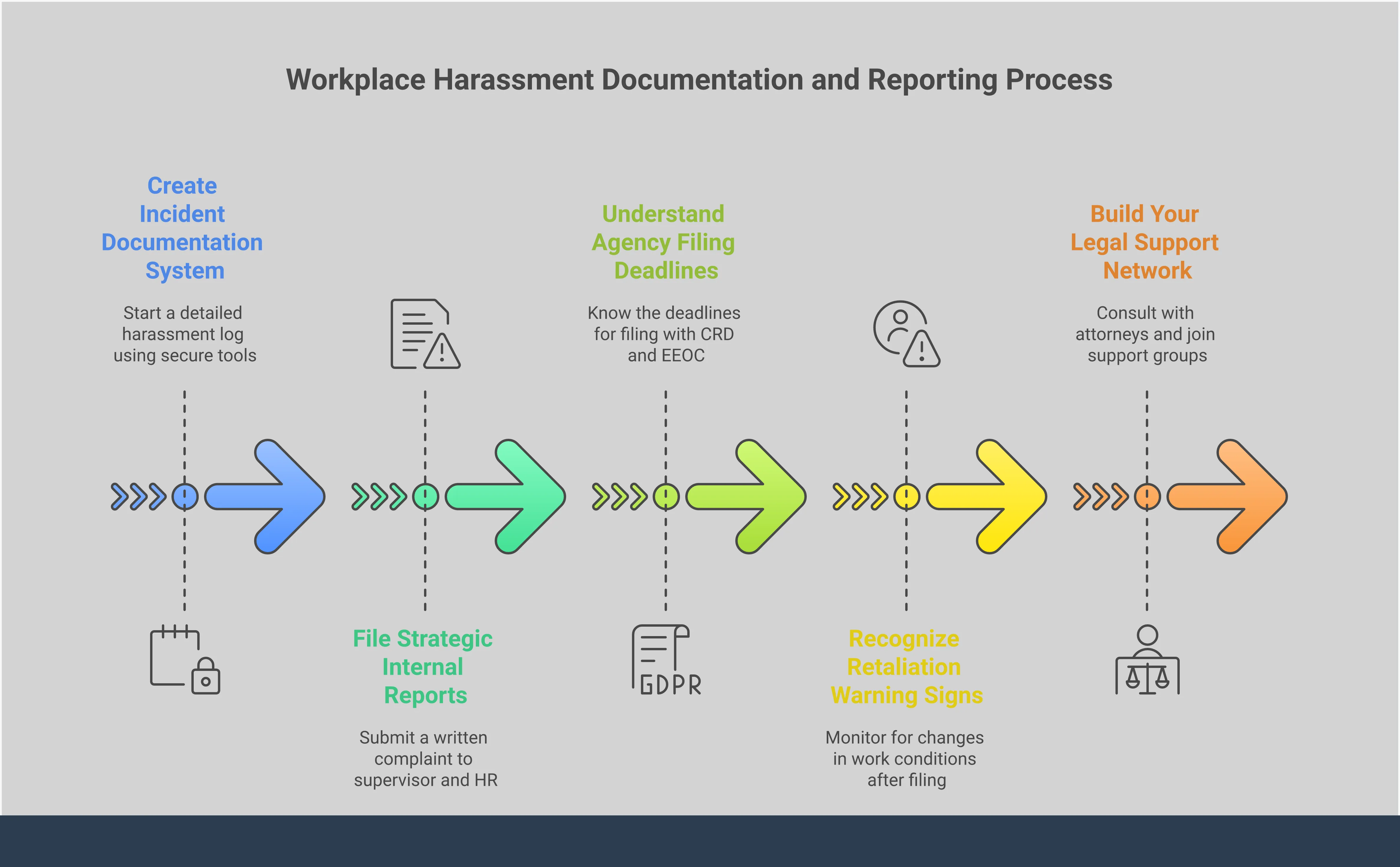
How to Effectively Report Workplace Harassment
Deciding to report harassment is a significant step, and knowing how to do it effectively can make all the difference. You have several options for making your voice heard, from internal company channels to state and federal agencies. Each path has its own process and timeline, so understanding them helps you choose the best course of action for your situation. Let’s walk through the primary ways you can report workplace harassment and seek a resolution.
Reporting Within Your Company
Your first option is often to report the issue internally. Most companies have a formal process for this, usually through the Human Resources department or a trusted supervisor. California law actually requires employers to have anti-harassment policies and a clear procedure for complaints. When you make your report, do it in writing. An email is a great way to create a time-stamped record of your complaint. Clearly state the facts: what happened, who was involved, when and where it occurred, and if there were any witnesses. Keep a copy of this report for your personal records. A formal internal complaint officially puts your employer on notice and legally obligates them to investigate and stop the behavior, which is a critical step in addressing a hostile work environment.
Filing a Complaint with the State (CRD)
If your employer doesn’t resolve the issue or you’re not comfortable reporting internally, you can file a complaint with California’s Civil Rights Department (CRD). This is the state agency responsible for enforcing laws that protect you from harassment and discrimination at work. You generally have three years from the date of the last harassing incident to file a complaint with the CRD. The process starts by submitting an intake form on the CRD website, after which they will contact you for an interview to discuss your case. Filing with the CRD is a formal way to assert your rights and can trigger a state-led investigation into the unlawful discrimination you experienced.
Contacting the Federal Agency (EEOC)
Another avenue is the U.S. Equal Employment Opportunity Commission (EEOC), the federal agency that enforces anti-harassment laws nationwide. The deadline for filing with the EEOC is shorter than the state’s—typically 180 days from the incident, though it can be extended to 300 days in states like California that have their own anti-discrimination agencies. Fortunately, the CRD and EEOC have a “work-sharing agreement.” This means if you file with one agency, your complaint can be “dual-filed” with the other, so you don’t have to go through the entire process twice. An experienced lawyer can help you understand the nuances of state versus federal employment law and which agency is the best starting point for your specific claim.
Knowing When to Call an Employment Lawyer
You can contact an employment lawyer at any point in this process. It is especially important to seek legal advice if your employer ignores your complaint or, even worse, punishes you for speaking up. This is known as retaliation, and it is illegal. An experienced attorney can provide a confidential assessment of your situation, explain your legal options, and help you gather the evidence needed to build a strong case. They can guide you through filing with the CRD or EEOC and represent you in any negotiations or legal proceedings. Taking that step to get professional advice ensures your rights are protected and you have a dedicated advocate in your corner.
What to Expect During a Harassment Investigation
Reporting harassment is a huge step, and it’s natural to wonder what comes next. The internal investigation process can feel intimidating, but knowing what to expect can help you feel more in control. Your employer has a legal duty to investigate your complaint promptly and thoroughly. While every company’s process is a little different, the core components are generally the same. Here’s a breakdown of what you should anticipate.
Know Your Rights During the Process
First, take a deep breath and remember your rights. Your employer is legally required to take your complaint seriously and conduct a fair, impartial investigation. The most important right you have is the protection against retaliation. You cannot be fired, demoted, or punished in any way for making a good-faith complaint about harassment. This protection is in place so you can speak up without fear. If you feel like you’re being treated differently after filing your report, document it immediately. Your voice matters, and the law is designed to ensure it can be heard safely.
What to Expect Regarding Confidentiality
Your employer should handle your complaint with as much confidentiality as possible. This doesn’t mean no one will ever know; for a proper investigation to happen, the investigator will need to speak with you, the person you accused, and any potential witnesses. However, the details should only be shared with people on a strict “need-to-know” basis. The goal is to protect you from gossip and further harassment while allowing the company to gather the necessary facts. A company that handles this process discreetly and professionally is a good sign they are taking your complaint about a hostile work environment seriously.
Possible Timelines and Outcomes
Investigations don’t follow a set schedule; they can take anywhere from a few days to several weeks, depending on the complexity of the situation. Once it’s complete, your employer should inform you that the investigation has concluded and what, if any, remedial actions will be taken. If they find that harassment occurred, consequences could range from disciplinary action against the harasser to company-wide training. If the company fails to conduct a proper investigation or doesn’t take appropriate action, they can be held liable. If you’re unsatisfied with the process or the result, it might be time to discuss your options with an experienced employment lawyer to understand your next steps.
Frequently Asked Questions
What’s the difference between a difficult boss and illegal harassment? This is a common and important question. While dealing with a demanding or unpleasant manager is stressful, it isn’t always illegal. The key difference is the reason for the behavior. Illegal harassment is unwelcome conduct that is based on a protected part of your identity, like your gender, race, age, or disability. For it to be against the law, the behavior must be severe or pervasive enough to create an abusive work environment. A boss who is an equal-opportunity jerk might just be a bad manager, but a boss who targets you with offensive comments because of your protected status is crossing a legal line.
Does the harassment have to come from my supervisor to be illegal? No, harassment can come from anyone in your workplace. While we often think of a boss harassing an employee, the law recognizes that a hostile environment can be created by a coworker, a manager in another department, or even a non-employee like a client or customer. Your employer has a legal responsibility to provide a safe workplace, and that duty extends to protecting you from harassment, regardless of who the perpetrator is. The important thing is that once your employer knows or should know about the harassment, they must take action to stop it.
What if I’m afraid of being fired for reporting harassment? It is completely understandable to fear for your job, but you should know that the law is on your side. California has strong anti-retaliation laws that make it illegal for your employer to punish you in any way for making a good-faith complaint about harassment. This means you cannot be fired, demoted, denied a promotion, or otherwise treated poorly because you spoke up. If your employer does take negative action against you after you report an issue, that is a separate legal violation called retaliation.
Do I have to report the issue to my company before I can file a legal claim? It is almost always a good idea to report the harassment internally by following the procedure in your employee handbook. This officially puts your employer on notice and gives them a chance to investigate and fix the problem, which they are legally required to do. Formally reporting it also strengthens your legal position later on. However, if you feel unsafe reporting internally or if your company has no clear process, you can still seek legal advice or file a complaint directly with a state agency like the Civil Rights Department (CRD).
What kind of proof do I need to report harassment? You don’t need a video recording or a signed confession to have a valid claim. The most powerful evidence is often a detailed, consistent record of what happened. This includes a personal log with dates, times, locations, what was said or done, and who witnessed the incidents. Save any harassing emails, texts, or other digital messages. The goal is to create a clear timeline that shows a pattern of unwelcome conduct. Your own credible testimony is also a critical piece of evidence.
Related Articles
- How to Prove Disability Discrimination at Work
- Real Gender Discrimination Cases in the Workplace
- Can You Sue for Medical Discrimination? A Step-by-Step Guide
Being harassed at work?
California law protects you, and a harasser can be held personally liable. Get a free, confidential case review.
Request Your Free Consultation