
Many people believe that if they hand in their resignation, they forfeit their right to take legal action against their employer. In many cases, that’s true. But what if you didn’t really have a choice? What if your resignation was a direct result of unresolved harassment, a sudden demotion, or other unbearable working conditions? The law has a name for this: constructive discharge. It re-frames your departure not as quitting, but as a form of wrongful termination. Proving it is complex and requires showing your employer’s actions left you with no other reasonable option. That’s where a constructive discharge lawyer becomes your most important ally.
Key Takeaways
- Your Resignation Might Be a Wrongful Termination: Constructive discharge isn’t just quitting a job you dislike; it’s when an employer makes working conditions so intolerable that leaving becomes your only realistic choice. The law views this as a forced resignation.
- Document Everything to Build Your Case: Proving you were forced out requires strong evidence. Keep a private log of all incidents, save relevant emails and performance reviews, and identify colleagues who witnessed the mistreatment.
- Consult an Attorney Before You Quit: Speaking with an employment lawyer before you resign is the most important step you can take. They can assess your situation, advise you on how to protect your rights, and help you build a stronger case from the start.
What Is Constructive Discharge? (And When You Need a Lawyer)
Leaving a job is a big decision, but sometimes it feels like you don’t have a choice. If your work environment has become so unbearable that quitting feels like your only option, you might be experiencing what the law calls “constructive discharge.” This isn’t the same as simply resigning because you found a better opportunity or were unhappy with your commute. Instead, it’s a situation where your employer’s actions—or inaction—effectively forced you out the door. This legal concept recognizes that some resignations are not truly voluntary.
Understanding constructive discharge is the first step to protecting your rights. It’s a complex area of employment law, and proving it requires showing that the working conditions were so intolerable that any reasonable person in your shoes would have felt compelled to resign. It essentially turns your resignation into a form of wrongful termination, giving you legal recourse you wouldn’t have if you simply quit. If you feel you’ve been pushed out of your job due to a hostile or illegal work environment, it’s crucial to know the signs and understand your legal options. Below, we’ll break down what constructive discharge really means, how to spot it, and clear up some common misconceptions.
Constructive Discharge vs. Quitting: What’s the Difference?
On the surface, constructive discharge looks like quitting. You’re the one who submits the resignation letter. But the key difference lies in the reason for your departure. Quitting is a voluntary act, while constructive discharge happens when an employer makes your working conditions so intolerable that you’re essentially forced to leave. The decision to resign is no longer a free choice but a necessary escape from an unbearable situation.
Think of it this way: your employer didn’t fire you outright, but their actions made it impossible for you to continue working. This could be a sudden, drastic pay cut, a demotion to a demeaning role, or ignoring serious harassment. In these cases, the law may view your resignation as a wrongful termination, because the employer created the conditions that led to it.
Signs You Were Forced to Resign
It can be hard to tell if a difficult work situation crosses the line into constructive discharge. While every case is unique, there are common patterns of employer behavior that can create an intolerable environment. The key is that these aren’t just minor annoyances; they are significant, negative changes to your employment conditions.
Some clear signs include:
- A significant demotion or reduction in job responsibilities
- A substantial cut in your pay or benefits
- Being transferred to a less desirable position or location
- Enduring a pattern of unresolved harassment or discrimination
- Being forced to work in unsafe or illegal conditions
- An employer’s refusal to address a hostile work environment
If you’re experiencing these issues, especially after reporting them with no resolution, you may have been constructively discharged.
Common Myths About Constructive Discharge
There’s a lot of confusion surrounding constructive discharge, which can prevent people from seeking the help they need. Let’s clear up a few common myths.
First, many believe that any uncomfortable work situation qualifies. This isn’t true. A demanding boss or a stressful project, while unpleasant, doesn’t typically meet the legal standard. The conditions must be objectively intolerable. Second, people often assume it’s the same as voluntarily resigning. As we’ve covered, the law sees it differently when your employer’s actions force your hand.
Finally, there’s a myth that constructive discharge is easy to prove. In reality, it can be challenging. You must demonstrate a clear link between the employer’s unlawful actions, like ongoing racial discrimination, and your decision to resign. This is why documenting everything and getting legal advice is so important.
How a Lawyer Can Help Your Constructive Discharge Case
Feeling forced out of your job is a disorienting and stressful experience. You might be questioning whether your situation qualifies as constructive discharge and what, if anything, you can do about it. This is where an experienced employment lawyer becomes your most important ally. Proving that you were compelled to resign because of intolerable working conditions is a complex legal challenge. It requires more than just feeling unhappy or mistreated; it demands evidence that your employer knowingly created or permitted conditions so unbearable that any reasonable person would have felt they had no choice but to quit.
An attorney can help you make sense of your situation from a legal perspective. They will cut through the confusion and provide a clear, objective assessment of your claim. From there, they become your strategist and advocate, managing the intricate details of the legal process so you can focus on your next career move. A lawyer will help you build a strong case, handle all communications with your former employer, and fight to hold them accountable for their actions. They ensure your rights are protected at every turn, providing the support and expertise you need to seek justice for the wrongful termination of your employment.
Evaluate Your Case and Explain Your Options
The first thing a lawyer will do is listen to your story. They’ll review the circumstances that led to your resignation and determine if your case meets the legal standard for constructive discharge in California. This initial evaluation is critical. An attorney can distinguish between a difficult work environment and one that is legally defined as “intolerable.” They will analyze the facts, identify the strengths and weaknesses of your potential claim, and explain your legal options in plain language. This might include filing a complaint with a government agency or pursuing a lawsuit. This clarity helps you make an informed decision about how to proceed.
Help You Gather Evidence and Documentation
A successful constructive discharge claim depends on strong evidence. While you may have a general sense of what happened, a lawyer knows exactly what kind of documentation is needed to build a compelling case. They will guide you in gathering crucial evidence, which could include emails, text messages, performance reviews, witness statements, and personal notes detailing specific incidents. If you were subjected to a hostile work environment, your attorney will help you document the pattern of harassment or discrimination that forced you to leave. They ensure your evidence is organized, preserved, and presented effectively.
File Your Claim and Represent You
Once you decide to move forward, your lawyer handles all the complex legal legwork. This includes drafting and filing the necessary legal documents, adhering to strict deadlines, and formally communicating with your former employer and their attorneys. Your lawyer acts as your representative in all proceedings, from settlement negotiations to courtroom litigation. They articulate your case, argue on your behalf, and manage the adversarial aspects of the process. This allows you to step back from the conflict while knowing a professional is tirelessly advocating for your best interests.
Protect You From Employer Retaliation
Even after you’ve left the company, you might worry about your former employer trying to harm your career by giving bad references or otherwise interfering with your job search. A lawyer can help protect you from this kind of post-employment retaliation. If you suspect your former employer is trying to sabotage your future opportunities, your attorney can intervene. They can send a formal letter demanding they stop or, if necessary, take further legal action to protect your professional reputation and ensure you can move forward without unfair interference.
How to Choose the Right Constructive Discharge Lawyer
Finding the right legal partner is a critical step when you’ve been forced out of your job. The lawyer you choose can make all the difference in the outcome of your case. It’s not just about finding someone with a law degree; it’s about finding an advocate who understands the specifics of your situation and is dedicated to fighting for your rights. When you start your search, focus on a few key areas to ensure you’re partnering with someone who can truly help you. Think about their specific expertise, their history of success, and how they handle the financial side of things.
Look for Specific Experience in Employment Law
Constructive discharge is a complex area of employment law, not something a general practice attorney typically handles. You need a lawyer who lives and breathes this stuff. Look for a firm that focuses exclusively on representing employees. An attorney with deep experience in this niche will understand the specific evidence needed to prove your employer made your work environment intolerable. They’ll know the tactics employers use and how to counter them effectively. This specialized knowledge is invaluable when building a strong case and fighting for the compensation you deserve after being forced to resign.
Check Their Track Record and Communication Style
Once you’ve found a few specialists, it’s time to dig a little deeper. What is their track record with cases like yours? Look for client testimonials or case results that show a history of success. But expertise isn’t everything—you also need an advocate you can trust. During your initial consultation, pay attention to their communication style. Do they listen to your story? Do they explain your legal options in a way you can understand? You’ll be working closely with this person during a very stressful time, so it’s important to find someone who is responsive, clear, and makes you feel supported. Getting to know the attorneys at our firm is a great first step.
Ask About Their Fee Structure and Payment Options
Don’t be shy about discussing money. A reputable lawyer will be transparent about their fees from the very beginning. Ask how they structure their payments. Many employment lawyers work on a contingency fee basis, which means you don’t pay any attorney’s fees unless they win your case. This arrangement makes legal help accessible, even if you’re facing financial uncertainty after leaving your job. Be sure to ask if there are any other costs you might be responsible for, like filing fees. Understanding the financial side of things upfront will help you make a confident decision and avoid any surprises down the road, which is a key part of pursuing a wrongful termination claim.
Understanding the Costs of Hiring a Lawyer
One of the biggest hurdles that can stop someone from seeking legal help is the fear of cost. It’s completely understandable to worry about how you’ll afford a lawyer, especially when you’ve just lost your income. The good news is that there are different payment structures designed to make legal representation accessible. An experienced employment lawyer will be transparent about their fees and help you understand the financial side of your case from the very beginning. Let’s walk through the most common options so you know what to expect.
How Contingency Fees Work
Many employment law firms, including Bluestone Law, work on a contingency fee basis. This is a “no win, no fee” arrangement. It means you don’t pay any attorney’s fees upfront. Instead, your lawyer’s payment is a percentage of the money they recover for you through a settlement or court award. If you don’t win your case, you don’t owe any attorney’s fees. This approach allows you to pursue justice without financial risk, ensuring that your ability to stand up for your rights isn’t limited by your bank account. In fact, most wrongful termination lawyers use this model because it aligns their goals directly with yours: getting you the best possible outcome.
What to Expect from Hourly Rates and Other Expenses
While contingency fees are common, some lawyers operate on an hourly basis. If you encounter this, it’s important to understand the costs. These hourly rates typically range from $200 to $500, depending on the attorney’s experience, location, and the complexity of your case. In some situations, a lawyer might charge a flat fee for a specific, defined task, like reviewing a severance agreement. Beyond attorney fees, a case can also involve other costs like court filing fees or expenses for expert witnesses. A reputable lawyer will always provide a clear fee agreement that outlines all potential costs before you commit to anything.
Recovering Damages and Compensation
When you’re thinking about costs, it’s also helpful to consider what you stand to gain. A successful constructive discharge claim can help you recover significant compensation for your losses. This can include back pay for the wages you lost, future lost wages, and damages for the emotional distress you suffered. These cases have serious financial implications for employers, too. The average cost for an employer to defend an employment lawsuit can be substantial, which is why many choose to settle. Your lawyer will help you calculate the full extent of your damages to ensure you are fighting for the compensation you truly deserve.
How to Build a Strong Case for Constructive Discharge
Winning a constructive discharge case hinges on your ability to prove that you didn’t just quit—you were forced out. Unlike a direct firing, the burden of proof rests on you to show that your employer made the working conditions so unbearable that any reasonable person would have felt compelled to resign. This isn’t about a single bad day or a difficult boss; it’s about demonstrating a pattern of intolerable conduct.
Building a strong case is like constructing a building: it requires a solid foundation and careful assembly of every piece of evidence. Each document, email, and witness account serves as a building block. Your goal is to create a clear and compelling picture for a judge or jury, showing that your resignation was a foreseeable consequence of your employer’s actions or inaction. Think of it as a form of wrongful termination where the exit was orchestrated by the employer, even if you were the one who had to sign the resignation letter. The following steps are crucial for laying that foundation.
Document Everything: Before and After You Resign
Your most powerful tool in a constructive discharge case is a detailed, contemporaneous record of events. Start a private journal—on your personal computer or in a notebook, never on a work device—and log every incident that contributes to the hostile environment. For each entry, include the date, time, and location. Write down exactly what was said or done, who was present, and how it made you feel. This consistent documentation creates a timeline that can reveal a pattern of discrimination or harassment that might otherwise be dismissed as isolated incidents. Continue this practice even after you resign to record any subsequent communications or events.
Save Workplace Communications and Find Witnesses
Hard evidence is essential for corroborating your personal log. Become an archivist for your own case by saving every relevant piece of communication. This includes emails, text messages, performance reviews, formal complaints you’ve made, and even notes from meetings. Forward important emails from your work account to a personal email address so you don’t lose access to them. Additionally, take note of any colleagues who witnessed the mistreatment. While it can be difficult for coworkers to get involved, a witness who can confirm your account of events can be incredibly valuable. Identifying potential witnesses who can speak to the hostile work environment will significantly strengthen your claim.
Partner with Your Lawyer to Build Your Case
Gathering evidence is the first step, but organizing it into a persuasive legal argument is where an experienced lawyer becomes invaluable. To win your case, you generally need to prove two things: that the working conditions were so intolerable a reasonable person would have resigned, and that your employer intentionally created or knowingly permitted those conditions. An attorney can help you connect your documentation to these legal standards. They will act as your strategic partner, helping you assemble your evidence, identify key facts, and build a compelling narrative that clearly demonstrates you were forced to leave. You don’t have to face this alone; partnering with a skilled employment law attorney is the best way to ensure your case is strong.
When Is the Right Time to Contact a Lawyer?
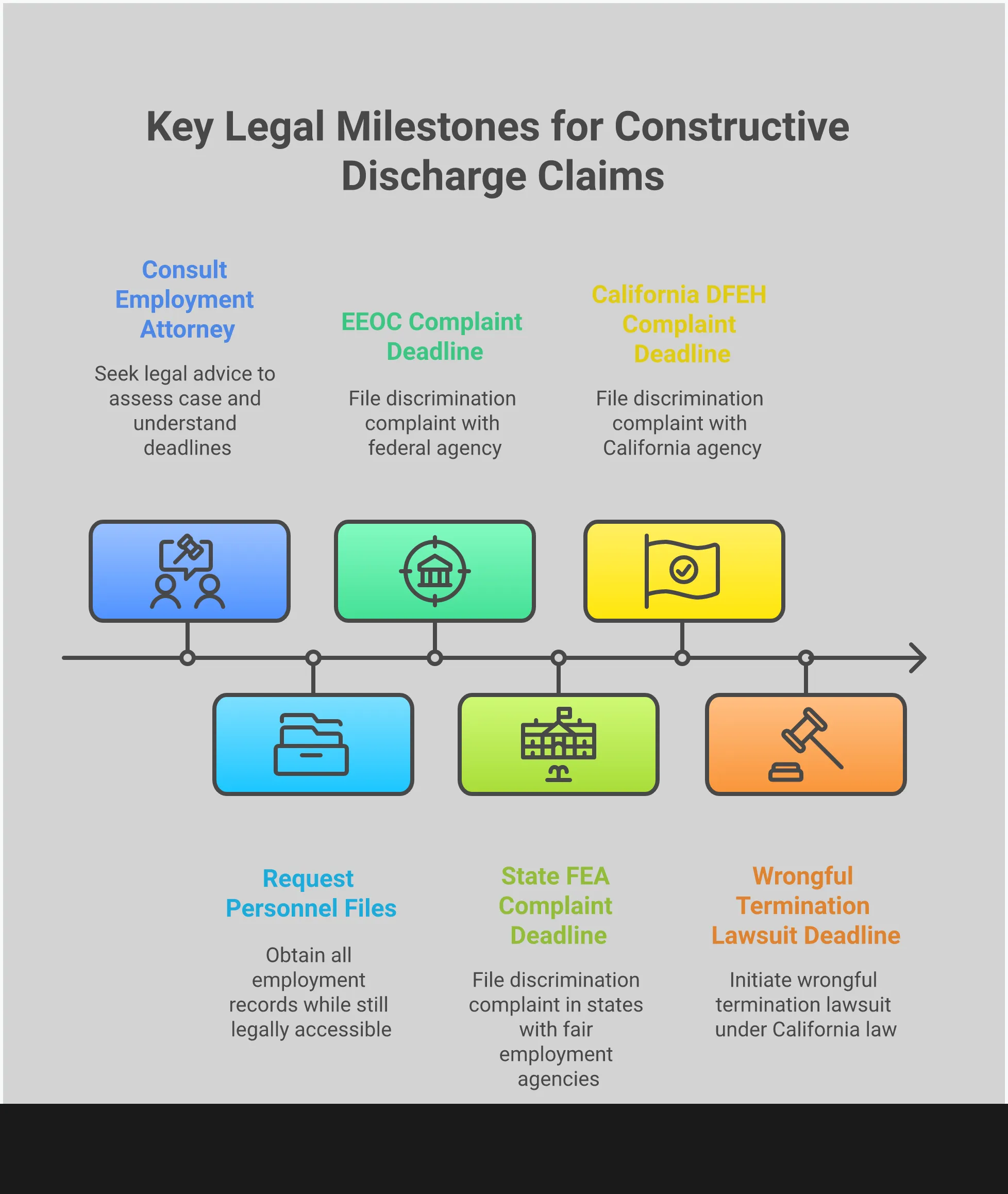
When you’re dealing with an unbearable work situation, figuring out your next move can feel overwhelming. If you’re wondering when to bring a lawyer into the picture, the simplest answer is: as soon as possible. Timing is a critical factor in a constructive discharge case. Acting quickly ensures you don’t miss important deadlines, helps you make strategic decisions before you resign, and allows you to start gathering the right evidence from the very beginning. An experienced attorney can provide clarity and a plan of action when you need it most, turning a confusing and stressful situation into a manageable process.
Know the Deadlines: Statutes of Limitations
In the legal world, deadlines are everything. A “statute of limitations” is a strict time limit for filing a lawsuit. If you miss this window, you could lose your right to seek justice permanently, no matter how strong your case is. These deadlines vary depending on the specifics of your situation, such as whether your case involves discrimination or other illegal actions. For constructive discharge, the clock usually starts ticking on the day you resign. Contacting a lawyer early ensures you understand the specific deadlines that apply to your claim and can take action before it’s too late.
Should You Act Before or After You Resign?
This is one of the most important questions, and the answer is clear: you should speak with an employment lawyer before you resign. Quitting your job is a major step, and once it’s done, you can’t undo it. A lawyer can assess your situation and tell you whether the conditions you’re facing legally meet the standard for a hostile work environment that would support a constructive discharge claim. They can also advise you on steps you might need to take before leaving—like reporting the issue internally—to strengthen your case. Acting without legal guidance can sometimes weaken your position, so getting advice beforehand is key to making an informed decision.
Protect Your Rights Every Step of the Way
A successful constructive discharge claim depends on solid evidence. You need to show that your employer made your working conditions so intolerable that any reasonable person would have felt forced to quit. This is where documentation becomes your best friend. Before you do anything else, start keeping a detailed record of every incident, including dates, times, what was said or done, and who was present. Save any relevant emails, text messages, performance reviews, or other communications. A lawyer can guide you on exactly what to document and how to preserve it, helping you build a compelling case that protects your rights and demonstrates why you had no other choice but to leave.
Related Articles
- How to Write a Constructive Dismissal Resignation Letter
- Constructive Dismissal California: A Complete Guide
- Canoga Park Employment Lawyer – Bluestone Law
Frequently Asked Questions
How do I know if my situation is just a “bad job” or actual constructive discharge? This is a common and important question. The legal standard for constructive discharge is higher than just having a demanding boss or a stressful workload. The key is whether the working conditions were so objectively awful that any reasonable person in your position would feel they had no other choice but to quit. Think of it as a pattern of negative behavior, like ongoing harassment that management ignores, a sudden and drastic pay cut, or a demotion designed to humiliate you. A single unpleasant incident usually isn’t enough.
Do I have to report the problem to my employer before I can claim constructive discharge? In most cases, yes. You generally need to show that you gave your employer a chance to fix the intolerable situation. Reporting the issue to HR or your manager and documenting their response (or lack thereof) is a critical step. This demonstrates that you tried to resolve the problem and that the employer was aware of the conditions but failed to act, which strengthens your claim that you were forced to leave as a last resort.
What kind of compensation can I receive if I win my case? If your constructive discharge claim is successful, it’s treated like a wrongful termination. This means you may be able to recover compensation for your losses, which can include lost wages from the time you were forced to quit, the value of lost benefits, and damages for the emotional distress you experienced. In some situations involving serious misconduct, punitive damages may also be awarded to punish the employer.
I was offered a severance package. Does that affect my ability to file a claim? It absolutely can. Accepting a severance package often requires you to sign an agreement that releases the company from all future legal claims, including one for constructive discharge. It is crucial that you do not sign anything before having an experienced employment lawyer review the document. An attorney can help you understand what rights you might be signing away and advise you on whether the offer is fair given the circumstances of your departure.
What if I can’t find another job right away? Does that impact my case? Not finding a new job immediately doesn’t hurt your case, but you are expected to actively look for one. This is known as the “duty to mitigate damages,” which means you have to make a reasonable effort to reduce your financial losses by seeking comparable employment. Be sure to keep detailed records of your job search, including applications you submit and interviews you attend, as this will be important for calculating any potential back pay you may be owed.
Think you were wrongfully terminated?
Get a free, confidential case evaluation from our experienced employment law attorneys.
Request Your Free Consultation