
That persistent headache, the sleepless nights, the knot in your stomach before every shift—these aren’t just random symptoms. They are often your body’s response to a toxic work environment. Harassment doesn’t just impact your mind; it takes a physical toll, creating chronic stress that can wear you down. Recognizing these physical and mental signs is crucial to addressing the emotional trauma after workplace harassment for Alameda County employees. Your well-being matters, and the law agrees. We’ll explore how to connect these symptoms to your work situation, what your rights are under California law, and how to gather the evidence needed to build a strong claim while prioritizing your health and recovery.
Key Takeaways
- Identify when mistreatment becomes illegal harassment: In California, harassment isn’t just bad behavior; it’s unwelcome conduct based on a protected part of your identity (like race, gender, or disability) that is severe or pervasive enough to create an abusive work environment.
- Your personal records are your strongest evidence: To build a solid emotional distress claim, you must connect the harassment to the harm it caused. Do this by keeping a detailed journal, saving all relevant communications, and collecting medical or therapy records that validate your experience.
- Know the official steps for taking legal action: You must file a complaint with the California Civil Rights Department (CRD) before you can sue your employer. An employment lawyer can help you meet critical deadlines and protect you from illegal retaliation for speaking up.
What Counts as Workplace Harassment in California?
It’s easy to think of harassment as just inappropriate jokes or comments, but in California, the legal definition is much broader. At its core, workplace harassment is any unwelcome conduct that is based on who you are. It’s behavior that’s offensive, intimidating, or hostile, and it crosses the line from annoying to illegal when it’s tied to your identity and creates an environment where you can’t do your job effectively. Understanding what qualifies is the first step toward knowing your rights and taking action.
Understanding Protected Characteristics
In California, harassment is illegal when it targets you because of a “protected characteristic.” Think of these as parts of your identity that the law shields from discrimination. This includes your race, religion, gender, age (if you’re over 40), disability, sexual orientation, gender identity, medical condition, and marital status, among others. Essentially, the law says your employer can’t allow you to be mistreated because of these personal attributes. The harassment doesn’t have to come from a supervisor, either. It can be from a co-worker, a manager in another department, or even a non-employee, like a client or customer. The key is that the unwelcome behavior is happening because of one of these protected traits.
Recognizing Harassing Behavior
Harassing behavior can take many forms, and it isn’t always sexual. It can be verbal, like slurs, offensive jokes, or derogatory comments. It can be physical, such as unwanted touching, assault, or gestures that are threatening. It can also be visual, like displaying offensive posters, cartoons, or images. Even subtle actions, like repeatedly isolating someone or sabotaging their work, can contribute to a hostile work environment if they are based on a protected characteristic. The behavior doesn’t have to be directed at you, either. Witnessing the harassment of others can also create an abusive work environment for you.
Hostile Work Environment vs. Quid Pro Quo: What’s the Difference?
Harassment generally falls into two main categories. The first is a “hostile work environment.” For conduct to be illegal under this category, it must be either “severe” or “pervasive.” A severe act might be a single, egregious incident, like a physical assault or a direct threat. Pervasive conduct refers to a pattern of less severe incidents that, taken together, make the workplace intimidating or abusive. The second category is “quid pro quo” harassment, a Latin phrase meaning “this for that.” This typically involves a supervisor or someone in a position of power demanding sexual favors in exchange for a job benefit (like a promotion or a raise) or to avoid a negative action (like being fired). This type of sexual harassment is illegal even if it only happens once.
Spotting the Signs of Emotional Trauma from Harassment
Workplace harassment doesn’t just stay at work. Its effects can follow you home, impacting your thoughts, your health, and your relationships. Recognizing the toll it’s taking is the first step toward taking action. Emotional trauma from a toxic work environment can show up in ways that are easy to dismiss as just “stress,” but these signs are often your mind and body telling you that something is seriously wrong. If you’re feeling unlike yourself and your job is the common denominator, it’s worth paying attention to these changes. Understanding these signs can help you validate your experience and see the situation for what it is: unacceptable and harmful.
The Mental and Emotional Impact
When you’re dealing with harassment day in and day out, your mental well-being often takes the first hit. You might notice a constant feeling of anxiety or a sense of dread before your workday even begins. This can spiral into depression, mental anguish, and persistent irritability that affects your interactions both in and out of the office. Many people in a hostile work environment report difficulty concentrating, restlessness, and sleepless nights. In more severe cases, the trauma can lead to recurring nightmares or flashbacks, replaying the distressing events when you least expect it. These aren’t just signs of a bad week; they are symptoms of genuine emotional distress.
How Stress Shows Up in Your Body
Your body often keeps a physical record of emotional stress. Chronic harassment at work creates chronic stress, which can manifest in very real physical symptoms. You might find yourself dealing with frequent headaches, stomach problems, or unexplained muscle aches and tension. Constant fatigue that no amount of sleep can fix is another common sign. This happens because your body is stuck in a “fight or flight” mode, and the prolonged release of stress hormones can wear you down. These physical ailments aren’t just in your head—they are your body’s response to an unhealthy and threatening environment.
Changes at Work and in Your Social Life
Emotional trauma can also change how you interact with the world around you. At work, you might become withdrawn, avoiding colleagues or projects you once enjoyed. A common signal of distress is the constant fear that you’ll be fired for the smallest misstep, which can make you hesitant to speak up or take risks. This fear is often linked to the possibility of facing retaliation at work for reporting the issue. Outside of work, you may find yourself pulling away from friends and family or losing interest in hobbies. If you’re canceling plans and isolating yourself because you’re too drained or anxious, it’s a clear sign that your work life is negatively impacting your personal life.
Know Your Rights as an Alameda County Employee
When you’re dealing with the emotional fallout of workplace harassment, the legal system can feel overwhelming. But it’s important to know that California has strong laws designed to protect you. Understanding your rights is the first step toward holding your employer accountable and getting the justice you deserve. These protections are not just suggestions; they are legal requirements your employer must follow.
Your Protections Under FEHA
The most important law on your side is California’s Fair Employment and Housing Act, or FEHA. Think of it as a shield that protects employees from workplace discrimination and harassment. This law makes it illegal for an employer to harass you based on protected characteristics like your race, gender, religion, disability, sexual orientation, or age (if you’re over 40). Under FEHA, your employer has a legal duty to prevent harassment, thoroughly investigate any complaints you make, and take decisive action to stop the behavior. If they fail to do this, they can be held legally responsible for the harm you’ve suffered.
Can You Sue for Emotional Distress?
The short answer is yes. In California, you can absolutely sue your employer for the emotional distress caused by workplace harassment. The law recognizes that the harm from harassment isn’t just financial; it takes a significant mental and emotional toll. A claim for emotional distress allows you to seek compensation for things like anxiety, depression, sleepless nights, and other psychological impacts you’ve endured. To build a strong case, it’s crucial to document everything—from the harassing incidents to your therapy appointments. An experienced attorney can help you understand the evidence you’ll need and guide you through the process of filing a claim for a hostile work environment.
Safeguards Against Retaliation
Many people hesitate to report harassment because they’re afraid of making things worse. They worry about being fired, demoted, or ostracized. The law understands this fear, which is why it explicitly protects you from retaliation. It is illegal for your employer to punish you in any way for reporting harassment or participating in an investigation. If you report harassment and your boss suddenly cuts your hours, assigns you to undesirable tasks, or terminates your employment, you may have a retaliation claim in addition to your harassment claim. You have the right to speak up without fear of losing your job.
How to Document Your Emotional Distress Claim
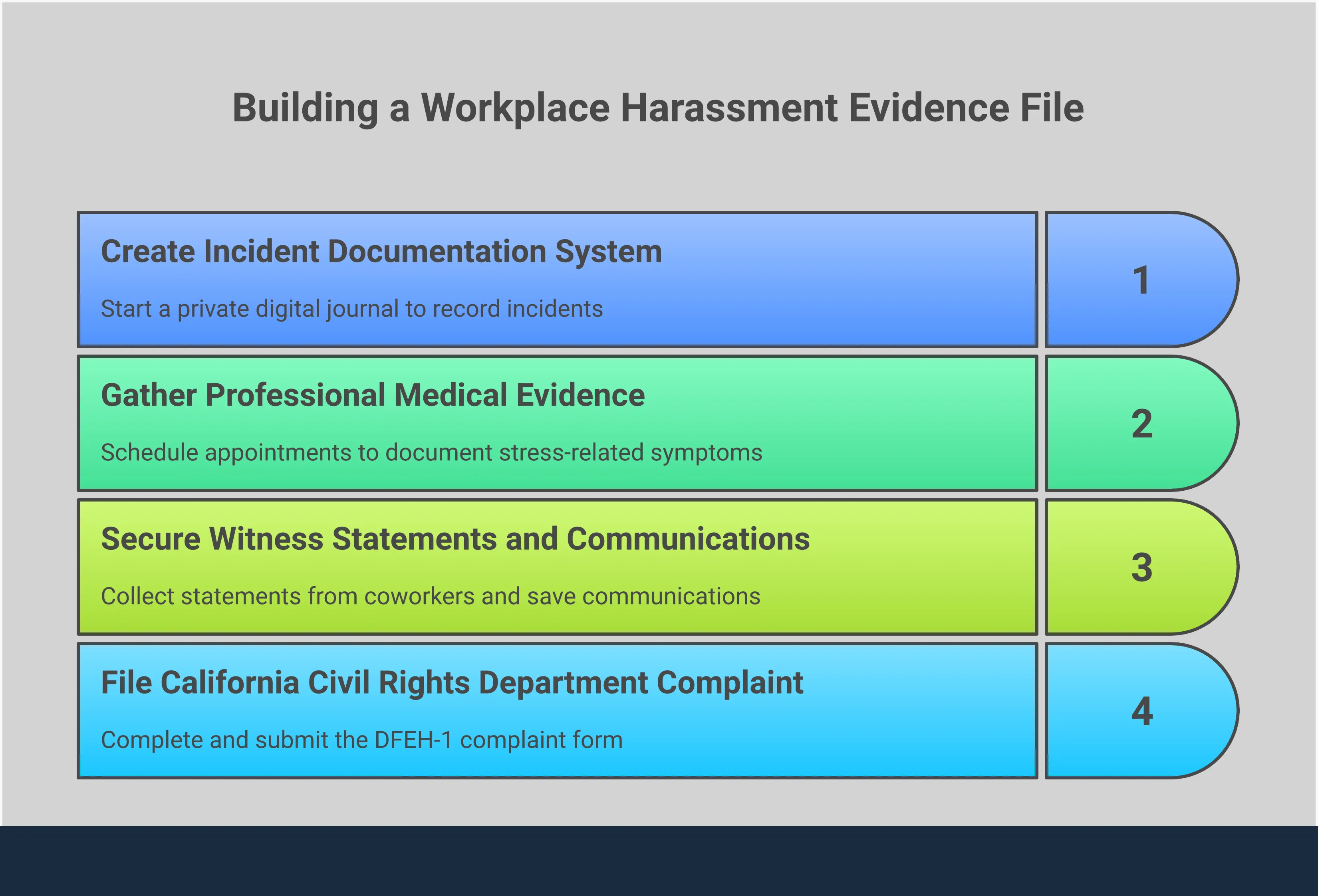
When you’re dealing with the emotional fallout from workplace harassment, the idea of gathering paperwork can feel overwhelming. But creating a clear record is one of the most powerful steps you can take to build your case. Proving emotional distress isn’t about simply saying you were hurt; it’s about showing the tangible impact the harassment had on your well-being. Think of it as creating a story backed by facts, where each piece of evidence is a chapter that illustrates what you’ve been through. This documentation helps connect the illegal workplace behavior to the harm you’ve experienced, giving your claim the strength it needs. Without it, your claim can be seen as one person’s word against another’s. With it, you provide a clear, factual timeline that supports your account and demonstrates the severity of the situation. Strong evidence is what transforms a personal experience into a solid legal case for a hostile work environment. By methodically collecting records, journals, and statements, you create a comprehensive picture that is difficult for an employer to dismiss. This process not only prepares you for potential legal action but can also be a way to regain a sense of control in a situation that has likely made you feel powerless.
Gathering Medical and Therapy Records
Your health records are a cornerstone of an emotional distress claim. If you’ve seen a doctor, therapist, or psychiatrist because of the stress from work, those records provide objective, professional validation of your experience. Be sure to collect any therapy notes, medical evaluations, prescriptions for medications like antidepressants, and official diagnoses. These documents serve as vital evidence to demonstrate the mental health impacts of the harassment you endured. They show a clear timeline and illustrate the steps you took to manage your health, which can be incredibly persuasive. This professional documentation is a critical piece of the puzzle when seeking justice for workplace discrimination.
The Power of a Personal Journal
While medical records are official, your personal account is what brings your story to life. Keeping a journal is a simple yet effective way to document your emotional state in real time. Each day, try to jot down how you’re feeling, describe specific incidents of harassment, and note how the situation is affecting your sleep, appetite, relationships, and ability to focus. These personal statements describing your emotional distress help establish credibility and provide a detailed narrative that official records might miss. Your journal becomes a consistent, contemporaneous record of your experience, making it a powerful tool in supporting your claim.
Collecting Witness Statements and Communications
You don’t have to build your case alone. Statements from others can significantly strengthen your claim. This could include colleagues who witnessed the harassing behavior or its effect on you. It could also be friends or family who can speak to the changes they observed in your personality or well-being since the harassment began. In addition to witness accounts, save any relevant communications. This means archiving emails, text messages, or performance reviews that either contain the harassment itself or show a decline in your work performance that corresponds with the mistreatment. Having strong, specific evidence from multiple sources creates a compelling and consistent story that is hard to ignore. This is especially important in cases where you may be facing retaliation at work.
How to File a Workplace Harassment Claim in Alameda County
Taking action against workplace harassment can feel like a monumental task, but you don’t have to figure it out alone. The process involves a few key steps designed to protect your rights and hold your employer accountable. By understanding the path forward—from reporting internally to filing a formal complaint—you can take control of the situation. Think of it as a roadmap: start with your employer, escalate to the state agency, and get legal guidance to support you along the way. Each step is crucial for building your case and seeking the justice you deserve.
Starting with Your Company’s HR
Your first stop is often your company’s Human Resources department. Most companies have an official process for reporting issues like harassment, and following it shows you gave them a chance to address the problem. When you report the incidents, be as specific as possible with dates, times, locations, and what was said or done. It’s important to know that reporting internally doesn’t prevent you from taking further action. According to Alameda County’s guidelines, you are entitled to file a complaint with external agencies at the same time. This step officially puts your employer on notice and is a critical piece of the paper trail for a hostile work environment claim.
Filing a Complaint with the CRD
Before you can file a lawsuit for harassment in California, you must file a formal complaint with the California Civil Rights Department (CRD). This is a mandatory step. The CRD is the state agency responsible for investigating claims of harassment, discrimination, and retaliation in the workplace. Filing a complaint, also known as “exhausting your administrative remedies,” is what gives you the right to sue later if the issue isn’t resolved. The CRD will investigate your claim, and this official process ensures your case is formally recognized by the state. This is a non-negotiable part of seeking legal recourse under California’s employment law protections.
Knowing When to Call a Lawyer
While you can start the process on your own, it’s wise to speak with an employment lawyer as soon as possible. The legal system is complex, and strict deadlines apply to harassment claims. An experienced attorney can help you understand your rights, ensure your complaint is filed correctly, and advise you on how to gather the strongest possible evidence. They can also protect you from employer retaliation, which is illegal but unfortunately still happens. Dealing with harassment is emotionally draining; having a legal advocate from a dedicated employment law firm ensures your interests are protected so you can focus on your well-being.
Coping with the Aftermath: How to Heal
Experiencing workplace harassment can leave deep emotional scars, and it’s important to know that healing is a process. Taking steps to protect your mental well-being is just as critical as taking legal action. You don’t have to carry this weight alone. There are confidential, professional, and personal resources available to help you process what happened and find your footing again.
Using Your Company’s Resources (EAPs)
Your company may offer a benefit called an Employee Assistance Program (EAP). Think of it as a confidential support service for personal and work-related challenges. Employee Assistance Programs are designed to help you manage the emotional fallout from harassment by connecting you with counseling, resources, and guidance tailored to your needs. Because these services are confidential, you can feel secure reaching out for help without it affecting your job. You can typically find information about your company’s EAP in your employee handbook or by speaking with a trusted HR representative.
Building Your Personal Support System
You don’t have to go through this alone. Creating a personal support system is a powerful step toward healing. This can include trusted friends, family members, or support groups where you have a safe space to share your experiences and feelings. As organizations like Crisis Support Services of Alameda County highlight, connecting with people who care can significantly aid in the recovery process. Leaning on people who will listen without judgment can provide the stability and validation you need to feel less isolated. Their support can be a powerful anchor during a difficult time.
Finding Local Mental Health Support
While friends and family are invaluable, the guidance of a mental health professional can provide you with specific tools to cope with trauma. Therapists and counselors are trained to help you process complex emotions and develop healthy coping strategies. Accessing local mental health resources is a vital step for anyone in Alameda County dealing with the effects of harassment. The county offers various services, including counseling and support for individuals of all ages. Organizations such as the City of Berkeley Family, Youth & Children Services and Jewish Family & Community Services of the East Bay provide essential support to help you heal.
Protect Your Peace and Your Career
Dealing with workplace harassment is a heavy burden, impacting both your mental well-being and your professional life. The chronic stress from a toxic environment can lead to serious mental health effects, including anxiety and depression. You might notice signs like sleeplessness, irritability, or a constant sense of dread before work. Your first priority should be your health. Many companies, including Alameda County, offer an Employee Assistance Program (EAP) that provides confidential support for you and your family. Don’t hesitate to use these resources or seek help from local support services. Your well-being comes first.
At the same time, you need to take steps to protect your career. This starts with documenting everything. Keep a private, detailed log of every incident of harassment. Note the date, time, location, what was said or done, and who was present. Save any relevant emails, text messages, or other communications. This record is not just for your own reference; it becomes crucial evidence if you decide to take formal action. Taking action is about reclaiming your power and ensuring you can continue your career in a safe and respectful environment. Consulting with an experienced employment lawyer can help you understand your legal rights and the best path forward, ensuring you meet all necessary deadlines to protect your claim.
Related Articles
- Sexual Harassment: A Guide to Your Rights & Options
- File a Sexual Harassment Claim: A Step-by-Step Guide
- What Is Workplace Sexual Harassment? A Clear Guide
- California sexual harassment lawyer – Bluestone Law
Frequently Asked Questions
What if the harassment isn’t a big, obvious event but a series of smaller comments or actions? This is a very common situation, and it absolutely can count as illegal harassment. The law recognizes that a hostile work environment is often created by a pattern of behavior that is “pervasive.” This means that a series of seemingly small incidents—like inappropriate jokes, subtle put-downs, or being consistently excluded—can add up over time to create an abusive atmosphere. The key is the cumulative effect of these actions and how they impact your ability to do your job.
Do I need an official diagnosis from a therapist to have a valid emotional distress claim? While having a formal diagnosis from a mental health professional is incredibly strong evidence, it is not an absolute requirement. Your own detailed journal describing your anxiety, sleepless nights, or depression is powerful. Testimony from friends or family who have noticed a change in your well-being can also support your claim. Even records from your primary doctor for stress-related physical symptoms like headaches or stomach issues can help demonstrate the toll the harassment has taken.
I’m afraid to report the harassment to HR. What if they don’t believe me or side with my harasser? This is a completely valid fear, and it’s one of the main reasons people hesitate to speak up. However, reporting the issue internally is a critical step. It creates an official record that you gave your employer a chance to fix the problem. If they fail to act or, worse, punish you for coming forward, their inaction or retaliation actually strengthens your legal case. Remember, it is illegal for your employer to retaliate against you for making a good-faith complaint.
What if I don’t have concrete evidence like emails or other witnesses? Many people find themselves in this position, as harassers are often careful not to leave a paper trail. This is why your own documentation is so important. A detailed, personal log where you record each incident—including the date, time, what happened, and how it made you feel—is a powerful piece of evidence. This contemporaneous record can be just as compelling as an email, especially when combined with other evidence of your emotional distress.
Does the offensive behavior have to be directed at me to be considered illegal harassment? No, it does not. You can be the victim of a hostile work environment even if you aren’t the direct target of the harassing conduct. For example, regularly overhearing a manager make racist jokes or witnessing a coworker be subjected to unwanted sexual advances can pollute your work environment to the point that it becomes intimidating and abusive for you, too. The law protects your right to a workplace free from this kind of pervasive hostility.
Think you were wrongfully terminated?
Get a free, confidential case evaluation from our experienced employment law attorneys.
Request Your Free Consultation